Ibn Thali Palace: A Historic Saudi Administrative Center
Site at a Glance
- Popularity
- Medium
- Country
- Saudi Arabia
- Primary era
- Early Modern
- Eras represented
- Early Modern
- Civilizations
- Ottoman
- Site type
- Civic
- Remains
- Palace
On this page4 sections
History
Ibn Thali Palace is a historic complex at al-Muhani in western Saudi Arabia, about 170 km north of Taif. Eid ibn Malfi ibn Thali and his brother Mu’tad founded it in the twelfth Hijri century, and it had been built before 1707. During the rule of Saud bin Abdulaziz, known as Imam Saud the Great, it became the first base of the First Saudi State, an early polity centered in central Arabia, in the Hijaz, the historical region of western Arabia that includes Mecca and Medina.
First Saudi State and pilgrimage route
Sheikh Eid was an early supporter of the Salafi movement, a Sunni reform movement emphasizing the practices of the early Muslim community. He fought alongside Saud in campaigns that reached Yemen. Protection for pilgrims traveling the old Zubaydah pilgrimage road was organized from the palace at al-Baraka.
Saudi administration and campaigns
Under the Third Saudi State, established by Abdulaziz ibn Abdulrahman Al Saud and later developed into the modern Kingdom of Saudi Arabia, the palace served as a departure point for the first banners of unification in the Hijaz. Sheikh Abd al-Hadi ibn Thali led King Abdulaziz’s banner and helped bring the area between Mecca, Medina, and Jeddah under Saudi rule.
In earlier periods and during the Saudi era, the palace also functioned as an emirate headquarters and security center, with its prison serving that security role. Sheikh Abdullah ibn Muslih ibn Thali became the first emir of the al-Muhani center in 1374 AH. The center remained at al-Muhani until its headquarters moved elsewhere. During the Hodeidah war in Yemen under King Faisal, Sheikh Shabab ibn Suwaylih ibn Thali was among the leading participants alongside the king in 1383 AH.
Remains
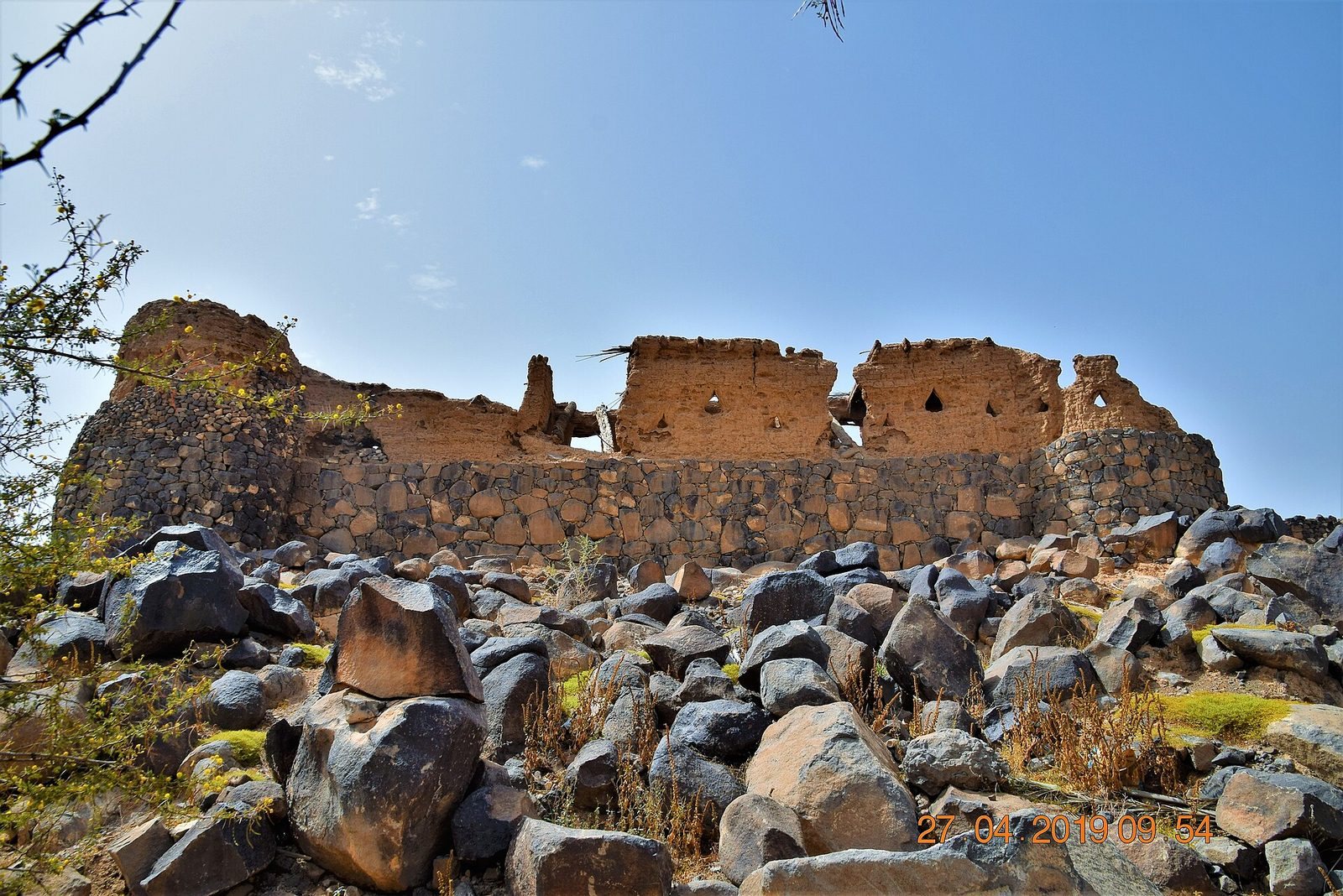
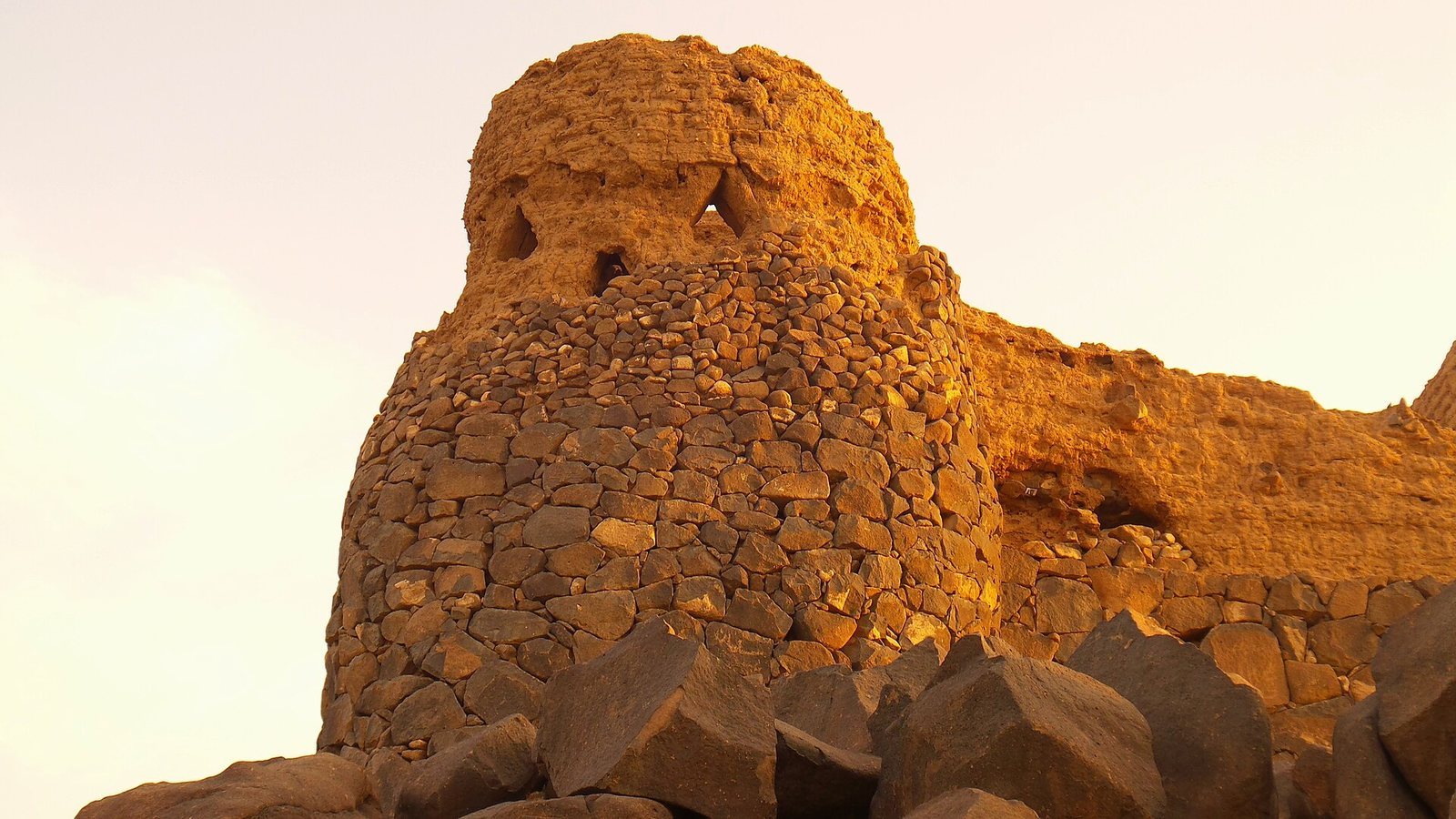
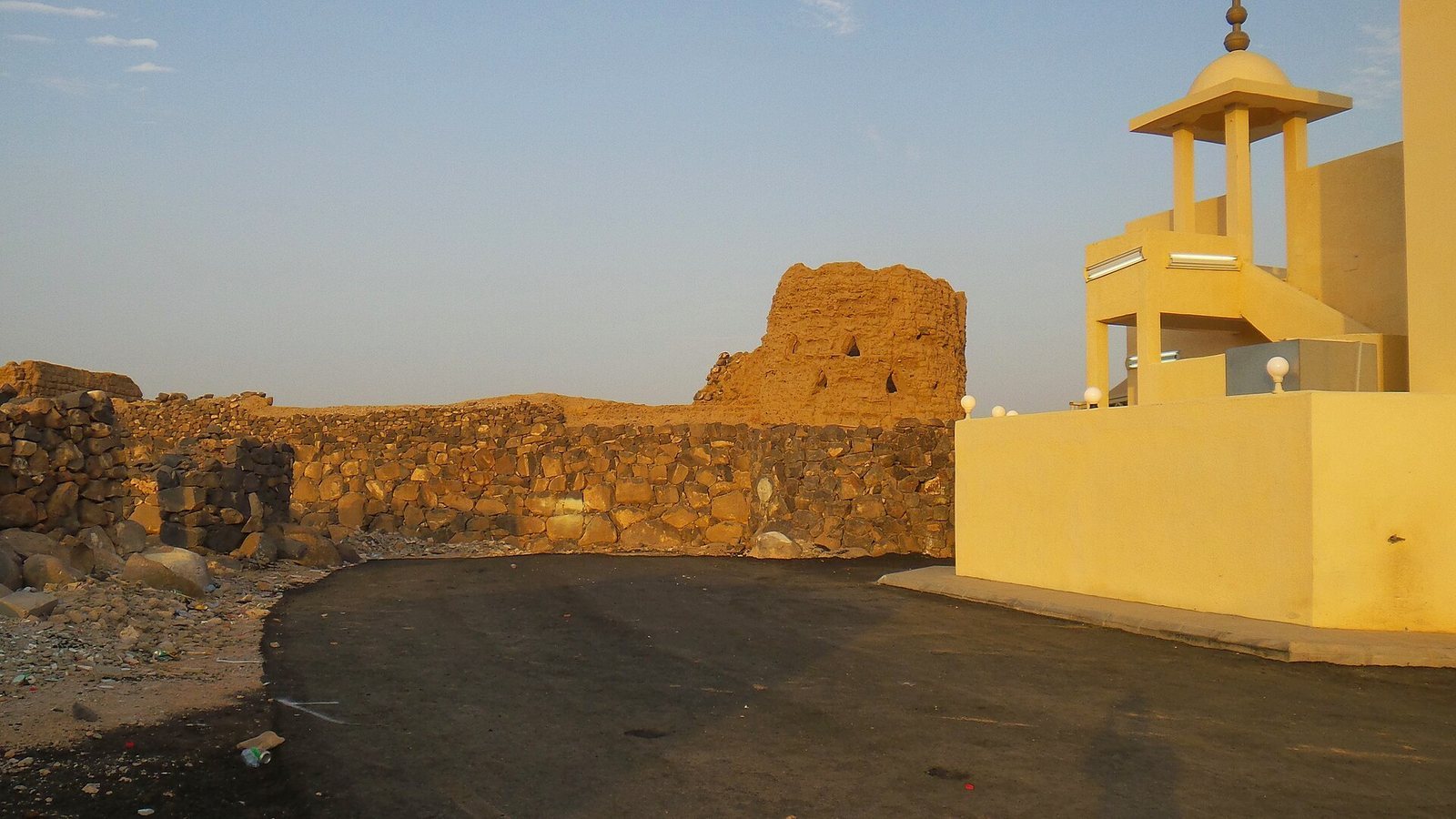
The complex comprises two principal buildings, an eastern palace and a western one. The western palace is better known because most traces of the eastern building have disappeared. The surviving structure is about 40 by 50 m, approximately 5 m high, and has a built area of around 2,000 m². Its two floors are made of stone and mud. Black basalt forms the lower parts of the walls to a height of about 2 m, with courses of mud brick above.
The palace includes many rooms, a mosque, a prison, two-storey towers, and a place for making gunpowder. Palm-trunk beams support the roof, which is covered with palm fronds and a second layer to strengthen it and limit rainwater leakage. Weathering and long abandonment have caused many parts to collapse, although some walls and rooms remain in good condition.