Hubický park: Historic Manor Grounds in Slovakia
Site at a Glance
- Popularity
- Very Low
- Country
- Slovakia
- Primary era
- Modern
- Eras represented
- Early Modern, Modern
- Civilizations
- Austria-Hungary, Habsburg, Hungarian
- Site type
- Domestic
- Remains
- Park
On this page9 sections
History
Manufactory and nineteenth-century rebuilding
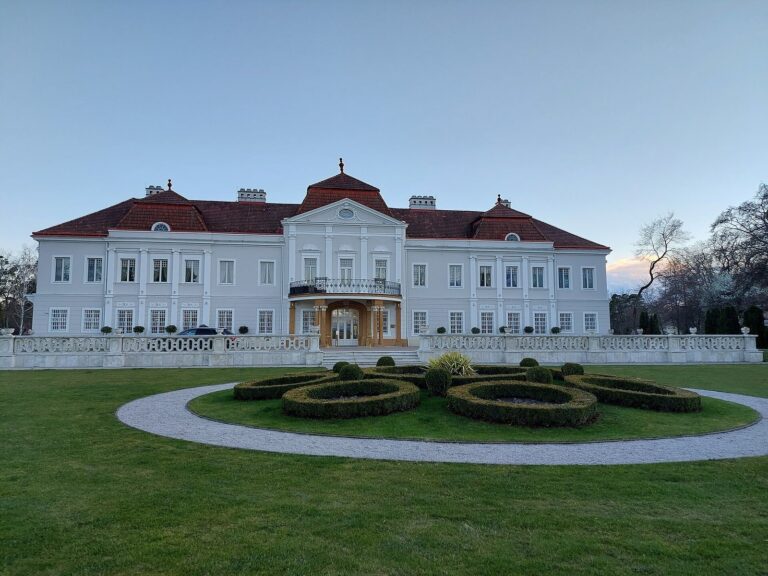
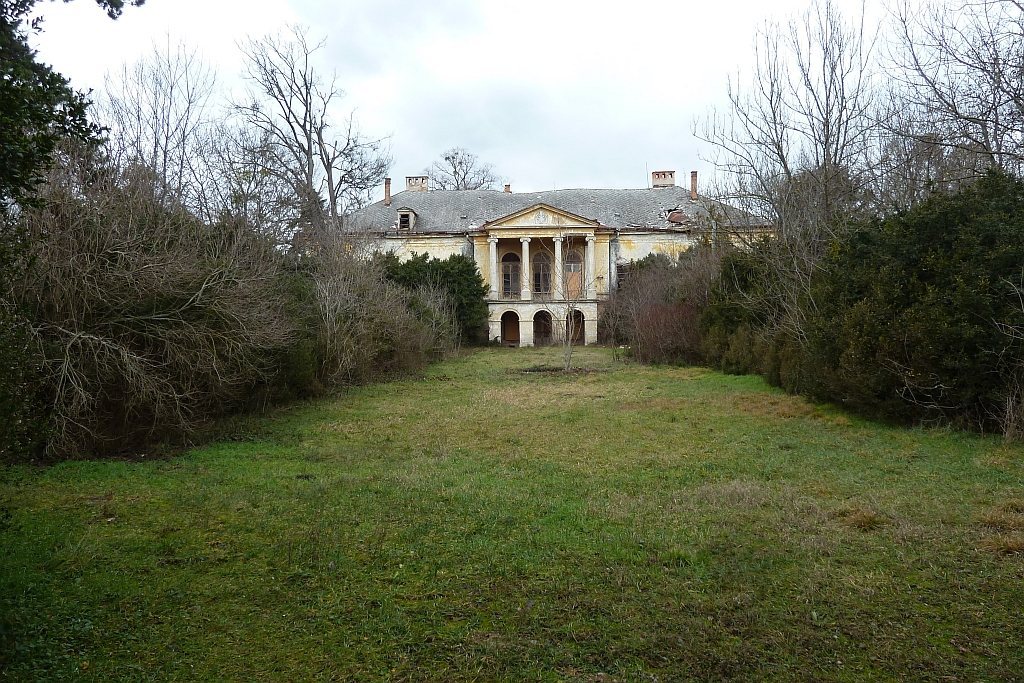
Hubický park is a historic manor park at Hubice in Slovakia. Its estate developed around a cloth manufactory and manor complex, and its large manor house was rebuilt around 1830 in the Classicist style, a restrained architectural language inspired by ancient Greek and Roman design.
In the seventeenth century, György Szelepcsényi established a cloth manufactory at the estate. A Renaissance manor house was used for cloth production, but the manufactory had ceased to exist by the end of that century. The Udvarnoky family later renovated the manor and made it their residence. Around 1830, part of the disused complex was demolished and a new large manor house built in its place; it became a family home that year. A small manor house, originally an oval stable, was built during the first third of the nineteenth century and later enlarged and altered.
Estate expansion and horse breeding
The estate was purchased in 1882 and expanded over the following decades to encompass more of the manor grounds, park, and village. Several owners bred horses, and the estate became known in horse-breeding communities for the quality of its breeding. Gombai Grand Prix competitions were held in several countries. The park’s paths were designed for riding, giving the grounds an equestrian character.
Confiscation and later changes
In 1945, both manor houses were confiscated and placed under state administration. The park received protected-area status in 1982. The buildings were privatized in 1992; the large manor house ceased to be used after the change in ownership, while the small manor house remained inhabited until the early 2010s. Restoration work has since begun on the large manor house. The park is state-owned, while the manor houses are privately owned.
Remains
Landscape and planting
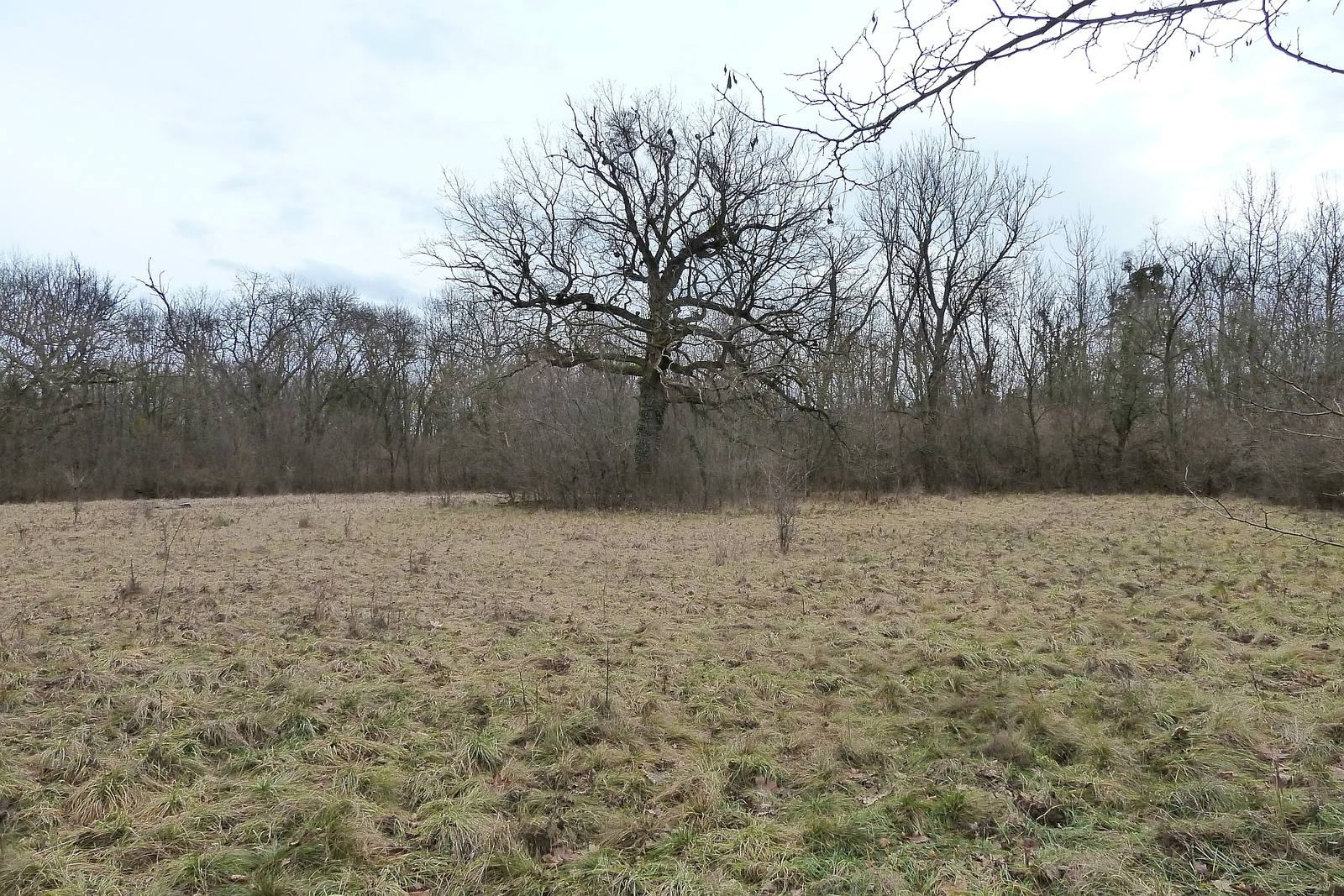
The 39-hectare grounds are an English landscape park, designed to resemble a natural landscape rather than a geometric garden. Two clearings contain open grass and solitary old trees, many of which are in varying stages of decay. The park is overgrown and unmanaged, and much of its designed landscape has been lost; the growth also suppresses other vegetation and contributes to the loss of valuable trees. Plantings include swamp cypress, Turkish hazel, plane trees with mottled bark, ornamental beech with colored foliage, and ginkgo. Ivy forms ground-covering carpets in several parts of the grounds.
Manor buildings and stables
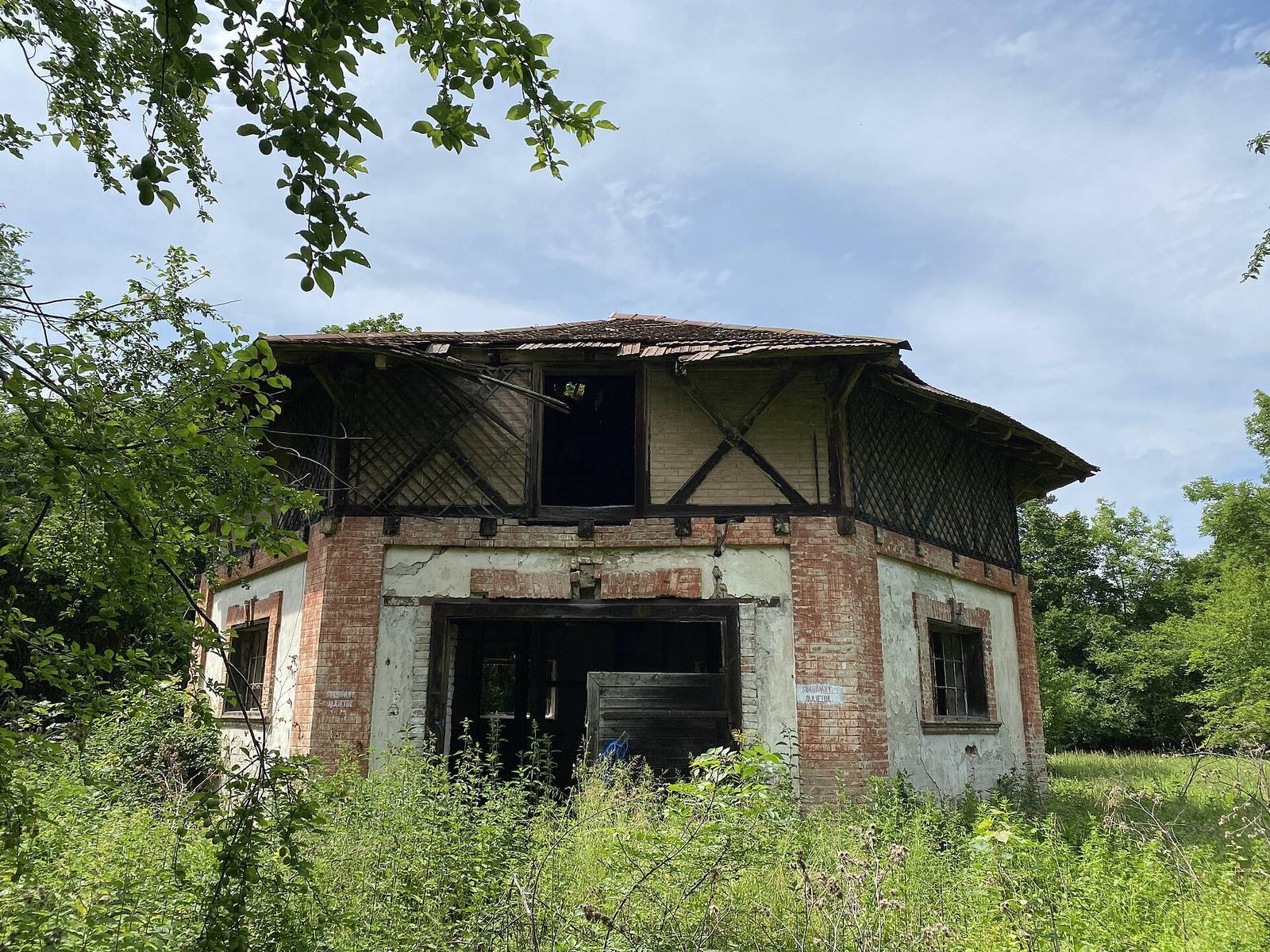
The large manor house, also known as the Udvarnoky-Nyáry manor house, is a Classicist building resting on Renaissance foundations. The small manor house developed from an oval stable: renovations and additions built on the earlier structure to create its present form. An octagonal stable built by the Udvarnoky family was intended for display horses.
Chapel and park structures
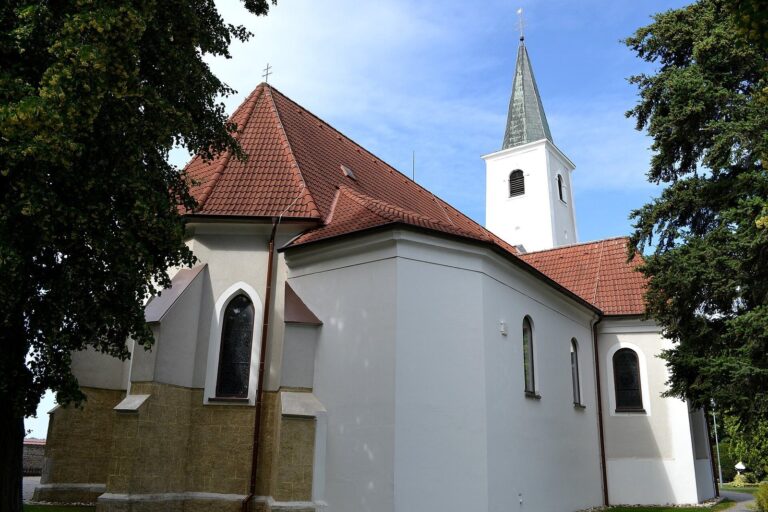
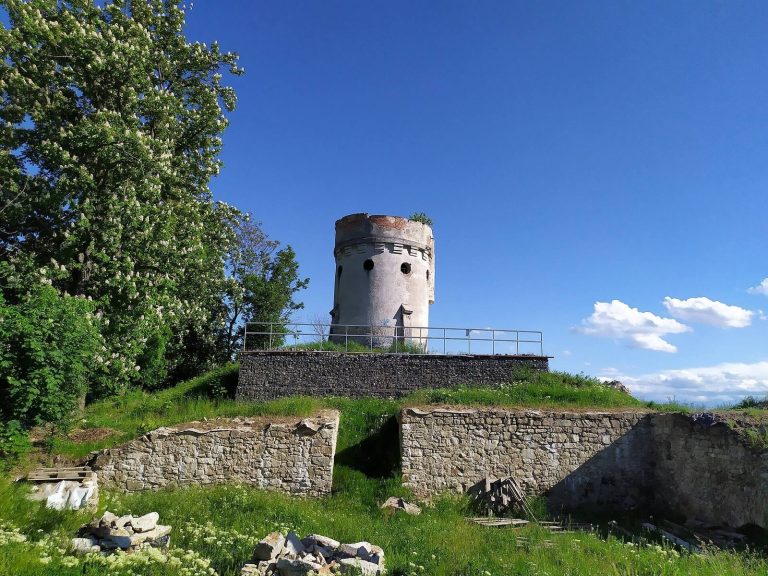
The Wiener-Welten family chapel and its crypt, a burial chamber, date from the late nineteenth century. Vandalism led to the coffins being moved to the cemetery. A local legend says a tunnel beneath the chapel runs to the entrance of the church in Čakany. The stone-built structure known as the bear cave has a board-lined interior and served for resting, ice storage, and later storage of staining agents. A stone bridge stands beside it. A stone bathing pool from the Wiener-Welten family’s period lies 50 metres from the park’s prominent water tower.
Waterways and irrigation
An artificial stream with a waterfall once ran through the grounds during the manor-house era, and a fishpond stood beside the water tower around the turn of the twentieth century. Both have dried up. The Poklostó River formerly crossed the park; it is known from records dating to the thirteenth century and appears on a 1726 map by Alajos Ferdinánd Marilius. A watermill operated on the river before it dried up. In the first half of the twentieth century, Baron Wiener-Welten built an underground irrigation system.