Hatfield Palace: An Episcopal Residence and Tudor Royal Palace
Site at a Glance
- Popularity
- Medium
- Country
- United Kingdom
- Primary era
- Medieval
- Eras represented
- Medieval
- Civilizations
- English
- Site type
- Religious
- Remains
- Palace
On this page9 sections
History
Hatfield Palace is a brick residence for the bishops of Ely, senior Christian leaders of the diocese, begun in 1485 in the United Kingdom. Its architecture has medieval and Tudor character. The Tudor period was the era of England’s Tudor monarchs, beginning with Henry VII. Planned with a chapel, the palace later became a royal residence closely associated with Elizabeth I.
Early settlement and the Ely estate
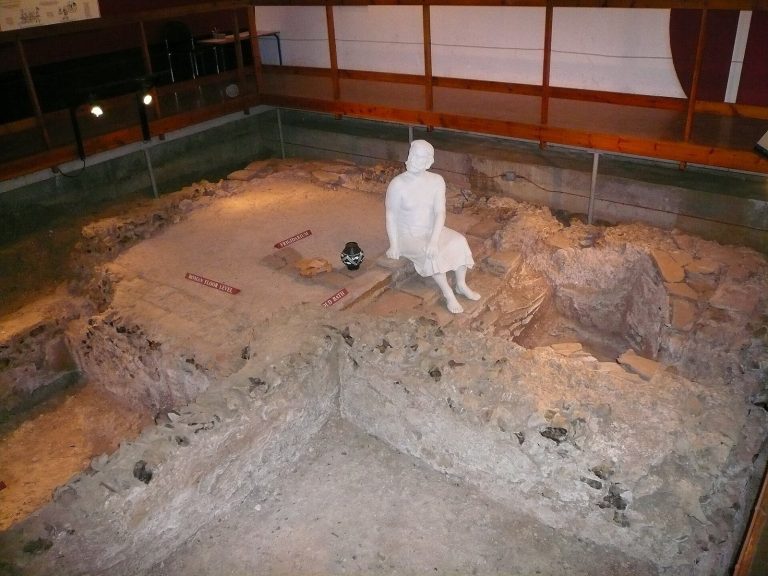
Worked flints point to Stone Age habitation at Hatfield. White marble used in Roman bath construction, along with pottery, brick, and fragments of wooden tiles found around Bishop’s Hatfield, suggests that a Roman building stood in the area. Saxon settlements also existed nearby.
The lands later associated with Hatfield belonged to the merchant Ordmaer and his wife, Æalde. They passed to their daughter, Æthelflaed, and her husband, King Edgar the Peaceful. In 970, Edgar granted the lands to the monks of Ely on condition that they build an abbey. Ethelred and Edward the Confessor later confirmed the grant.
The Domesday Book describes Hatfield in 1086 as a parish with 12 houses, 18 villagers, a market, and two watermills. Its estate included 40 hectares of woodland and land that could support 2,000 pigs; six serfs worked for the monks. By 1109, the lands had passed from the monks to the abbots and then to the bishops of Ely, along with buildings and parks.
Medieval episcopal estate
Over the following four centuries, the bishops enlarged the estate to receive royal visitors and generate income. They rented land and woodland and drew revenue from resources used for livestock, pottery, building materials, and charcoal.
King John stayed at Hatfield in March 1211. In 1252, William de Valence, Henry III’s half-brother, was caught hunting deer without permission in Middle Park. Edward I stayed for several days in February 1303, Edward II visited in July 1309, and Edward III came six times during his reign, including at Christmas 1336.
Edward III’s wife, Philippa of Hainault, gave birth at Hatfield to William on 16 February 1337. The child died on 8 July and was buried as William de Hatfield. John Barnet, Bishop of Ely and Treasurer of England, died at Bishop’s Hatfield on 7 June 1397. Catherine of Valois, widow of Henry V and wife of Owen Tudor, gave birth to Jasper Tudor at the palace in 1431. Bishop Philip Morgan died at Palace Hatfield on 25 October 1434.
In 1441, Bishop Louis de Luxembourg leased the manor to Cecily Neville and her husband, Richard, Duke of York. Their son Henry was born there on 10 February and died four or five days later, after being baptised at Westminster. Louis died at the palace on 18 September 1443.
Building the palace and royal household
Construction began in 1485 on the initiative of John Morton, Bishop of Ely, a cardinal, and chief minister to Henry VII. The building, then called Bishop’s Hatfield, was intended as an episcopal residence with a chapel. Edmund Tudor, a young son of Henry VII and Elizabeth of York, died there on 19 June 1500, aged about eighteen months.
From 1514, Henry VIII’s blacksmith Hannibal Zenzano leased the manor and served as keeper of its parks, while the king used the estate as if it were his own. Henry visited in November 1522, in 1524, in August 1525, and in 1528. In 1517, his sister Mary Tudor gave birth at Hatfield to Frances Brandon, who was baptised at St Etheldreda’s Church west of the palace.
Mary and her household had quarters at Hatfield. After Elizabeth’s birth in 1533, Henry designated the palace as a nursery for his children. Elizabeth arrived at three months old with her household, including servants, ladies-in-waiting, and tutors. In 1534, Anne Shelton became governess to Henry’s daughters, while her husband, John Shelton, managed their households. Edward joined Mary and Elizabeth after his birth in 1537, and Elizabeth received lessons from tutors assigned to the future king.
In 1538, Henry acquired ownership rights to the palace in an exchange with Bishop of Ely Thomas Goodrich. He paid £40 and returned church properties in Cambridgeshire and Essex that had previously been seized. Hatfield thereby became a royal residence.
Elizabeth I and the accession of 1558
In 1549, Elizabeth was questioned at Hatfield by Robert Tyrwhitt after accusations that Thomas Seymour, Edward VI’s uncle, had plotted to marry her. She made no confession. That year, Edward transferred the palace’s ownership rights to John Dudley, Earl of Warwick. Dudley returned them to the king in 1550, and, with the Privy Council’s consent, Elizabeth received the property and compensated Dudley with land.
After Mary I succeeded Edward VI in 1553, her government placed Elizabeth under surveillance at Hatfield from June 1555, with Sir Thomas Pope responsible for her custody. The Catholic government feared a Protestant plot to replace Mary with Elizabeth. Elizabeth lived there with part of her household. Robert Dudley visited regularly from 1556 for two years, and Elizabeth fell in love with him. Mary and Elizabeth met at Hatfield in 1557. Elizabeth declined a marriage proposal from Emmanuel-Philibert of Savoy in April 1557 and another from Eric, son of Sweden’s King Gustav Vasa, in May 1558.
According to tradition, Elizabeth was beneath an oak in the park in November 1558 when Robert Dudley brought news that Mary had died and Elizabeth had become queen, together with the royal ring. Elizabeth held her first council meeting in the palace’s Banqueting Hall. She appointed William Cecil as chief minister and made him Lord Burghley. During her reign, she leased the estate to members of the House of Lords and used the proceeds for its upkeep.
Demolition and preservation
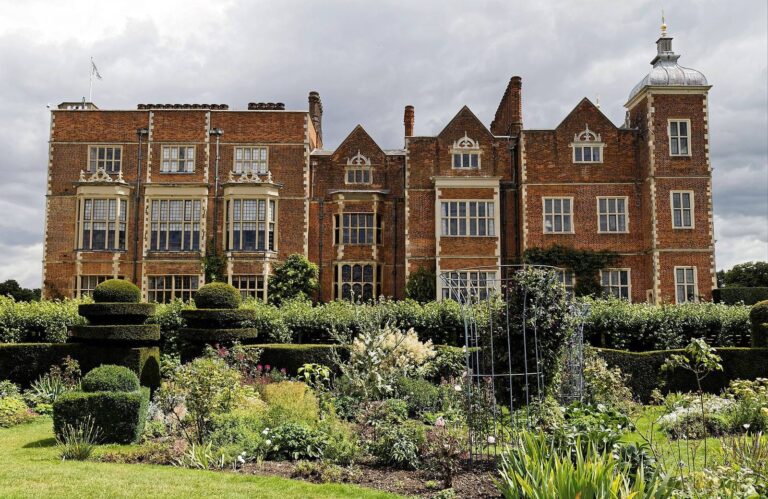
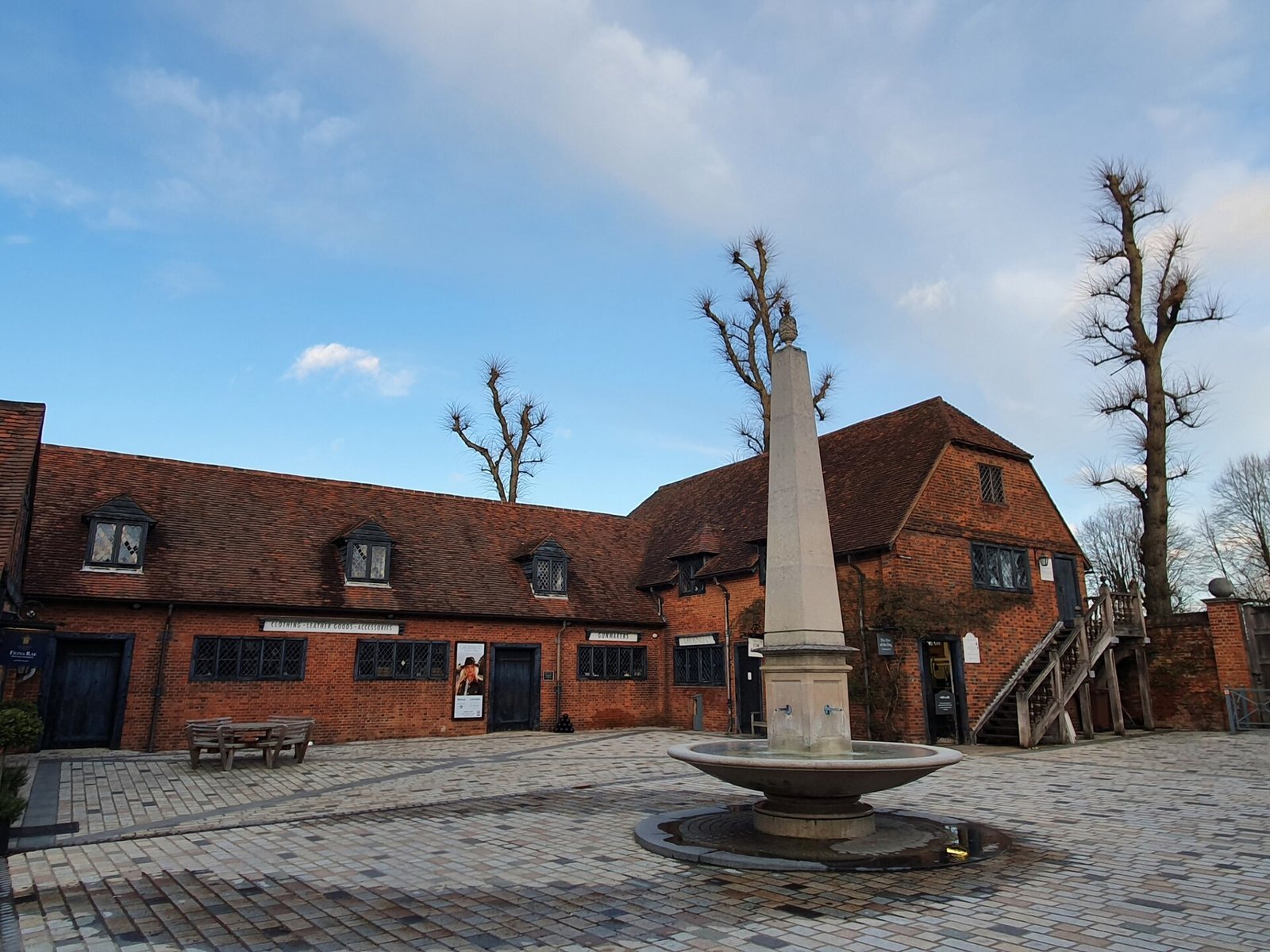
In 1607, James I exchanged Hatfield Palace for Theobalds House with his chief minister, Robert Cecil. Cecil demolished about three-quarters of the palace and reused its bricks in the foundations of nearby Hatfield House, completed in 1611. Cecil said the palace was uninhabitable, although bills record maintenance work. The Cecil family has owned the estate since the exchange. James Edward Gascoyne-Cecil, 4th Marquess of Salisbury, restored the surviving west wing in 1915. The palace is Grade I listed, the highest listed-building grade in England, and nationally protected; it is recognised as a major example of medieval English brick architecture. In 2014, Elizabeth II planted an oak near the tree associated by tradition with Elizabeth I’s accession.
Remains
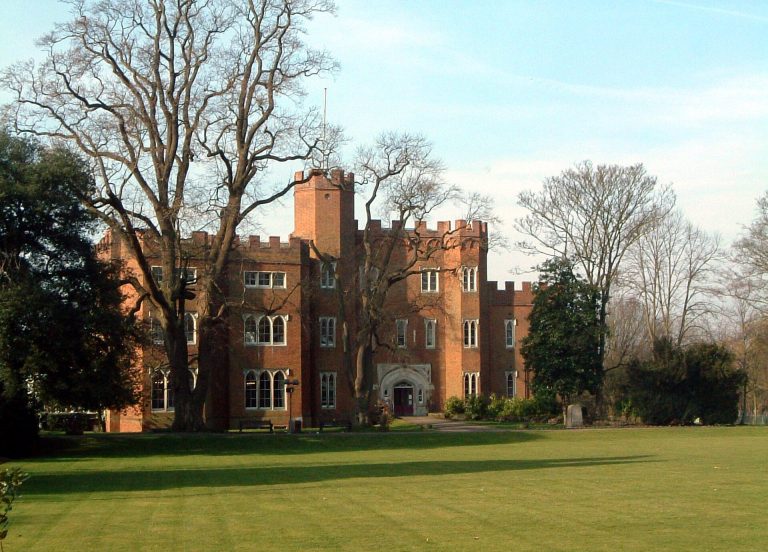
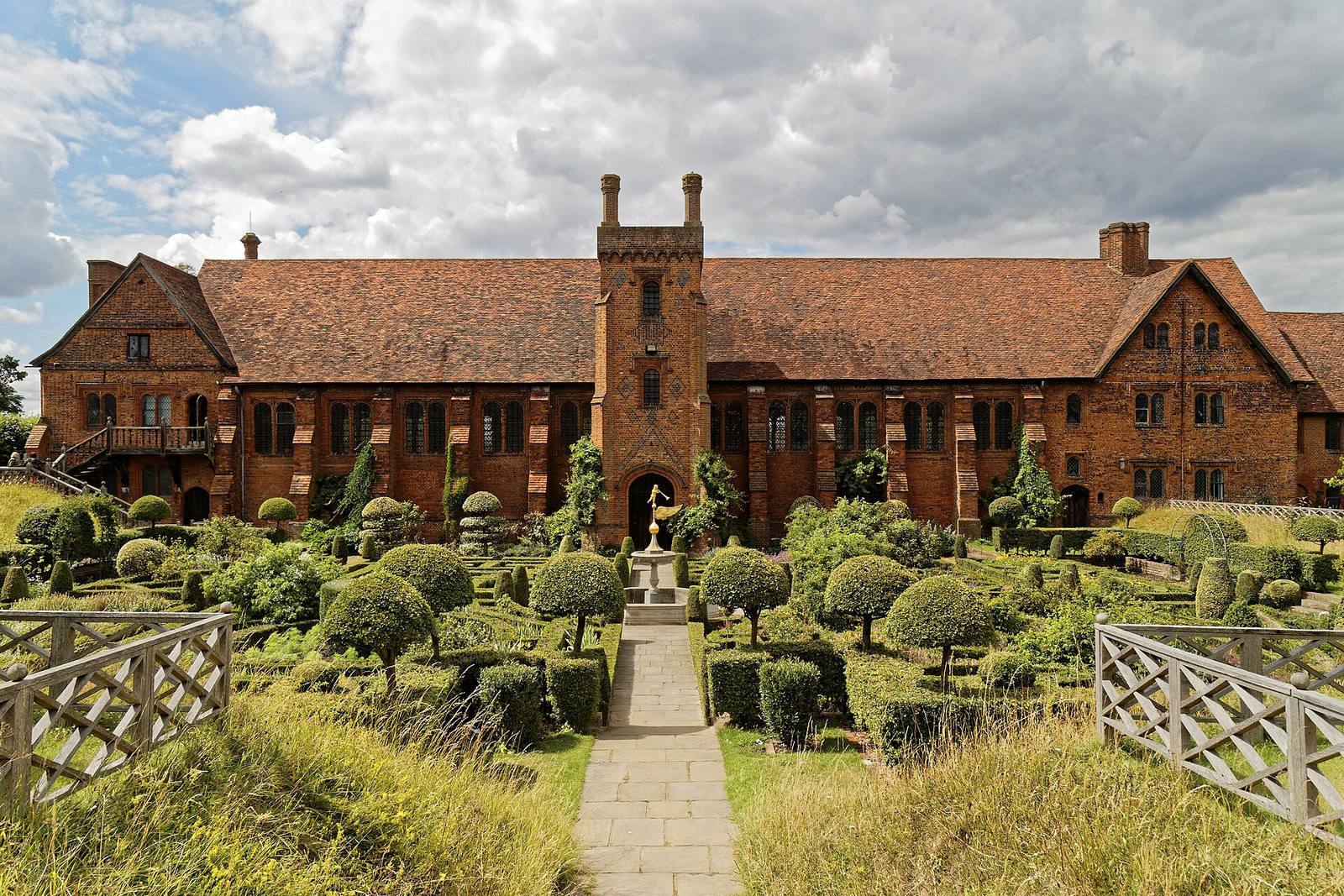
The palace was laid out as a quadrangle around a central courtyard and built in brick, with medieval and Tudor architectural character. Its surviving west wing preserves the original form and fabric of part of this arrangement.
West wing
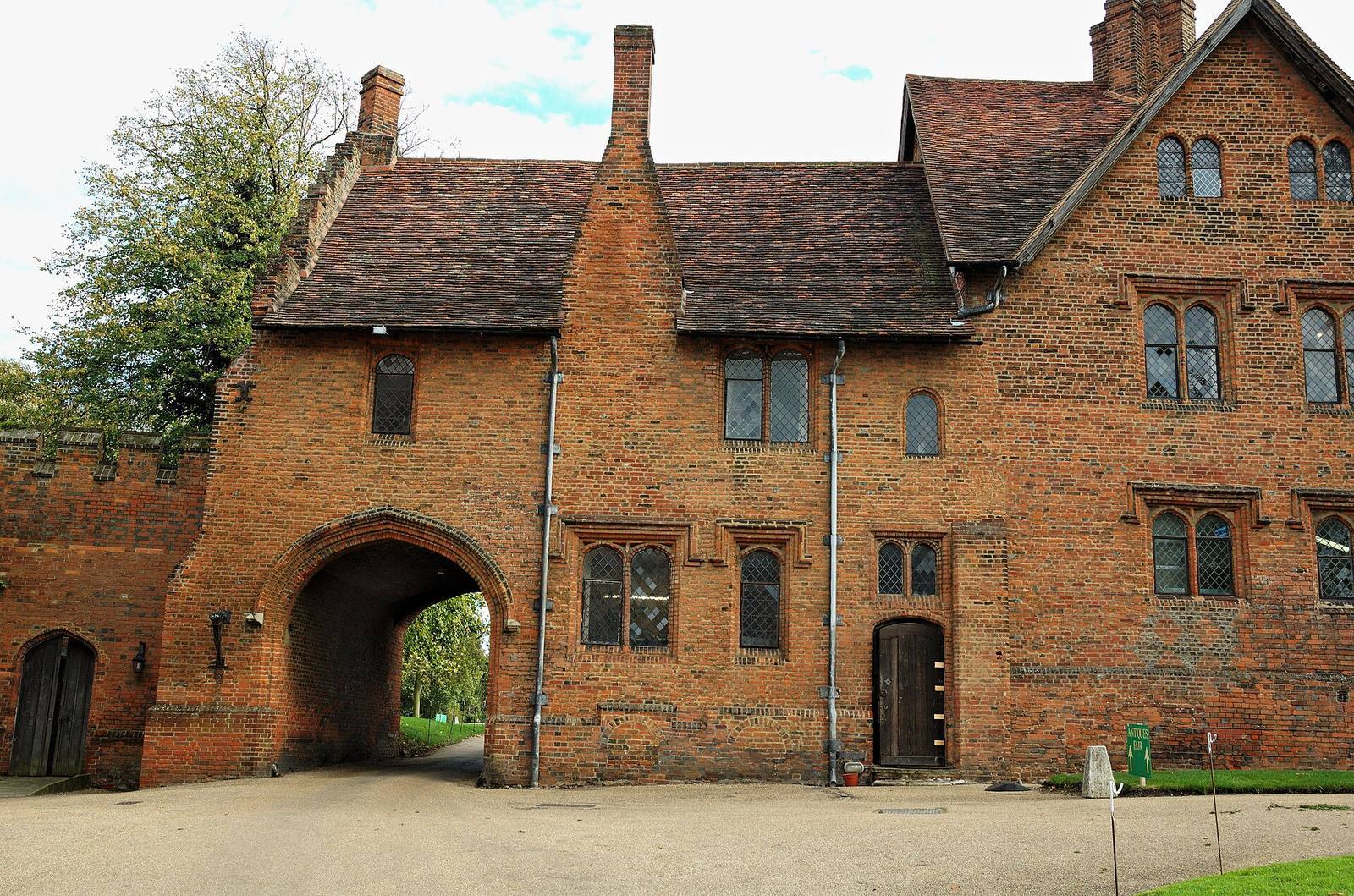
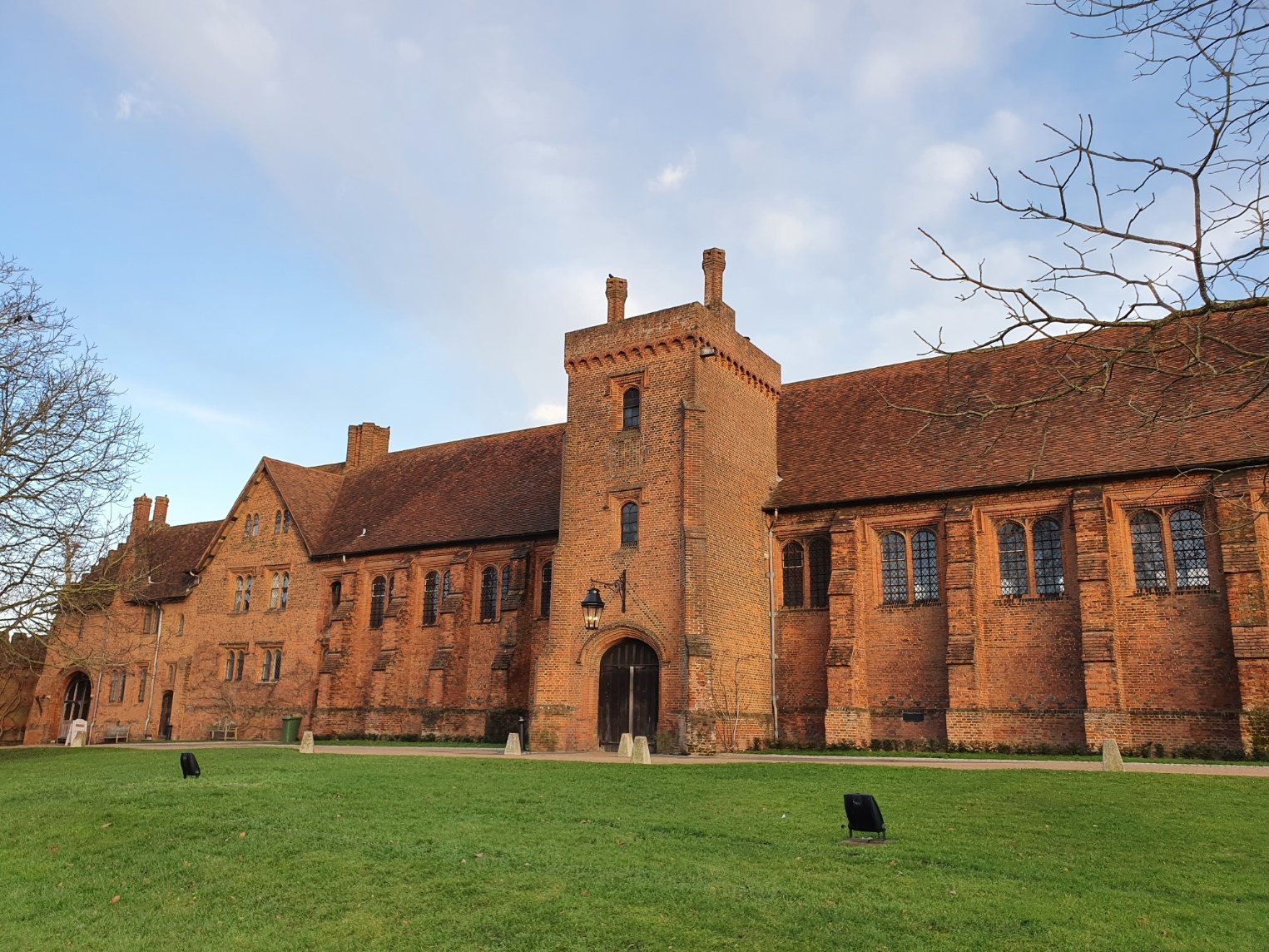
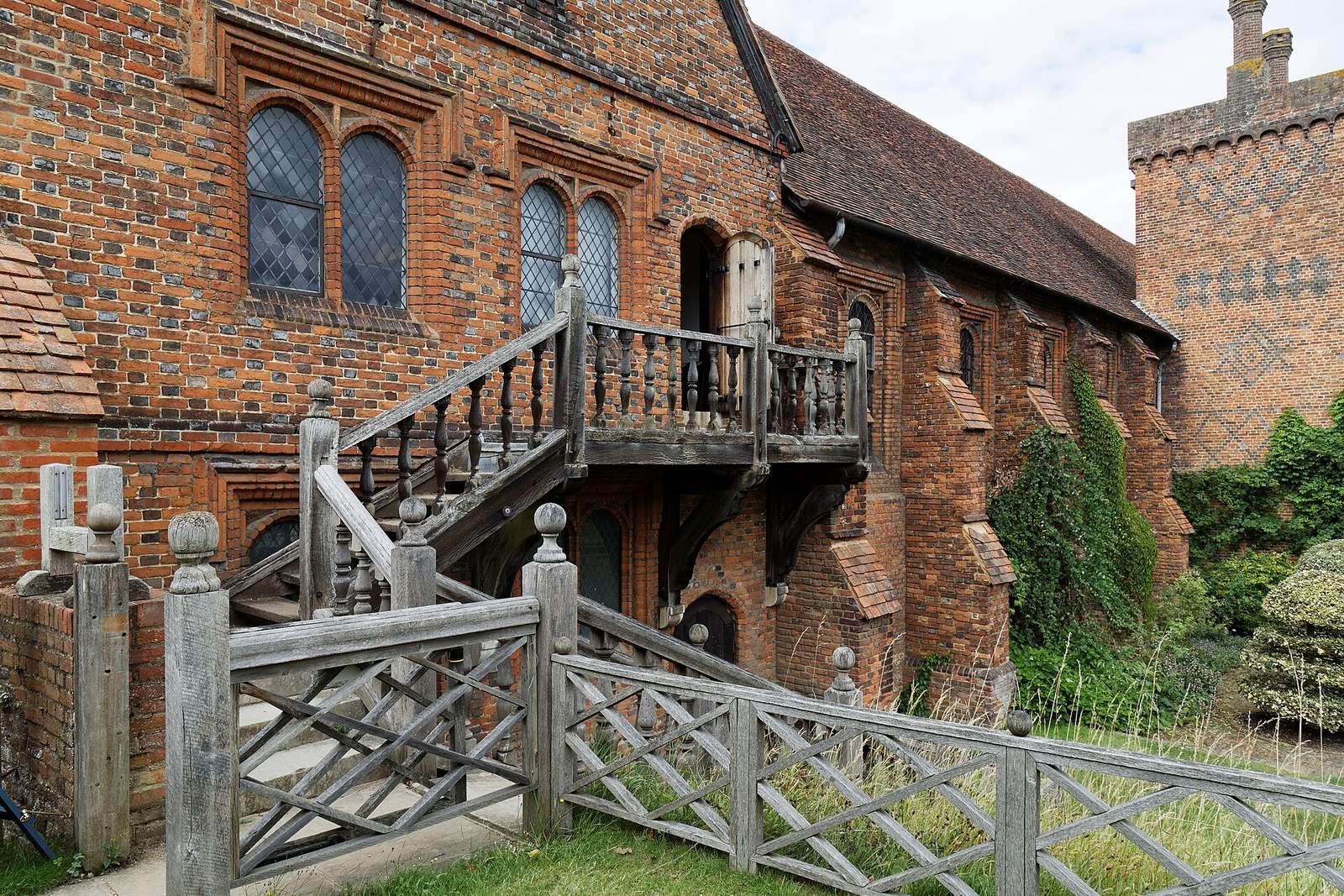
The west wing is built of red brick and retains its original timber roof. Two towers on the side facing the Knot Garden, an ornamental garden arranged in interlacing patterns, served the other wings and the upper floors. A gatehouse stands at one end of the wing and is reached through a porch. Inside are the Great Hall, also called the Banqueting Hall, a kitchen, and butteries, service rooms for storing or serving drink. The wing also contains a solar, a private upper-floor chamber. Rooms on the first floor were reserved for servants.
Parkland and surrounding features
The estate included oak woodland, farmland beside the River Lea, and Clay Field, where clay for pottery was obtained. Great Park and Gacelyn’s Park are recorded in 1222 and 1300, respectively, while Middle Park was used for keeping deer for aristocratic hunting. The winding Great North Road crossed Great Park and connected Hatfield with London; gates stood on the park’s northern, southern, and eastern sides. Tolls were charged on loaded carts and mounted horses. Apparent traces of three Roman roads suggest routes from London toward Hatfield and Hatfield Park. Nearby Hatfield House is a separate building, not part of the palace.