Haenam Bangsan-ri Janggobong Kofun: A Keyhole-Shaped Burial Mound
Site at a Glance
- Popularity
- Medium
- Country
- South Korea
- Primary era
- Classical
- Eras represented
- Classical, Medieval
- Civilizations
- Unclassified
- Site type
- Burial
- Remains
- Burial Mound
On this page9 sections
History
Construction and maritime setting
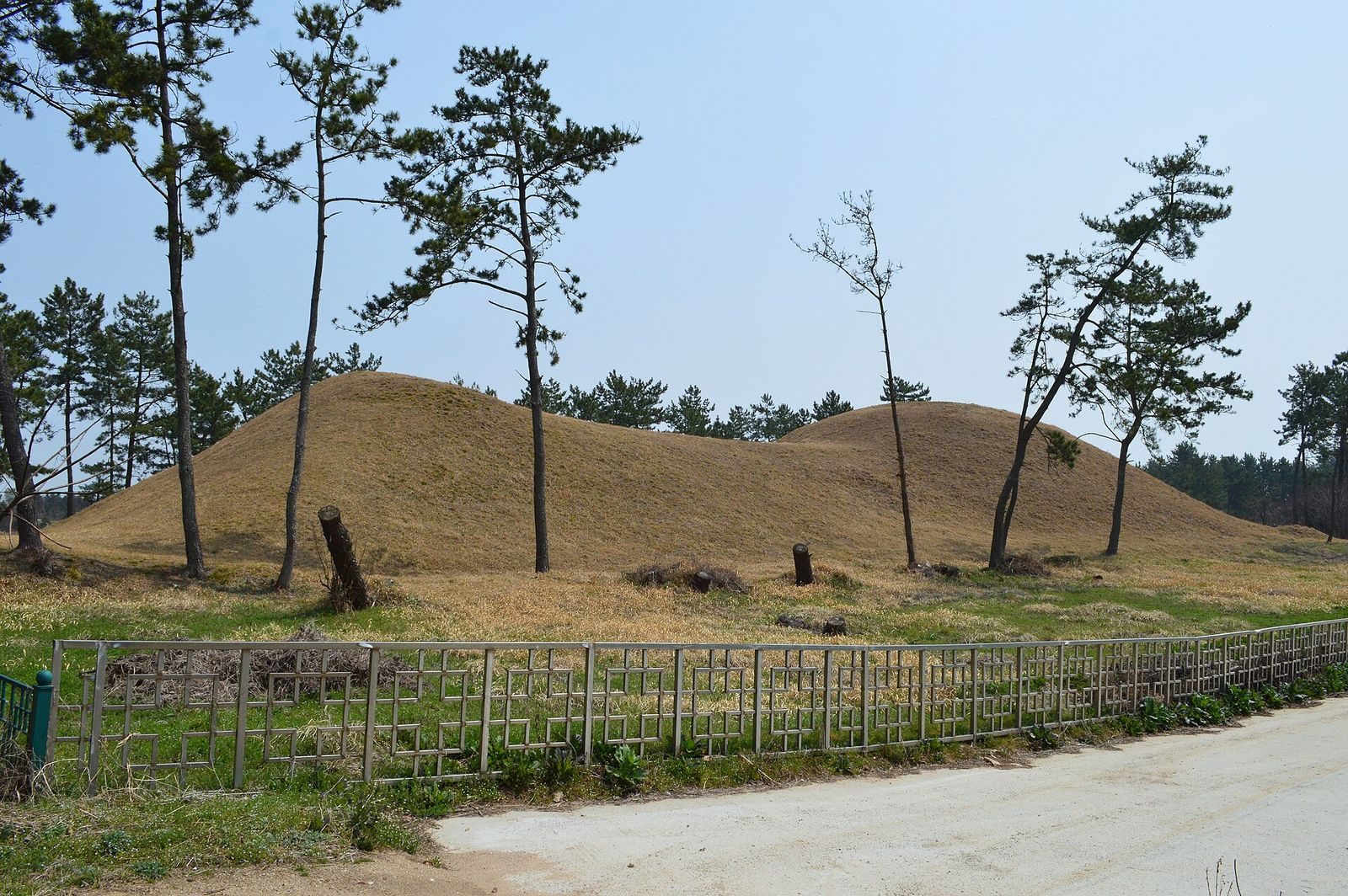
Haenam Bangsan-ri Janggobong Kofun is an ancient burial mound in Haenam County, South Korea, probably built from the late fifth into the early sixth century. Its keyhole shape, with a squared front and rounded rear, has been associated with burial mounds in Japan. It is the southernmost and largest of more than ten keyhole-shaped tombs identified in the southern Korean Peninsula, and is considered large in comparison with Japanese tombs of a similar date.
The surrounding area had no earlier local tradition of this type of tomb. Nearby burials with features associated with Wa, an ancient name for Japan and its people, followed its appearance. A connection among these burial groups has been proposed. The nearby plain is narrow and poorly suited to farming, while the area lay on an important maritime transport route. The person buried here is therefore thought to have held influence over sea transport.
Modern investigations and protection
The tomb became Jeollanam-do Monument No. 85, a provincial heritage designation, on 7 February 1986. It was robbed twice in the 1990s. After looting pits were found, the National Gwangju Museum carried out an emergency test excavation in 2000. Further excavations took place in 2020 and 2021.
Remains
Main mound
Setting and form
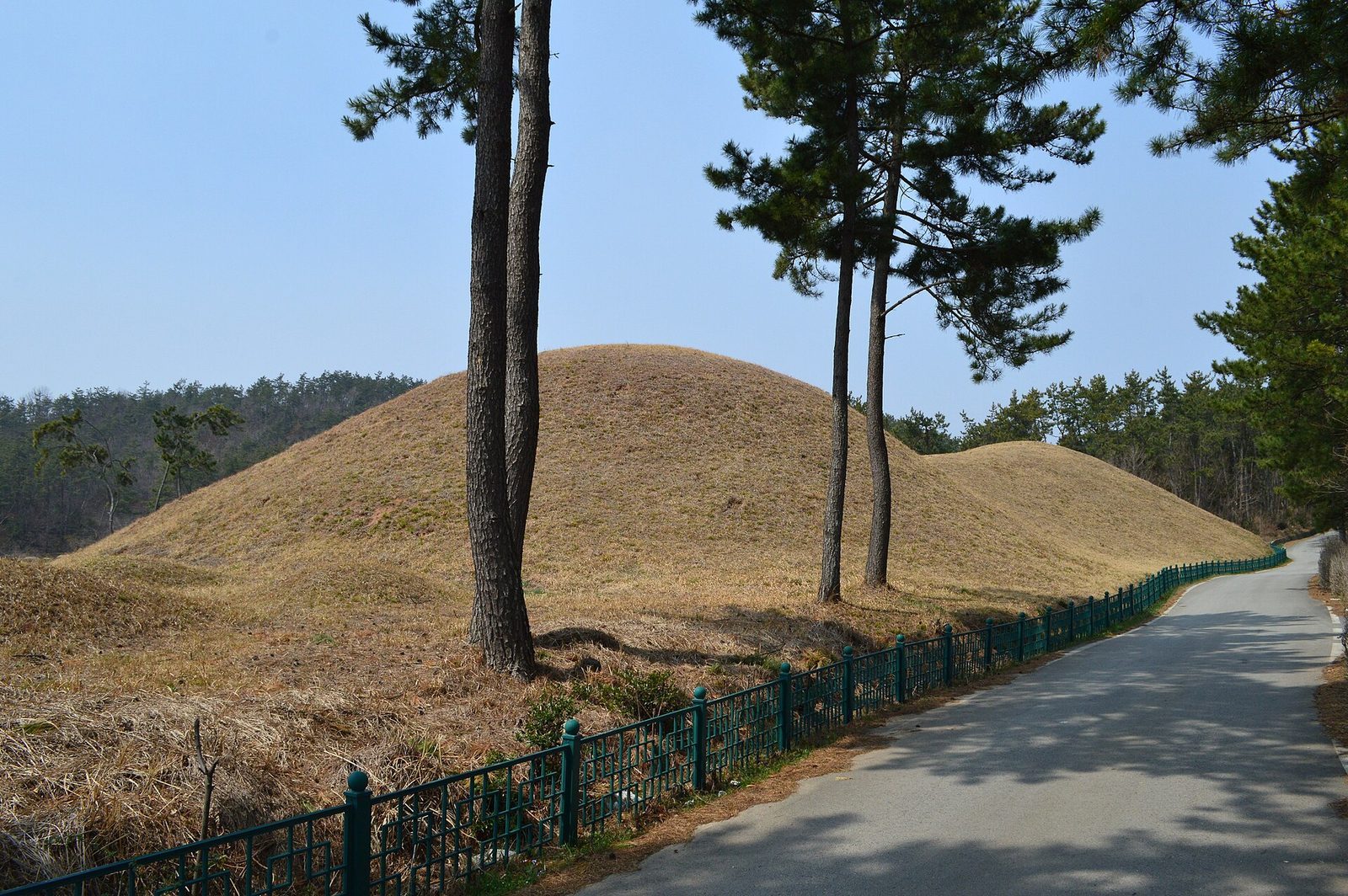
The mound stands on a hill about 30 metres above sea level, roughly one kilometre inland from the coast in southeastern Haenam County. It lies east of a mountain fortress that encircles a summit. Rising like a large natural hill, the mound is 76 metres long and 10 metres high. Its north–south axis places the front to the north and the rear toward the plain. Its slopes are steeper than those of Japanese keyhole-shaped tombs, and its exterior form has been compared with a burial mound in Nara Prefecture, Japan.
Earthworks and burial chamber
A levelled area about 10 metres north of the front and another on the south side of the rear are thought to have supplied earth for building up the mound. Inside, a side passage leads to an elongated rectangular stone burial chamber. The passage is also long and narrow, giving the chamber and entrance an unusual overall form. Red ochre, a natural earth pigment, was used to paint the chamber interior.
Alteration and survival
Modern graves on the front and rear sections, along with a road along the eastern side, have altered parts of the mound. Despite these changes, it largely retains its original shape.
Other tombs
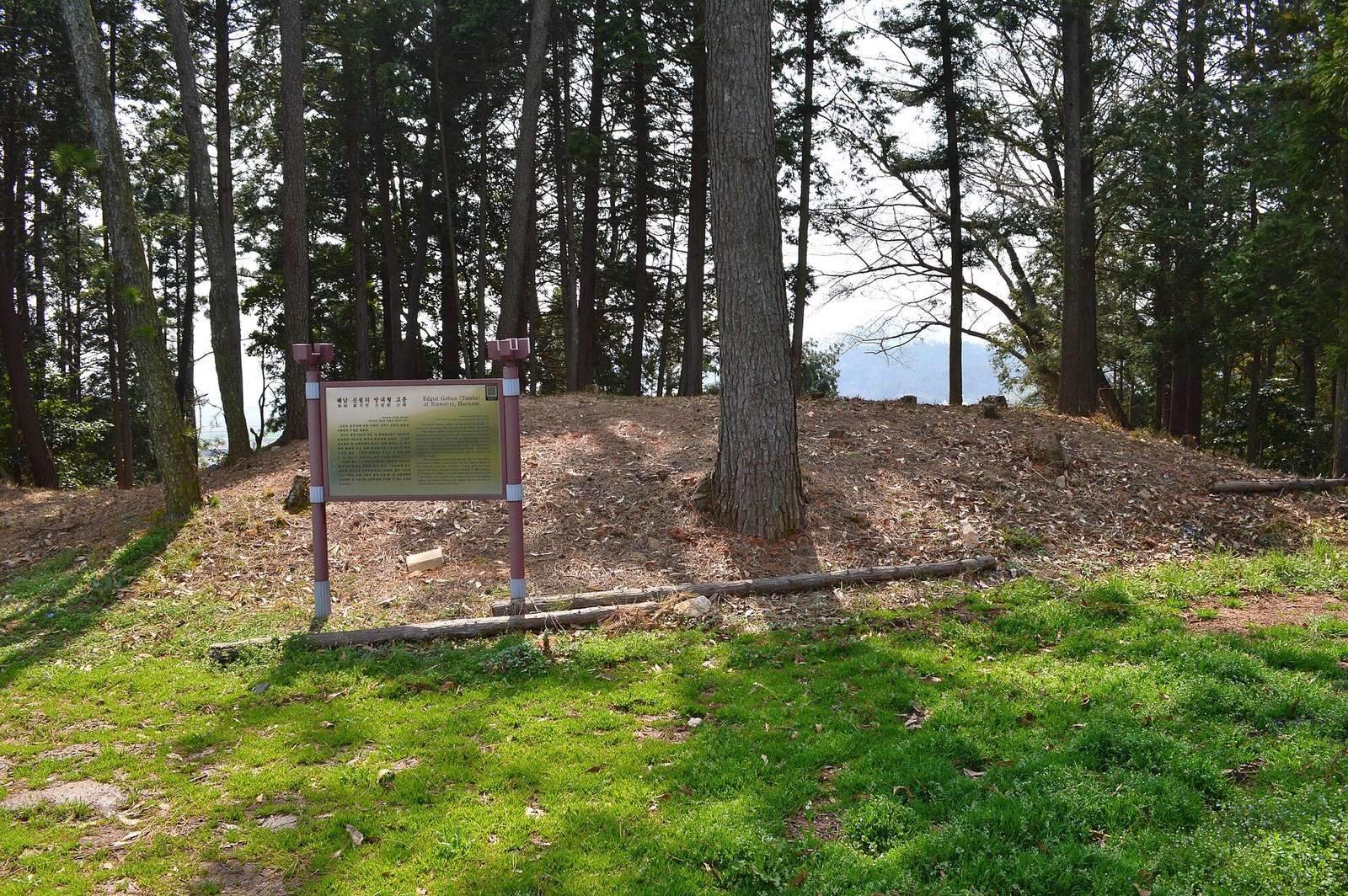
North of the fortress, a low, level hill bears a pyramid-shaped tomb whose surface is densely covered with irregular stones. South of the main mound is an exposed tomb built around a stone burial chamber. Nearby burial groups contain six, seven, and two tombs.