Hadrianopolis in Paphlagonia: An Ancient City and Pilgrimage Center
Site at a Glance
- Rating
- 4.4
- Popularity
- High
- Country
- Turkey
- Primary era
- Medieval
- Eras represented
- Classical, Medieval
- Civilizations
- Byzantine, Roman
- Site type
- Settlement
- Remains
- City
On this page14 sections
History
Hadrianopolis in Paphlagonia was an ancient city about 3 km from modern Eskipazar in Turkey, inhabited from at least the 1st century BC into the 8th century AD. Its settlement phases span the late Hellenistic period, following Alexander the Great’s conquests, the Roman era, and the early Byzantine centuries of the Eastern Roman Empire.
Hellenistic and Roman periods
In the 2nd century AD, the city took its name from Hadrian, a Roman emperor. It also bore the names Caesarea and Proseilemmene. In 380, Emperor Theodosius I formed the province of Honorias from parts of Paphlagonia and Bithynia, regions of Asia Minor. Named for Theodosius’s younger son Honorius, the province gave the city its later name, Hadrianopolis in Honoriade.
Christian city and pilgrimage center
After the 4th century, Hadrianopolis was a major center with numerous churches and monasteries. It served as an episcopal see, the official seat of a bishop, in the western Black Sea region. Pilgrims came seeking relief from physical and spiritual ailments. The former bishopric is also listed as a titular see, a title retained for a former or non-residential bishopric, in the Catholic Church’s annual directory.
Saint Alypios the Stylite lived from 522 to 649. A stylite was a Christian ascetic who lived on a pillar, and Alypios practiced this form of devotion in a pagan cemetery just beyond the city. Before he began, a church dedicated to Saint Euphemia, an early Christian martyr, had been built beside the pillar. Alypios was later buried there. A monastery for men and another for women stood on opposite sides of the pillar.
Tradition credits Alypios with healing the sick, exorcisms, and foretelling the future. People gathered to hear him and seek cures, and some remained to live nearby. He is said to have set rules for the two monasteries, including directing the women not to appear before men. His mother, his sister Maria, and other prominent women lived in the women’s community. Saint Stylianos of Paphlagonia was born in Hadrianopolis in 550 and later lived as a hermit in the surrounding mountains.
Abandonment and archaeological investigation
Archaeologist Ersin Çelikbaş has proposed that the city was suddenly emptied in the 7th century. Its abandonment date remains uncertain, since habitation continued at least into the 8th century, and its eventual cause is unclear. Archaeological excavations began in 2003.
Remains
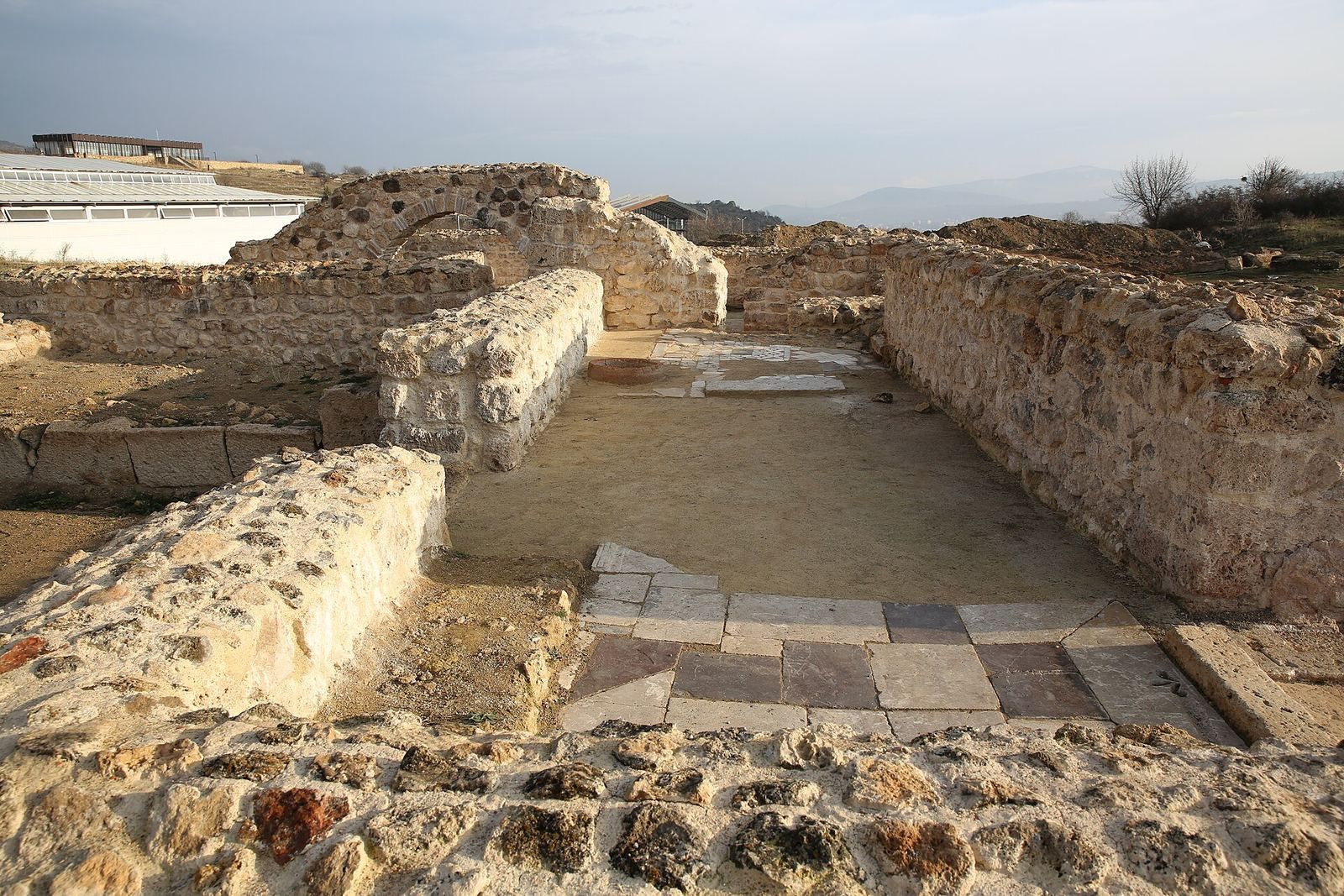
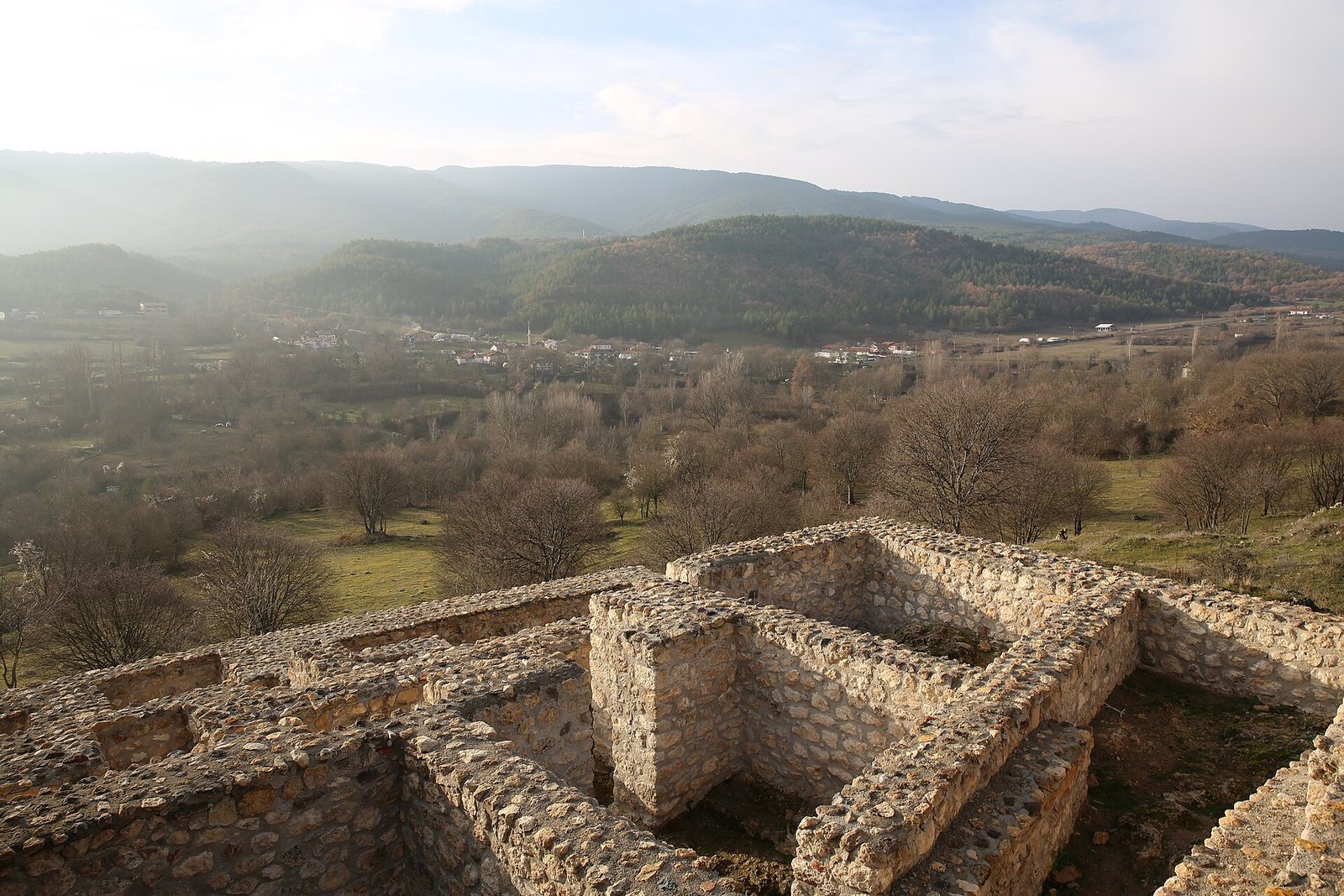
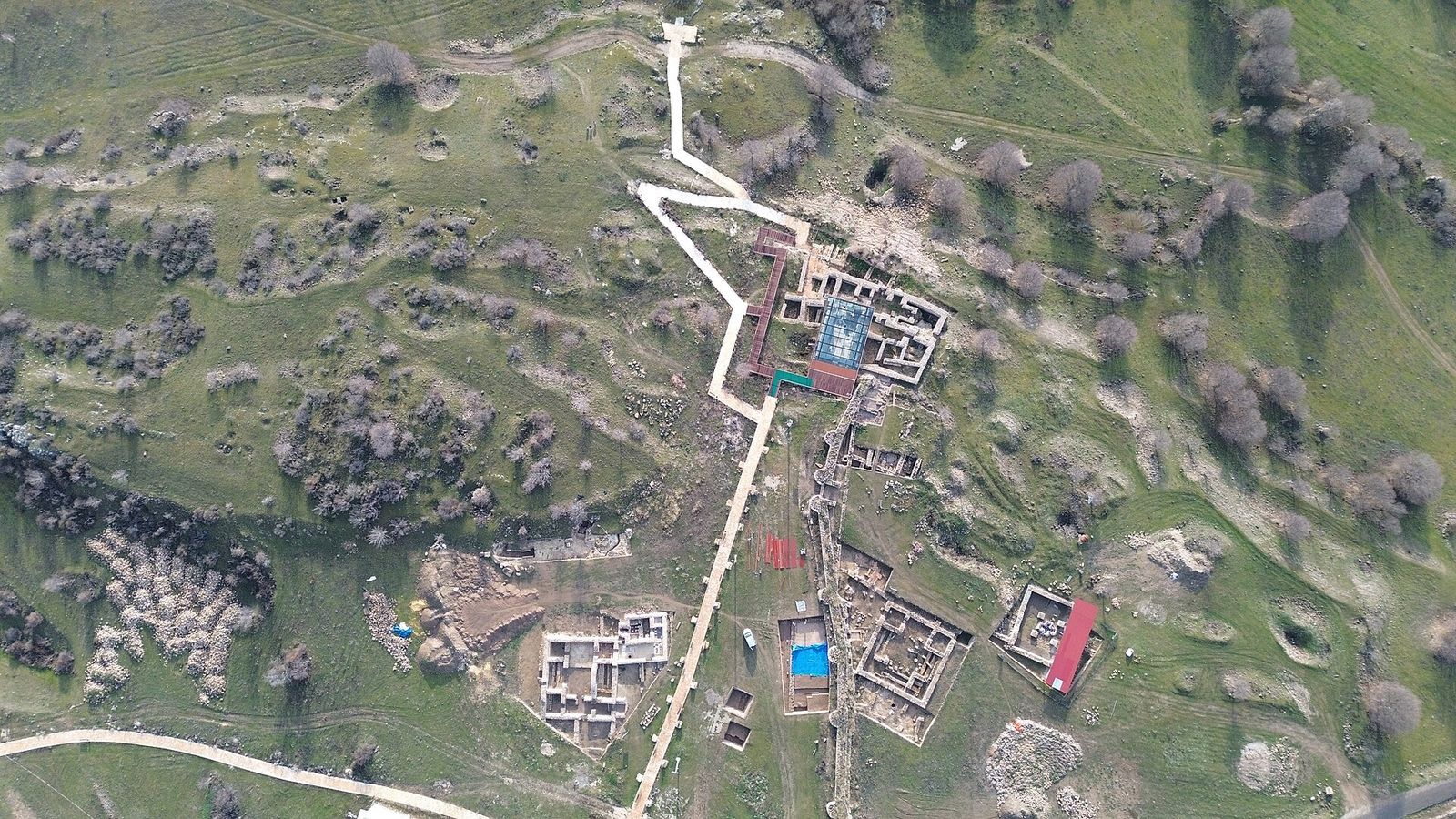
Surveys and excavations have identified 14 public buildings, along with other structures. Christian buildings are distributed across an area extending as far as 20 km from the city center. Excavation has covered only part of the ancient city, and some of the site has been covered over.
Buildings and infrastructure
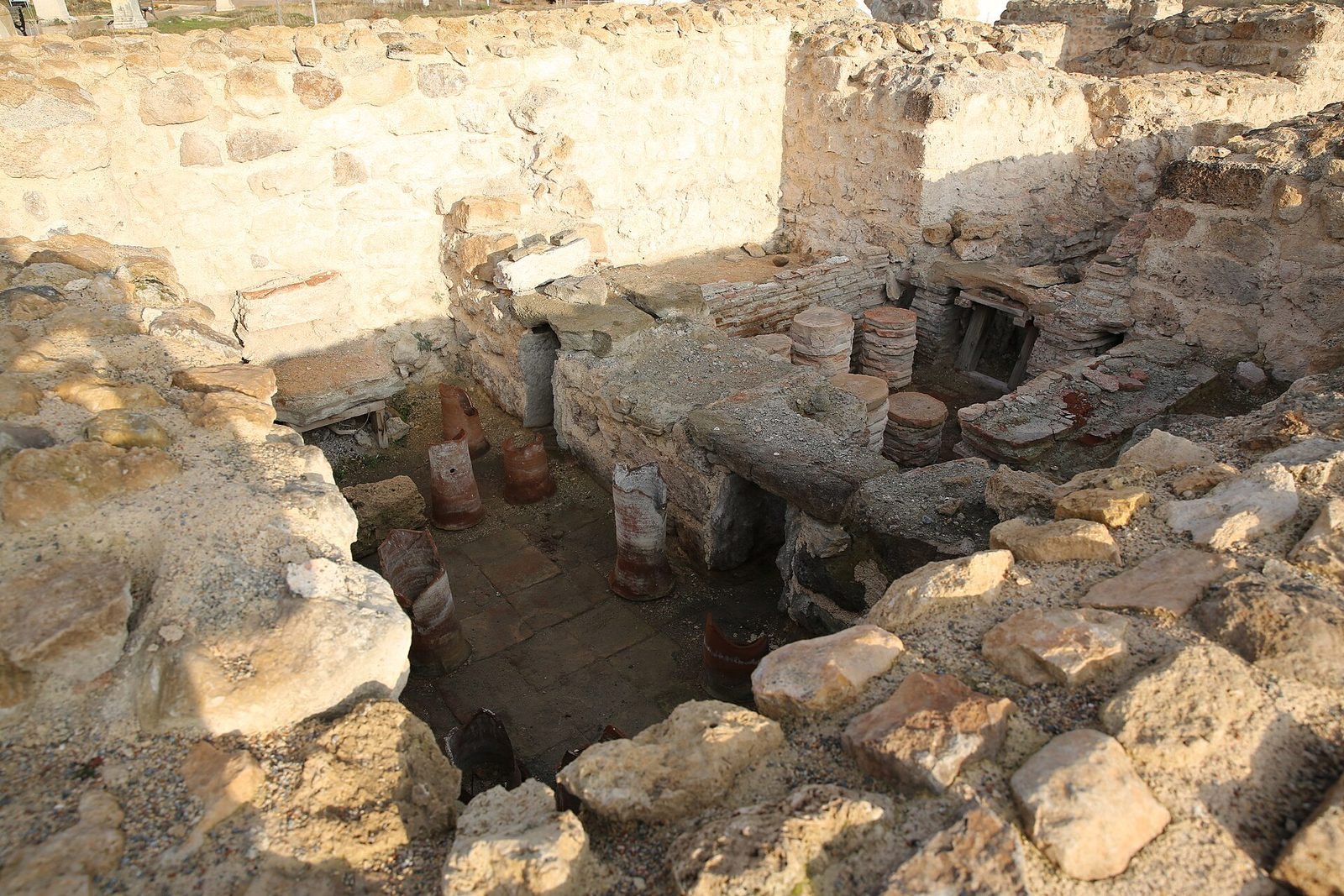
The identified structures include two baths, a theater, defensive walls and a defensive structure, rock-cut tombs, a vaulted and domed building, a monumental niche for worship, and a villa. Other monumental and religious buildings contribute to the range of building types across the site. Cisterns, tunnels, storage cellars, and wine cellars are also among the remains.
Churches and mosaics
Church buildings
Two churches are among the identified public buildings, alongside several other religious structures. One excavated church is more than 1,500 years old and is considered among the earliest known churches in Anatolia.
Church floor mosaics
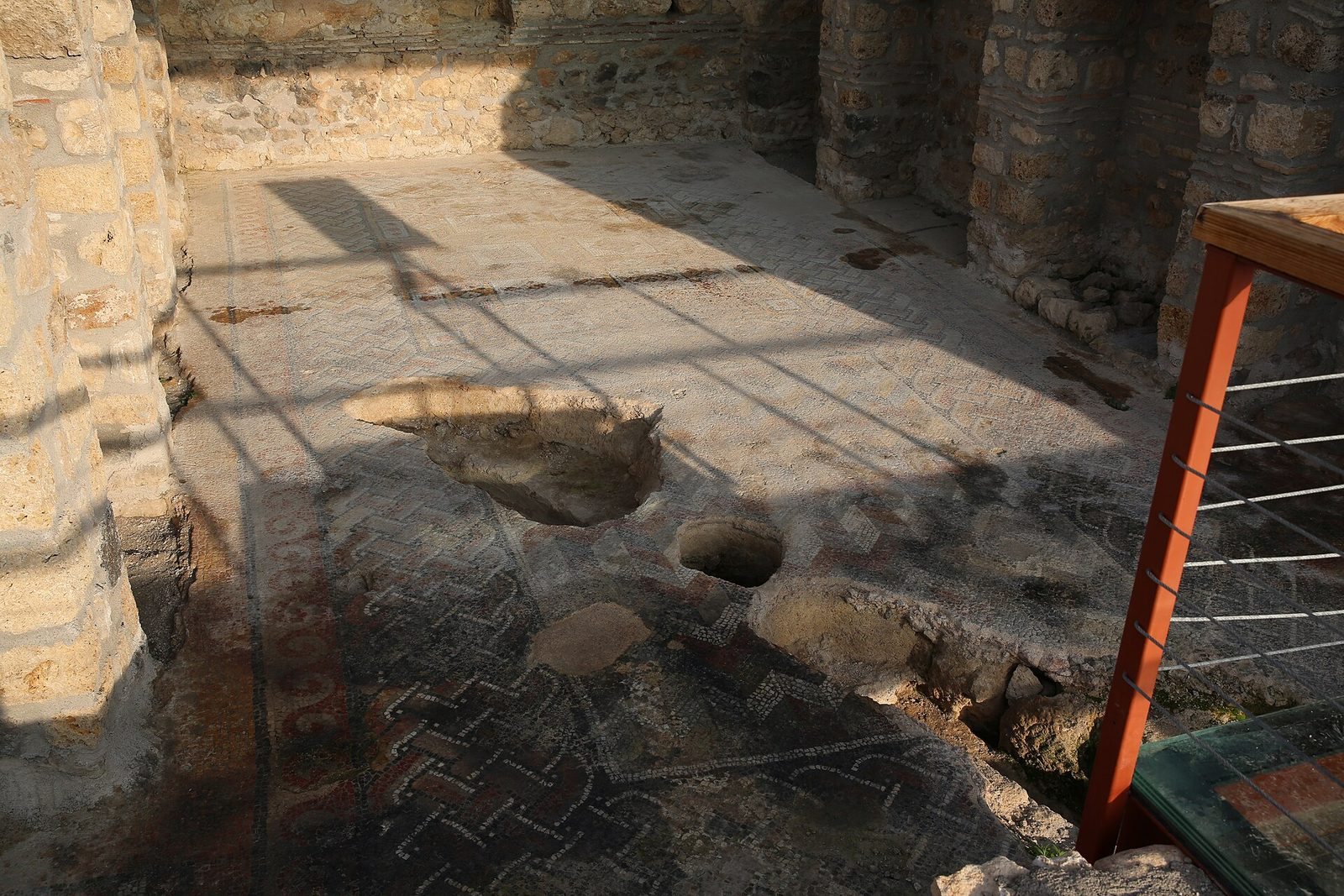
Mosaic floors in the churches depict the biblical rivers Gihon, Pishon, Tigris, and Euphrates. Other images include horses, elephants, griffins, a bull, a lion, and two peacocks. These mosaics have been compared with those of ancient Zeugma, a city in southeastern Asia Minor known for its mosaics.
Mosaics in the Roman fort
Mosaics found in a Roman fort in 2022 include multicolored peacocks and amphorae, large vessels used to store or transport goods, decorated with baskets of grapes.
Sculpture, inscriptions, and finds
Carved limestone slab
A limestone slab unearthed in 2019 is about 1,800 years old. It shows a woman, probably the Greek goddess Demeter, who was associated with agriculture and grain. She wears traditional clothing and a belt bearing a snake, and holds ears of wheat. The inscription names “Herakleides, son of Glaukos.”
Asklepios inscription
A three-line inscription refers to Asklepios, the Greek god associated with healing. It says that Ailos Deiotaros dedicated an offering to “Asklepios the Savior.” Identified in 2022, the inscription provided the first excavated evidence of an Asklepios cult in the Black Sea region.
Architectural fragments and coins
Marble columns and capitals, statues, and numerous coins have also been found at the site. Local residents say rain and floodwater sometimes uncover coins and carry them into a stream crossing the ancient city, where they are lost.