Gradishte: A Prehistoric Megalithic Sanctuary in Bulgaria
Site at a Glance
- Popularity
- Medium
- Country
- Bulgaria
- Primary era
- Stone Age
- Eras represented
- Stone Age, Classical
- Civilizations
- Roman
- Site type
- Religious
- Remains
- Sanctuary
On this page11 sections
History
Gradishte is a prehistoric sanctuary with large stone structures and ritual features near Dolno Dryanovo, in Garmen, Bulgaria. It is assigned to the Late Chalcolithic, part of the Copper Age when people used copper alongside stone tools, and its broad archaeological dating range is 4900 to 3800 BC. Archaeologist Krasimir Leshtakov places its construction about 7,000 years ago.
Late Chalcolithic origins and later use
The purpose of the stone constructions is uncertain. One interpretation regards them as burial mounds filled with stone, while another sees them as places for ritual offerings. Archaeologist Anelia Bozhkova interprets the sanctuary as having been reused by Thracians, ancient peoples of the Balkans. Excavations indicate human presence near the end of the fifth millennium BC and in the third and fourth centuries AD, during Late Antiquity, the final centuries of the ancient world and the transition toward the medieval period. Pottery and other finds also point to activity in the Iron Age.
A possible ancient route linking Thasos, a Greek island, with Pistiros, an ancient settlement near Vetren, has been proposed through the area. The Sanctuary of Dionysus below Mount Ostrets, above Velingrad, has also been associated with this suggested route.
Rediscovery and archaeological work
Polish archaeologist Mieczysław Domaradzki found the sanctuary during fieldwork in the late 1980s. Professor Todor Boyadzhiev recognized it again in 2000 and began archaeological investigations. After Boyadzhiev’s death, Anelia Bozhkova and Nadezhda Todorova led further work. Rescue excavations in 2008 and investigations in 2011 helped clarify the site’s chronology, including evidence of activity in the late fifth millennium BC and the third and fourth centuries AD.
Healing rites and protection
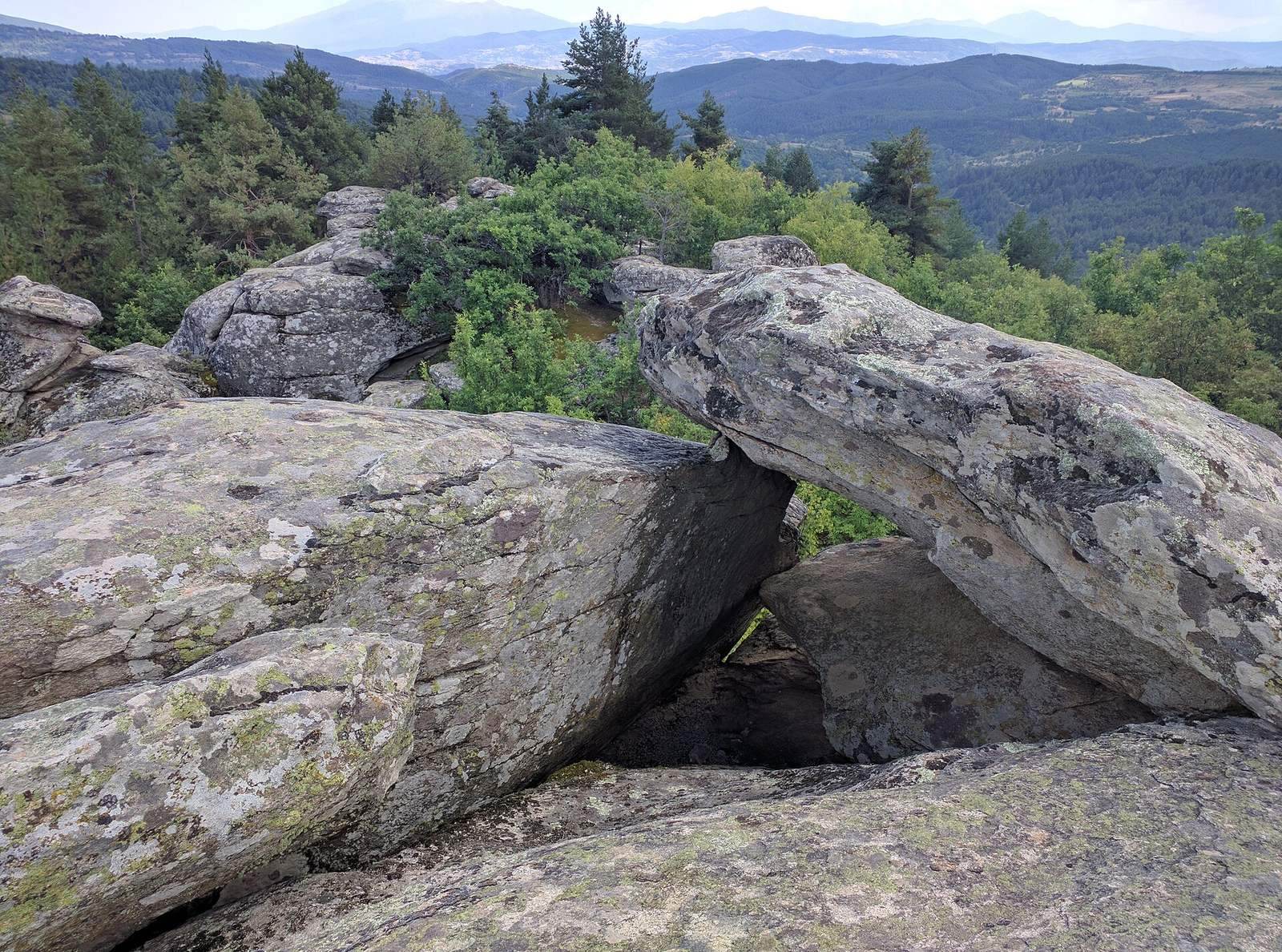
Local Bulgarian Muslims continued healing rites at the stone arch into the early 2000s. Before a ceremony, a healer assessed a patient’s needs with prayers and honey spread on square paper; people might also seek care from a doctor or a Christian or Muslim religious leader. At sunrise, the patient passed through the arch from east to west. They left an old garment and a red thread used to measure their height against the arch’s southern stone, and placed coins as an offering. The garment represented leaving illness behind and receiving health. The last healer known to perform the rite was a woman from Dolno Dryanovo. Similar practices took place elsewhere in Bulgaria during the Ottoman period, and related rites continue among Muslims and Christians in Bulgaria and North Macedonia. Vasil Markov has offered a speculative interpretation of the passage as a descent into the underworld followed by rebirth from Mother Earth.
Archaeological work included partial conservation of ancient masonry, and a permanent guard was assigned to protect the site from looting. From July 2008, Gradishte was recognized as a cultural monument under Bulgarian law.
Remains
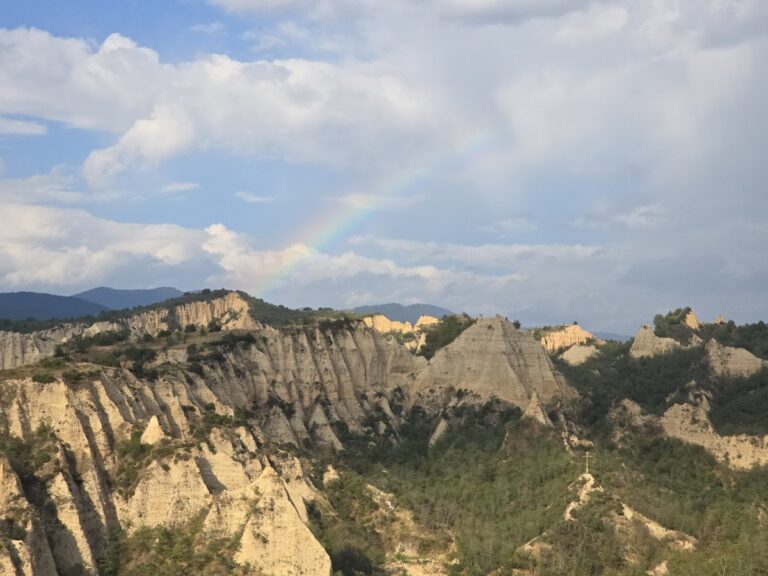
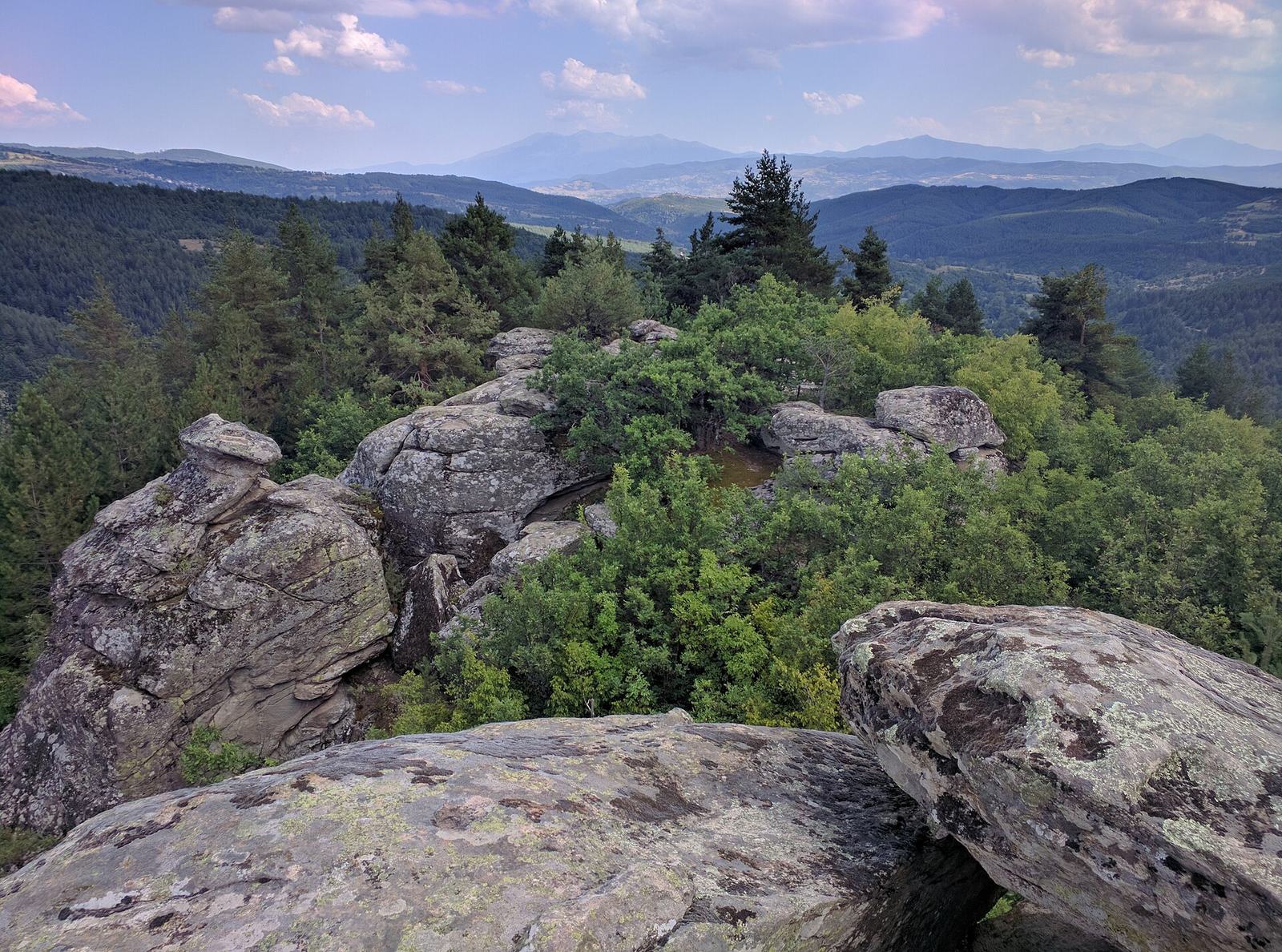
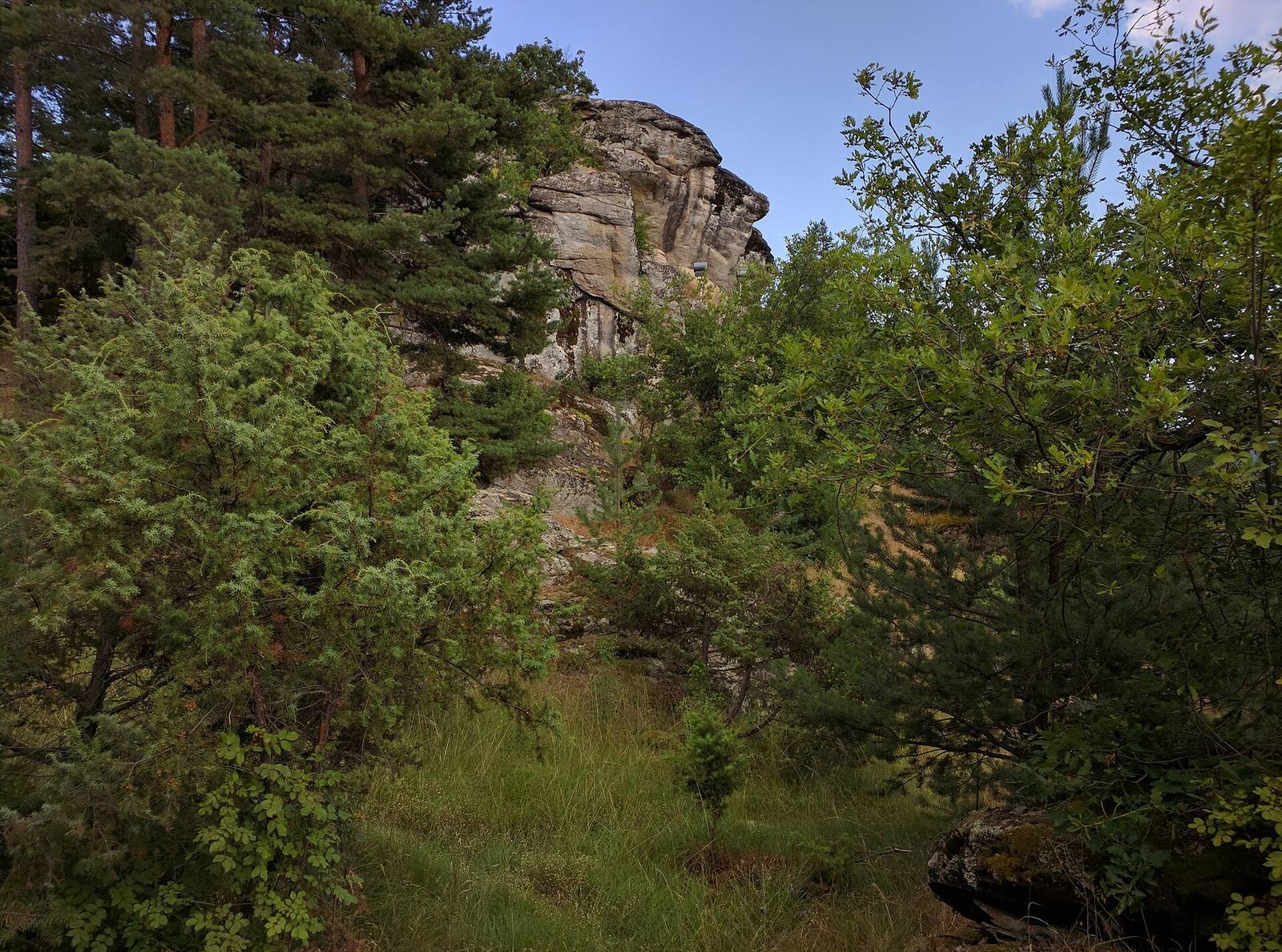
The complex occupies a rocky landscape of about 50 hectares, with the sanctuary covering roughly 20 hectares. Rock formations rise as high as 88 metres. The site includes dozens of stone constructions and human-like and animal-like forms, including shapes compared to amphibians and reptiles. Researchers consider some of the large blocks and boulders to have been further shaped by people. Several blocks resemble human heads when viewed from particular angles. An ensemble of such stone forms lies about five kilometres from Dolno Dryanovo.
The stone arch
Near the modern entrance, two upright blocks support a third stone laid across them. This arrangement resembles a dolmen, a structure made from upright stones supporting a capstone. The arch faces northeast, and its opening catches the sunrise. Its southern stone was used for offerings of coins and red thread during healing rites.
Rock hollows and alignments
Groups of circular hollows are cut into a rocky promontory that projects south. Each measures about 15 to 20 centimetres across and 10 to 15 centimetres deep. Other stone features follow east-west or north-south axes. Researchers Alexey Stoev, Penka Maglova, and Petar Stefanov interpret the arrangement and geometry of natural arches and three-stone structures as possibly encoding a solar calendar and supporting observations of daily and annual solar cycles.
Cave shelters and road remains
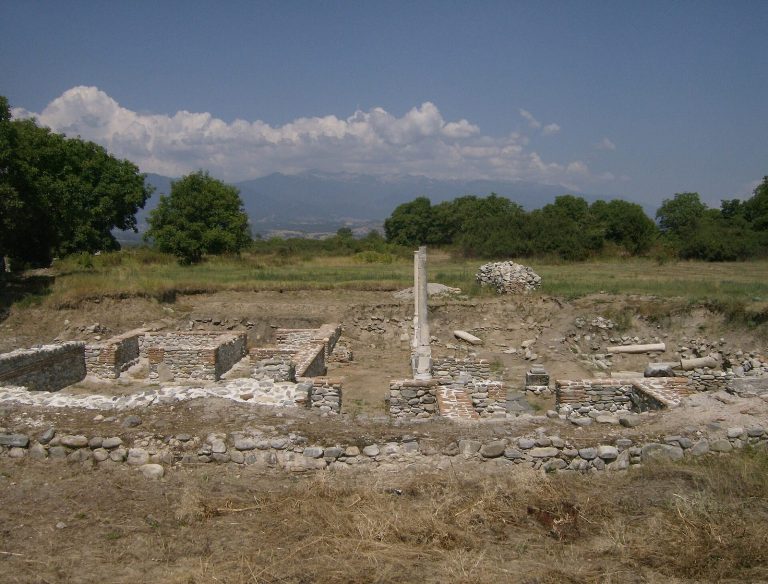
Two cave shelters lie within the sanctuary. At the foot of the Dabrash Ridge, remains of a Roman road survive. A separate monument north of Gradishte consists of monolithic stone blocks arranged in three groups, alongside traces of ritual activity.
Excavated deposits and finds
Late Chalcolithic pottery
Three natural cracks in the rock contain Late Chalcolithic deposits. Their pottery includes fragments of bowls, amphora-shaped vessels, pots, cups, and miniature vessels. The pieces share a consistent range of forms and have incised, punctured, impressed, or painted decoration. They are dated to the final Late Chalcolithic, around the beginning of the fourth millennium BC, or to the first half of the transition from the Chalcolithic to the Bronze Age.
Later occupation and decorated hearth
Layers of archaeological material measure between 0.50 and 1.50 metres thick. Excavations in 2008 covered 150 square metres. Finds assigned to the end of the Iron Age, a period marked by the widespread use of iron, include wheel-made and hand-built household pottery, roof tiles and other building ceramics, clay weights for a loom with upright threads, a clay spinning weight, and animal bones. The assemblage also includes pieces of a krater, a vessel for mixing wine and water, amphorae, or two-handled storage jars, and a fragmentary vessel of uncertain type. Pottery from the late Iron Age and Late Antiquity occurs in substantial quantities. Excavations also revealed a preserved clay hearth with geometric and plant-based decoration, along with traces of sacrificial hearths and circular ritual hollows.