Gracchurris: A Roman Colony in Spain
Site at a Glance
- Popularity
- Medium
- Country
- Spain
- Primary era
- Classical
- Eras represented
- Iron Age, Classical, Medieval
- Civilizations
- Celtiberian, Roman
- Site type
- Settlement
- Remains
- City
On this page13 sections
History
Gracchurris was a Roman city in present-day Alfaro, La Rioja, Spain, founded in 179 BCE by the Roman general Tiberius Sempronius Gracchus. Named in his honor, it was established as a colony, a settlement within Rome’s colonial system, to accommodate Romans and Indigenous people wounded in his campaign against the Celtiberians.
Ilurcis before Rome
People occupied the area from the late Bronze Age. Before Gracchurris was founded, a settlement called Ilurcis stood there. Its inhabitants have been identified variously as Celtiberian, Beronian, or Vasconian. The name Ilurcis has been interpreted as Basque-Iberian, with proposed meanings including a wooded valley or an area of scrub.
Celtiberian and Roman material found together supports the view that the two populations lived alongside one another during early Romanization. It also strengthens the possibility that Ilurcis formed the original core of Gracchurris.
Republican political alignments
Gracchurris was a loyal ally of Rome during the conquest, but later backed the popular faction led by Quintus Sertorius. Sertorius commanded a rival Roman power in Hispania during the civil conflicts shaped by Gaius Marius and Sulla, competing leaders of the late Republic. After Sertorius’s defeat, Gracchurris became part of Pompey’s network of clients in Hispania.
Regional loyalties were also divided. The Vascones supported Pompey, while Calagurris backed Sertorius. By this period, Ilurcis, previously associated with the Berones, was under Vascon control. Areas east of Calagurris, including territories linked to Cascantum and Gracchurris, were also associated with the Vascones.
Municipal status and imperial connections
By the early Empire, Gracchurris had become a municipium, a community with recognized municipal status. It belonged to the Roman province of Hispania Citerior Tarraconensis, in northeastern Hispania, and to the Caesaraugustan judicial-administrative district.
During the reign of the emperor Tiberius, successor to Augustus, the city issued coins. The Antonine Itinerary, a Roman list of routes and stations, places Gracchurris as a lodging stop between Barbariana and Balsione on the road from Caesaraugusta, modern Zaragoza, to Asturica Augusta, modern Astorga.
Remains
Settlement layout
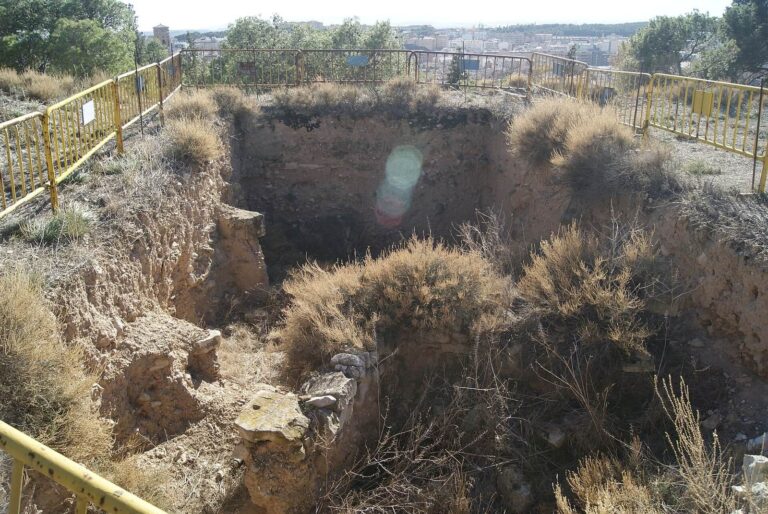
The archaeological remains occupy river terraces near the Alhama. The earlier settlement of Ilurcis lay in the Eras de la Cárcel area, while the Roman city extended across Eras de San Martín.
Roman buildings
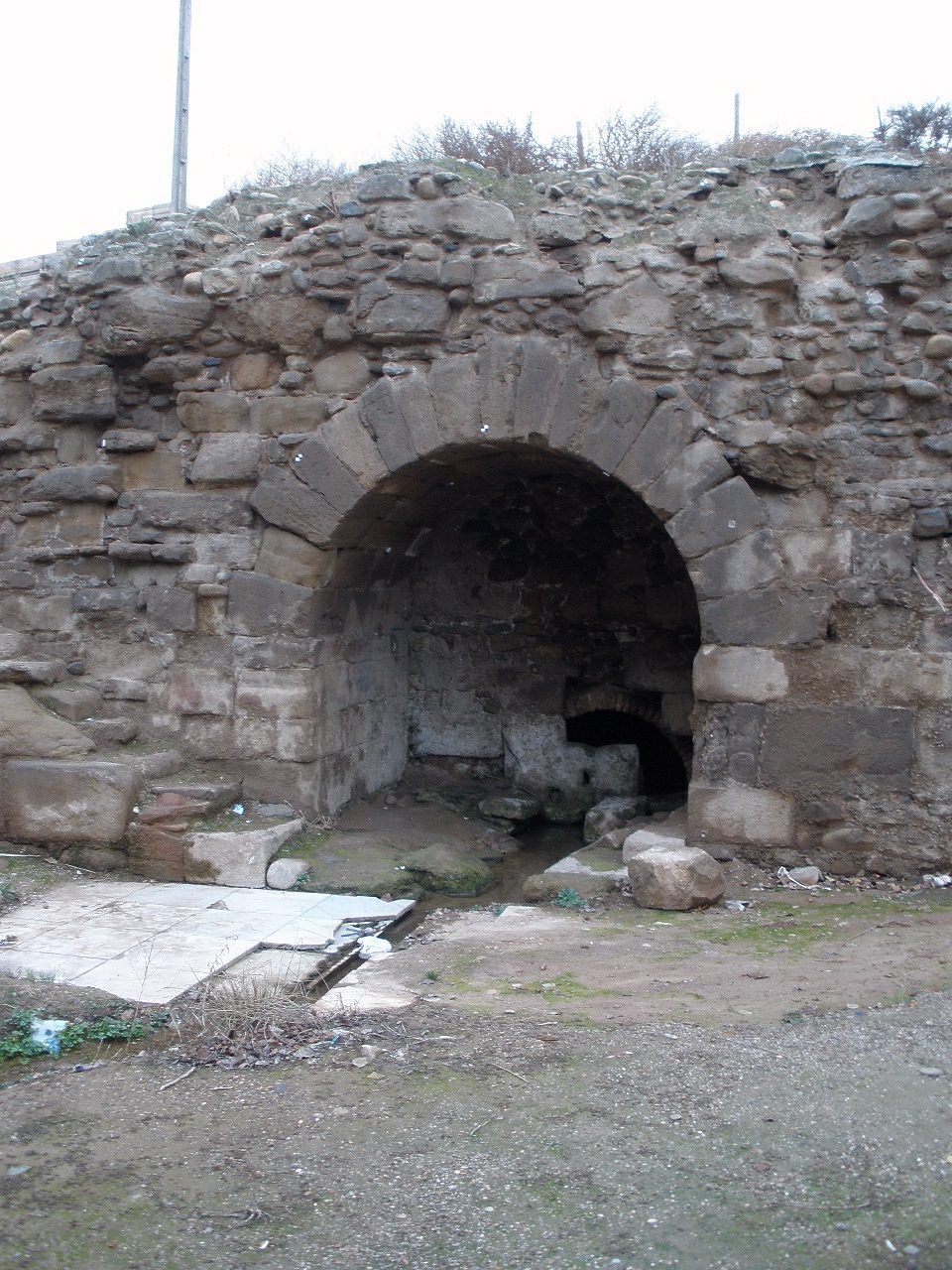
Nymphaeum
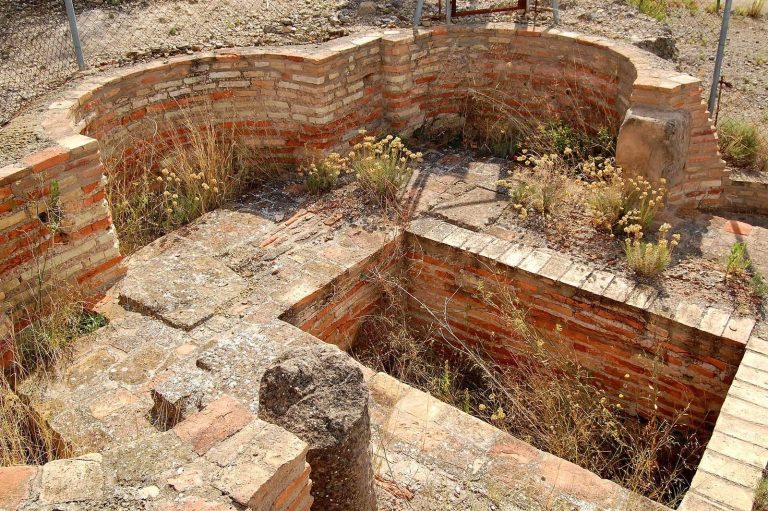
A first-century nymphaeum, a structure associated with a fountain, survives on the bank of the Alhama.
Domestic buildings
Excavations at Eras de San Martín have revealed early imperial homes with floors made from mortar mixed with crushed pottery and wall paintings from two phases. First-century decoration included gray lower-wall panels and red panels edged in black. Second-century paintings imitated colored marble and included painted columns, a style associated with higher-status homes in the middle Ebro valley.
Finds and later occupation
Coins and small finds
Bronze coins minted at Gracchurris under Tiberius include the as, a Roman coin, and the semis, worth half an as. Both show the emperor’s bust on the front. The as has a mitred bull on the back, while the semis bears a bull’s head. Other finds from the area include a small Celtiberian token and a scratched inscription on a utilitarian object.
Mosaic of Ursicinus
The Roman Mosaic of Ursicinus is a Christian memorial associated with the spread of Christianity in the area. It is now in the Madrid Archaeological Museum.
Medieval settlements
Physical remains of settlements dating to the ninth and tenth centuries have also been identified in the area.