Gooty Fort: A Chalukya Fortress in India
Site at a Glance
- Rating
- 4.2
- Popularity
- Medium
- Country
- India
- Primary era
- Medieval
- Eras represented
- Medieval, Early Modern
- Civilizations
- Chalukya, Maratha
- Site type
- Military
- Remains
- Fort
On this page13 sections
History
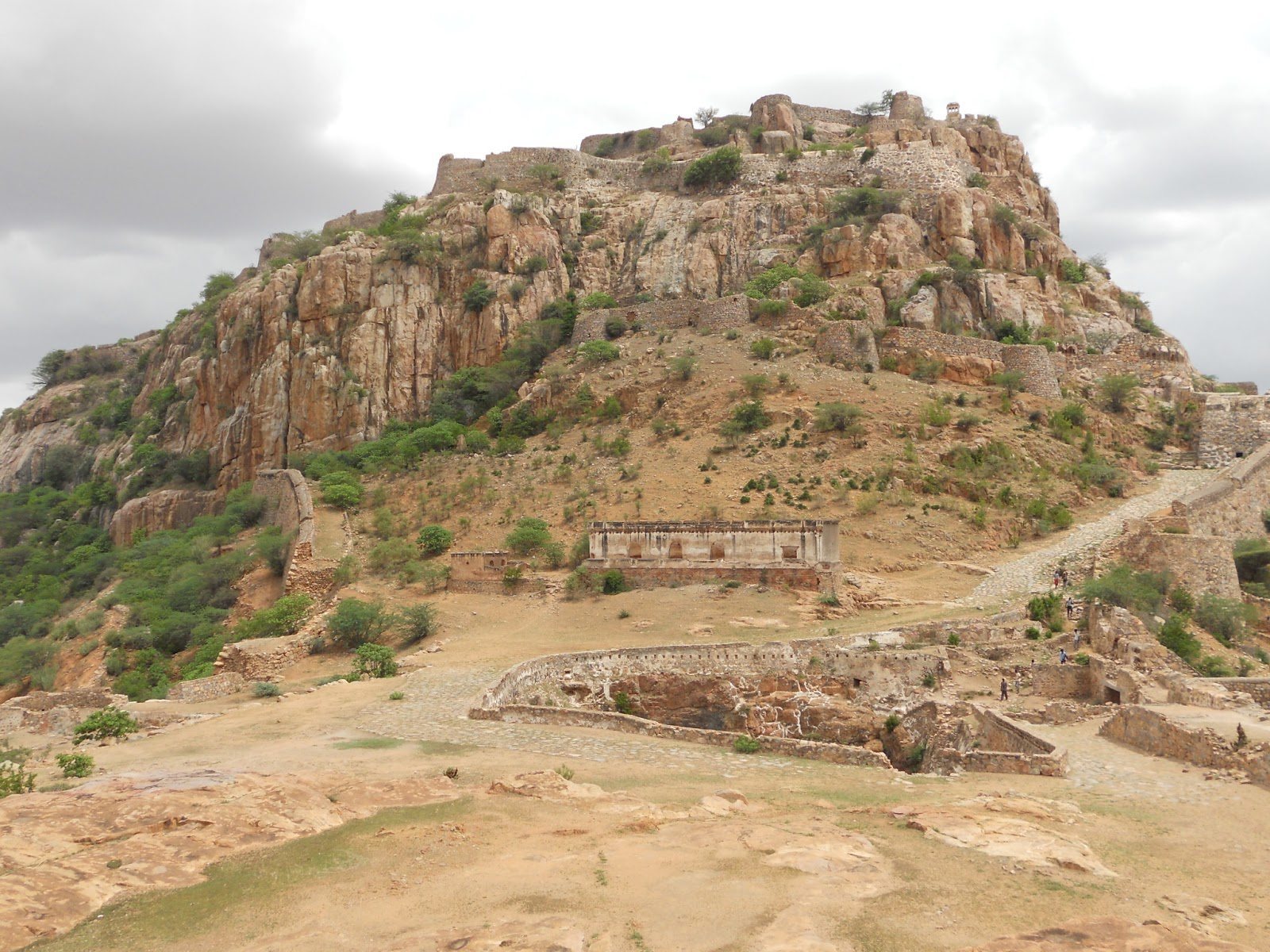
Gooty Fort is a ruined fortress at Gooty in Andhra Pradesh, India, whose earliest surviving structures belong to the late Chalukya period. The fort occupies a group of hills and is also known as Ravadurg and Gutti Kota. Gooty itself was formerly called Gutti and Gowthampuri.
Chalukya and Vijayanagara Rule
Eight badly damaged inscriptions on rocks near the Narasimha temple appear to date from the reign of Vikramaditya VI, a major ruler of the Western Chalukya dynasty, which controlled much of the Deccan during the eleventh and early twelfth centuries. Their dates fall around 1076 to 1126, and they are thought to identify Vikramaditya VI as the builder of the earliest fortifications and other structures at Gooty.
The fortress later came under the Vijayanagara Empire, a powerful south Indian state that ruled extensive parts of the Deccan and southern India from the fourteenth to the seventeenth century. During the reign of Venkata II, approximately from 1584 to 1614, Vijayanagara lost Gooty to the Qutb Shahi dynasty, which ruled the Golconda Sultanate in the Deccan.
Mughal and Maratha Control
Gooty appears to have passed to the Mughals after Aurangzeb conquered Golconda in 1687 and reduced the Qutb Shahi state to a Mughal province. The Marathas later took control of the region and captured the fort around 1746. Eight years afterward, the Maratha commander Raja Murarirao Ghorpade made Gooty his permanent residence. He repaired the fortress and commissioned stucco ornamentation for its small gateways.
In 1775, Hyder Ali, ruler of the Kingdom of Mysore from 1761 to 1782, attacked and besieged the fort. After two months, Murari Rao surrendered because the fortress had run out of water.
Company Administration and Protection
The fort later passed to the East India Company, probably around 1820. The company administrator Thomas Munro used some of its buildings as prisons. Munro, who served as governor of the Madras Presidency from 1820 to 1827, was buried in the cemetery at the foothill. Gooty Fort is now a centrally protected monument of national importance.
Remains
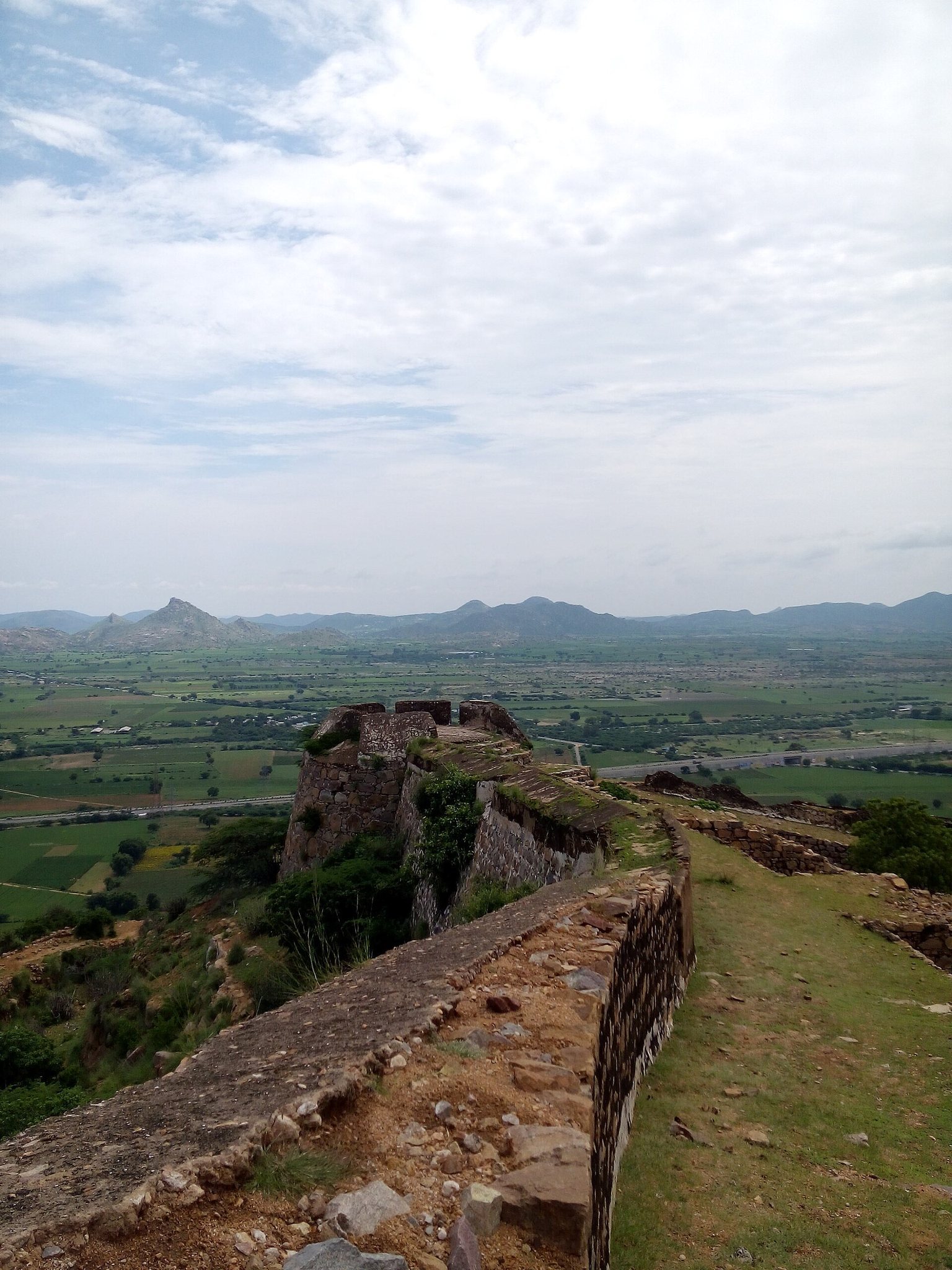
The fortress extends across several hills rising to approximately 500 to 680 metres above sea level. Lower spurs connect the hills, while the citadel occupies the westernmost hill and stands on the summit of the highest rock. Three recognizable rings of walls follow the underlying rock, creating a system of ramparts, gateways, bastions, and semicircular towers.
The Citadel and Summit
Walls and Entrance
The citadel has a single entrance known as Mar Gooty. Its fortifications follow the contours of the rock, and the lower defenses include ramparts linked by gateways and flanked by bastions. Semicircular towers form part of the surviving wall system.
Summit Buildings
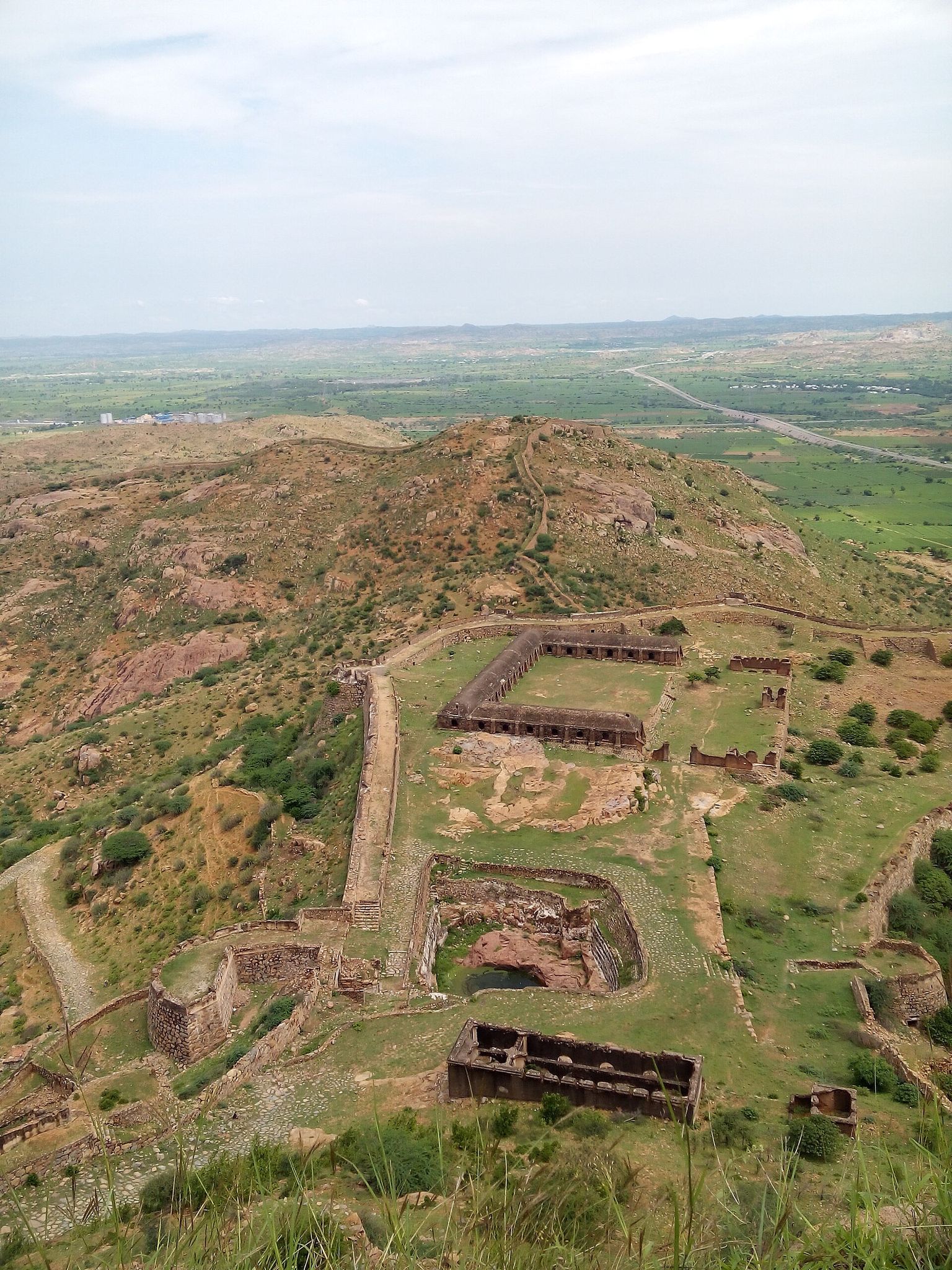
Two buildings on the summit are identified as a granary and a gunpowder magazine. A gunpowder magazine was used to store explosive propellant for firearms and artillery. The buildings form part of the ruined military complex on the citadel’s highest ground.
Narasimha Temple
The ruined Narasimha temple stands near the summit. Narasimha, the man-lion incarnation of the Hindu deity Vishnu, gives the temple its name. Eight severely damaged inscriptions were found on rocks nearby, linking the physical remains with the Chalukya phase of the fortress.
Waterworks and Military Stores
Reservoirs and Wells
Numerous reservoirs were excavated in clefts in the rock to collect seasonal rainwater. The fort contained 108 wells, a water system that was vital to maintaining the hilltop stronghold during periods of siege.
Granaries and Magazines
Other ruined buildings include granaries, storerooms, and magazines. Near the foot of the summit, a relatively well-preserved complex contains a gunpowder magazine and a grain store. The small gateways retain stucco ornamentation commissioned during Murarirao Ghorpade’s repairs.
Murari Rao’s Seat
A small pavilion called Murari Rao’s Seat stands on a cliff approximately 300 metres high above the town. It is traditionally associated with Murarirao Ghorpade, who is said to have played chess and used a swing there.