Gladstone’s Library: A Residential Library and National Memorial in Wales
Site at a Glance
- Country
- United Kingdom
- Primary era
- Modern
- Eras represented
- Modern
- Civilizations
- British
- Site type
- Civic
- Remains
- Library
On this page12 sections
History
Gladstone’s Library is a residential library in Hawarden, Flintshire, Wales, United Kingdom, founded in 1894 as a national memorial to William Ewart Gladstone. A British Liberal statesman who served four times as prime minister, Gladstone is commemorated here through a library designed to make study possible for a wide range of readers. It is Britain’s only Prime Ministerial Library and its largest residential library.
Gladstone’s plan and collection
Gladstone’s plan to share his books took shape in 1889. He wanted people with limited means, including gifted children and young people from Hawarden, to have access to them. He also hoped to create a place for humanities students from different Christian denominations, other religions, and no religion to study and reflect. His collection began with Sacred Dramas, given to him when he was young by the English writer Hannah More, and expanded during his education at Eton, an English independent school, and Christ Church, a college of the University of Oxford.
The library was founded in 1894, when an adjoining house began serving as a hostel for affordable accommodation and scholarly community. In 1895, aged 85, Gladstone gave the library £40,000 and much of his personal collection. With one of his daughters and his valet, he wheeled 32,000 books from Hawarden Castle, about three-quarters of a mile away, and arranged them according to his own system. In a diary entry that December, he estimated the cost of the work at £41,000 to £42,000, including maintenance through the end of the year.
A permanent library and memorial
After Gladstone died in 1898, a public appeal raised £9,000 for a permanent building to replace the temporary library. His widow, Catherine, broke ground in 1899, and the Duke of Westminster laid the foundation stone on behalf of the national memorial committee. The permanent library opened on 14 October 1902, inaugurated by the Earl Spencer as a memorial to Gladstone.
The Gladstone family funded a residential wing. Work began in 1903, its first resident arrived on 29 June 1906, and it was officially opened on 3 January 1908. The library has Grade I listed status, the highest listed-building category in England and Wales, used for buildings of exceptional architectural or historic interest. Until 2010, it was known as St Deiniol’s Library, named for the Welsh Christian saint who is patron of Hawarden’s parish church.
Remains
The complex brings together library and residential accommodation, with spaces for reading, worship, meetings, and overnight stays. Its physical development includes the original study rooms and a permanent building designed for library use.
Buildings and accommodation
First library rooms
The library’s first accommodation, begun in 1889, comprised two large iron rooms lined with felt. Six or seven alcoves within them could be used as study spaces.
Permanent library
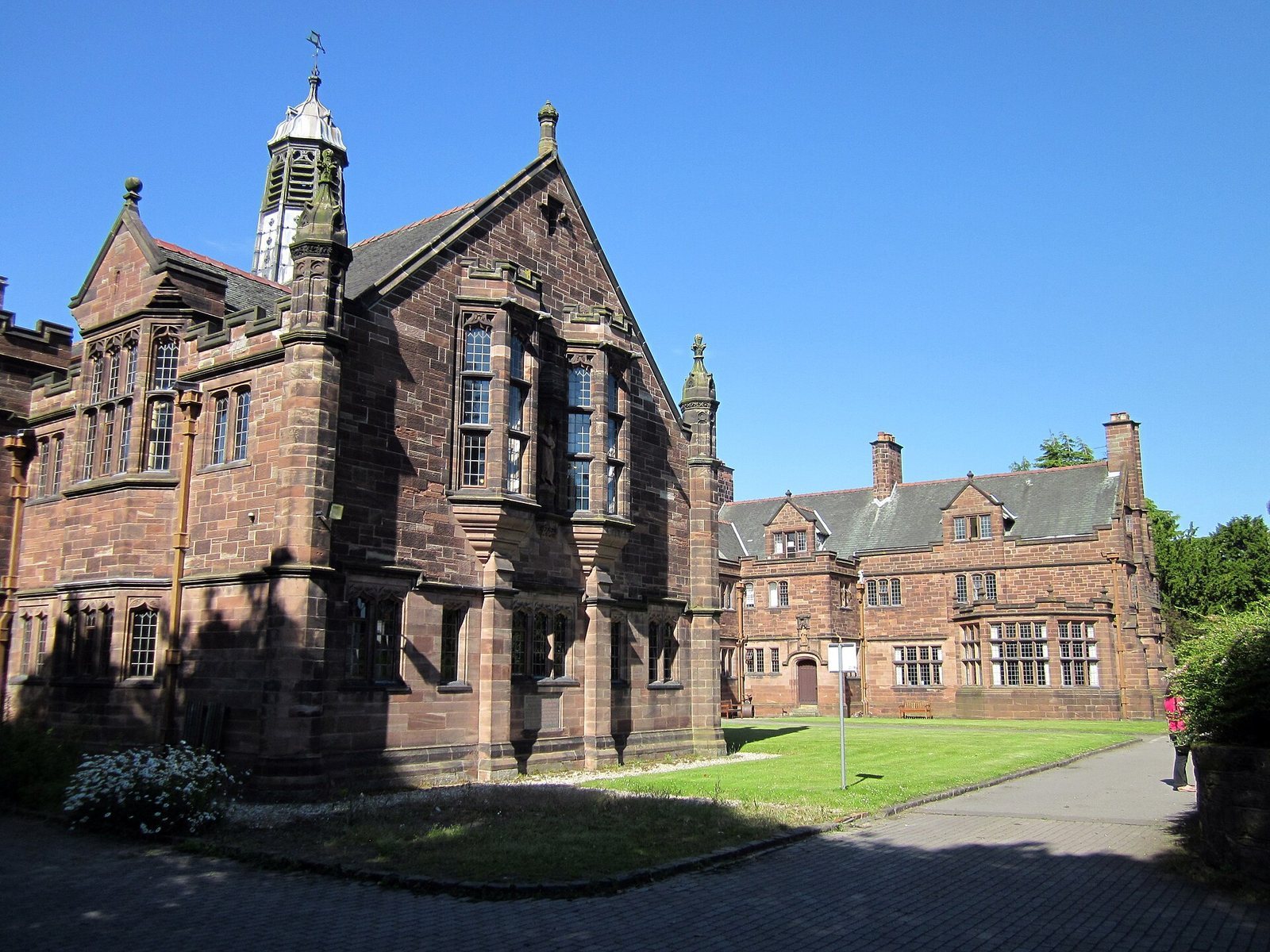
British architect John Douglas designed the permanent library building. The complex includes historical reading rooms, a chapel, and conference rooms.
Residential facilities
The residential wing includes 26 bedrooms for overnight guests. Other shared spaces in the complex include a guest lounge, a café, and a restaurant called Food For Thought.
Books and archives
The printed holdings number about 250,000 items, while the library also preserves a substantial family archive.
Foundation Collection
The Foundation Collection contains 20,000 volumes that belonged to Gladstone. Many bear his annotations.
Circulating collection
The circulating collection, available for lending, contains more than 150,000 books, pamphlets, and journals.
Glynne-Gladstone Archive
The Glynne-Gladstone Archive holds personal, family, business, and estate correspondence and papers belonging to the Glynne and Gladstone families. Its manuscript holdings amount to about 250,000 items and include extensive correspondence by Gladstone.