Giant’s Ring: A Neolithic Henge in County Down
Site at a Glance
- Rating
- 4.5
- Popularity
- Medium
- Country
- United Kingdom
- Primary era
- Stone Age
- Eras represented
- Stone Age, Modern
- Civilizations
- British
- Site type
- Religious
- Remains
- Sanctuary
On this page11 sections
History
The Giant’s Ring is a Neolithic henge, a circular prehistoric earthwork enclosure, at Ballynahatty in County Down, United Kingdom. It is generally dated to around 2700 BC, although its precise chronology is uncertain. The Neolithic was the later Stone Age, when farming communities used stone tools and built monuments.
Prehistoric development
Two timber enclosures, Ballynahatty 5 and 6, were built shortly after 3000 BC. The Ring’s earthwork may have replaced or supplemented them, and is generally considered later than the stone tomb already at the site. Pottery sherds indicate that the area was used for at least several hundred years, probably for important ceremonies. A ford across the nearby River Lagan had been used since at least the Stone Age.
The Ring’s original purpose is unknown, and its role may have changed over time. It has been interpreted as a possible place for ceremonial gatherings or as a memorial to the dead. Irish archaeologist Michael J. O’Kelly argued that it reflected a Neolithic religion centered on the dead, while other monuments built from large stones may have expressed beliefs focused on the sun.
Later uses and protection
The site appears to have served public purposes in different periods, including horse racing in the 18th century. In the 19th century, local landowner Arthur Hill-Trevor, 3rd Viscount Dungannon, a peerage rank below an earl, arranged for a protective wall around the henge.
In the early 1990s, archaeologist Barrie Hartwell of Queen’s University Belfast excavated a ritual site beside the henge. He also published a detailed study of the monument, its excavations, and possible uses of the wider Ballynahatty area. The Giant’s Ring is protected as a State Care Historic Monument, a historic or archaeological site maintained and protected by the state, and as a Site of Special Scientific Interest, an area designated for scientific importance.
Remains
Enclosure and tomb
Earthwork enclosure
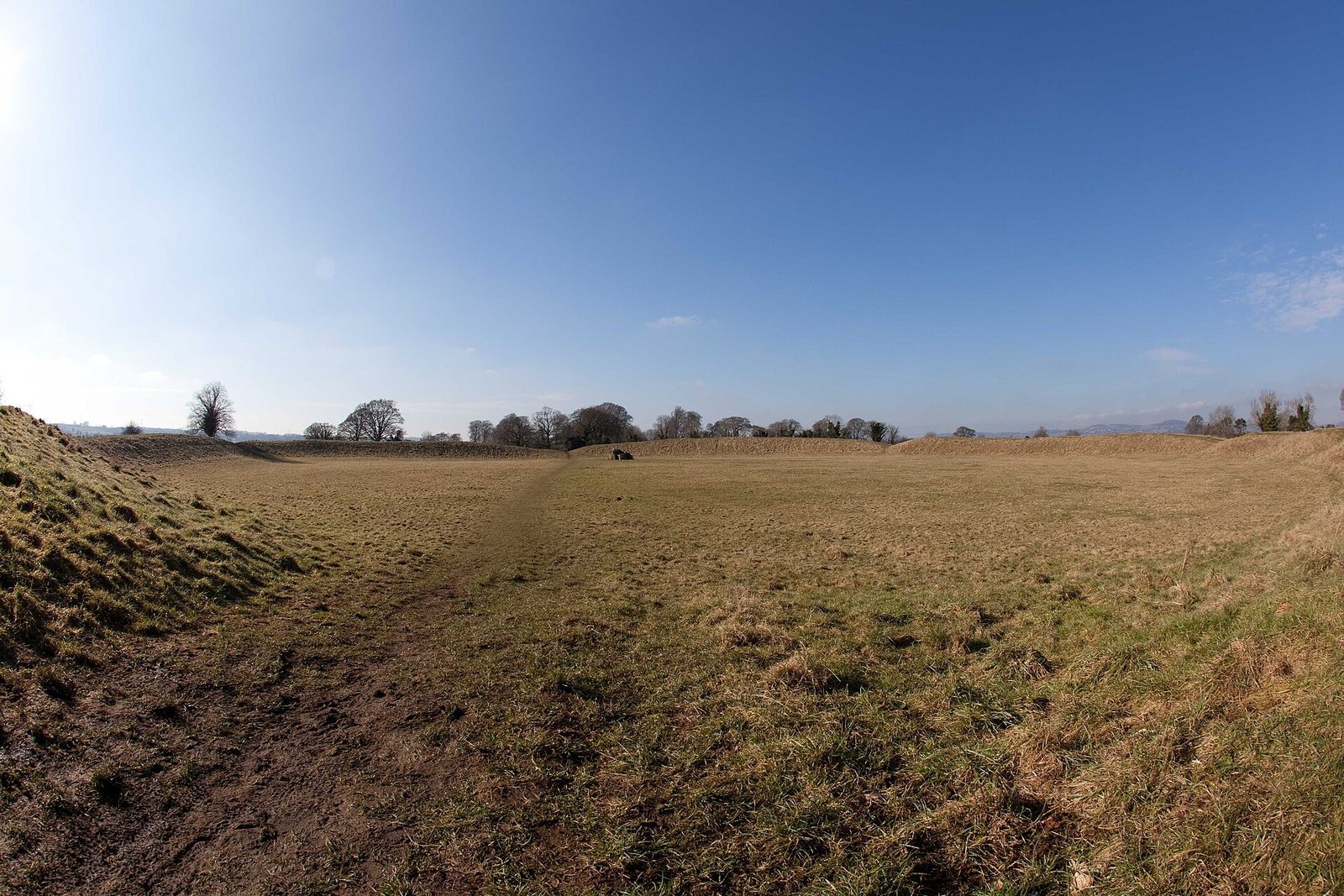
The nearly circular enclosure occupies the southeastern corner of a sandy plateau covering about 100 hectares. It measures about 180 m across and covers 2.8 hectares. The earthen bank rises approximately 3.5 to 3.6 m, with a ditch running along its inner side. Five irregularly spaced gaps interrupt the bank, though their original number is uncertain. Aerial photographs also show three ring-shaped features between the bank and the enclosure’s centre; these may mark where large wooden posts once stood.
Stone tomb
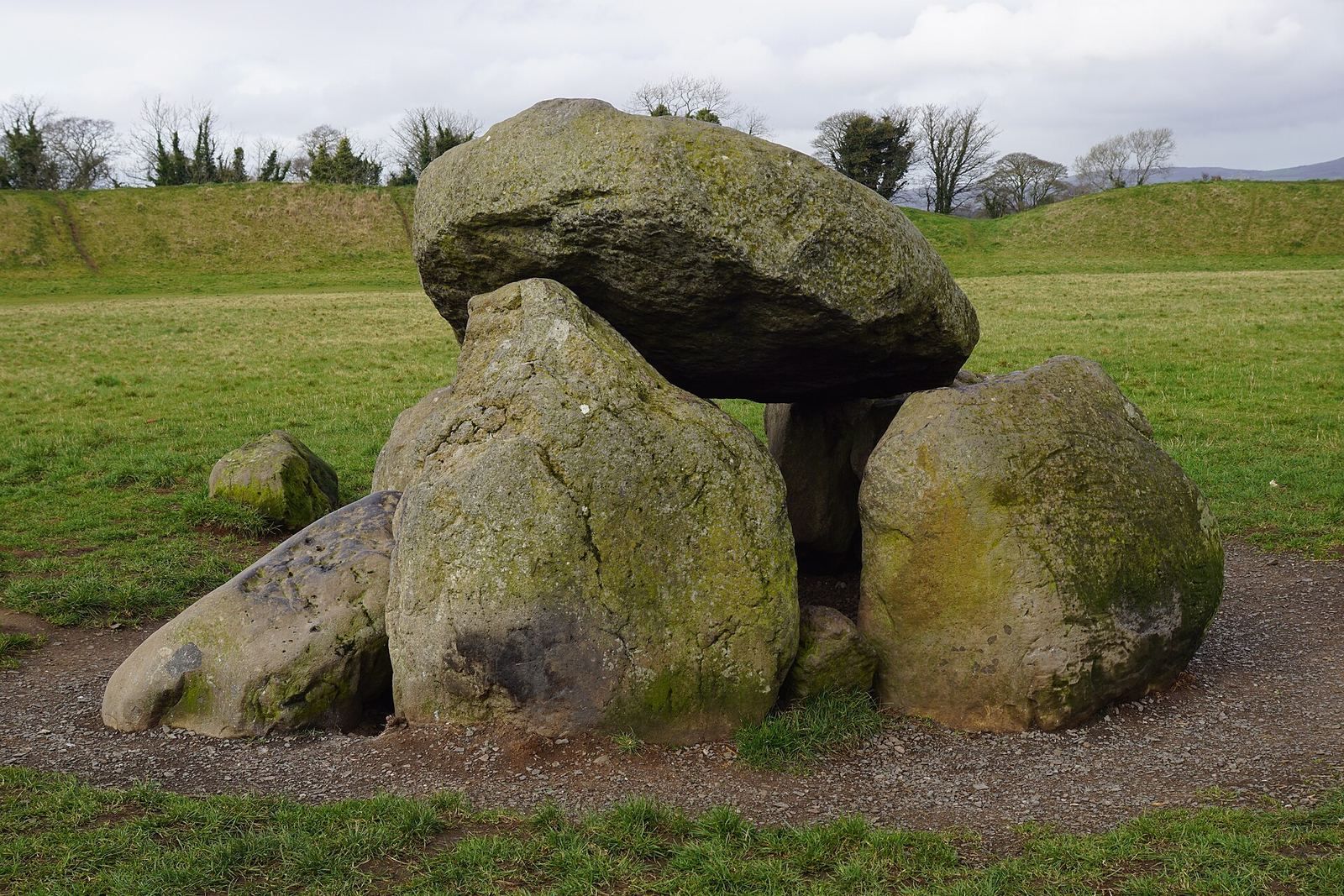
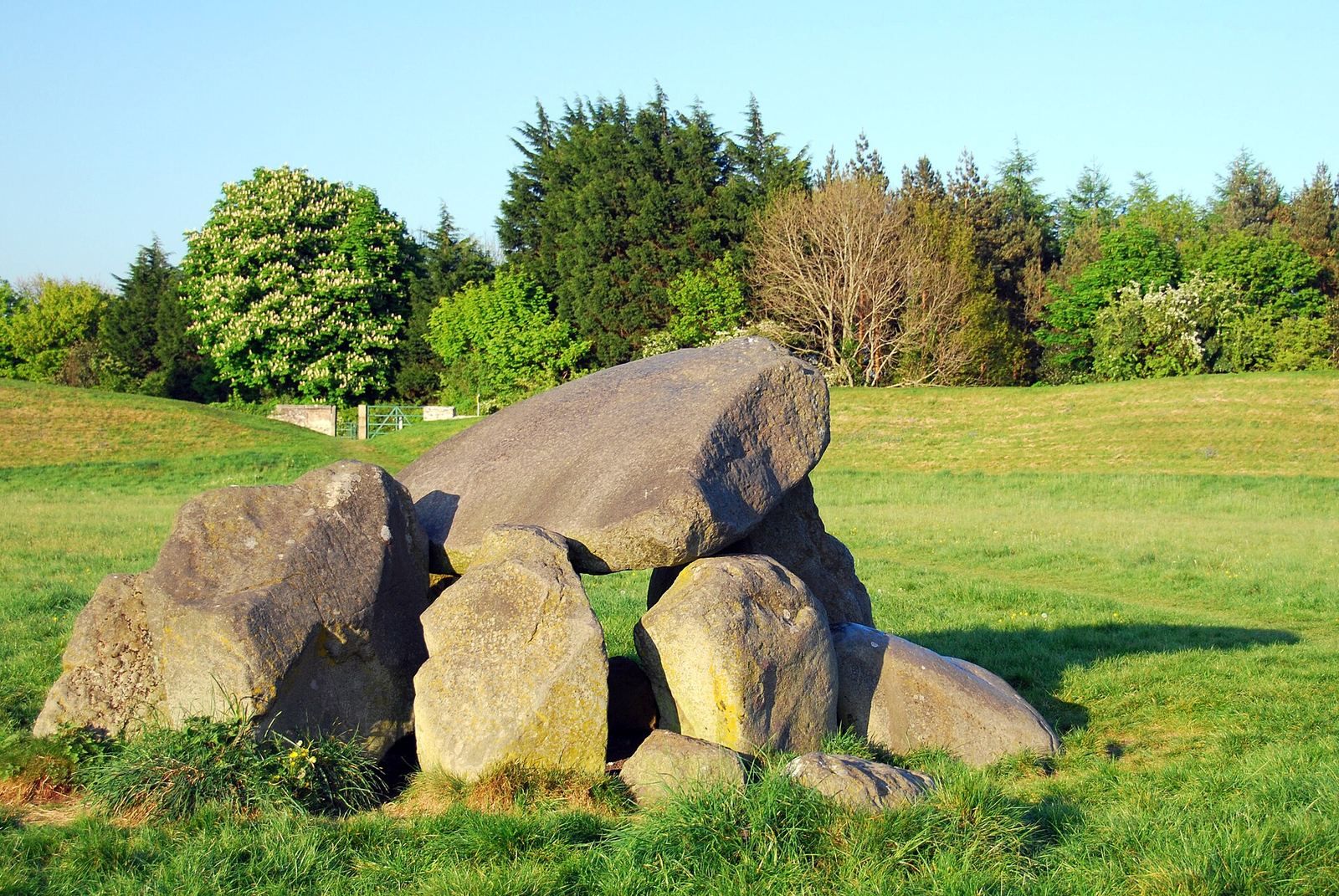
East of the enclosure’s centre stands a small stone tomb, probably the remains of a simple passage tomb. A passage tomb is a stone burial monument whose chamber is reached through a passage. Five upright stones support a large covering stone, called a capstone; the tomb may originally have had two. Its entrance faces west, and a mound of earth and stones once covered the structure.
Wider prehistoric landscape
Timber enclosures
Ballynahatty 5 and 6 stand at the edge of a ridge from which the Ring can be seen. One enclosure is rectangular, about 100 m by 70 m, while the other is circular and about 16 m across. Both had double palisades, meaning two parallel fences of upright posts.
Associated features
A low wall about 5 m wide runs east to west less than 100 m north of the henge. A large boulder stands at its western end. At least ten graves have been found in the surrounding area. Aerial evidence suggests that the ritual landscape extended beyond the enclosure and may have included a stone circle, perhaps dating to the late Neolithic or early Bronze Age. Farmers damaged it in the 19th century while removing features that obstructed cultivation.
Protective wall and inscriptions
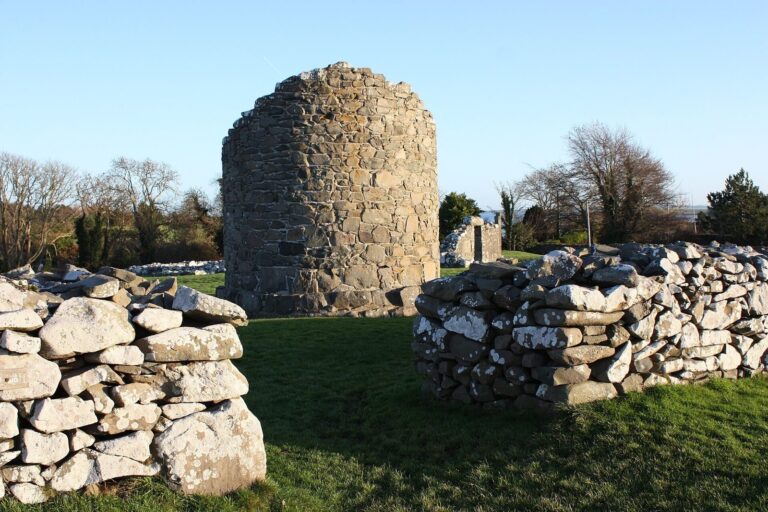
The wall around the site carries plaques on both sides. An exterior inscription dates its construction to 1841 and records Hill-Trevor’s recommendation that his successors care for the monument. An interior plaque commemorates Sophia, Viscountess Dungannon, a title for a woman who held or was married to a viscount, and her visit on 4 April 1856, when nearby tenants welcomed her warmly. A stone tablet concerning Hill-Trevor’s interest in the site was carved around 1919 by Belfast stone-carver Charles A. Thompson.