Gestelnburg: A Medieval Hill Castle in Switzerland
Site at a Glance
- Rating
- 4.8
- Popularity
- Very Low
- Country
- Switzerland
- Primary era
- Medieval
- Eras represented
- Medieval
- Civilizations
- Holy Roman Empire
- Site type
- Military
- Remains
- Castle
On this page10 sections
History
Gestelnburg is a medieval hill castle in Switzerland, above Niedergesteln in Valais. Probably built in the twelfth century by the Barons de la Tour, it became the seat of one of the most powerful feudal families in late-medieval Valais and was already standing in family possession by 1235.
The Barons de la Tour
The castle was also known as Châtillon and as the Château des de la Tour-Châtillon. During the family’s rule, the settlement below it was called Bas-Châtillion, a name associated with the later name Niedergesteln. The Barons de la Tour probably descended from the Barons de la Tour du Pin of Dauphiné and established themselves in Valais during the twelfth century. Their possessions also extended into Chablais, the Bernese Oberland, and Fribourg.
The family probably built Gestelnburg in alliance with local knights. Amédée de la Tour, a member of the family, became bishop of Sion. This combination of territorial holdings, noble alliances, and an ecclesiastical connection placed the castle within the political network of medieval Valais.
War with the Bishop of Sion
During the second half of the fourteenth century, the Barons de la Tour entered a series of wars with the Bishop of Sion and other regional feudal powers. The principal opponents were Bishop Guichard Tavelli and Antoine de la Tour. In 1362, Antoine attacked the Tavelli family stronghold at Granges. Episcopal troops then plundered many possessions belonging to the de la Tour family.
Upper Valais forces destroyed Niedergesteln and unsuccessfully besieged Gestelnburg. Antoine appealed to Amadeus VII, Count of Savoy, who invaded Valais with an army. In 1375, mercenaries serving Antoine murdered Bishop Guichard Tavelli at nearby Seta Castle. Upper Valais forces later defeated Antoine’s army near Saint-Léonard, seriously wounded him, and drove him into exile in Savoy. The de la Tour family never recovered from this defeat.
Destruction and restoration
Upper Valais forces captured Gestelnburg in 1384 and destroyed the castle. Antoine de la Tour, also known as Anton von Turn, is represented by one of the wooden sculptures now installed at the site.
In 1984, six centuries after the destruction, the Pro Castellione Foundation began archaeological excavations and restoration work at the ruins. The work was completed in 1993 and improved access to the surviving remains. The foundation also installed life-size wooden sculptures representing members of the Barons de la Tour. Gestelnburg is designated a Swiss cultural property of national importance.
Remains
Fortified ridge
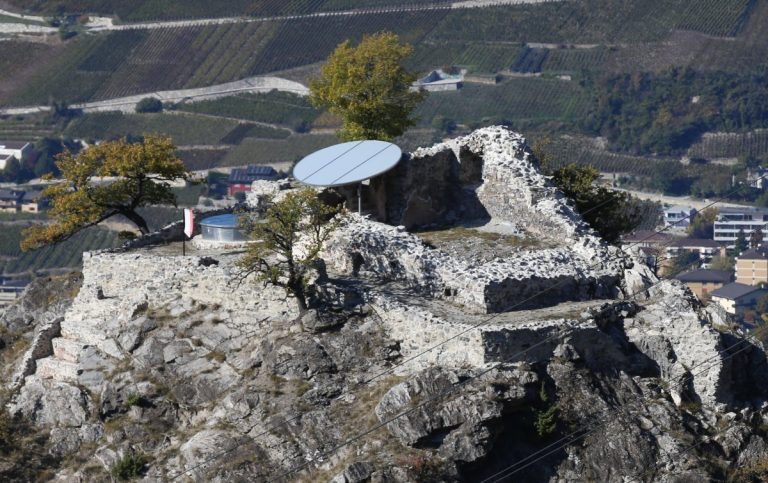
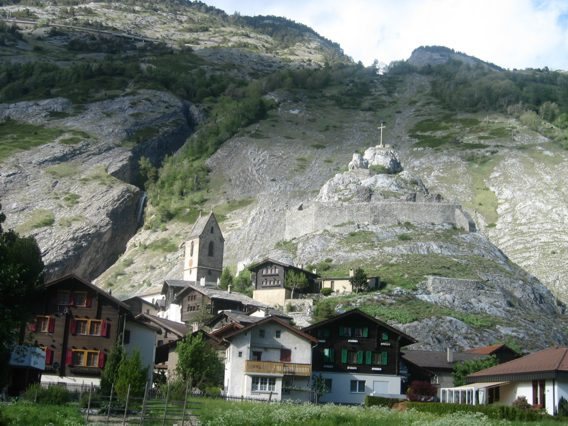
The ruins occupy the rocky Feschti ridge, about 100 metres above Niedergesteln at an elevation of approximately 715 metres. Gestelnburg was a rock castle built in stone masonry, and its surviving walls form the remains of a complex arranged along the ridge.
Lower fortifications
The lower part of the site contains remains of the lowest defensive walls, a water cistern, and auxiliary buildings used for service functions. These features formed the base of the castle complex below the principal building.
Principal castle building
Higher on the ridge stood the main castle building. Its floor plan measured about 40 by 13 metres and occupied the full width of the rocky crest. Parts of its walls survive, with masonry reaching up to 3 metres in thickness.
Moats and round tower
An uphill moat protected the main building from higher ground and hindered movement toward the uppermost part of the castle. The upper section was dominated by a round tower, which had additional walls and another moat on its uphill side. Only portions of the tower walls remain visible, and a wooden cross now stands at the tower’s location. Together, the massive walls, elevated position, and defensive ditches created a complex capable of resisting sieges.
Feschtiloch cave and archaeological finds
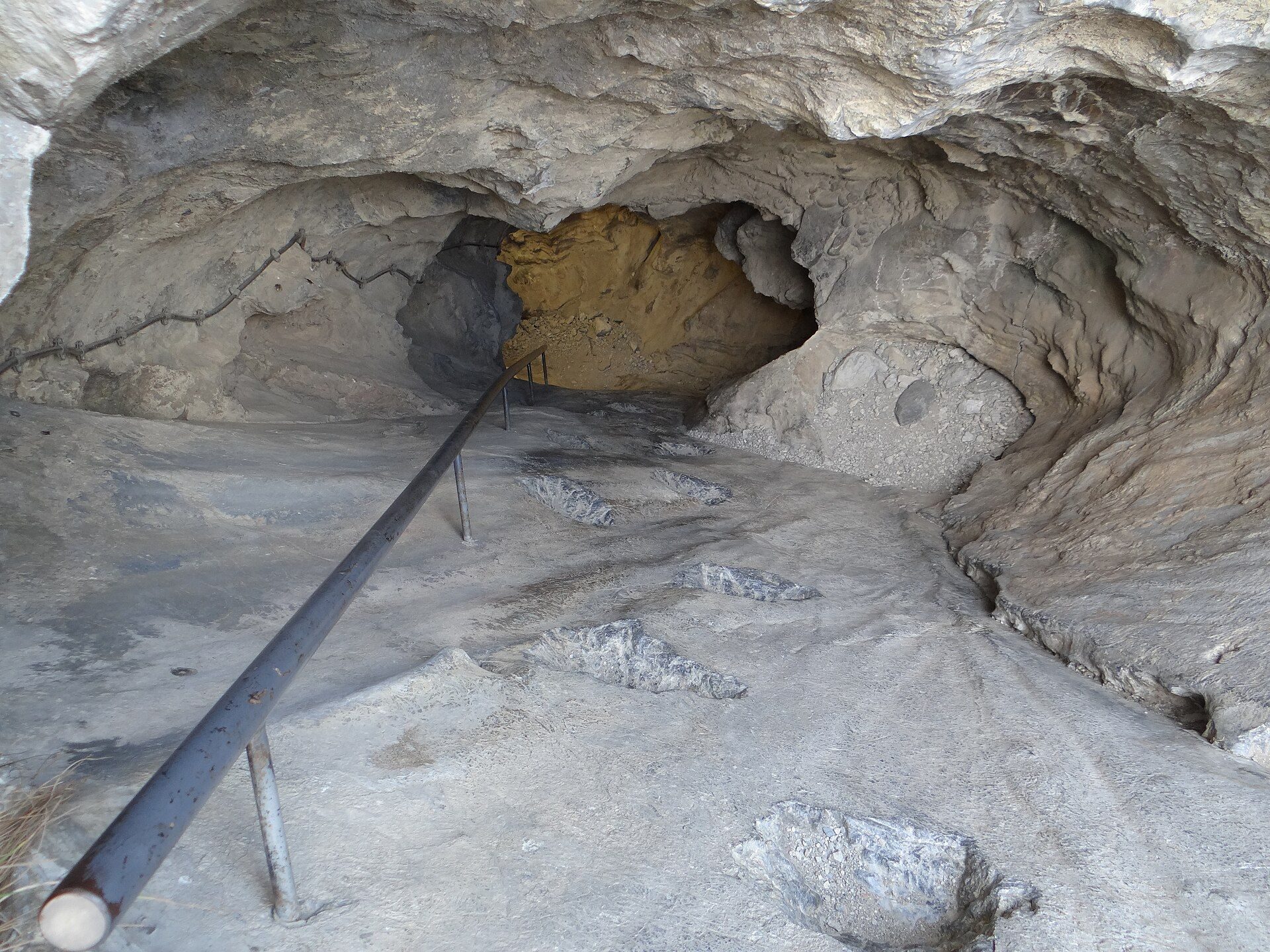
The Feschtiloch, a cave beneath or behind the fortress, formed during the last Ice Age. Its name probably derives from the German word for “fortress,” while Feschtiloch means “the hole under the fortress.” Local tradition describes three passages within the cave. One was said to contain three cauldrons filled with money, guarded by a poisonous snake, a toad, and a lion. According to the legend, the money could be taken only on Christmas Eve during the consecration in Mass, after each guardian had been kissed. The cauldrons were believed to appear only at that moment and therefore to remain concealed in the cave.
Excavations recovered numerous fragments of a tiled stove. Their relief decoration includes patterns, flowers, animals, and human figures. The style of these representations places the stove’s origin in the first half of the fourteenth century. The fragments are preserved at the Valais History Museum in Sion.