Fort Zeelandia: A Dutch Colonial Fort in Guyana
Site at a Glance
- Rating
- 4.5
- Popularity
- Very Low
- Country
- Guyana
- Primary era
- Early Modern
- External website
- Open
- Eras represented
- Early Modern
- Civilizations
- Dutch
- Site type
- Military
- Remains
- Fort
On this page9 sections
History
Fort Zeelandia is a former Dutch fort on Fort Island in Guyana, built in the eighteenth century to defend the mouth of the Essequibo River, protect Dutch planters, and safeguard the interests of the Dutch West India Company, a chartered trading and colonial company. Its brick replacement was constructed between 1740 and 1749, after an earlier wooden fortification had deteriorated.
The First Fortification
As Dutch settlers moved onto the fertile banks of the Essequibo, the colony’s commanders recommended moving its administrative centre. In 1726, the engineer Leslorant arrived from the Netherlands to build a wooden redoubt, a small fortified defensive enclosure, and a strong palisade at the northern point of Flag Island.
The wooden structure quickly decayed. After inspecting it in August 1738, Laurens Storm van ’s Gravesande, secretary to Commander Gleskerk, proposed replacing it with a brick fort. Fort Zeelandia replaced Fort Kyk-over-Al as the capital of Essequibo in 1739. Fort Kyk-over-Al, the earlier Dutch fort and administrative centre, was abandoned in 1748 when the capital moved to Fort Island.
Construction and Colonial Administration
Work on the brick fort began in 1740, and the main structure was finished in 1743. Shortages of building materials and labour delayed completion of the wider complex until 1749. Storm van ’s Gravesande submitted the lozenge-shaped design. The completed fort was named for Zeeland, a county in the Netherlands from which many of the original settlers came.
Fort Zeelandia’s successive colonial associations included the Dutch Republic from 1726 to 1795, the Batavian Republic from 1795 to 1806, the Kingdom of Holland from 1806 to 1810, the First French Empire from 1810 to 1813, and the Sovereign Principality of the United Netherlands from 1813 to 1815.
War, Occupation, and Decline
During the Fourth Anglo-Dutch War, fought between Britain and the Dutch Republic from 1780 to 1784, the fort was already considered unfit for effective use by 1781. When about six British privateers arrived in late February, Captain Severyn was ordered to fire a blank shot, then a formal shot, and surrender if they continued toward the colony. The privateers captured 16 Dutch vessels and departed.
Several days later, HMS Barbuda and HMS Surprise, sent by the British naval commander Admiral Lord Rodney, appeared at Demerara and Essequibo and accepted the fort’s surrender. French forces occupied the island the following year, while the Dutch regained control two years later. From 1796, Fort Zeelandia entered a prolonged decline as administrative attention shifted to the colony of Demerara.
Fort Zeelandia and the adjacent Court of Policy Building were added to UNESCO’s Tentative List in the Cultural category on 15 November 1995. The fort is also a National Monument managed by the National Trust of Guyana.
Remains
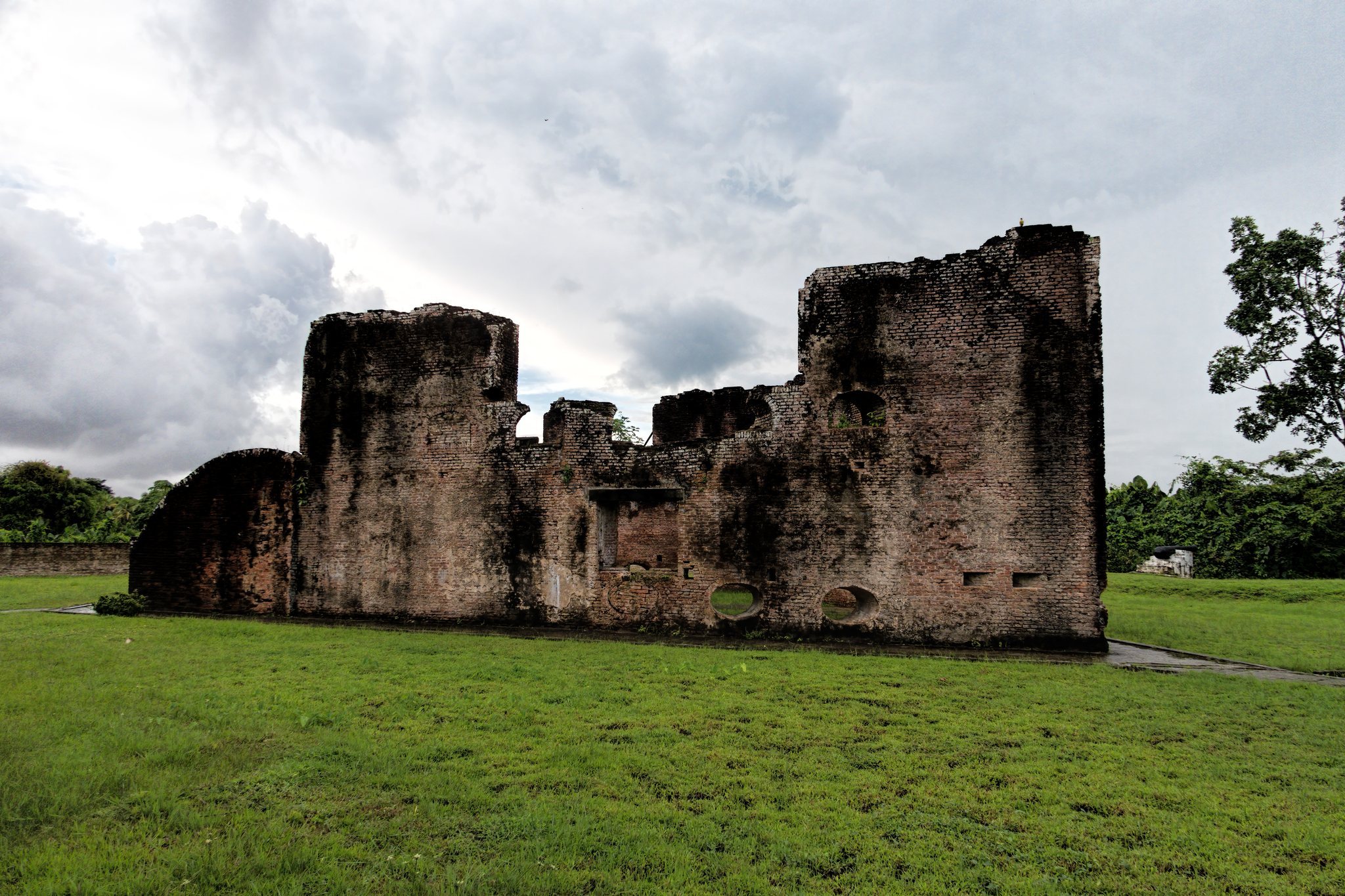
Fort Zeelandia stands on Fort Island, a fluvial island about 16 kilometres from the mouth of the Essequibo River. The small fort occupies a strategic position at the river mouth. Its plan is lozenge-shaped, with a central redoubt, high surrounding walls, low corner towers, and a further lower enclosing wall. The fort is now a ruin.
The Fort
Central Redoubt
The central redoubt measured approximately 50 feet square and had walls thick enough to withstand heavy ordnance. It contained two storeys. The lower level held a provisions warehouse and a secure powder house, while the upper level accommodated soldiers and included a room for non-commissioned officers. Each storey had 20 gunports, openings through which 2- or 3-pounder guns could be fired.
Walls and Construction Materials
The fort measured approximately 15 by 20 metres. Bricks were baked on the island, while mortar and trass, a volcanic material used in mortar, were imported from Barbados and the Netherlands. Enslaved Africans provided the labour for its construction. The wall on the river side has completely collapsed, leaving the fort in a ruined condition.
Court of Policy Building
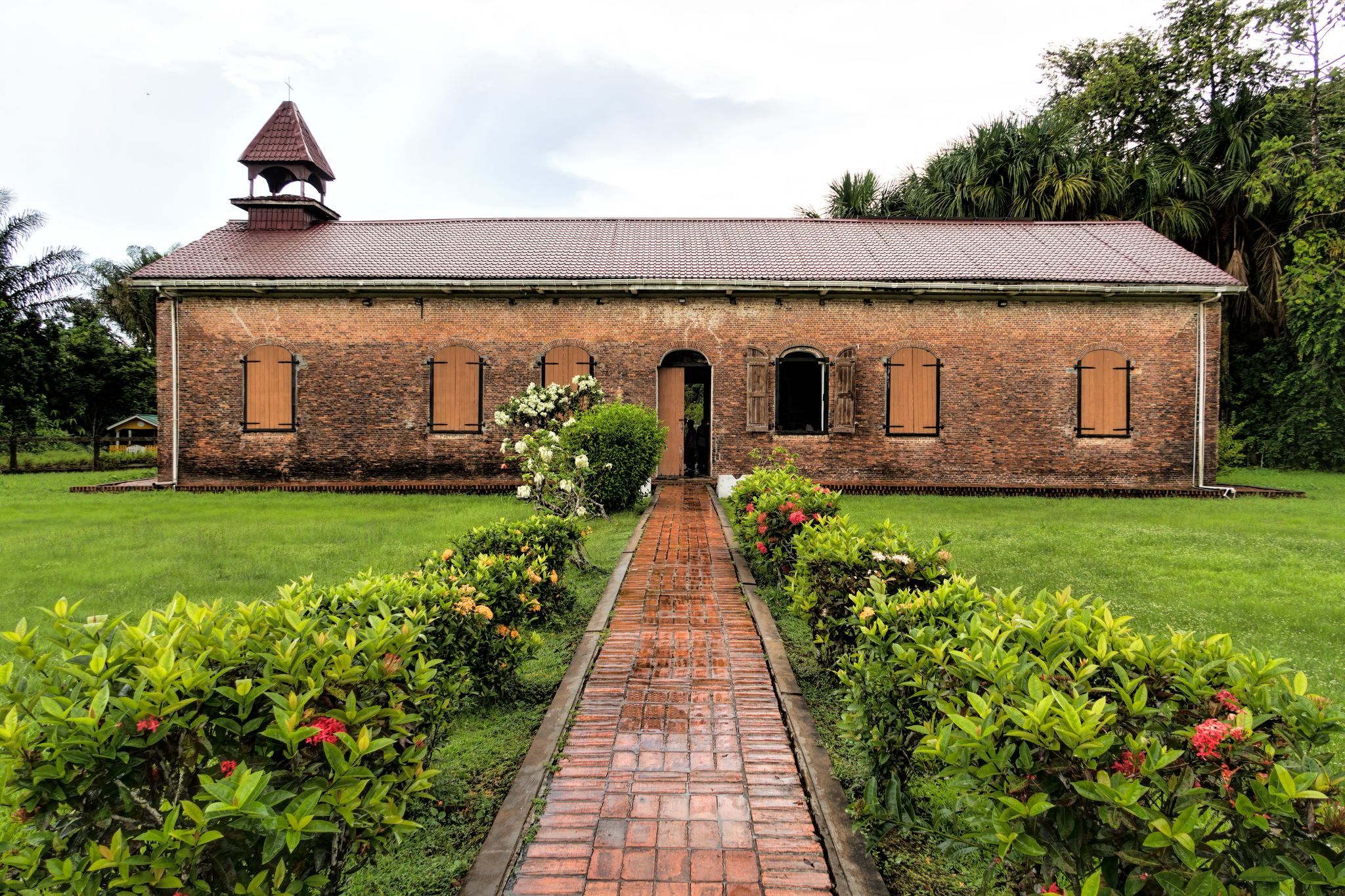
The Court of Policy Building stands beside Fort Zeelandia. It was restored in the early twenty-first century and later became the Dutch Heritage Museum.