Fort Kyk-Over-Al: Dutch Colonial Fort in Guyana
Site at a Glance
- Rating
- 4.6
- Popularity
- Very Low
- Country
- Guyana
- Primary era
- Early Modern
- Eras represented
- Early Modern
- Civilizations
- Dutch
- Site type
- Military
- Remains
- Fort
On this page11 sections
History
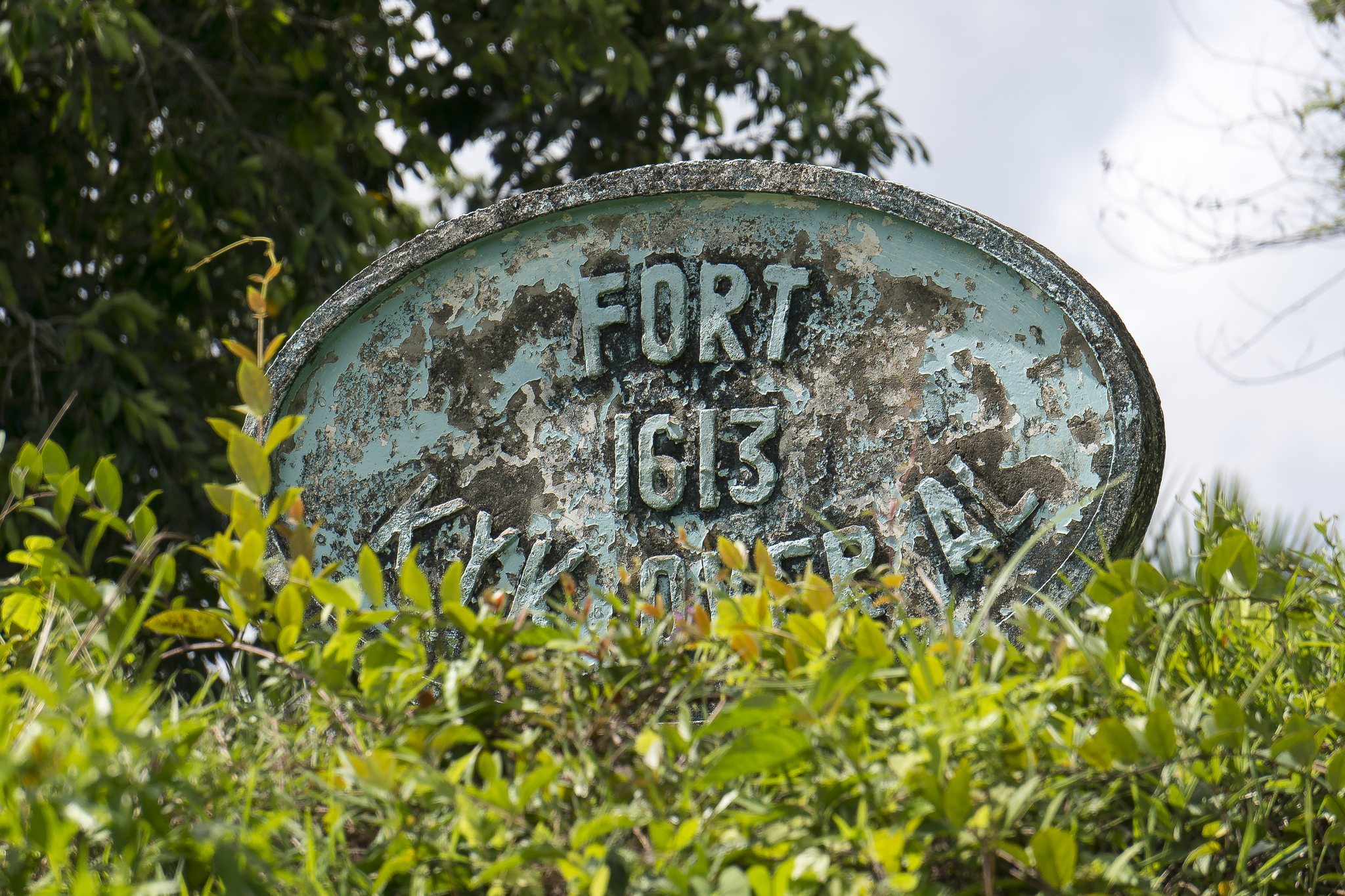
Fort Kyk-Over-Al is a Dutch fort in Guyana, built in 1616 in the colony of Essequibo at the initiative of Captain Adrian Groenewegen. It served as the colony’s administrative centre until 1739 and occupied a strategic position over the Essequibo, Cuyuni, and Mazaruni rivers.
Foundation and Dutch administration
Groenewegen became the fort’s first commander, serving from 1616 to 1624. The fort was initially known as Fort Ter Hoogen, after an influential Dutchman, but was later renamed Kyk-Over-Al, meaning “See over all,” in reference to its commanding view over the rivers.
Kyk-Over-Al administered Essequibo through Dutch colonial institutions, including the Zeeland Chamber of the Dutch West India Company. This company was a chartered Dutch corporation that held a monopoly over Dutch trade and colonization in parts of the Americas and West Africa. The site may have occupied an earlier Iberian fort. A carved stone emblem found there probably represents a Spanish cross, although a Portuguese origin has also been proposed.
Dutch administration was not fully unified during the colony’s early years. Adrian van der Goes, an appointee of the Dutch West India Company, established a separate settlement that was abandoned in 1632, while Groenewegen’s settlement continued to receive colonists. Dutch settlers from Tobago joined it in 1633, and the first enslaved Africans are believed to have arrived at Kyk-Over-Al with them.
War, trade, and colonial expansion
During the Second Anglo-Dutch War, an international conflict between England and the Dutch Republic, the English commander John Scott captured Kyk-Over-Al in 1665 after taking Fort Nova Zeelandia. The Dutch recovered it in 1666, when Matthys Bergenaar, commander of Berbice, marched overland to retake the fort. Dutch admiral Abraham Crijnssen then concentrated on rebuilding Kyk-Over-Al and the surrounding settlements.
By 1670, the fort and its surrounding colony were involved in expanding trade with Indigenous communities, including the Caribs and Arawaks. Commercial activity remained concentrated around Kyk-Over-Al, where only a small number of plantations had been established. The fort also served as an important starting point for Dutch trade with Spanish territories. A river route led through the Cuyuni toward the Cuyuni savanna, where horses and other draught animals were obtained from the Spanish. This trade was particularly active from 1693 to 1707, when the Spanish closed the route.
During the War of the Spanish Succession, a European conflict involving several major powers over the Spanish succession, French privateers attacked Essequibo settlements in 1708 and again in 1709. The commander of Kyk-Over-Al refused to send assistance during the first attack because he had only about 50 soldiers and considered the fort’s defence his priority.
Transfer of the capital and abandonment
By 1718, Kyk-Over-Al had become too crowded for the colony’s officers and soldiers. A separate building called Huis Naby, meaning “Nearby House,” was constructed at Kartabo near the confluence of the Mazaruni and Cuyuni. It contained the council chamber and Company store and accommodated the fort commanders and some colonial officials.
The fort’s inland position allowed surveillance of the Essequibo, Mazaruni, and Cuyuni rivers, but it made it difficult to protect plantations and settlers near the mouth of the Essequibo. The Dutch therefore began constructing Fort Zeelandia on Vlaggeneiland in 1726, closer to the coast and the plantations. The capital moved from Kyk-Over-Al to Fort Zeelandia in 1739.
Kyk-Over-Al was abandoned in 1748, and most of its buildings were demolished or dismantled. Their materials were reused at Plantation Duyenenburg, a sugar estate along the Essequibo River. The Cuyuni route continued to serve trade and also became an escape route for enslaved people from Dutch plantations. In 1755, the Dutch built an outpost on the Cuyuni to obstruct movement toward the Orinoco, although the outpost was later relocated.
Archaeology and preservation
The ruins became relevant during the 1897 Venezuelan-British Guiana boundary dispute. Brick samples were analysed in England and identified as Dutch, helping establish the fort’s Dutch construction. In June 1910, vegetation was cleared from the island on the orders of Sir Frederick Hodgson, governor of British Guiana. This exposed additional remains and evidence of Dutch occupation.
Fort Kyk-Over-Al was designated a National Monument on 20 July 1999. The National Trust of Guyana, the country’s heritage organization for protected historic sites, maintains and administers the site.
Remains
Island fort and archaeological evidence
Fort Kyk-Over-Al stood on an island of approximately 6,070 square metres at the confluence of the Essequibo, Cuyuni, and Mazaruni rivers, about 30 leagues upriver. Its position provided a broad view over the surrounding waterways. The earliest fortifications were made of wood before being replaced or rebuilt in masonry with mortar and brick.
Main fort
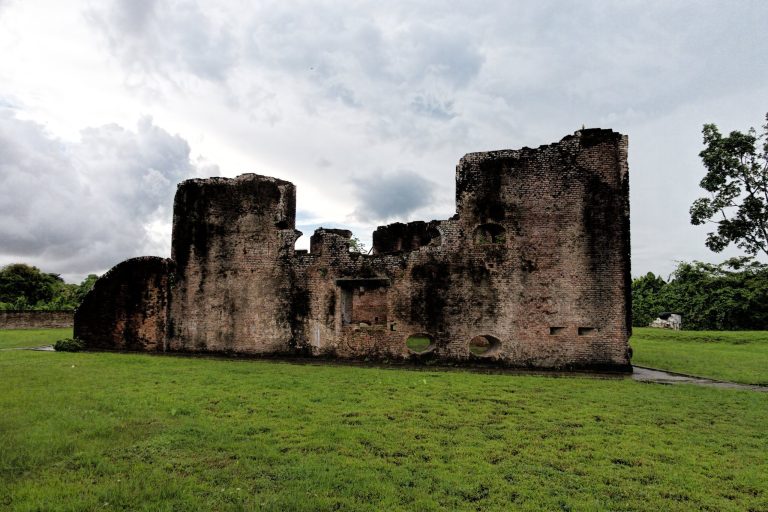
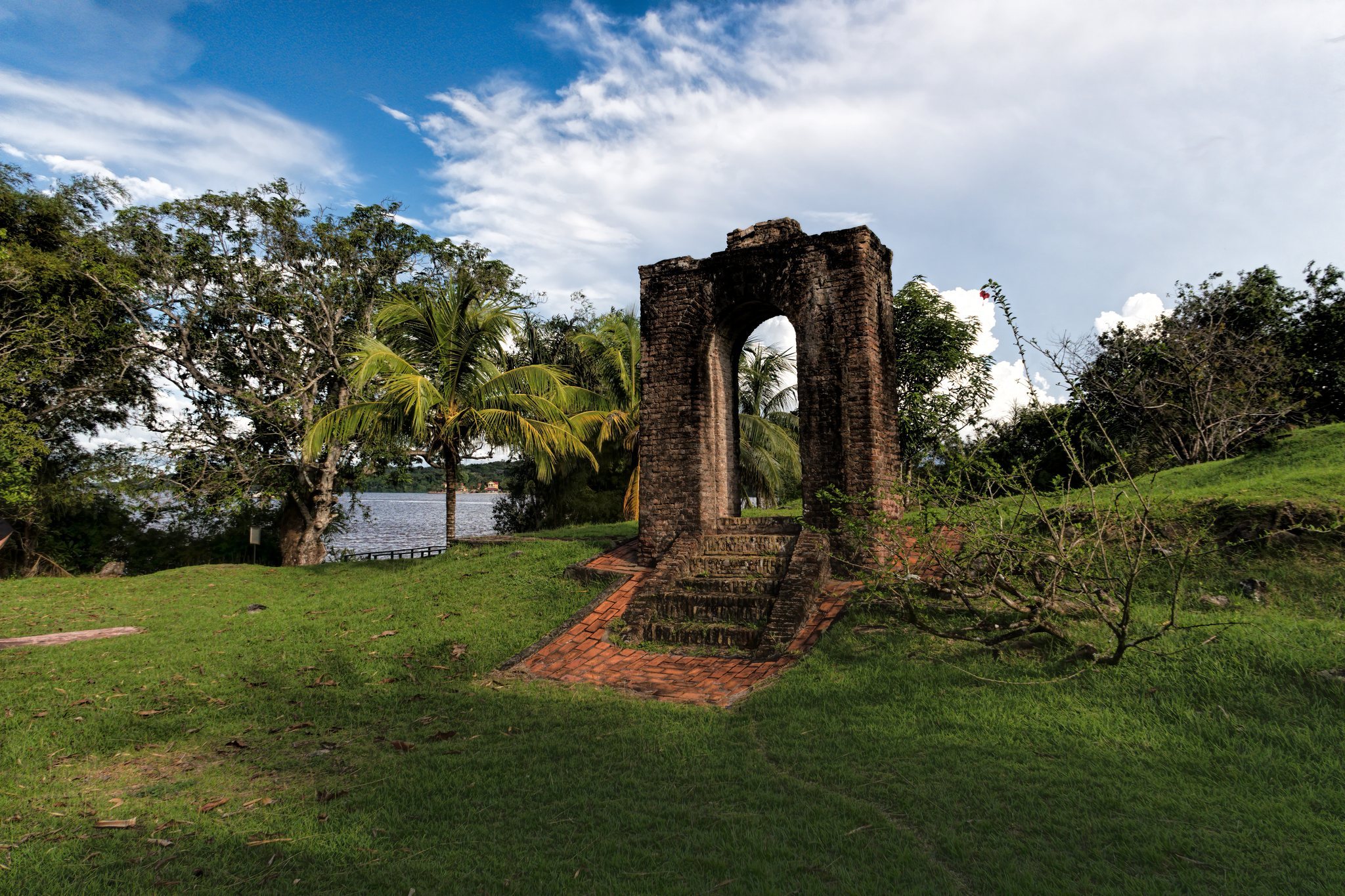
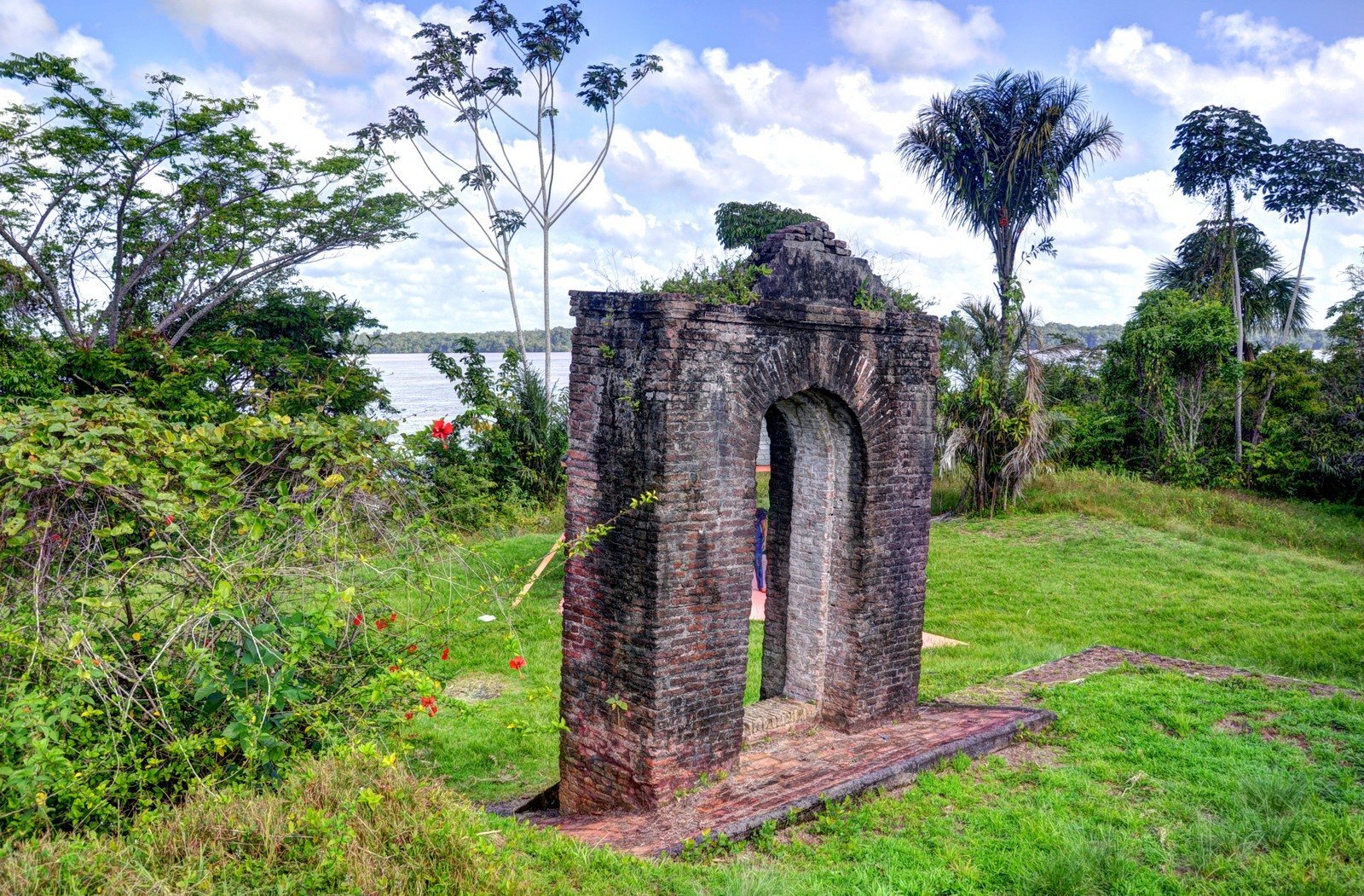
By 1672, the fort was described as a two-storey brick structure measuring approximately 20 by 20 metres. A powder magazine, a fortified storage space for gunpowder and other ammunition, stood inside the walls, and three small cannon formed part of its defences. Excavations and vegetation clearance revealed stone walls, brick pavements, and foundations. The surviving fort is now a ruin that includes a preserved arch.
Occupation material and carved emblem
Archaeological work recovered Dutch-period occupation material, including cannonballs, glass bottles, and several clay tobacco pipes. A carved stone emblem found at the fort probably represents a cross, but its possible Spanish or Portuguese origin remains unresolved.
Huis Naby at Kartabo
Council house and Company store
Huis Naby stood at Kartabo near the confluence of the Mazaruni and Cuyuni. Built after Kyk-Over-Al became overcrowded, it contained the colonial council chamber and the Company store. It also provided accommodation for the fort’s commanders and other officials, extending the administrative functions associated with the fort beyond its island walls.