Fort Sylvia: A Historic Fort and Museum in Kapit, Sarawak
Site at a Glance
- Rating
- 4.2
- Popularity
- Very Low
- Country
- Malaysia
- Primary era
- Modern
- External website
- Open
- Eras represented
- Modern
- Civilizations
- Unclassified
- Site type
- Military
- Remains
- Fort
On this page10 sections
History
Baleh Fort and the founding of Kapit Fort
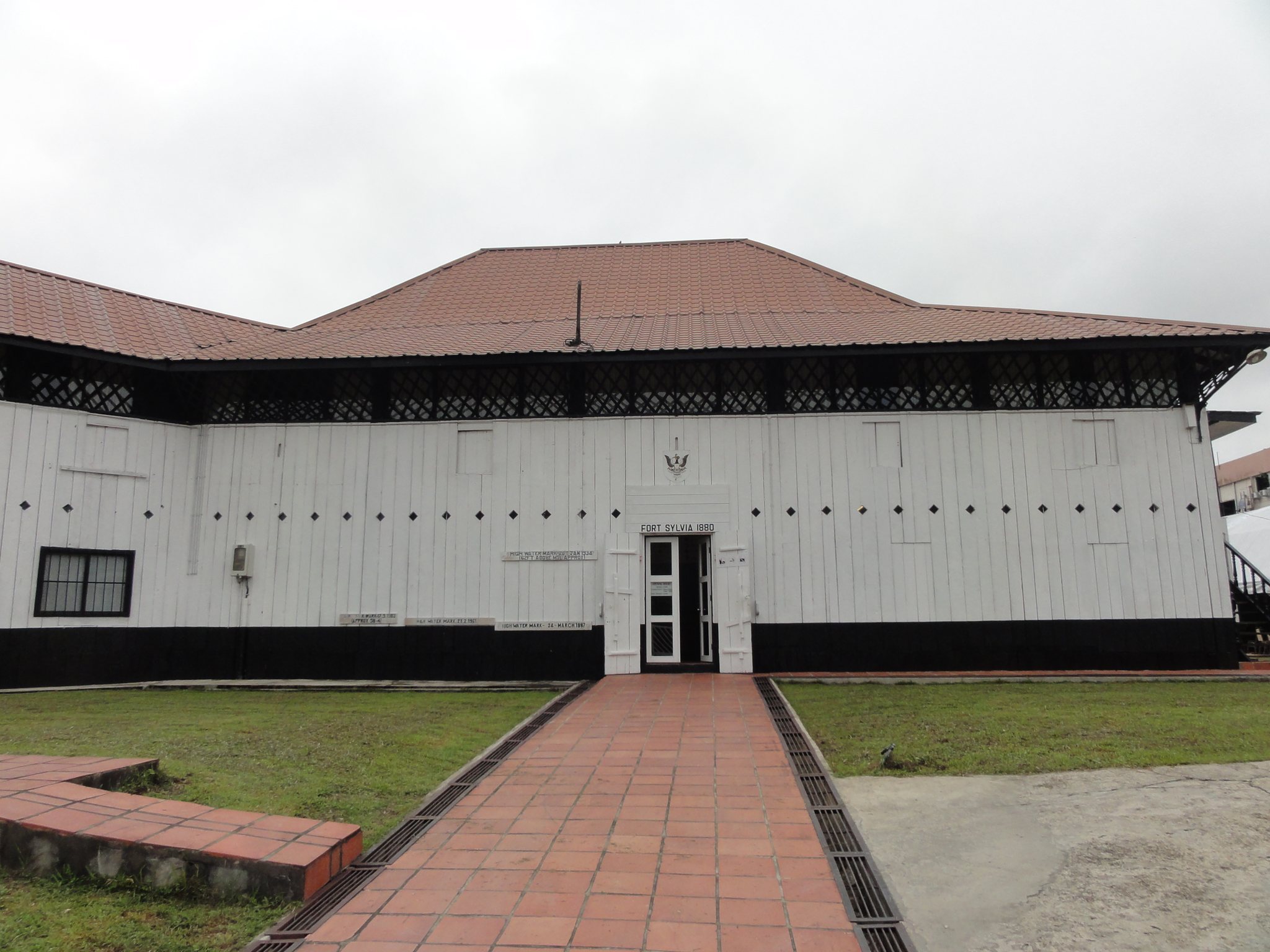
Fort Sylvia is a historic fort in Kapit, Sarawak, Malaysia, built in 1880 as a replacement for Baleh Fort during the rule of the Brooke dynasty. Rajah Charles Brooke had established Baleh Fort at Nanga Balleh in late 1874 to prevent further Iban migration upriver in the Rajang River basin and the conflicts that followed with the Orang Ulu. The new fort at Kapit continued this strategic role.
Baleh Fort stood at the meeting point of the Rajang and Baleh rivers, between Kanowit and Song. In 1877, Charles Brooke nearly drowned there when his boat overturned in dangerous currents. The fort was abandoned in 1878, and Kapit Fort became its replacement two years later.
Peace-making ceremony and renaming
On 16 November 1924, Kapit Fort hosted a peace-making ceremony involving the Iban, Kayan, Kenyah, and Kajang. Rajah Charles Brooke attended the event. The ceremony became an important part of the fort’s later historical interpretation and is represented in the museum’s historical displays.
In 1925, the building was renamed Fort Sylvia after Rani Sylvia Brooke, the wife of Rajah Charles Vyner Brooke. The title Rani, also rendered Ranee, was used for the wife of a Brooke Rajah. Charles Vyner Brooke was the third Brooke ruler of Sarawak, following Charles Brooke as the second member of the family to govern the territory.
Government use and conservation
During the 1960s, the fort housed the District Office and District Court House. After Kapit Division was formed in 1973, it later accommodated the Resident’s Office, the administrative office of the government’s senior representative in a division.
In May 1997, the Sarawak state government approved management of the monument by the Tun Jugah Foundation and the creation of a museum inside the fort. Conservation and renovation began immediately and were completed in December 1998. The museum now presents the history of Kapit, Fort Sylvia, and the colonial period through photographs and copies of historical documents.
Remains
Fort structure
Fort Sylvia is constructed entirely from belian, a highly durable ironwood used as a building material in Borneo. Its thick timber walls were designed to withstand attacks. The historic fort building now contains the museum, which is arranged in identified sections devoted to history, community figures, and the Tun Jugah Gallery.
Museum interior
History section
The History section contains photographs and copies of documents concerning Kapit, Fort Sylvia, and the colonial period. The displayed images include the 1924 peace-making ceremony, Charles Vyner Brooke with Rani Sylvia Brooke, Temenggong Koh, and Tedong ak Barieng, as well as Domingo de Rozario and a group photographed outside Fort Sylvia. Other material shows Temenggong Koh with Malcolm MacDonald and Tun Jugah anak Barieng.
Community Wall of Fame
The Community Wall of Fame presents photographs of community leaders and other historical figures from Iban, Orang Ulu, Malay, and Chinese communities. Those identified include Tun Jugah anak Barieng, Temenggong Koh ak Jubang, Temenggong Sibat ak Buyong, Temenggong Jinggut ak Attan, Kapitan Ah Wai, Tan Guan Hock, Tan Sit Leong, Penghulu Hang Nyipa, Penghulu Puso Abun, Matu Puso, Radin Yusop bin Radin Salleh, Datuk Abang Abdul Gapor bin Abang Tek, Datu Abang Ahmad bin Datu Abang Abdul Gapor, and Datuk Abang Indih bin Datuk Gapor.
Tun Jugah Gallery
The Tun Jugah Gallery forms another identified section within the museum. It is part of the museum arrangement created inside the conserved fort building under the management of the Tun Jugah Foundation.