Fort St. David: A Coastal Fort at Cuddalore, India
Site at a Glance
- Popularity
- High
- Country
- India
- Primary era
- Early Modern
- Eras represented
- Early Modern
- Civilizations
- British, Dutch, Vijayanagara
- Site type
- Military
- Remains
- Fort
On this page5 sections
History
Origins and English acquisition
Fort St. David is a coastal fort at Devanampatnam near Cuddalore, India. Construction began in 1608 after Thriyambamka Krishnappa Nayaka, a ruler among the Nayaks of Gingee, authorized the Dutch to build a fort to defend their trade from Portuguese attacks. Gingee was then under the wider authority of the Vijayanagara Empire. The Nayaks withdrew permission by 1610 after Portuguese pressure on Vijayanagara to curb Dutch expansion.
A Hindu merchant was placed in charge of continuing the work. Chinnia Chetti, a member of the Balija mercantile community, is credited with building the fort. Cuddalore’s port continued to handle overseas trade, including sandalwood, camphor, cloves, nutmeg, mace, green velvet, porcelain, copper and brass.
Gingee passed under Maratha authority in 1677. In 1689, amid financial difficulties and while Rajaram Chhatrapati faced a Mughal siege at Gingee, the Marathas sought to sell the fort to a European power. After negotiations with the Dutch and French, the English East India Company acquired it under a treaty dated 15 July 1690. The purchase also covered Cuddalore and nearby towns and villages within cannon range. The company gained a second fortified base alongside Fort St. George at Madras, and Governor Elihu Yale named the fort for Saint David, the patron saint of Wales.
Administrative center and military conflict
From 1725, the East India Company substantially strengthened the fort. In the eighteenth century it became a major British center of power in southern India. After French forces captured Madras and Fort St. George on 10 September 1746, the Madras Presidency government moved to Fort St. David. The fort repelled a French attack on 17 June 1748. Under the Treaty of Aix-la-Chapelle, which ended the War of the Austrian Succession, Madras returned to British control; the government moved back to Fort St. George on 5 April 1752.
French captures and abandonment
During the Seven Years’ War, known in southern India as the Third Carnatic War, French forces captured the fort in 1758. Robert Clive, appointed its governor in 1756, was not there to prevent the loss. The capture led to the destruction of two Royal Navy vessels in port. The French abandoned the fort in 1760 as British forces attacked Pondicherry, and a British detachment under Sir Eyre Coote retook it.
French forces captured the fort again in 1782 and repaired it enough to withstand a British counterattack in June and July 1783. It returned to British possession in 1785. After the Coalition Wars ended the French threat to British possessions in India, the fort lost importance, was abandoned and fell into ruin.
Remains
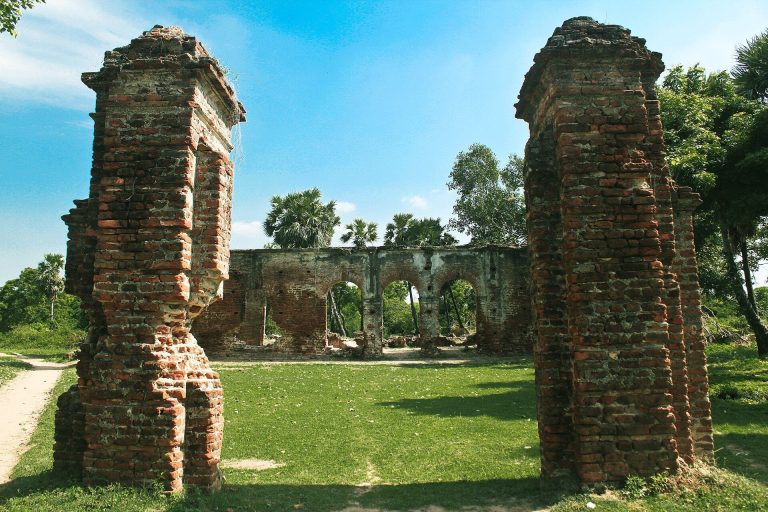
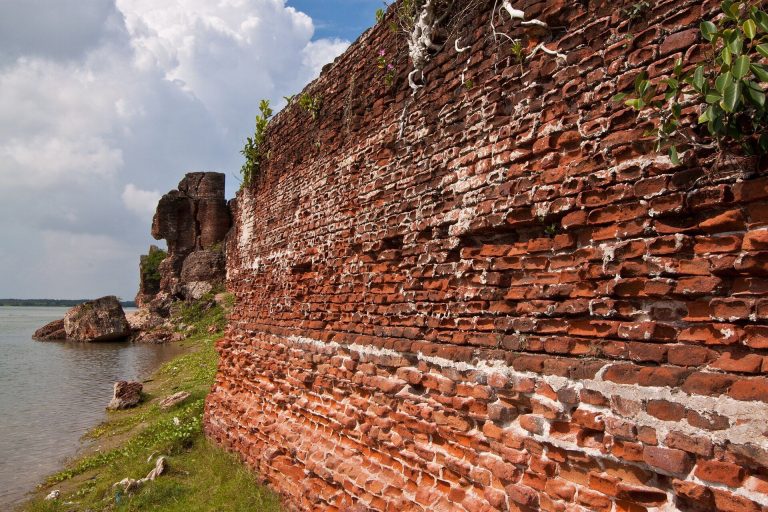
The ruined fort stands north of Cuddalore’s old town, near the former mouth of the Gadilam River, where it meets the Bay of Bengal. The river mouth has since silted up. The site lies on the Coromandel Coast near Silver Beach, about 20 kilometres south of Puducherry and 160 kilometres south of Chennai.
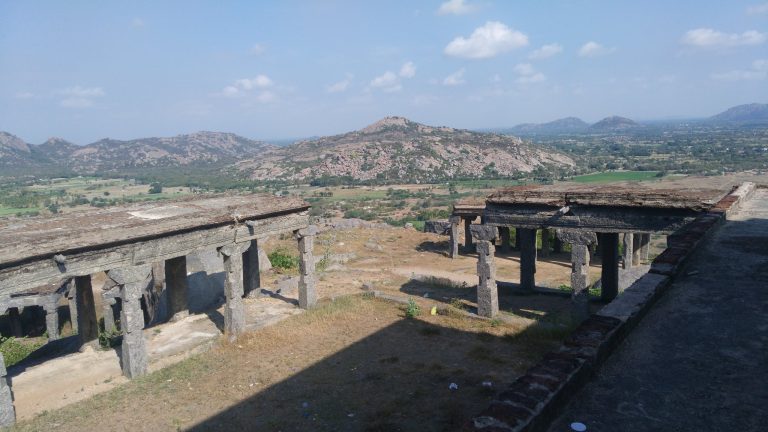
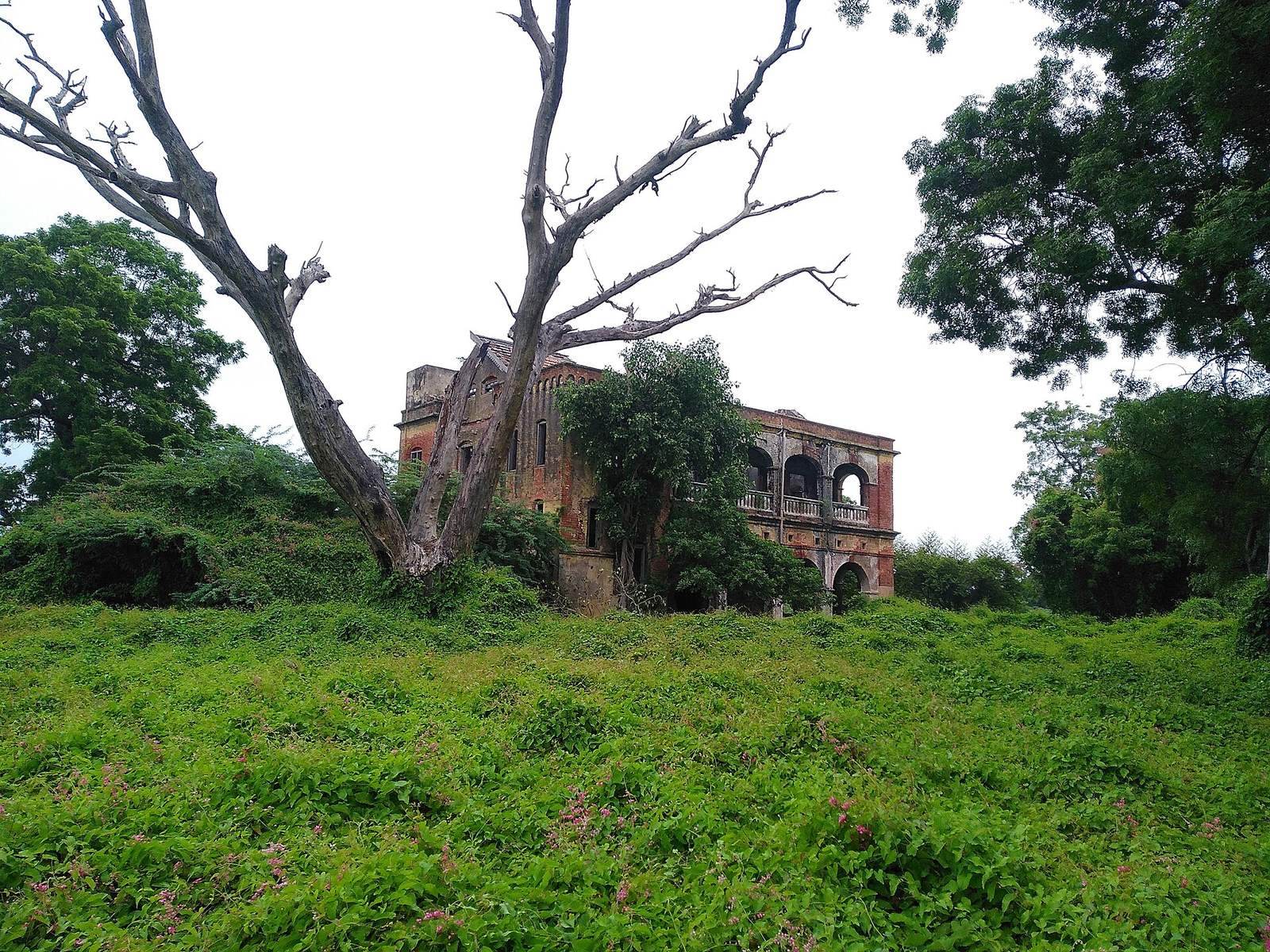
By 1690, the fort had two massive rings of defenses and numerous stone buildings. Its remains are now in ruins and lack maintenance.