Fort Prinzenstein: A Danish Coastal Fort in Ghana
Site at a Glance
- Rating
- 3.9
- Popularity
- Low
- Country
- Ghana
- Primary era
- Early Modern
- Eras represented
- Early Modern
- Civilizations
- Danish
- Site type
- Military
- Remains
- Fort
On this page7 sections
History
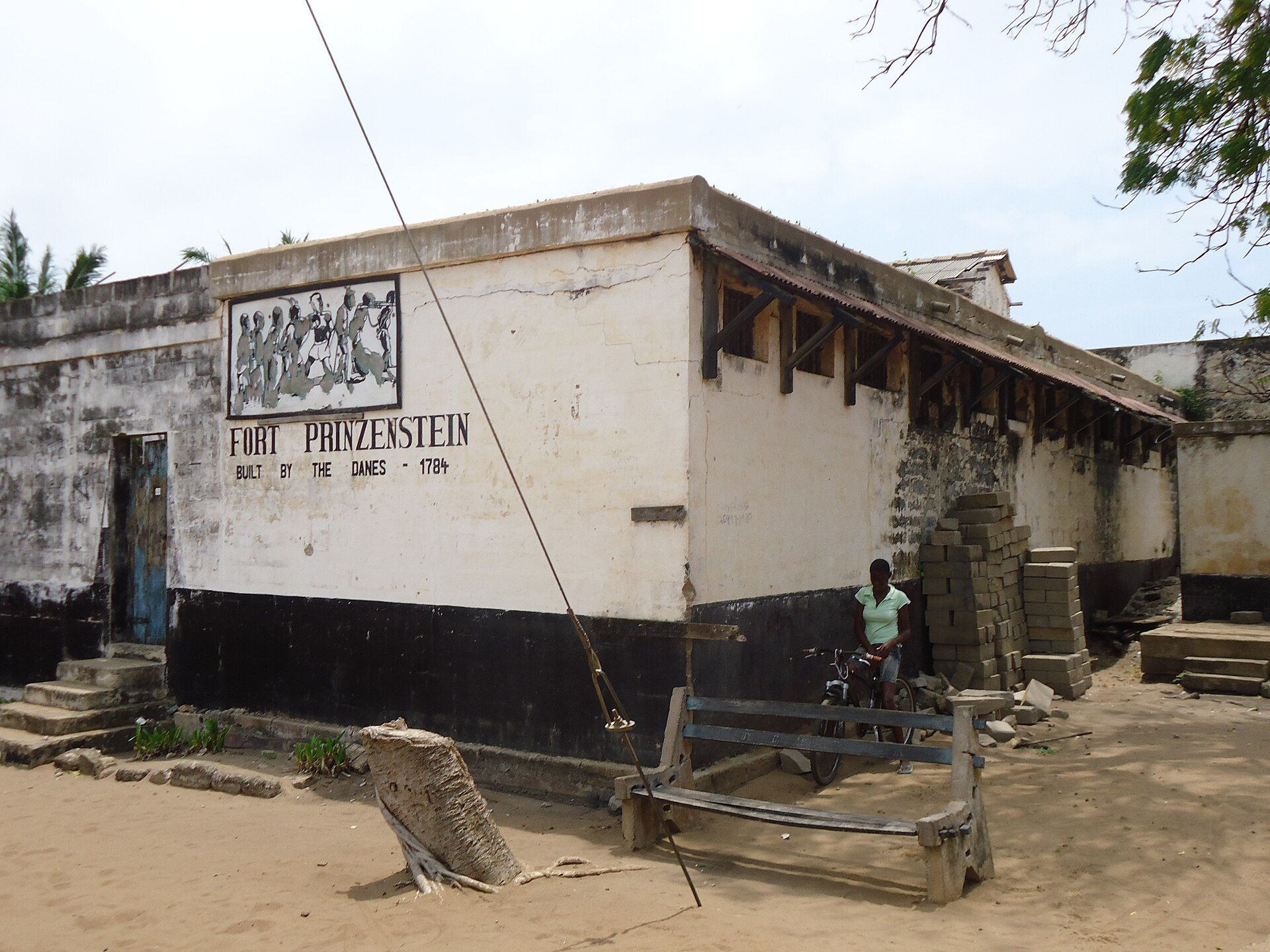
Fort Prinzenstein is an eighteenth-century Danish fort in Ghana, built at Keta in 1784 as a square coastal fortification. It protected a Danish trading lodge and supported Denmark’s commercial interests along the coast east of the Volta estuary. Keta was the commercial capital of the Anlo people, and the fort became part of the Danish Gold Coast, Denmark’s former coastal colony in present-day Ghana.
Before the Danish fort
The site had earlier been occupied by Fort Singelenburgh, a fort of the Dutch West India Company, from 1734 to 1737. This chartered Dutch trading and colonial company operated across the Atlantic world. The Dutch abandoned the fort after the Akyem–Akwamu conflict, probably because they had supported the defeated Akwamu.
A Danish trading lodge was established at Keta in 1745 on the initiative of Governor August Frederick Hackenborg, following an agreement with local authorities. A trading lodge, also called a factory, was a fortified or semi-fortified commercial post where European merchants stored goods, conducted trade, and maintained representatives. Keta’s commerce initially centered largely on the slave trade, alongside ivory, spices, and cotton textiles intended for other West African markets.
Conflict and foundation
In 1783, Anlo inhabitants pillaged the Danish trading post at Keta. The governor of Christiansborg raised forces from Ada, Akwapim, Ga, and Krobo communities, and the Danish side defeated the Anlo in the ensuing conflict. The fighting extended across the western Mina coast, the historical coastal region east of the Volta estuary toward Whydah. Ada supported the Danish faction, while other Ewe groups, the king of Whydah, and the British supported the anti-Danish Anlo side. Britain ultimately avoided direct military confrontation with Denmark, and the Danish faction emerged victorious.
A treaty imposed in 1784 gave Denmark permission to build Fort Prinzenstein and required the Anlo to trade exclusively with the Danes. It also helped protect Danish interests from rival colonial powers. The foundation ceremony took place on 22 June 1784. Adade, the brother of the king of Grand-Popo, performed the ceremony, while Prince Ofoli of Little-Popo prepared the mortar and enclosed the foundation stone. Governor Jens Adolf Kjöge and other Danish government representatives attended. The fort’s name refers to the participation of the two African princes in laying its foundation.
Fort Prinzenstein primarily protected the trading lodge at Keta and the security of further Danish settlements planned east of the Volta estuary toward the kingdom of Whydah, a coastal kingdom and trading center in the region of present-day Benin. It was one of four major structures built by the Danes. Trade through Keta later included gold, ivory, muskets, brandy, iron bars, textiles, and cowrie shells.
Slave trade and later colonial use
Until 1803, Fort Prinzenstein served as a prison and holding station for enslaved people awaiting transportation to the Caribbean. A Danish royal decree of 16 May 1792 ordered the abolition of the slave trade in Danish possessions in West Africa and the West Indies from the beginning of 1803. After the end of its principal role in the slave trade, the fort was used chiefly as a barracks and prison.
In 1850, Denmark sold Fort Prinzenstein and the rest of the Danish Gold Coast to Britain. Keta then became a British colony, and the British continued to use the fort as a prison. Keta remained an open port until Tema Harbour began operating to the west in 1962. After Ghana became independent in 1957, the fort continued to serve as a prison for a period.
Damage and heritage protection
Coastal erosion partially destroyed Fort Prinzenstein from the seaward side during the 1980s. In 1991, ICOMOS Ghana, the Ghana Museum and Monuments Board, and the Danish Embassy undertook preservation efforts to protect the remains. ICOMOS, the International Council on Monuments and Sites, is concerned with the conservation and study of cultural heritage. Marine erosion nevertheless continued to affect the fort.
Fort Prinzenstein forms part of Ghana’s forts and castles associated with the Atlantic slave trade. UNESCO included it in the World Heritage listing in 1979 under criterion (vi), which covers sites directly associated with events, traditions, ideas, beliefs, or works of outstanding universal significance.
Remains
Fortification and setting
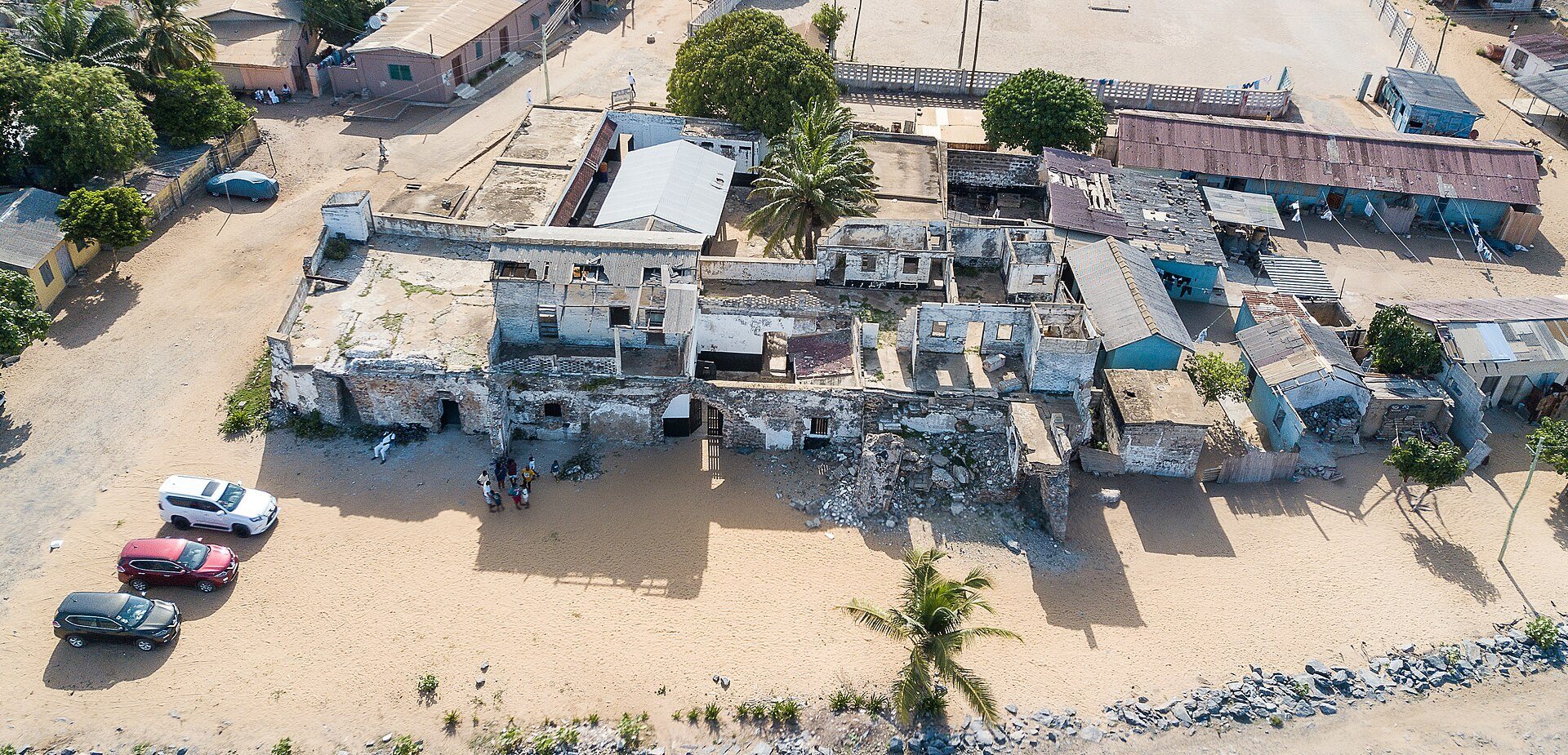
Fort Prinzenstein stands at Keta on a sandspit between the Keta Lagoon and the Atlantic Ocean. Its position places it among the few forts associated with the West African slave trade located east of the Volta River. The fort was built mainly from materials brought from Accra, particularly stone, and its original military purpose was to protect the adjacent Danish trading lodge.
The fort was laid out as a square fortification with four corner bastions. A bastion is a projecting fortification, usually placed at a corner, from which defenders could fire along the walls and across approaches to the fort. These structures principally served as gun positions. The building’s later uses as a slave prison, barracks, and prison followed its initial role as a military defense for Danish commerce.
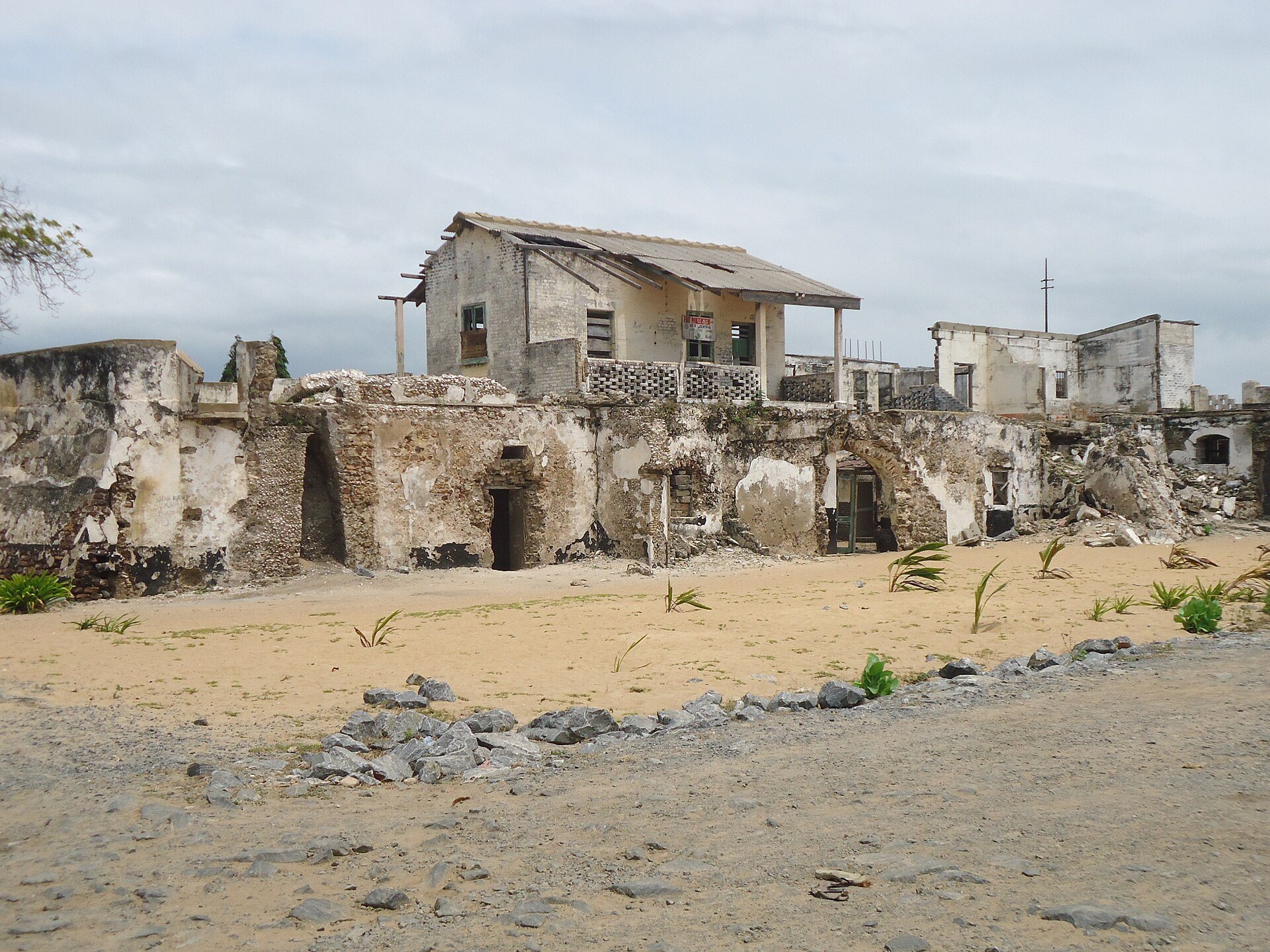
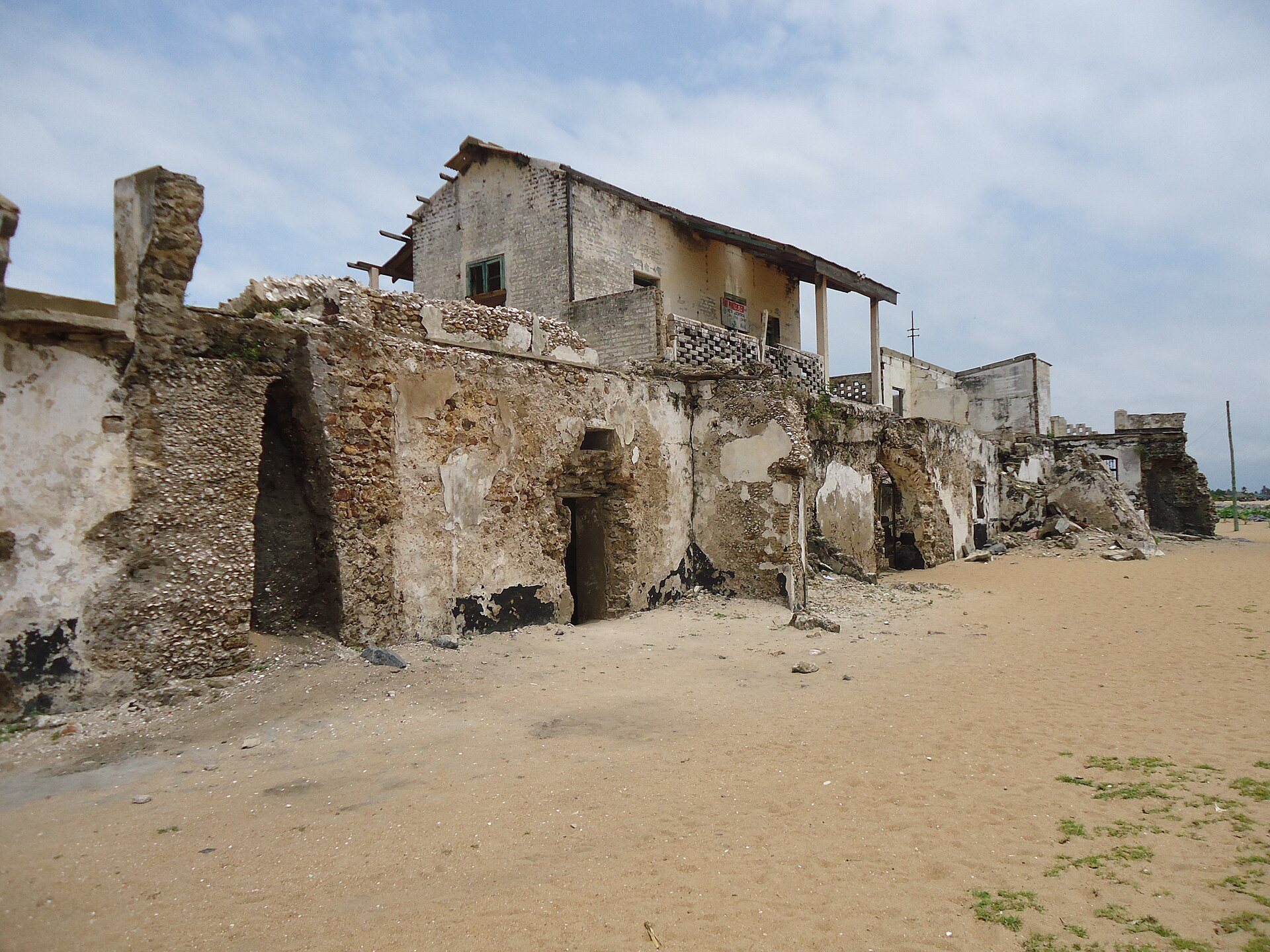
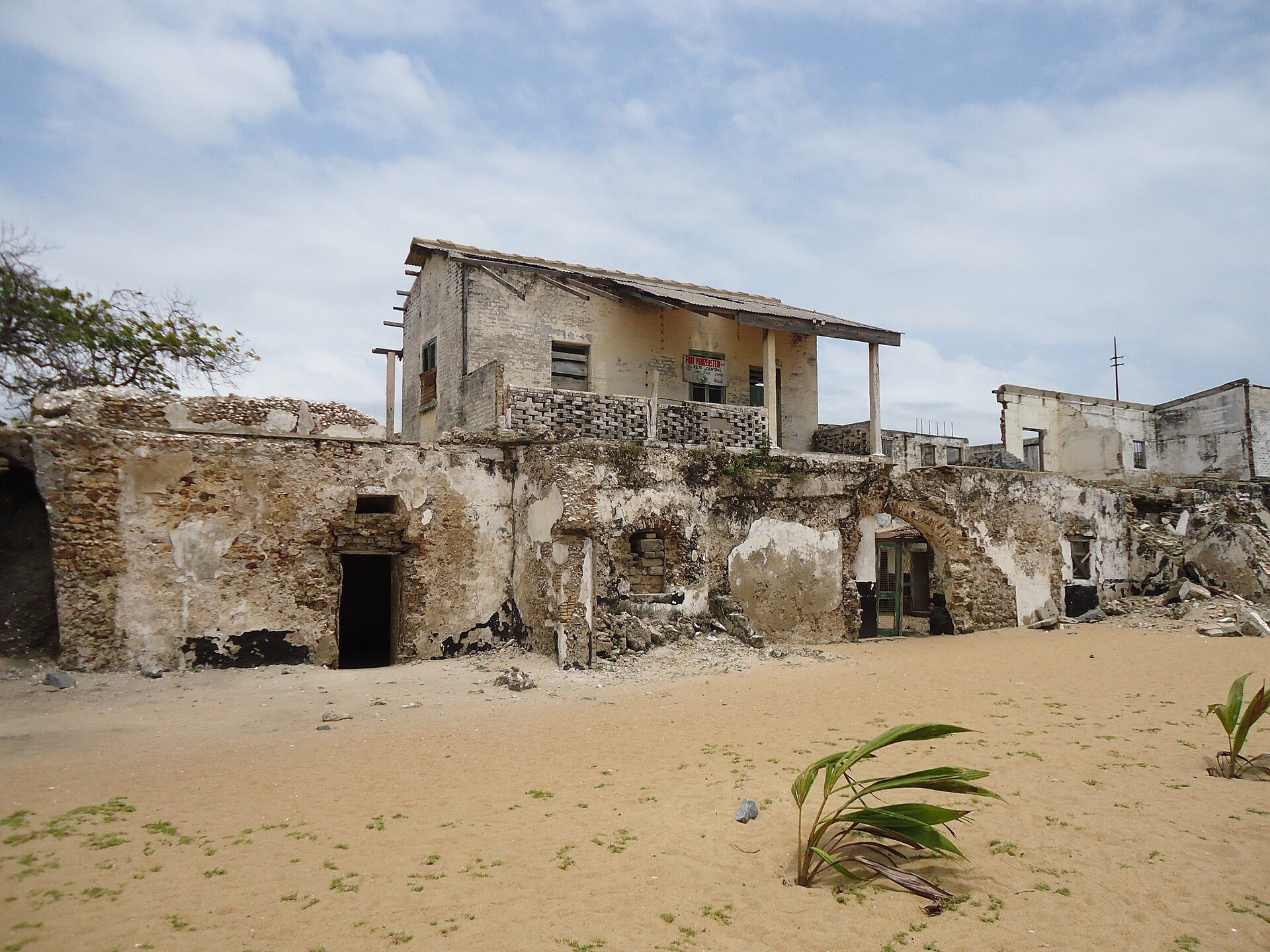
Fort Prinzenstein survives as a ruin. Marine erosion and ground erosion have progressively destroyed it from the seaward side since the 1980s, leaving only partial remains. The surviving fabric and its exposed position preserve evidence of the fort’s coastal defensive purpose, its connection with the Danish trading lodge, and its later association with imprisonment and the Atlantic slave trade.