Fort Plätzwiese: An Austro-Hungarian Border Fort in Italy
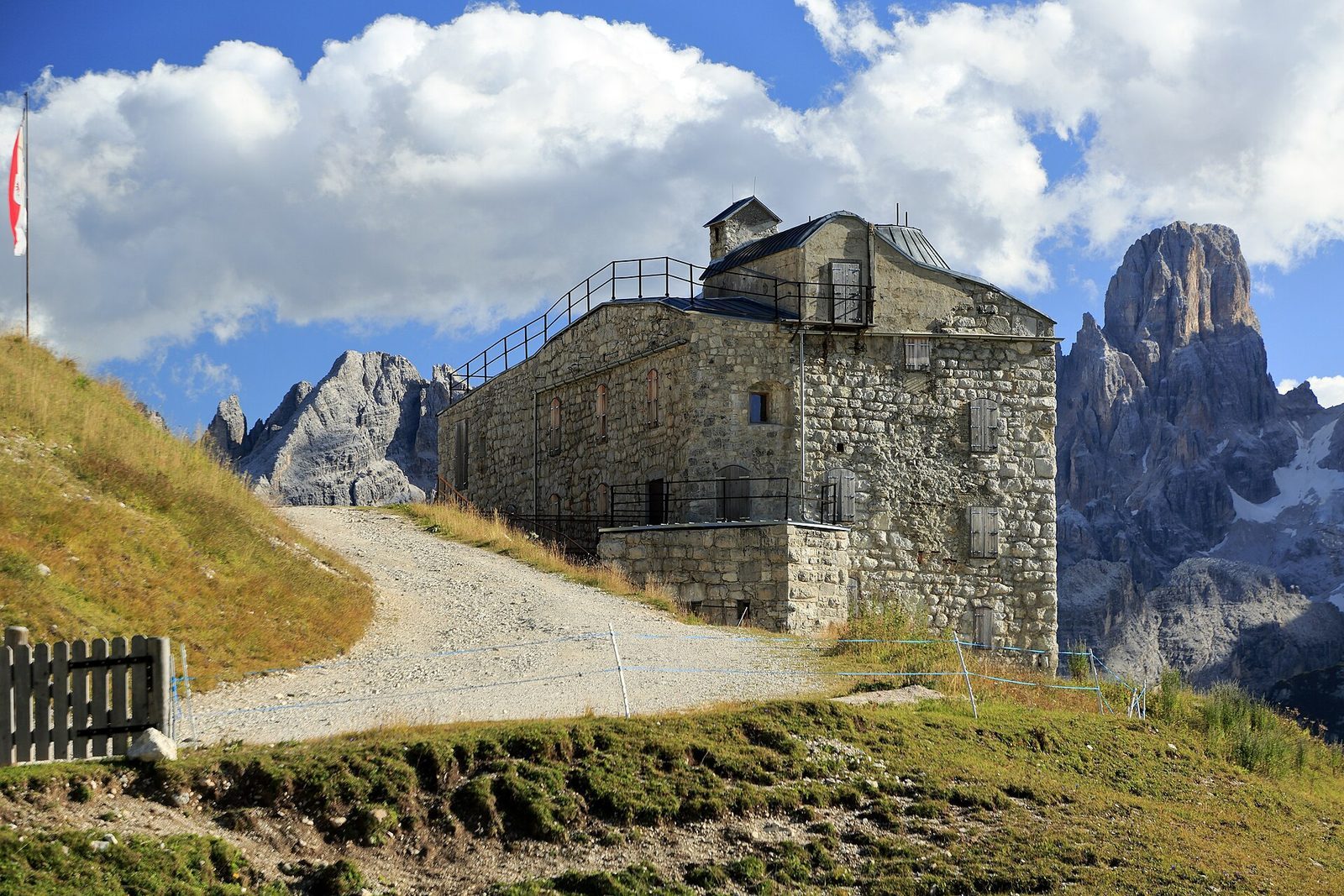
Site at a Glance
- Popularity
- Medium
- Country
- Italy
- Primary era
- Modern
- Eras represented
- Modern
- Civilizations
- Austria-Hungary, Habsburg, Italian
- Site type
- Military
- Remains
- Fort
On this page7 sections
History
Fort Plätzwiese is a late-nineteenth-century Austro-Hungarian border fort on the Plätzwiese plateau in Italy. Built as part of the empire’s frontier defenses, it was intended, together with Fort Landro, to secure the Landro Valley and the approach to the Puster Valley.
Construction and strategic role
By the outbreak of the First World War, the fort was nearly thirty years old and considered outdated. Its weapons had been changed several times, but the structure itself had not been modified.
First World War
After Austrian forces abandoned Cortina d’Ampezzo and its basin in May 1915, Monte Piano initially remained the main obstacle to an Italian advance. Italian artillery repeatedly shelled the fort. Early in the fighting, two 30.5-centimetre shells pierced it and made it unfit for combat, although the Italian command did not realize this. Its elevated position still made it useful for observing Italian forces.
The fort’s guns were moved outside into field positions. Its garrison of about twenty included a detachment of the Innichen Landesschützen Regiment No. III, a Tyrolean mountain-troop regiment, and members of Fortress Artillery Battalion No. 1, an artillery unit from Vienna.
Postwar changes and preservation
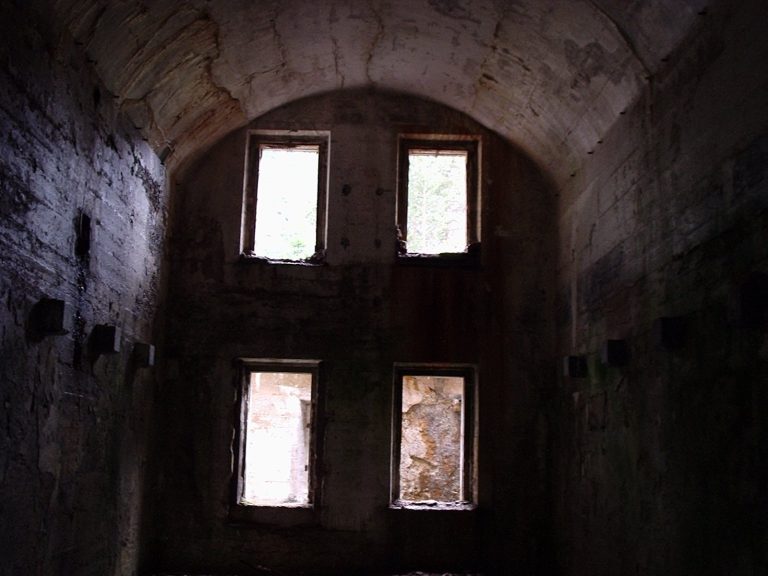
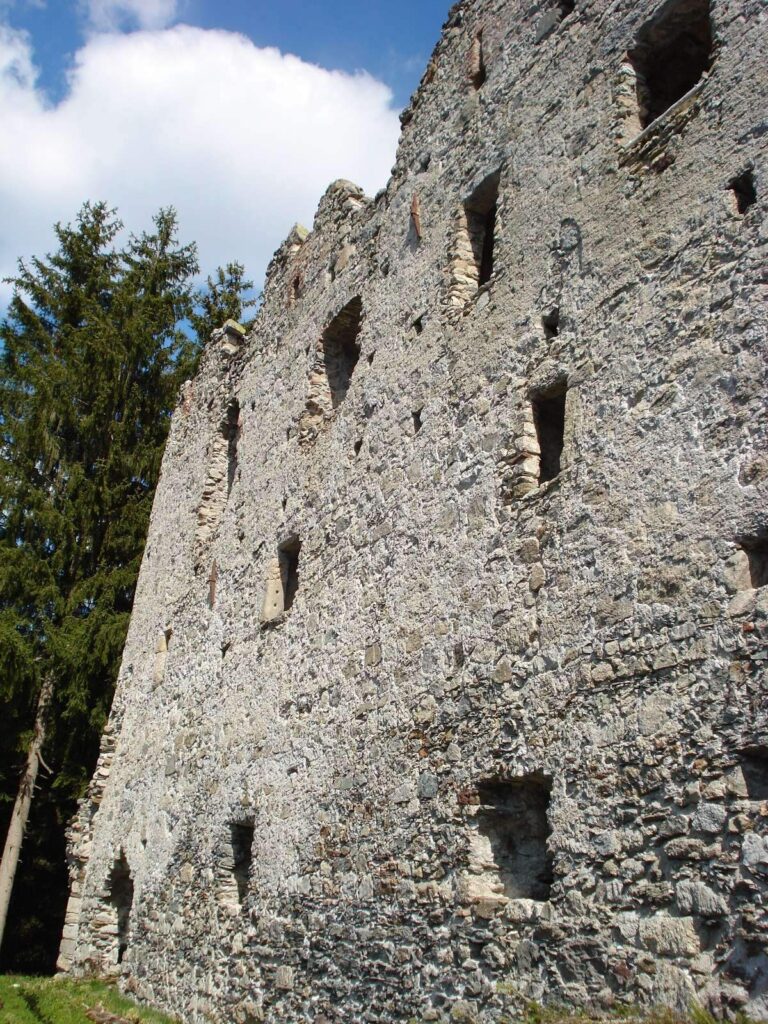
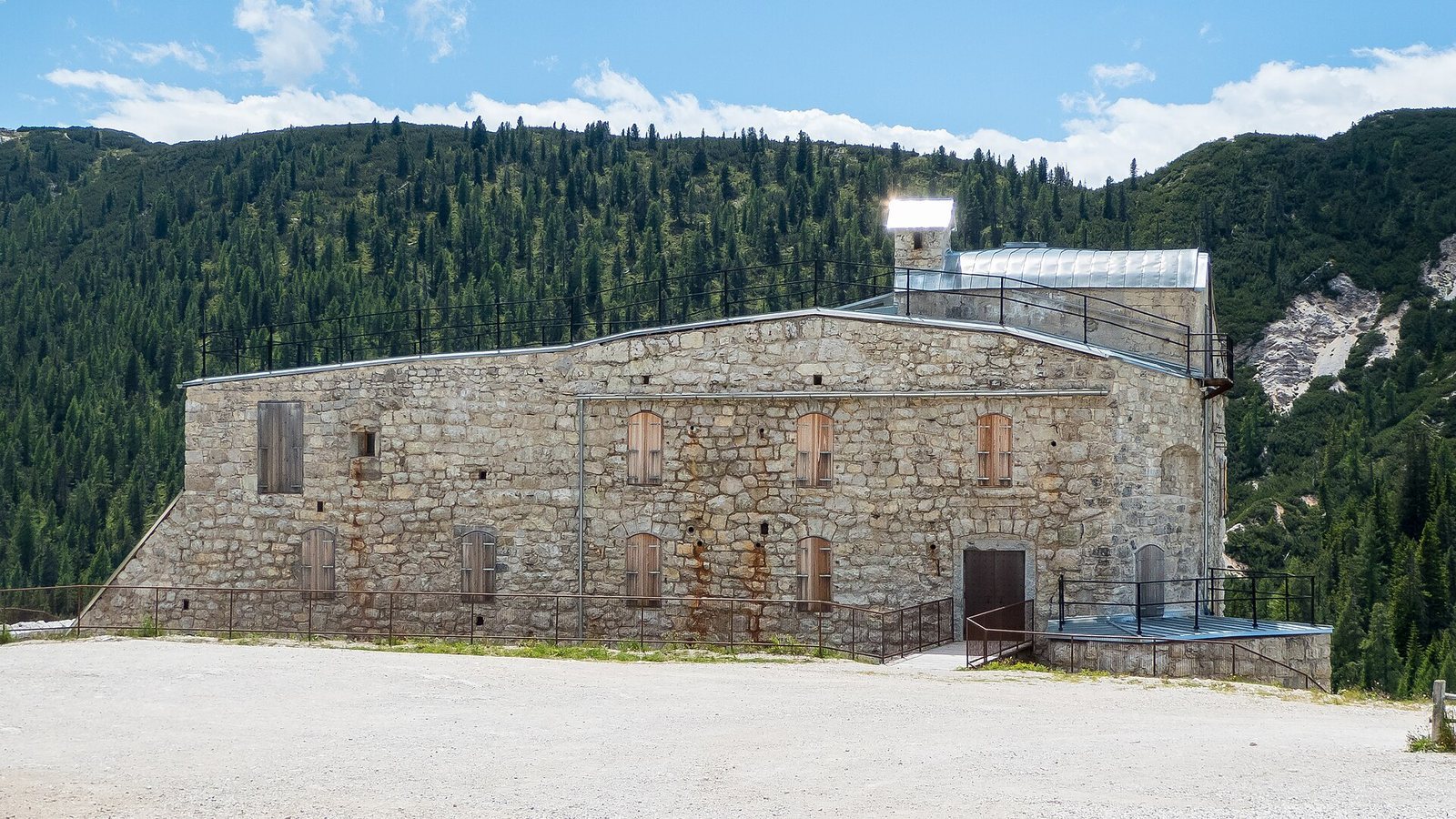
After the First World War and the territory’s annexation to Italy, the fort lost its military purpose and passed from Italian military ownership into private hands. Alterations and additions during the Italian period substantially changed its original fabric. It later fell into serious disrepair, with timber used to barricade its entrance, doors, and windows. Protected as a monument, it was structurally secured in 2011–12.
Remains
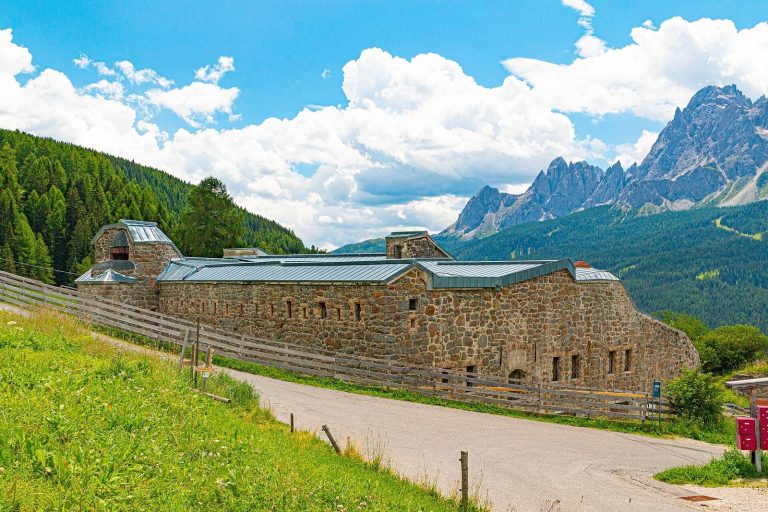
The fort stands at 2,040 metres above sea level on the Plätzwiese plateau in the Landro Valley, near the Dürrensteinhütte. It lies on the boundary between the municipalities of Toblach (Dobbiaco) and Prags (Braies).
Main block
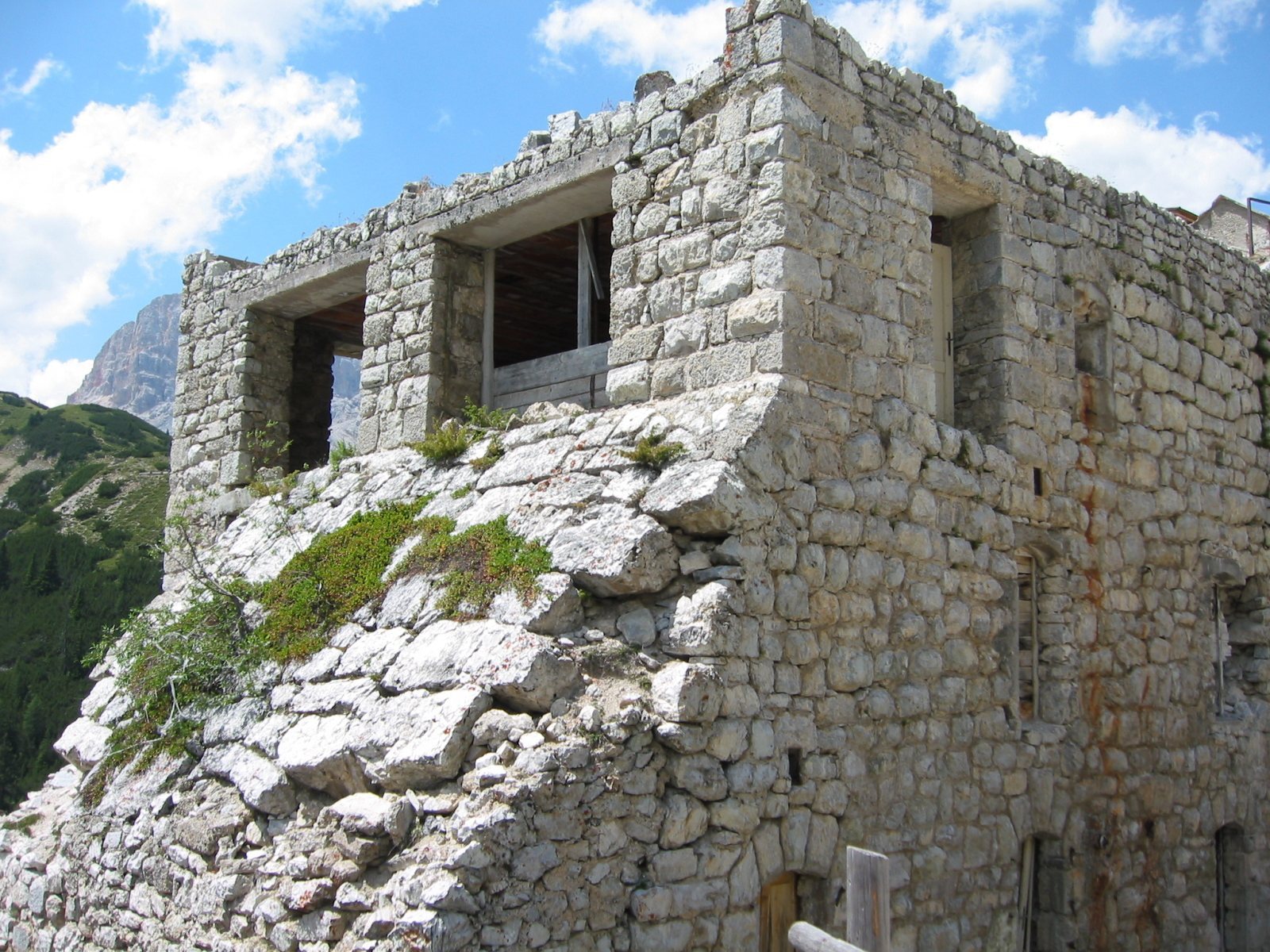
The compact fort is a single block, about 30 metres on each side, with partly rounded corners. Depending on the slope, it has two or three storeys, and an upper extension that served as an observation post. The restored building now houses the emergency generator for the Dürrensteinhütte.
Armament and field positions
At the outbreak of the First World War, two 150-millimetre Model 80/96 mortars stood in armored turrets, with eleven 8-millimetre Model 93 machine guns. Two 90-millimetre field guns were positioned outside the fort for mobile defense. Supporting field positions lay farther back, above the present-day mountain refuge.