Fort de la Redoute Ruinée: A French Alpine Fort
Site at a Glance
- Popularity
- Medium
- Country
- France
- Primary era
- Modern
- Eras represented
- Early Modern, Modern
- Civilizations
- Duchy of Savoy, French, Holy Roman Empire
- Site type
- Military
- Remains
- Fort
On this page8 sections
History
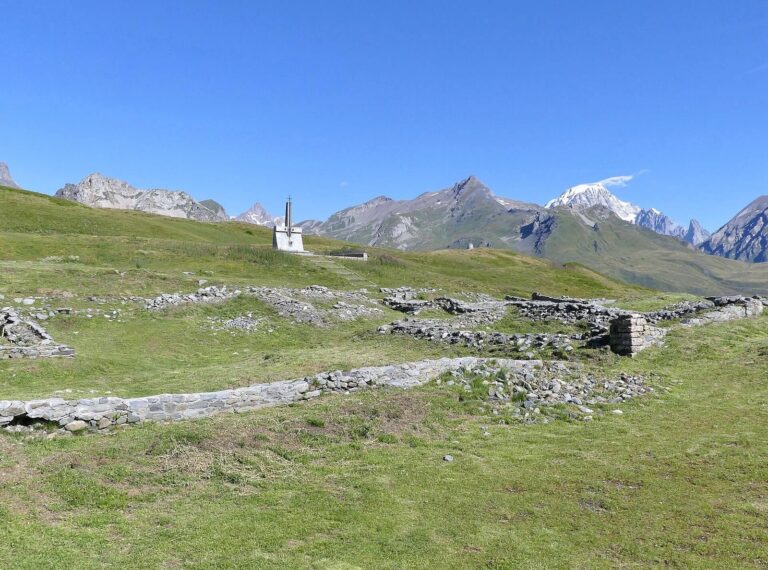
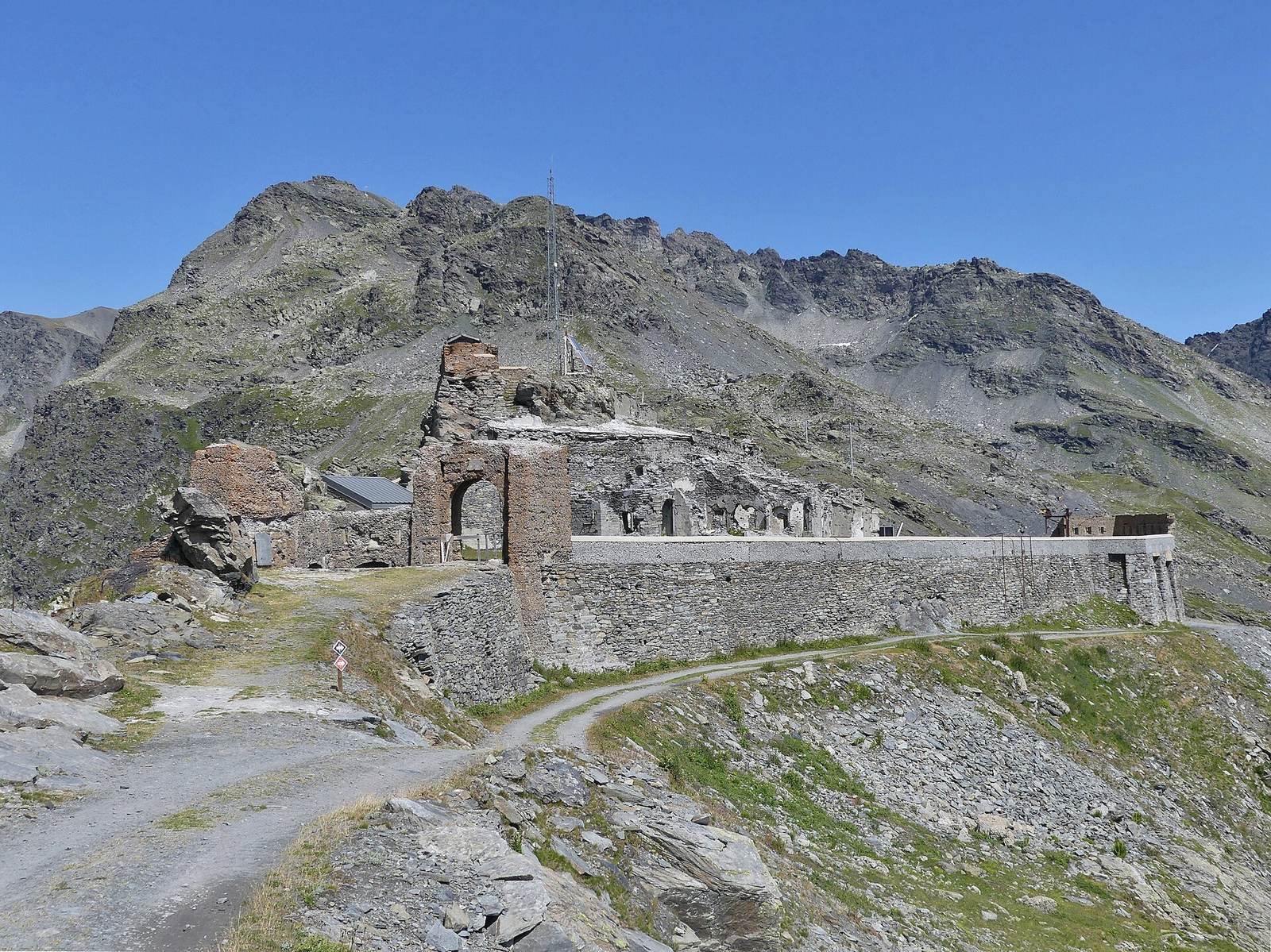
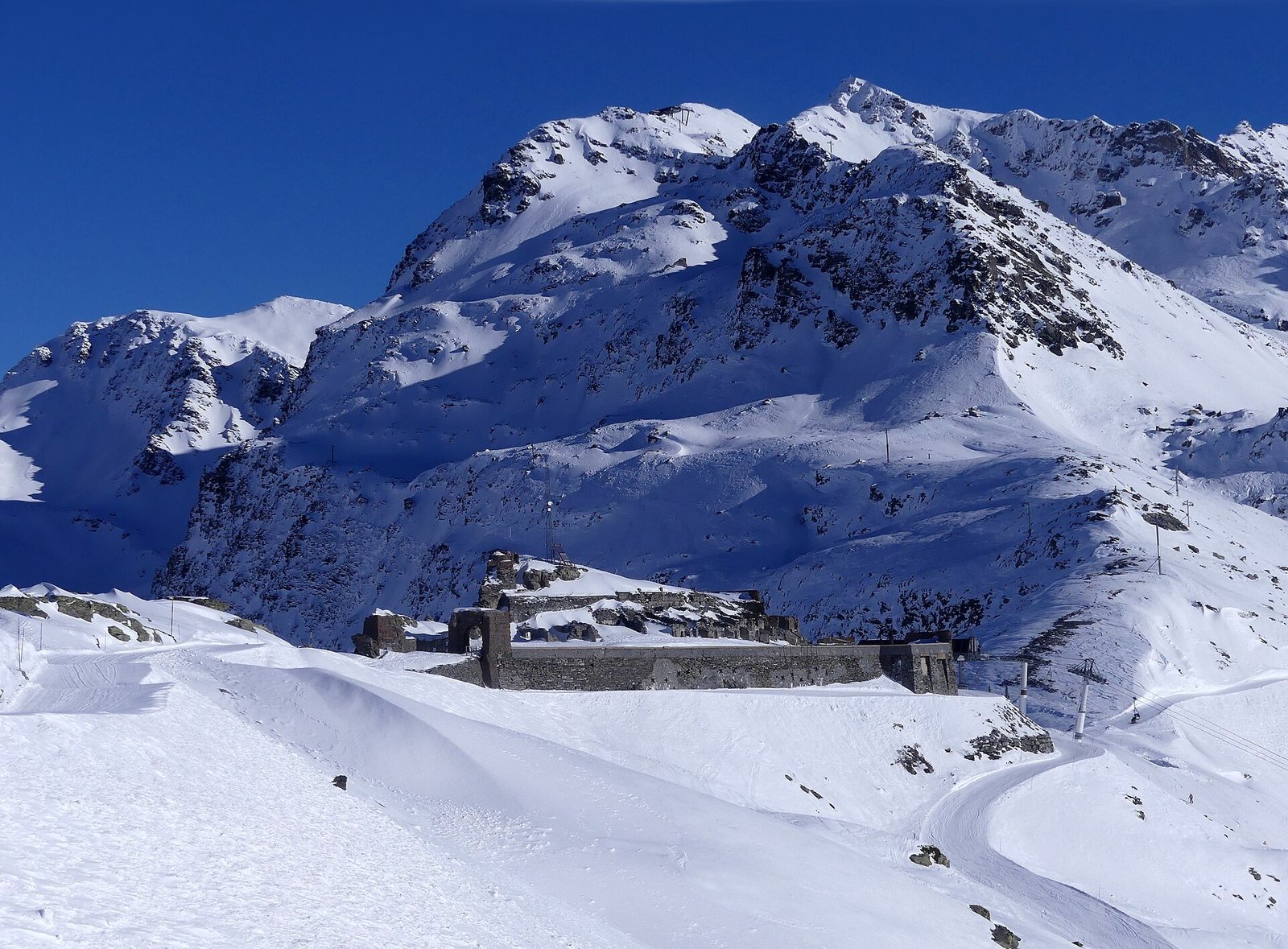
Fort de la Redoute Ruinée is a ruined mountain fort at the Traversette Pass in Montvalezan, France. Rebuilt by France in stages from 1891 to 1894, it guarded the route toward the Little St Bernard Pass. The French position replaced a Savoyard redoubt first built there in 1630.
Savoyard redoubt and French takeover
The original dry-stone fort commanded the road descending from the Little St Bernard Pass toward Bourg-Saint-Maurice. In 1794, French forces captured it from a garrison of 50 Savoyard soldiers and renamed it Fort Libre. Savoy, ruled by the House of Savoy, became part of France in 1860 through a territorial settlement with the Kingdom of Sardinia under the Treaty of Turin.
Rebuilding and Alpine defenses
The new French fortification was designed by General Raymond Adolphe Séré de Rivière, a military engineer associated with France’s late-nineteenth-century fortification system. It took the name Redoute-Ruinée in reference to the earlier work. The 22nd Alpine Hunters Battalion, French mountain infantry, occupied the fort from 1891 to 1895, followed by the 11th Battalion.
In February 1897, an avalanche between the fort and the Eucherts post killed three soldiers of the 11th Battalion and injured about ten. During his visit in August, President Félix Faure paid tribute to those killed, inaugurated a memorial, and decorated several soldiers. From 1897 to 1907, General Berge promoted extensive improvements as part of a policy of adding forts and defensive systems farther up valleys from the towns they protected.
The fort was strengthened in 1932 and connected by cableway to the Eucherts in 1936. During the 1930s it became part of the Tarentaise sub-sector, a geographic division of the Alpine defenses, within the Alpine extension of the Maginot Line, France’s system of fortifications. It served as an outpost ahead of the Châtelard and Cave-à-Canon defensive positions. Its location lay beyond the artillery range of Fort du Truc and the Vulmix and Courbaton batteries.
Wartime service and the end of its military role
When Italy began its offensive against France on 21 June 1940, about 70 French soldiers under Second Lieutenant Henry Desserteaux held the fort against infantry attacks supported by artillery and aircraft. The garrison surrendered only after the Franco-Italian armistice of 24 June and marched out with the honours of war in early July.
After Italy’s armistice in September 1943, German forces and troops of the Italian Social Republic, a German-backed state in northern Italy, occupied the fort. A platoon of the Republic’s Littorio Division was stationed there during the winter of 1944–45. In March 1945, French forces under General Paul-André Doyen sought to retake the Little St Bernard Pass and its positions. Poor weather stopped soldiers of the 13th Alpine Hunters Battalion from reaching the pass. The garrison surrendered on 29 April, restoring French control.
The fort was renamed Captain Desserteaux Barracks after its return to France. Its military role ended in 1946, and it was later incorporated into the La Rosière winter-sports resort.
Remains
Mountain setting and first works
The ruins occupy a rocky spur at about 2,400 metres above sea level at the Traversette Pass. The Little St Bernard Pass lies about 200 metres lower and approximately 2.7 kilometres to the north. The original Savoyard redoubt was built of dry-laid stone. The later French position began with three barrack buildings west of the pass; a covered gallery was added in 1893 and stables in 1894.
Enclosure and defensive works
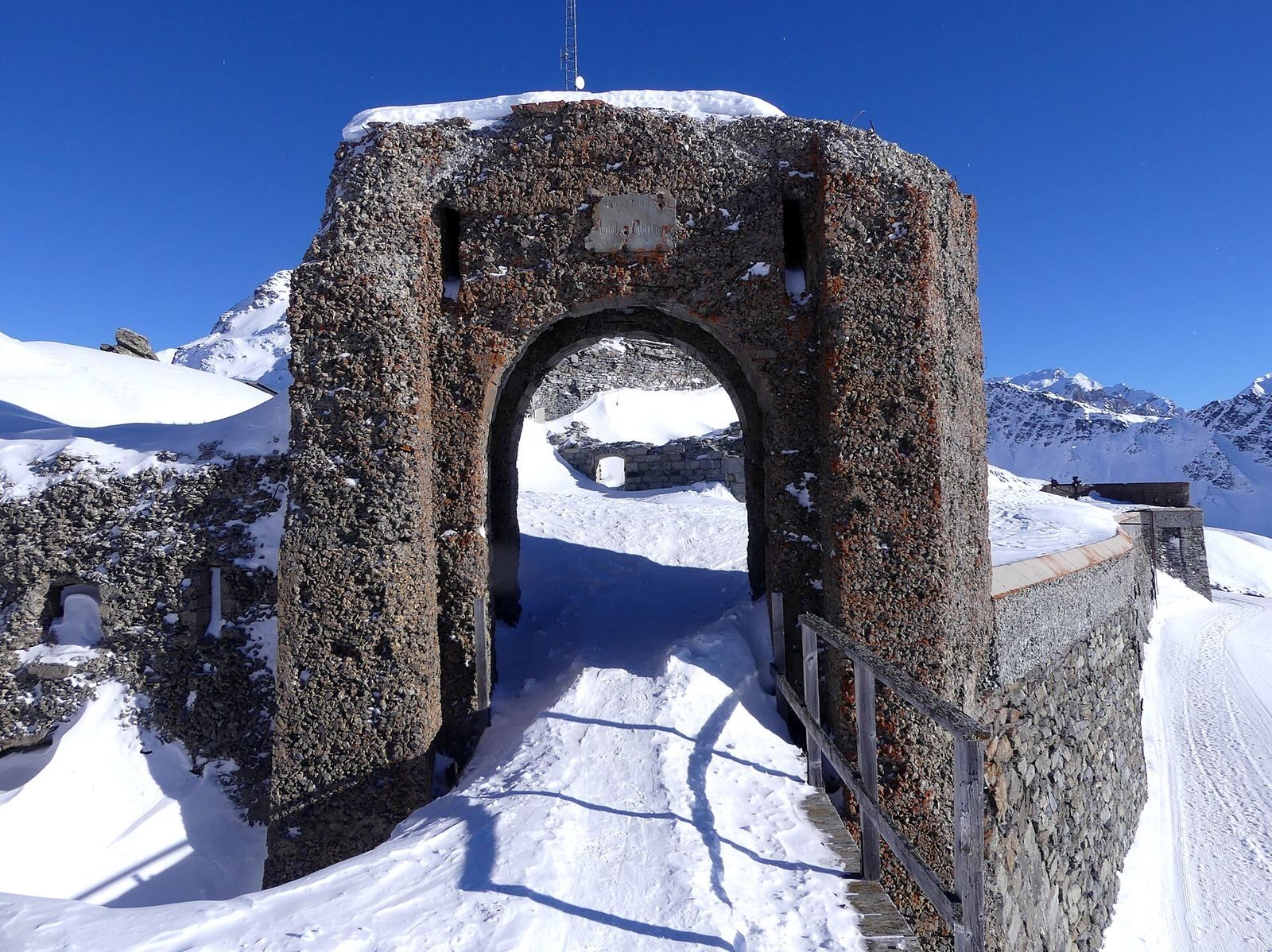
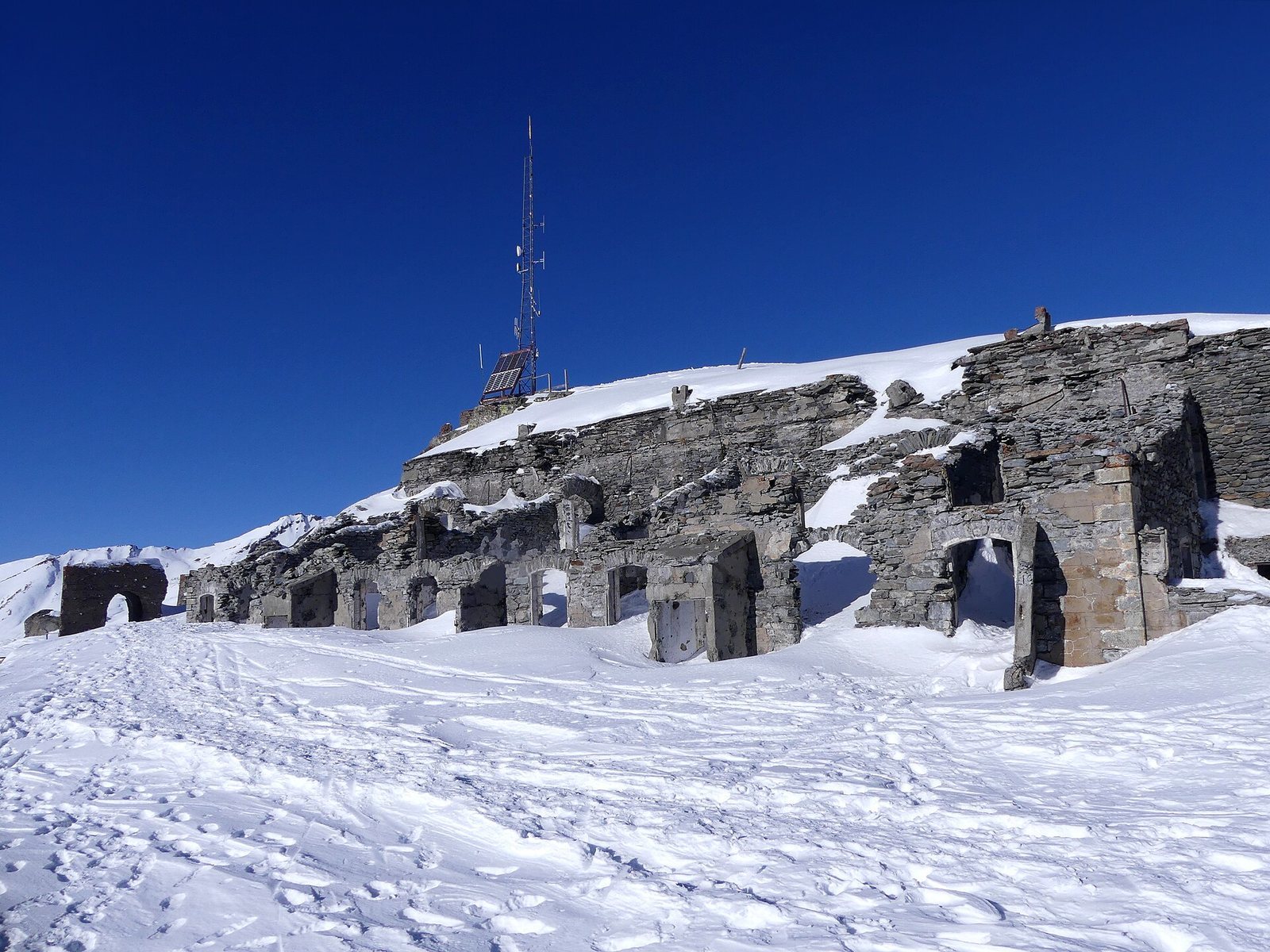
Improvements made between 1897 and 1907 enclosed the three barracks and added a drawbridge and an observatory. Reinforcement work in 1932 included a shelter for the garrison against bombardment and a machine-gun opening in a casemate, a protected gun position, at the fort’s western projecting section. The opening faced toward the Little St Bernard Pass.
Water supply, cableway, and memorial
A cistern and pipe supplied drinking water, collecting it from a bore beneath Mont Valezan. From 1936, a cableway linked the fort with the Eucherts. A memorial to the soldiers killed in the 1897 avalanche was inaugurated at the fort. The fort is now in ruins, and its artillery was directed toward the Italian side of the mountain.