Fort de Kock: A Dutch Colonial Fortification in Indonesia
Site at a Glance
- Rating
- 4.5
- Popularity
- Medium
- Country
- Indonesia
- Primary era
- Modern
- Eras represented
- Modern
- Civilizations
- Dutch
- Site type
- Military
- Remains
- Fort
On this page8 sections
History
Fort de Kock is a Dutch colonial fortification in Indonesia, established in 1825 on Bukit Jirek in Bukittinggi, West Sumatra, during the Padri War. Its star-shaped defensive plan gave it an early name, Sterrenschans, before it was renamed for Hendrik Merkus de Kock, the Dutch military commander and colonial official who served as commander of the Dutch forces and vice governor of the Dutch East Indies. Captain Bauer established the fort.
Foundation during the Padri War
The fort was built as a defensive position overlooking five local adat villages. Adat refers to established indigenous customary law, religious practices, and social traditions. The communities granted the Dutch permission to construct the fort on Bukit Jirek, where it was intended to guard against Padri uprisings during the decade-long Padri War.
The Padri movement was an early nineteenth-century Islamic reform movement in West Sumatra. It opposed local adat customs and practices because it regarded them as un-Islamic. After years of conflict, Dutch forces and the adat communities defeated the Padri forces, strengthening Dutch control in the area.
Expansion and the growth of Fort de Kock
After the fort was established, the Dutch took control of further defensive positions at Bukit Sarang Gagak, Bukit Tambun Tulang, Bukit Cubadak Bungkuak, and Bukit Malambung. Together, these positions formed an expanding fort network that supported the development of a colonial administrative center. Government offices, a cemetery complex, a market, schools, and a recreation area grew around the military installations.
A settlement developed around the fort and eventually became a city known by the same name. Following Indonesian independence, the city was renamed Bukittinggi, leaving Fort de Kock as a surviving reminder of the city’s former colonial name.
Later alteration
The fort’s original buildings were demolished, while limited traces of the defensive work remained in the earthworks, moats, cannons, and a commemorative plaque. In 2002, the West Sumatra regional government refurbished Bukit Jirek and converted the area into Bukittinggi City Park and Tropical Bird Park.
Remains
Hilltop fortification
Fort de Kock occupied the summit of Bukit Jirek as a star-shaped sconce, a small defensive fortification with projecting points that broadened its coverage. The surviving earthworks include recognizable ramparts or mound remains, together with parts of the moats that once formed elements of the fort’s defensive layout.
Earthworks and cannons
Several nineteenth-century cannons remain associated with the former fort. They have been installed on top of a modern maintenance building rather than preserved in their original positions within the fortification. A commemorative plaque also marks the site and helps preserve its historical association with the former Dutch strongpoint.
Modern central structure
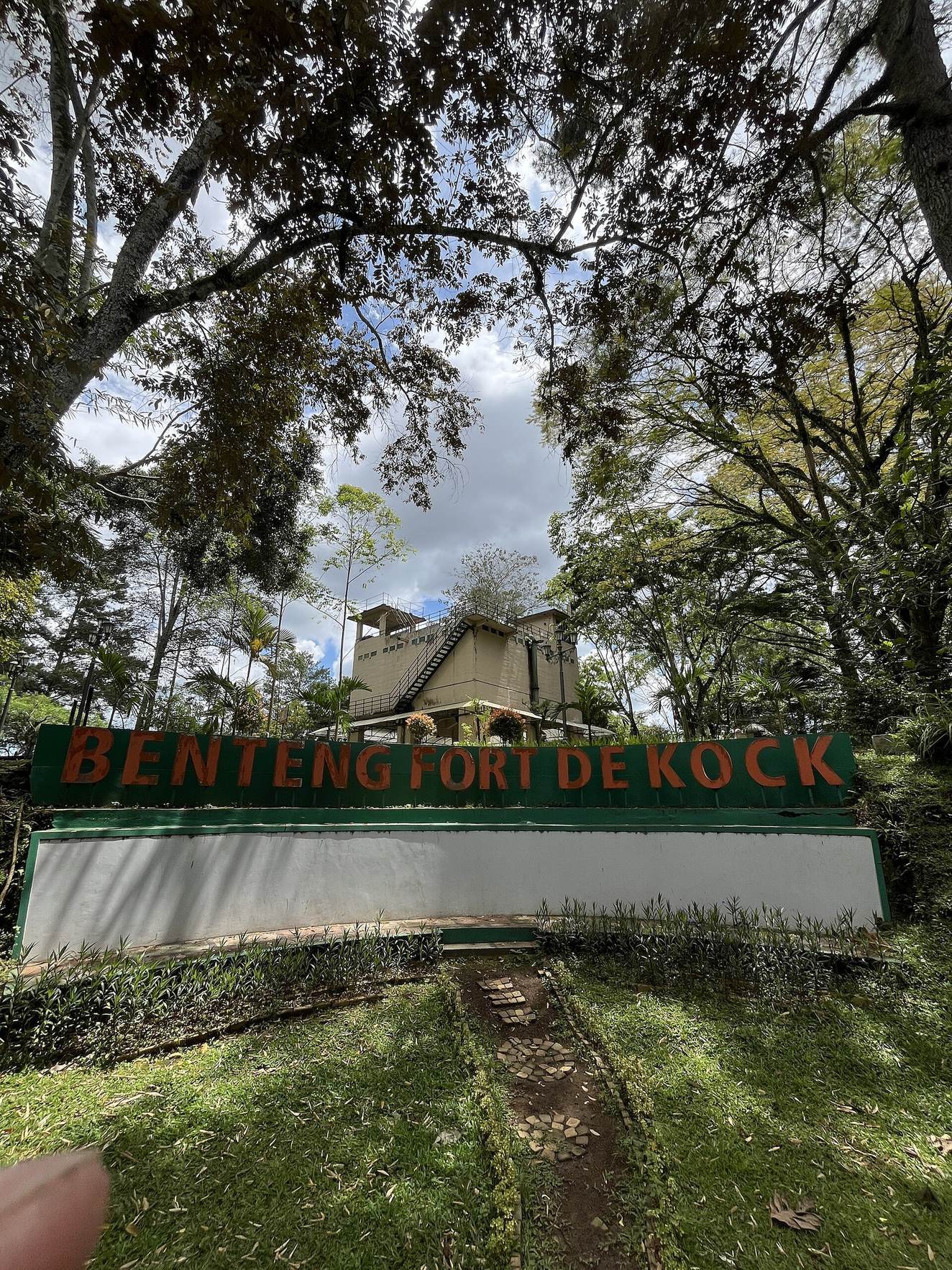
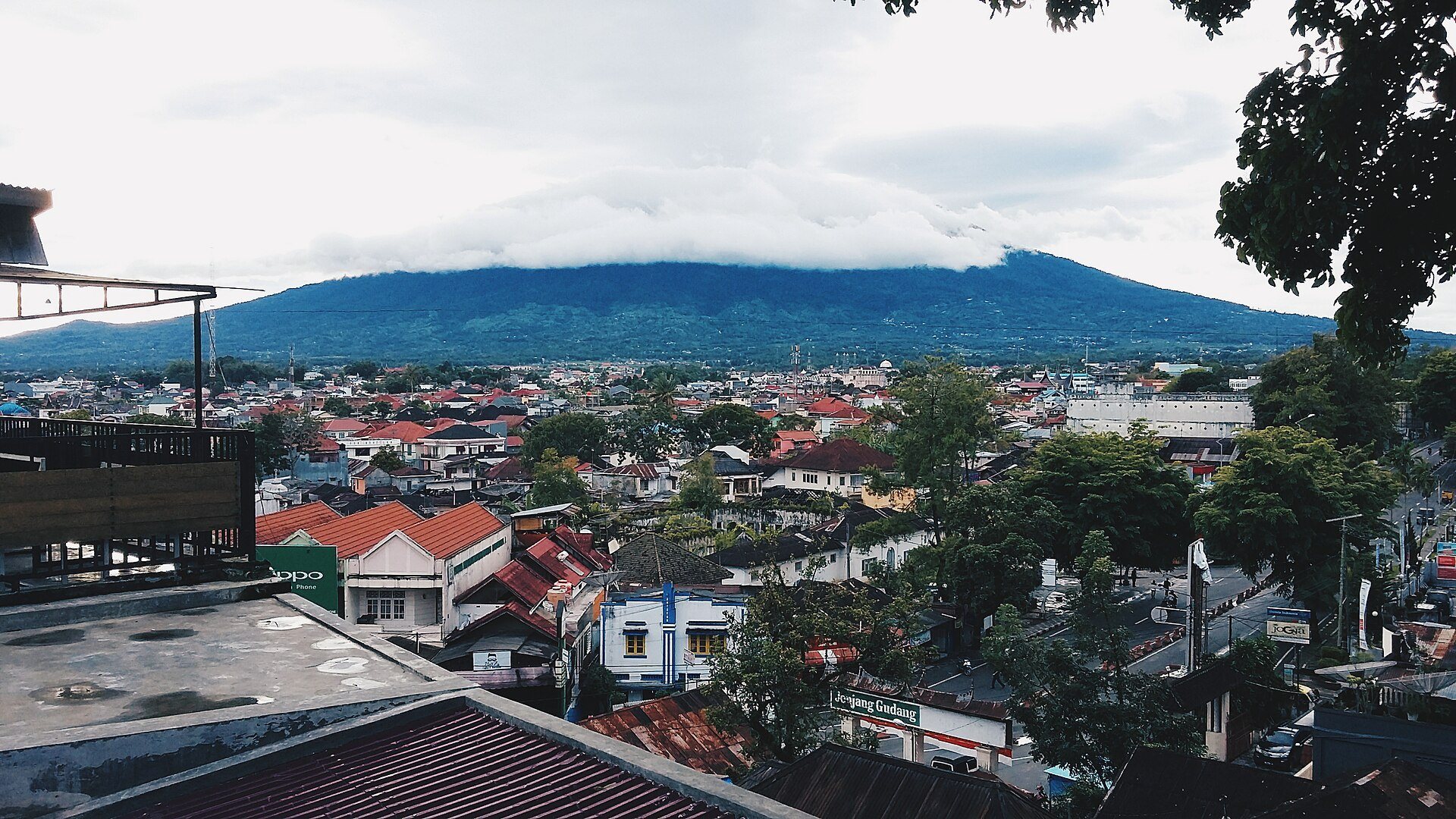
A 20-metre-high maintenance building for a radio antenna now stands at the centre of the former mound. Painted white and green, it forms the principal modern structure within the surviving fort area, while its upper deck provides panoramic views over Bukittinggi.