Fort Belgica: A Dutch Colonial Fortress in Indonesia
Site at a Glance
- Rating
- 4.7
- Popularity
- Low
- Country
- Indonesia
- Primary era
- Early Modern
- Eras represented
- Early Modern
- Civilizations
- Dutch
- Site type
- Military
- Remains
- Fort
On this page7 sections
History
Fort Belgica is a seventeenth-century Dutch colonial fort on Banda Neira, Indonesia, built as part of the defensive system of the Banda Islands, then the only place in the world where nutmeg was produced. Its present form dates mainly from reconstruction between 1672 and 1673, when the fort became a powerful stone stronghold overlooking Fort Nassau.
Portuguese and Early Dutch Fortifications
A Portuguese fort occupied the hill before Fort Belgica was built. On September 4, 1611, Pieter Both, the first Governor-General of the Dutch East Indies, ordered a new Dutch fort to strengthen the position above the original Dutch Fort Nassau. The new work was to be called either Belgica or Nederland, but it became known as Fort Belgica.
The first Fort Belgica was a modest square fort. In 1662, Jan Pieterszoon Coen, a Dutch colonial official associated with the expansion of Dutch power in the East Indies, ordered its renovation. The earlier structure was replaced by a stronger redoubt, a compact fortified enclosure, designed to accommodate 40 men.
Reconstruction and Military Use
By the middle of the seventeenth century, earthquakes, the tropical monsoon climate, and weaknesses in the original materials and building methods had left the fort in poor condition. In 1667, Governor Cornelis Speelman commissioned the military engineer Adriaan de Leeuw to redesign and rebuild it. Major work began in 1672 and ended in 1673, creating the castle-like fortification that survives in altered form.
The modifications cost more than 300,000 guilders. Fort Belgica was equipped with 50 guns and defended by a garrison of 400 men, yet it surrendered to a British fleet in 1796 without firing a shot. Dutch control was restored in 1803, but British forces captured the fort again in 1810 after a naval force commanded by Captain Christopher Cole stormed it.
Demolition, Restoration, and Heritage Status
Part of the fort was demolished in 1904, and the structure was incompletely rebuilt in 1919. A thorough restoration followed in 1991 on the orders of General Benny Moerdani, Indonesia’s Minister of Defense and Security. In January 2015, Fort Belgica was placed on UNESCO’s World Heritage Tentative List as part of the Historic and Marine Landscape of the Banda Islands. This designation represents a proposal for possible future inscription and is not the same as inclusion on the World Heritage List.
Remains
Outer Pentagon and Defenses
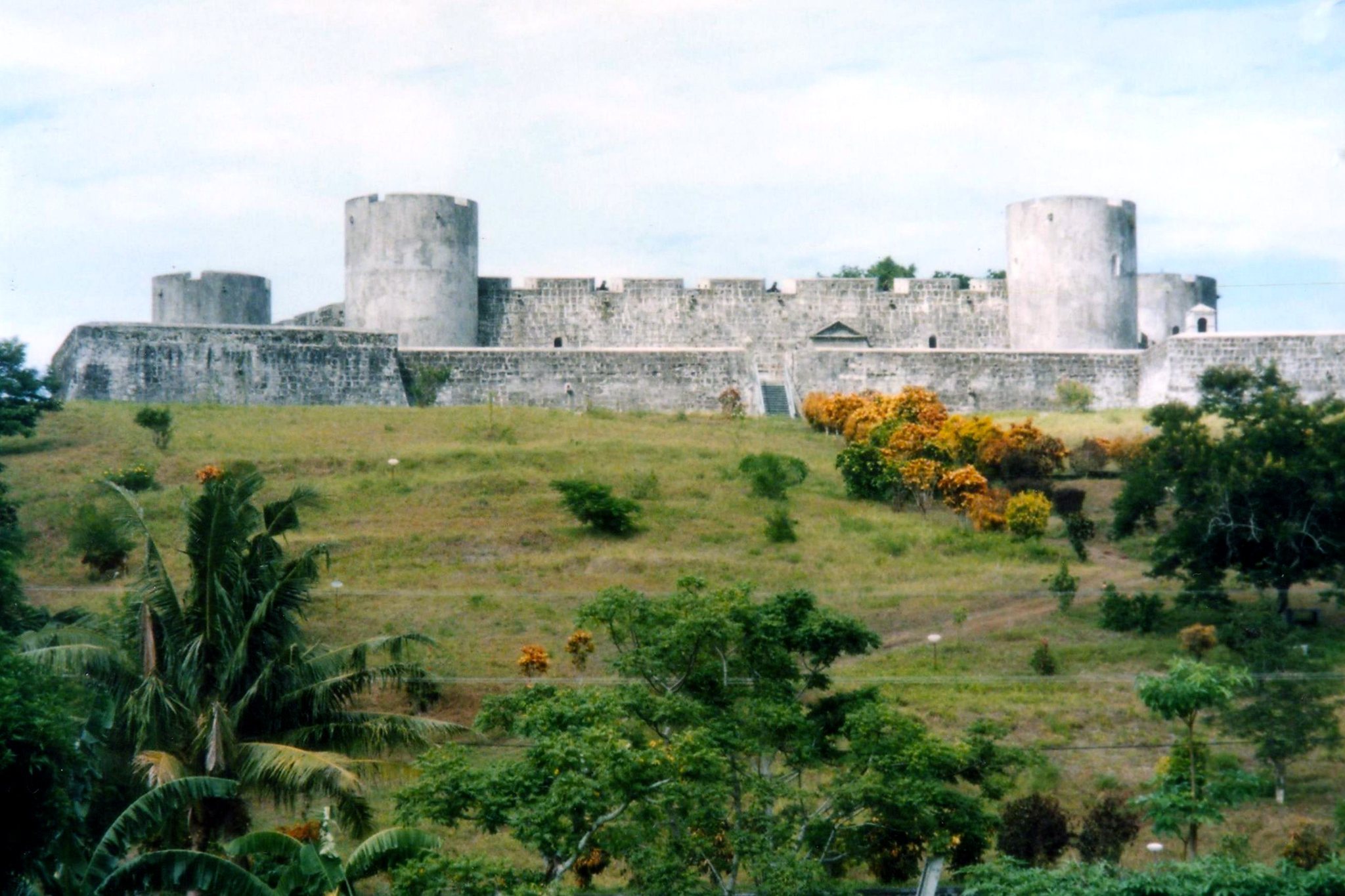
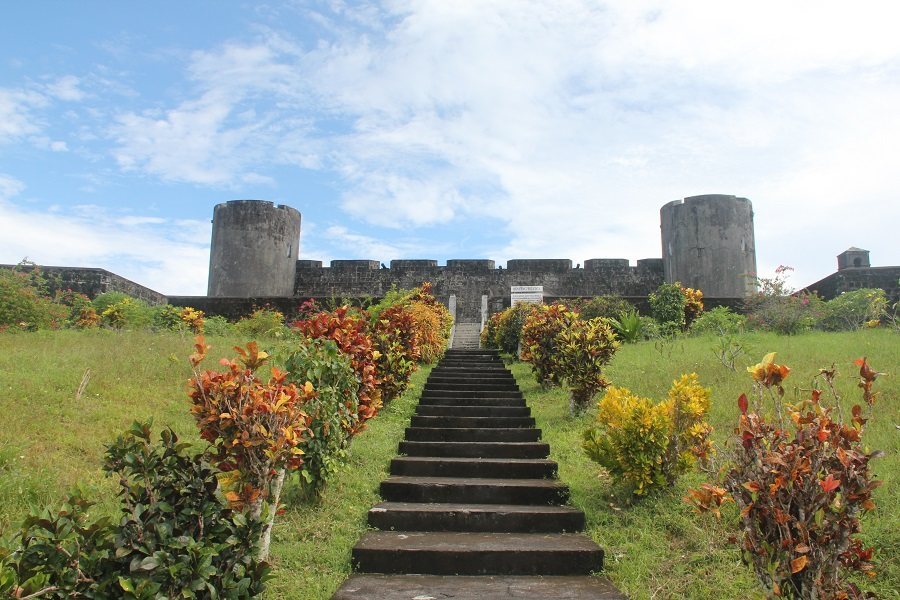
Fort Belgica stands on a hill in the southwestern part of Banda Neira, above Fort Nassau on the southern side of the hill. The rebuilt fort is made of stone transported to the island and has a pentagonal plan. A low outer pentagonal structure surrounds a higher inner pentagon, creating the fort’s distinctive stepped profile.
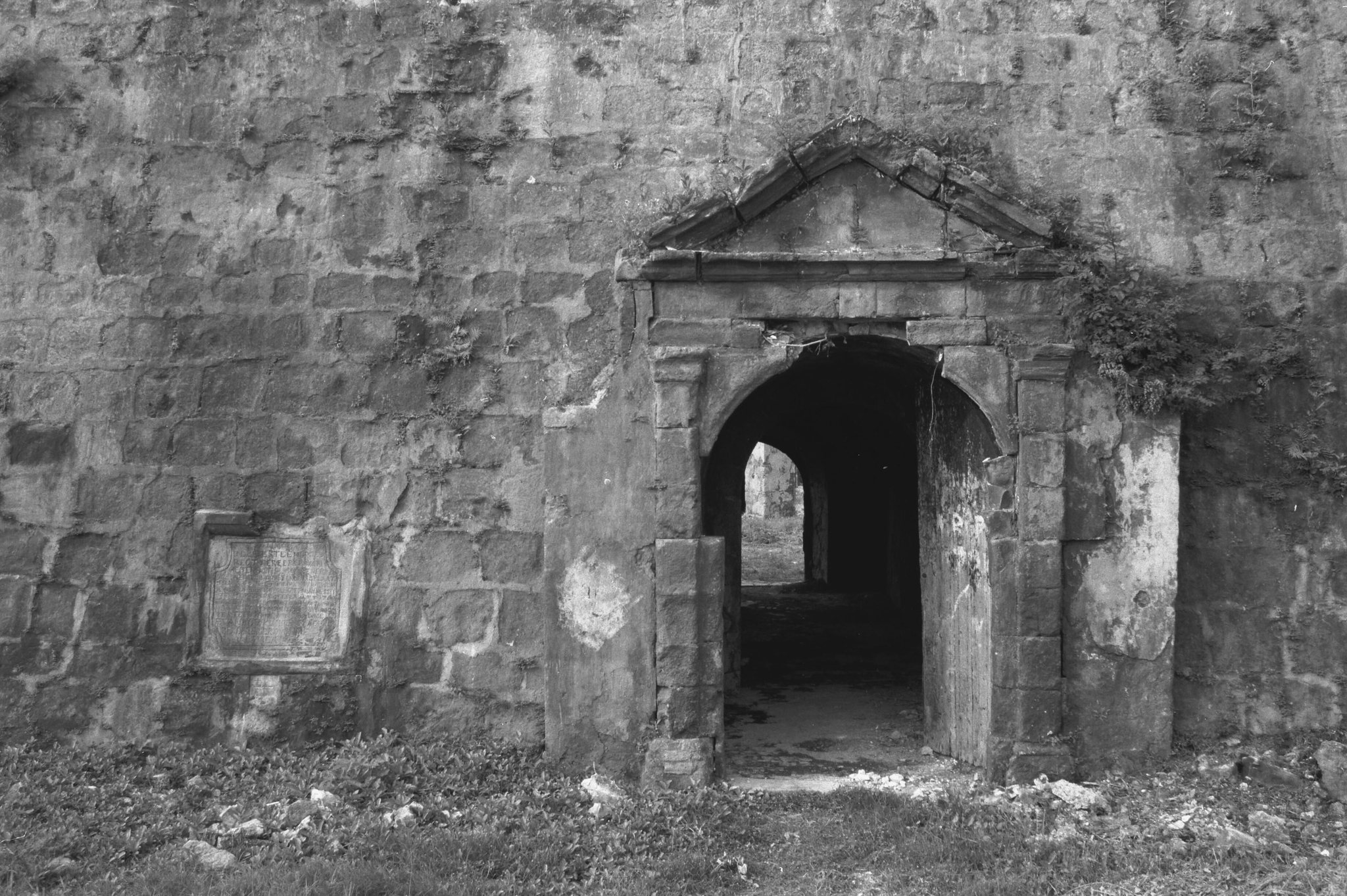
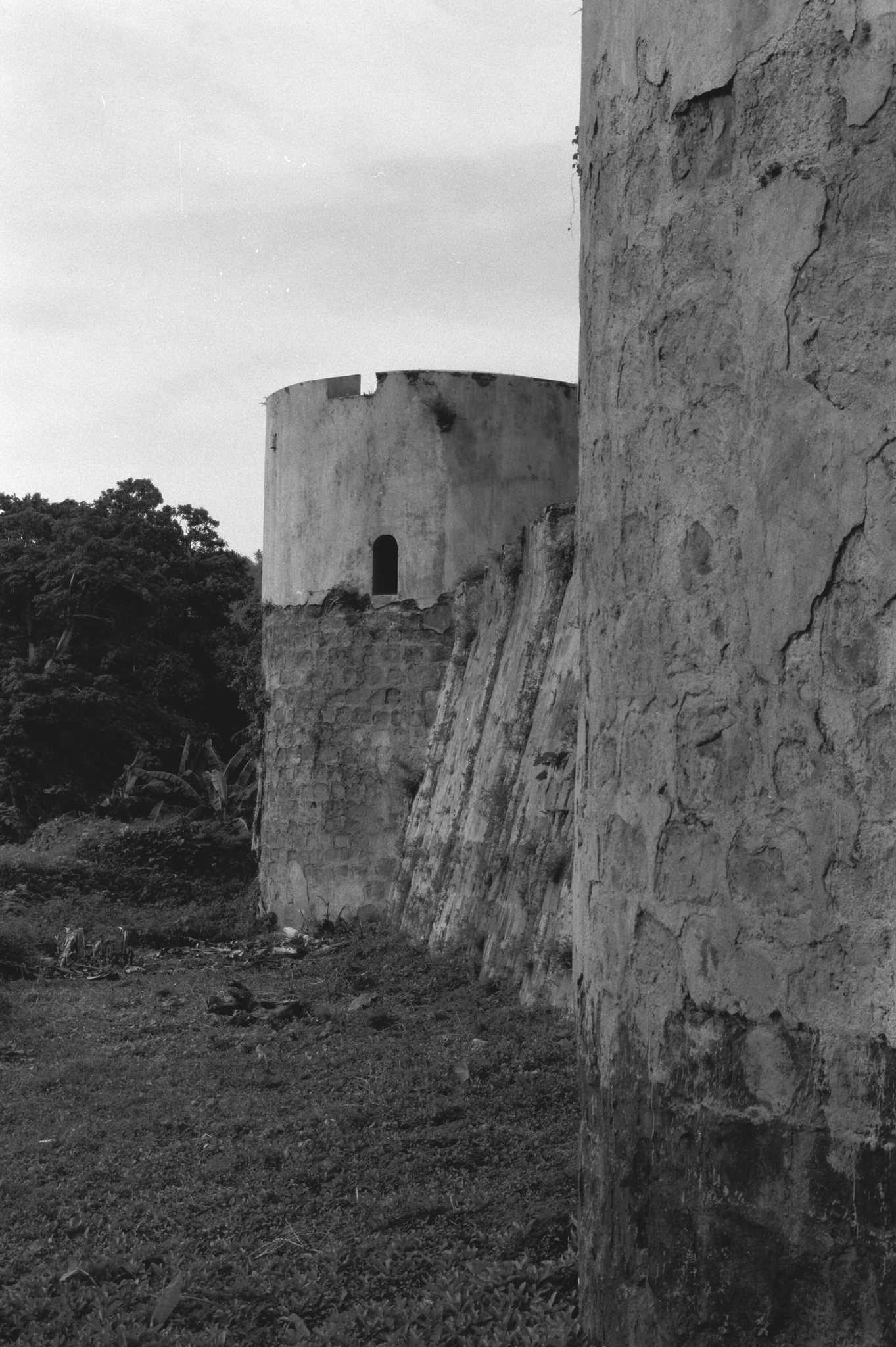
The southernmost wall contains the only entrance, reached by a staircase. Five angled corner bastions, projecting parts of a fortification designed to direct defensive fire along the walls, strengthen the outer structure. Each bastion has a bartizan, a small projecting lookout or defensive turret. Starting from the left of the entrance, they are named Galge punt, Moorsche punt, Leugenaar punt, Metaale punt, and Klokke punt.
Inner Pentagon
The higher inner structure contains several rooms arranged around a pentagonal courtyard. One of these rooms has a staircase leading to the upper level. Together, the outer and inner pentagons form the surviving architectural arrangement associated with Fort Belgica’s reconstruction in the late seventeenth century.
Fort Belgica is identified as an example of Dutch colonial architecture and is the only fort of this type in the Banda Islands.