First Romanian School: An Orthodox School in Brașov
Site at a Glance
- Popularity
- High
- Country
- Romania
- Primary era
- Early Modern
- Eras represented
- Early Modern, Modern
- Civilizations
- Habsburg, Kingdom of Romania, Principality of Transylvania
- Site type
- Civic
- Remains
- School
On this page15 sections
History
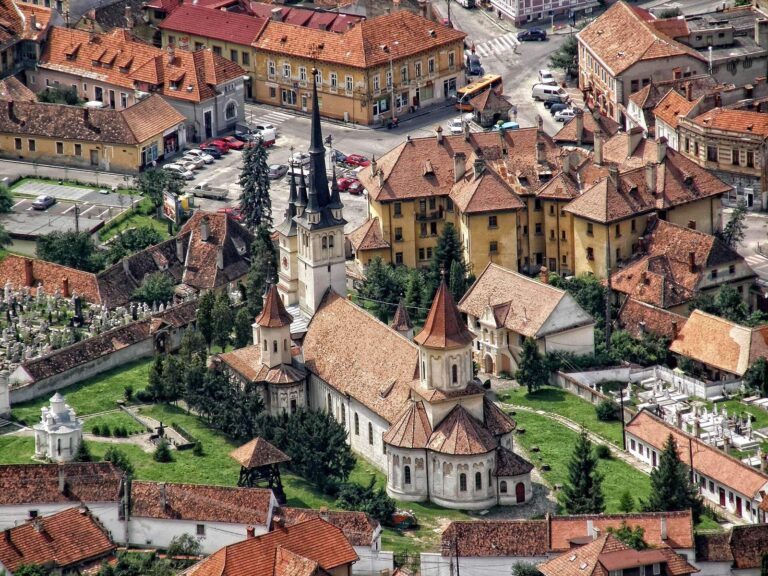
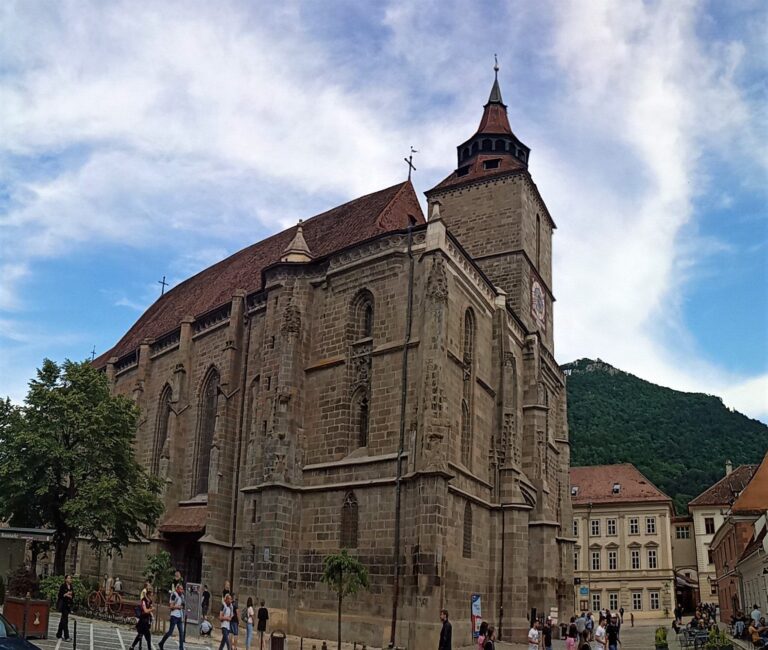
The First Romanian School was an Orthodox school in the courtyard of St. Nicholas Church in Șcheii Brașovului, a historic district of Brașov, Romania. Orthodox refers here to the Eastern Christian tradition. It was the first school in the territory of present-day Romania to teach in Romanian and admit lay pupils alongside clergy. Its institutional history reaches the late 15th century, and its building later took on a Baroque form.
Origins and Romanian-language teaching
Organized Orthodox education in Șchei may date to the 14th century. A papal decree from 1399 refers to an Orthodox community in Brașov and urges Catholics to curb the spread of Orthodox teaching. Tradition also links early schooling to fragments of an 11th- or 12th-century homiliary, a collection of religious sermons. Historian Nicolae Iorga placed the school’s beginnings no later than 1480. Its first known mention is from 1495, and its existence is certain by 1497.
Church Slavonic, a historical language of Orthodox worship and writing, was used for teaching before Romanian instruction began during the 16th century. Romanian was being taught by about 1530. In the 16th century, pupils learned reading, writing, Romanian, Church Slavonic, Cyrillic script, Christian philosophy, and church law. The school offered basic instruction as well as advanced study for future clergy and teachers, including training in teaching. Latin was also taught, and Greek became a subject in the 18th century.
Education in Romanian also helped preserve Orthodox learning amid efforts to draw the Romanian population toward Catholicism. Rulers of Moldavia and Wallachia, historic Romanian principalities, supported Romanian education in Transylvania with books and financial aid. School and church personnel also served Brașov beyond education. Local authorities selected people associated with St. Nicholas Church and the school as clerks and delegates for economic and political relations with the principalities. Teachers and grammarians copied documents and joined official diplomatic or commercial missions.
Printing, scholarship, and educational reform
The school’s cultural role grew alongside Romanian-language printing in Brașov. From 1559 to 1581, the deacon and printer Coresi produced 17 books in Romanian and Church Slavonic using paper from a local workshop; his broader printing activity in the city ran from 1556 to 1583. In 1570, the schoolteacher Oprea translated the Octoechos, an Orthodox service book organized around eight musical modes, into Romanian. Its epilogue describes the translation and school life in Șchei. In 1578, local authorities accepted Coresi’s catechism as the school’s first Romanian textbook.
Other teachers and clergy added to the body of Romanian writing. Archpriest Iane translated the Second Homiliary and wrote the first Romanian letter in Brașov. Barbu Horban prepared the first philosophy manual, Archpriest Vasile wrote a chronicle on a Romanian subject, and Petcu Soanul edited the country’s first almanac. In 1724, Archpriest Florea Baran wrote the first document in the Latin alphabet. Radu Tempea II’s 1743 Chronicle of Șchei covers the years 1391–1743.
The curriculum changed little until the 17th century, then developed into a wider educational system. In the 18th century, the school belonged to the “non-united national schools,” meaning Orthodox schools not united with the Roman Catholic Church. Instruction extended from elementary classes, sometimes taught by one or two teachers, to capital schools at an intermediate level and real or normal schools that prepared pupils for gymnasium study. On 24 May 1774, the Viennese court ordered improvements to Serbian and Romanian elementary schools of this kind. Children aged six to twelve were required to attend, and church authorities had to report on attendance. The school also operated within the Ratio Educationis, the public-education framework established for Transylvania in 1770–1779. In 1797, Radu Tempea V wrote a Romanian grammar structured on Latin.
A three-year course introduced in 1802 included German and Hungarian. Students’ home villages paid for their education, expecting them to return as clerks, teachers, or priests. In total, 1,730 pupils attended, with no more than 110 at the school at any one time. As the premises became too small, the school acquired Ciurculeț House in 1826 and established a kindergarten there. Teaching continued in that building until the First World War.
Anton Pann stayed at St. Nicholas Church for periods in 1821 and 1828, sang in its choir, and taught there in the late 1820s. In May 1848, teacher Gheorghe Ucenescu fitted a melody by Pann to Andrei Mureșianu’s poem “Deșteaptă-te, române!” (“Awake, Romanian!”). The school and church complex is consequently associated with the creation of Romania’s national anthem.
Closure and museum
The school continued serving the Romanian community of Șchei until 1850, when a Romanian Orthodox high school, later known as Andrei Șaguna College, opened. Until then, it had been the community’s only Romanian school. After its closure, the school building’s upper rooms were used for a library, archive, and meetings, while the ground floor became the sacristan’s residence.
Andrei Șaguna proposed turning the building into a museum in 1858. Collection-building began in 1933, but attempts to establish the museum in 1926 and 1938 did not succeed. Professor Ion Colan organized it in 1957, and it opened on 29 June 1961 as the Museum of Romanian Culture in Șcheii Brașovului. It was reorganized in 1967 and 1987. The former school is registered as a nationally important historic monument.
Remains
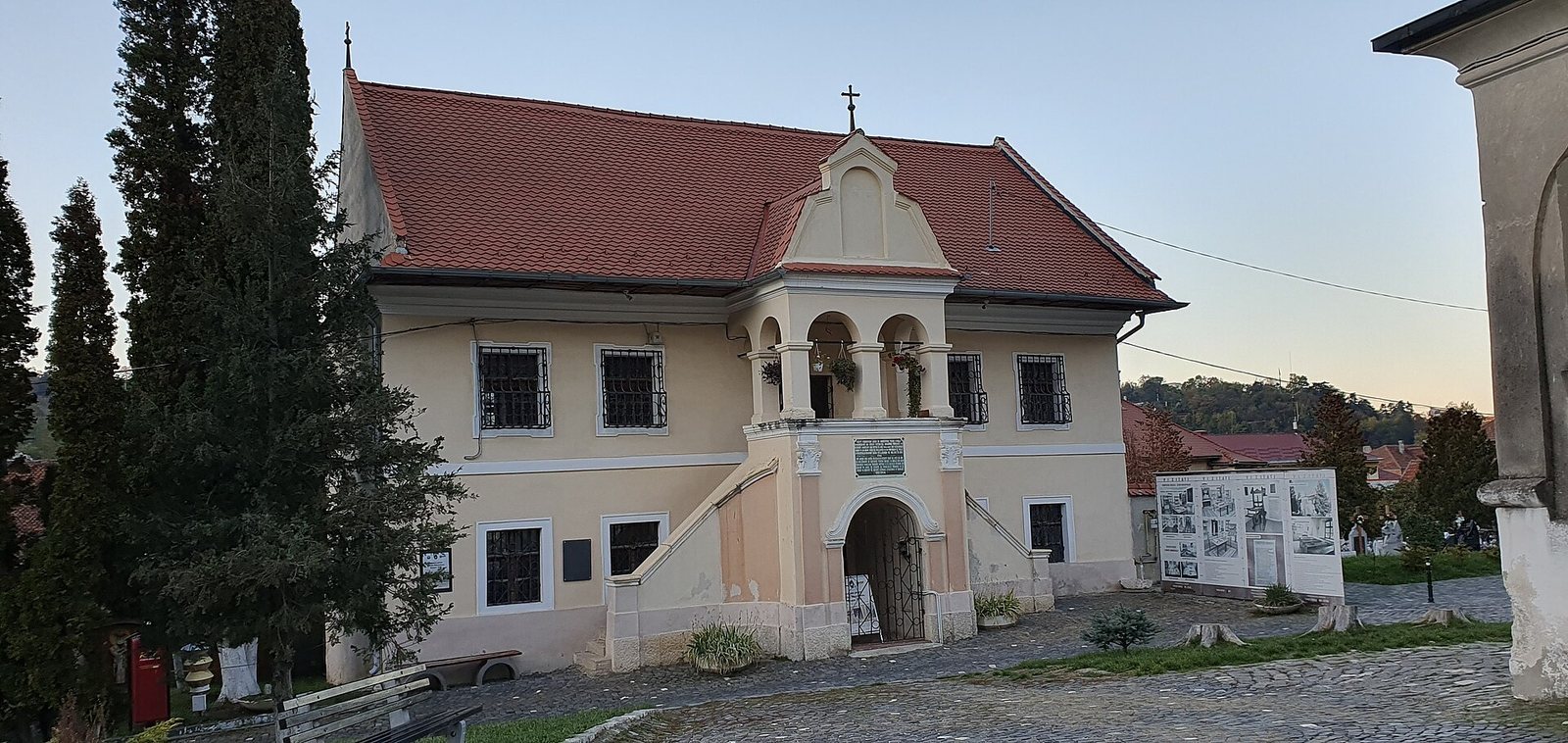
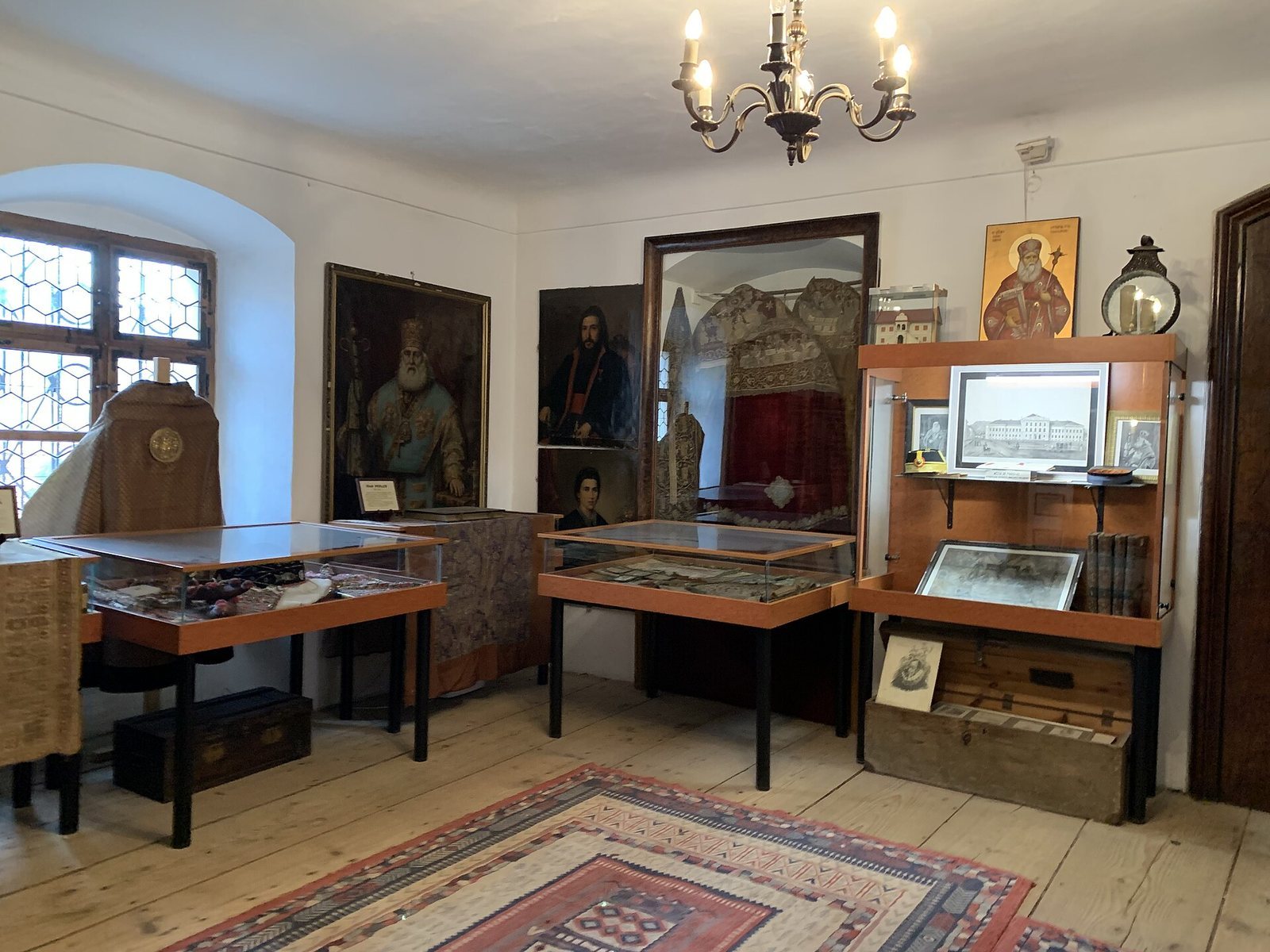
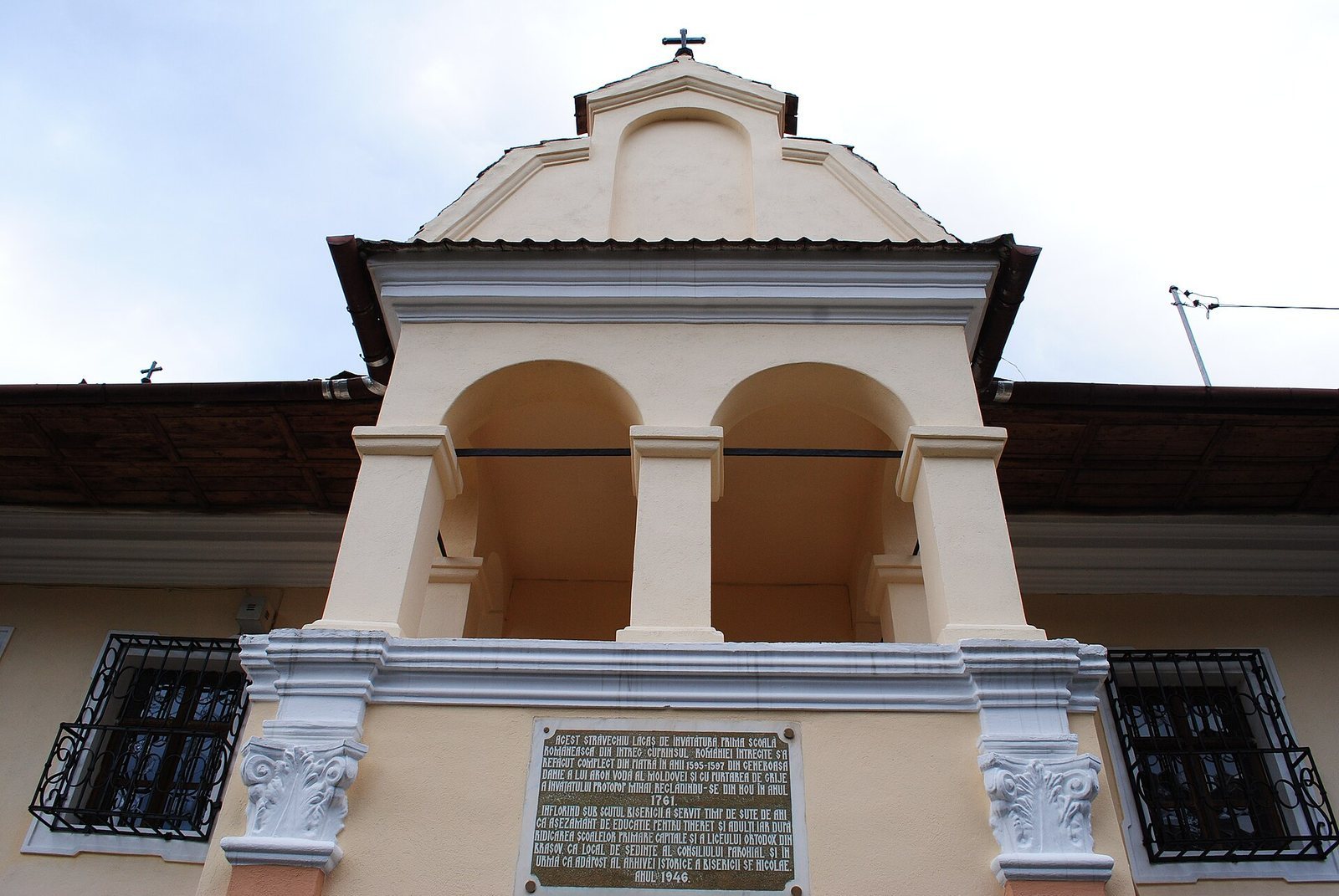
The surviving school stands within the church courtyard as a two-level stone building with a Baroque form. Its museum displays are arranged in named rooms devoted to school life, printing, books, and local household culture. A statue and commemorative plaques are also present at the site.
Building and courtyard
Former school building
A wooden school preceded the stone structure, which was built in 1595–1597 while work was underway on the stone church. Construction followed the urging of Archpriest Mihai and received support from Aron Vodă, ruler of Moldavia. The work cost 375 florins; at the time, only 14 houses in Brașov were valued at more than 300 florins. In 1760–1761, an additional storey gave the building its two-level form, which it has retained.
Entrance memorials
A plaque above the entrance, dated 1946, recalls the stone rebuilding and the school’s long educational role. A second plaque, placed at the entrance in 2016, commemorates the 1824 first edition of Peter Beron’s Fish Primer, printed in Brașov. A statue of Deacon Coresi is also part of the site.
Museum rooms and collections
Collections and library
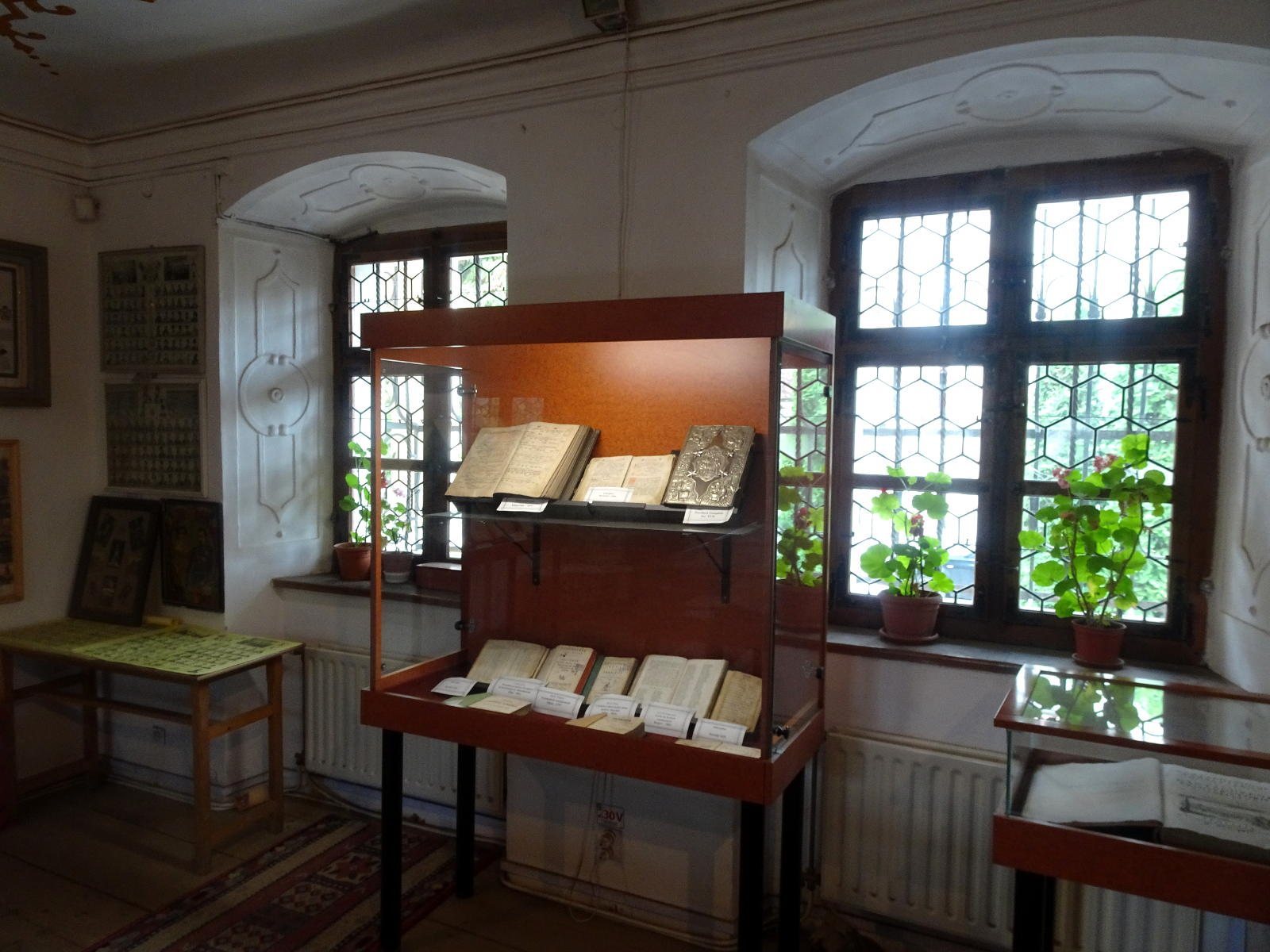
The museum’s holdings include about 4,000 old books and more than 30,000 documents, mainly in Church Slavonic and Old Romanian. Its library contains 6,000 books used in the school. The wider collection includes books from Transylvania, Moldavia, Wallachia, and elsewhere in Europe, among them a 1643 book from Iași written in Middle Bulgarian, a medieval form of Bulgarian, and a school almanac.
Anton Pann classroom
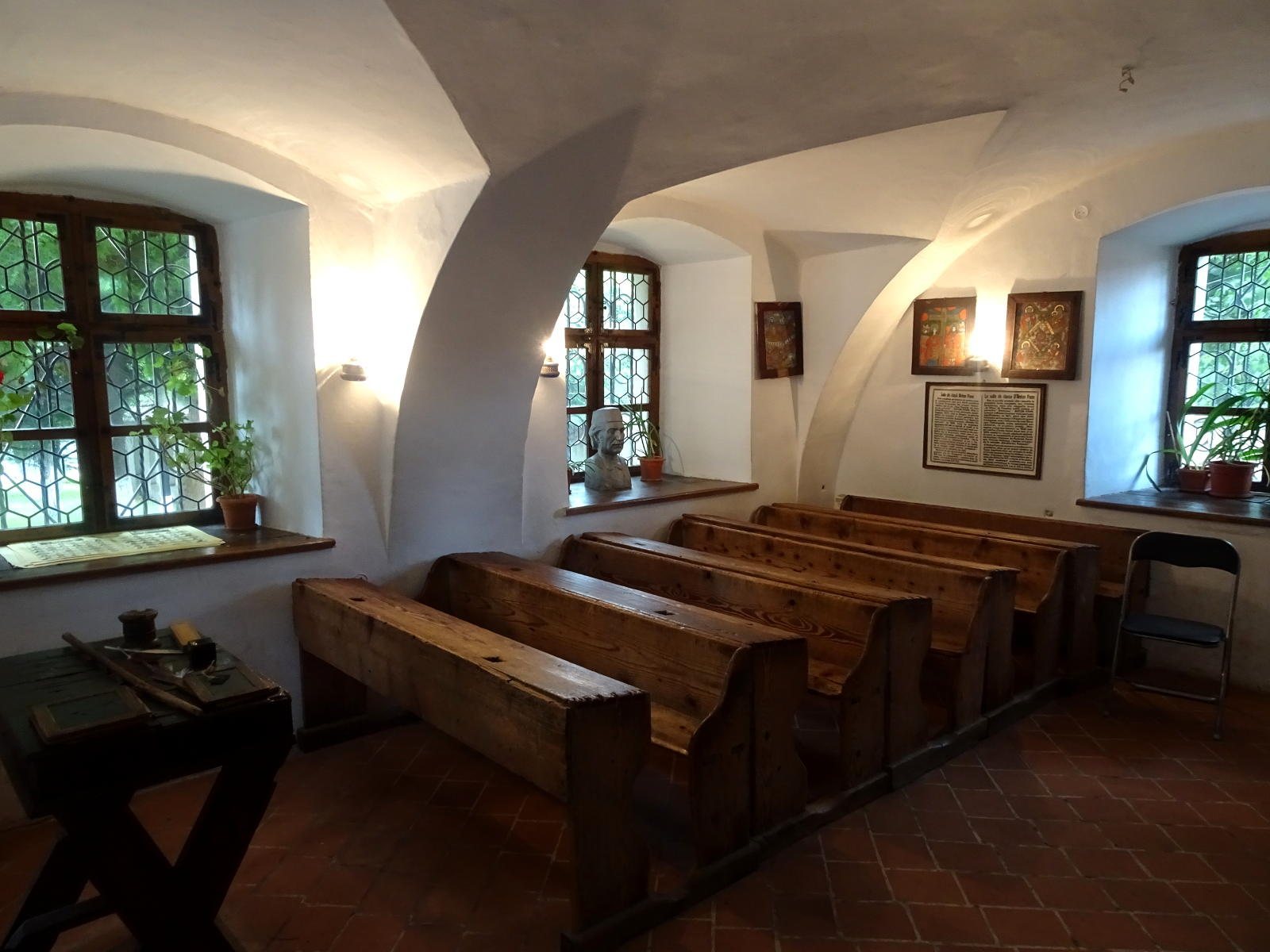
This room evokes an older schoolroom with scratched desks, inkpots, pens, and tablets for writing letters. It also commemorates Pann’s association with the church and school.
Deacon Coresi room
A working replica of Coresi’s press has been displayed here since 1967. It recalls a press associated with Coresi that was brought from Târgoviște in 1556.
Books and Brașov Scholars room
This room presents old books and newspapers printed in Brașov alongside paintings by Mișu Popp. Its displays include an 11th- or 12th-century homiliary, the prayer book of priest Bratu, the book of scriptural readings compiled by Archpriest Vasile, and oil paintings on canvas of Metropolitan Andrei Șaguna.
Book as a Factor of National Unity room
More than 80 princely charters written on parchment and gilded are displayed here; they record lasting connections among Romanian lands. Other works include the 1688 Bucharest Bible, Varlaam’s 1643 Homiliary, the 1652 Law Code of Târgoviște, and Coresi’s Second Homiliary, Psalter, Miscellany, and Octoechos. A Psalter is a book of Psalms.
Hearth room
This room contains a hearth, glass icons, and household objects associated with the medieval-era folk culture of Șchei.