Eshoni Pir Madrasa: An Islamic Educational Institution in Bukhara


Site at a Glance
- Rating
- 4.5
- Popularity
- Very Low
- Country
- Uzbekistan
- Primary era
- Early Modern
- Eras represented
- Early Modern
- Civilizations
- Emirate of Bukhara
- Site type
- Religious
- Remains
- Madrasa
On this page6 sections
History
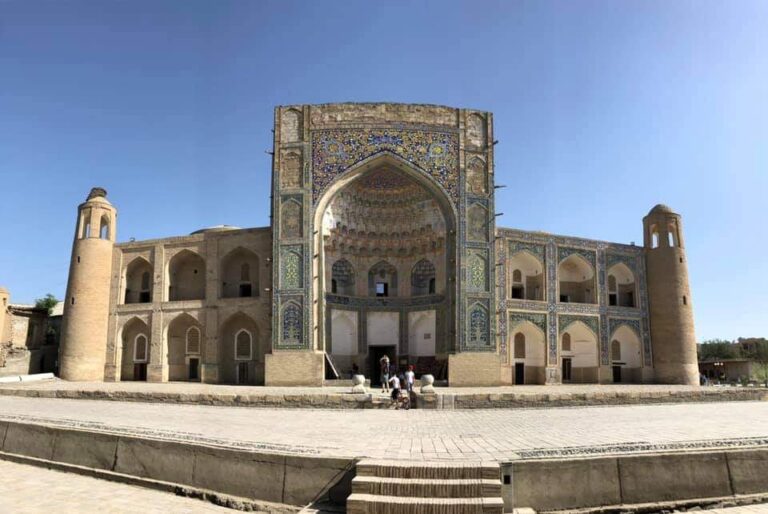
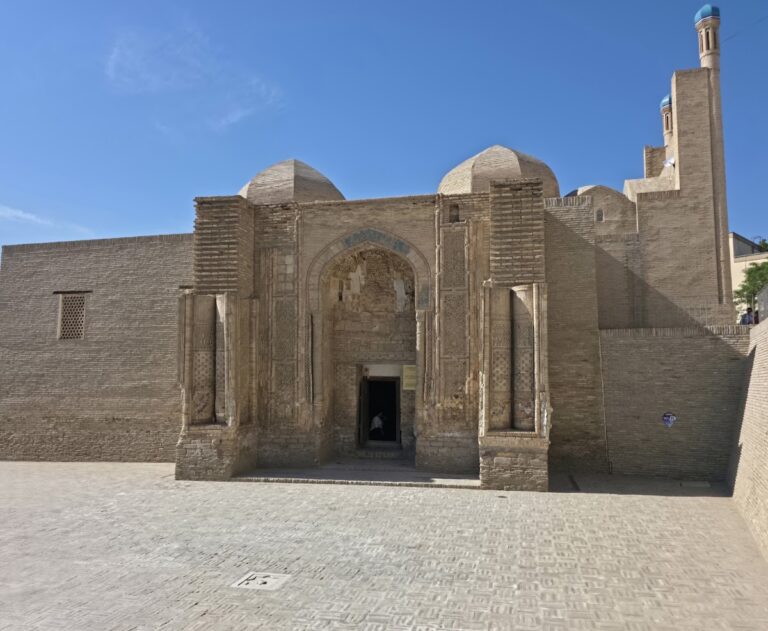
Eshoni Pir Madrasa is a mid-eighteenth-century Islamic educational institution in Bukhara, Uzbekistan, built in the Central Asian architectural style during the reign of Muhammad Rahimbiy. Located in Eshoni Pir Alley, also known as Xojagi, in the historic center of the city, it was constructed by Ishoqhoja Dahbediy during the period when Muhammad Rahimbiy founded the Manghit dynasty in the Bukhara Emirate.
Education and endowment
The madrasa operated through a waqf, a permanent charitable or religious endowment whose income supports a designated institution. Shops and parcels of land were assigned to its maintenance, including a butcher’s shop in Xoja Abdulloh Safedmo’y Alley and 25 plots in Raboti Kuraviy Cemetery at Komi Abu Muslim. These provisions connected the school’s educational work with a wider system of endowed property.
Rules governing the madrasa addressed both administration and student conduct. Students who missed classes for more than two months and ten days without a valid reason could be expelled. The documents also name teachers who served there, including Mulla Abdurahim, Mulla Bobonazar, and Mulla Komilxoja.
Waqf records and later repairs
Four documents concerning the madrasa’s activities were identified by Abdusattor Jumanazarov. One was copied during the reign of Amir Shohmurod, a later ruler of the Bukhara Emirate, while the waqf document was copied in 1794–1795. This renewed document appointed Ashurjon Qofilaboshi ibn Muhammad Rahimjon as mutawalli, the trustee responsible for managing the endowment.
The building underwent major repairs in the early twentieth century. The work was financed by Alim Khan, ruler of the Bukhara Emirate from 1910 to 1920. Eshoni Pir Madrasa is now included in Uzbekistan’s national register of immovable objects of material and cultural heritage and is legally protected as a historic architectural monument.
Remains
Layout and construction
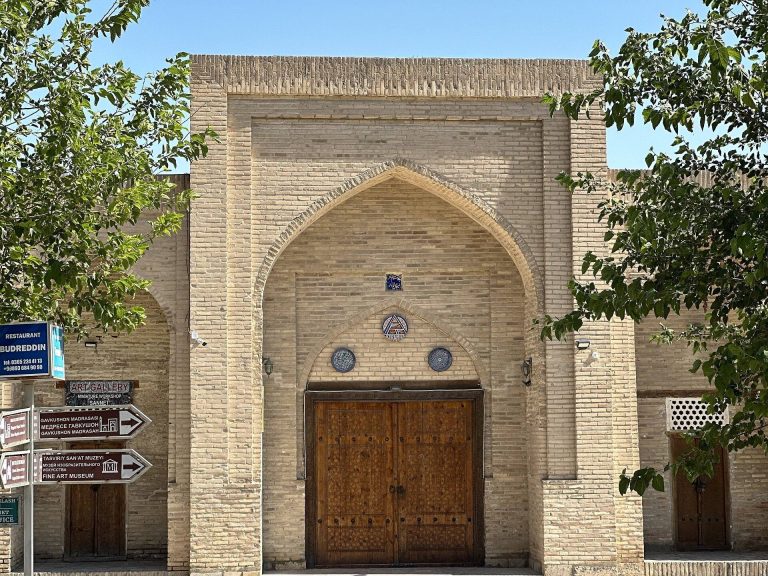
Eshoni Pir Madrasa is a two-storey building made of baked brick, wood, stone, and gypsum. Its documented plan includes inner and outer courtyards surrounded by cells or rooms, together with a mosque positioned on the western side. Sadri Ziyo recorded 18 cells, while a separate architectural description gives the building a total of 52 rooms, reflecting two different descriptions of its internal accommodation.
Courtyards and mosque
The inner and outer courtyards form the principal organizing spaces of the madrasa, with the rooms arranged as part of the educational complex. The mosque on the western side served as the building’s religious component. Together, these features define the surviving architectural arrangement within the two-storey structure.