Epiphania: An Ancient City in Cilicia
Site at a Glance
- Popularity
- Medium
- Country
- Turkey
- Primary era
- Classical
- Eras represented
- Classical, Medieval
- Civilizations
- Byzantine, Roman, Seleucid
- Site type
- City
On this page9 sections
History
Epiphania was an ancient city in Cilicia, in present-day Turkey. Formerly called Oeniandos or Oiniandos, it was renamed in the second century BC for Antiochus IV Epiphanes, a Seleucid king of Syria. The Seleucids were a Hellenistic dynasty that ruled much of western Asia after the division of Alexander the Great’s empire.
Hellenistic and Roman periods
Tacitus credited the Roman general Lucullus with taking control of the part of Cilicia that included Epiphania. After Pompey’s campaign against Cilician pirates in 67–66 BC, many who surrendered were settled in the city. Epiphania was one of several deserted cities that Pompey repopulated, and its calendar counted years from his victory over the pirates.
The city appears in works by the ancient writers Ptolemy, Ammianus, and Pliny the Elder. Cicero, the Roman statesman and writer, stayed there briefly during his exile. He described Epiphania as about a day’s journey from Mount Amanus and wrote of camping below the city.
Imperial rule and Sasanian capture
From the reign of Trajan through that of Gallienus, Epiphania issued coins in its own name as well as coins bearing an emperor’s name. Some issues called the city Traianopolis, apparently linking the name to Trajan’s presence in Cilicia during his campaign against the Parthians. In AD 260, the Sasanian king Shapur I captured Epiphania. The Sasanian Empire was a pre-Islamic Iranian state.
Late Antiquity and later traditions
In Late Antiquity, the later Roman period and transition toward the early Middle Ages, Epiphania was a bishopric in Cilicia Secunda, a Roman provincial division, within the civil Diocese of the East. It belonged to the Patriarchate of Antioch, a major church jurisdiction, and was a suffragan see of Anazarbus, meaning its bishop served under that city’s metropolitan. A sixth-century episcopal list records this standing.
Amphion is identified as Epiphania’s earliest known bishop and as a suffragan of Anazarbus in 325. He attended the First Council of Nicaea, a major early Christian council, that year. He is also said to have suffered under the Roman emperor Diocletian, whose reign included persecution of Christians, and to have spent the rest of his life in Epiphania. The Catholic Church’s titular bishopric of Epiphania preserves the name of this ancient see, which no longer serves as a residential diocese.
The eighteenth-century historian Edward Gibbon attributed Saint George’s birth to Epiphania, locating it in a fuller’s shop, a workshop where cloth was cleaned and thickened. Local tradition also places the ancient Battle of Issus at the ruins, although the battle is considered more likely to have taken place about 10 km south, near Dörtyol.
Remains
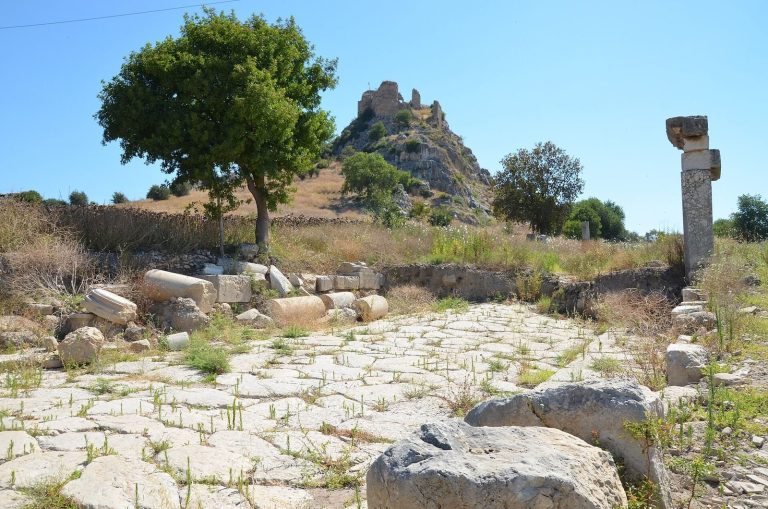
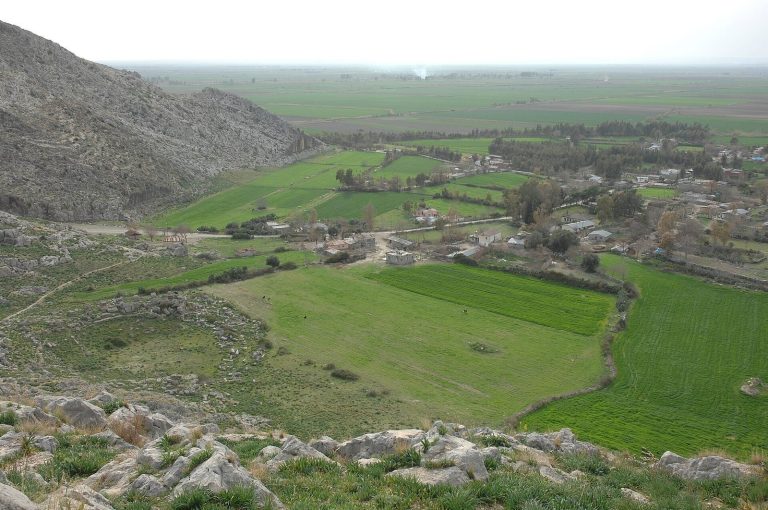
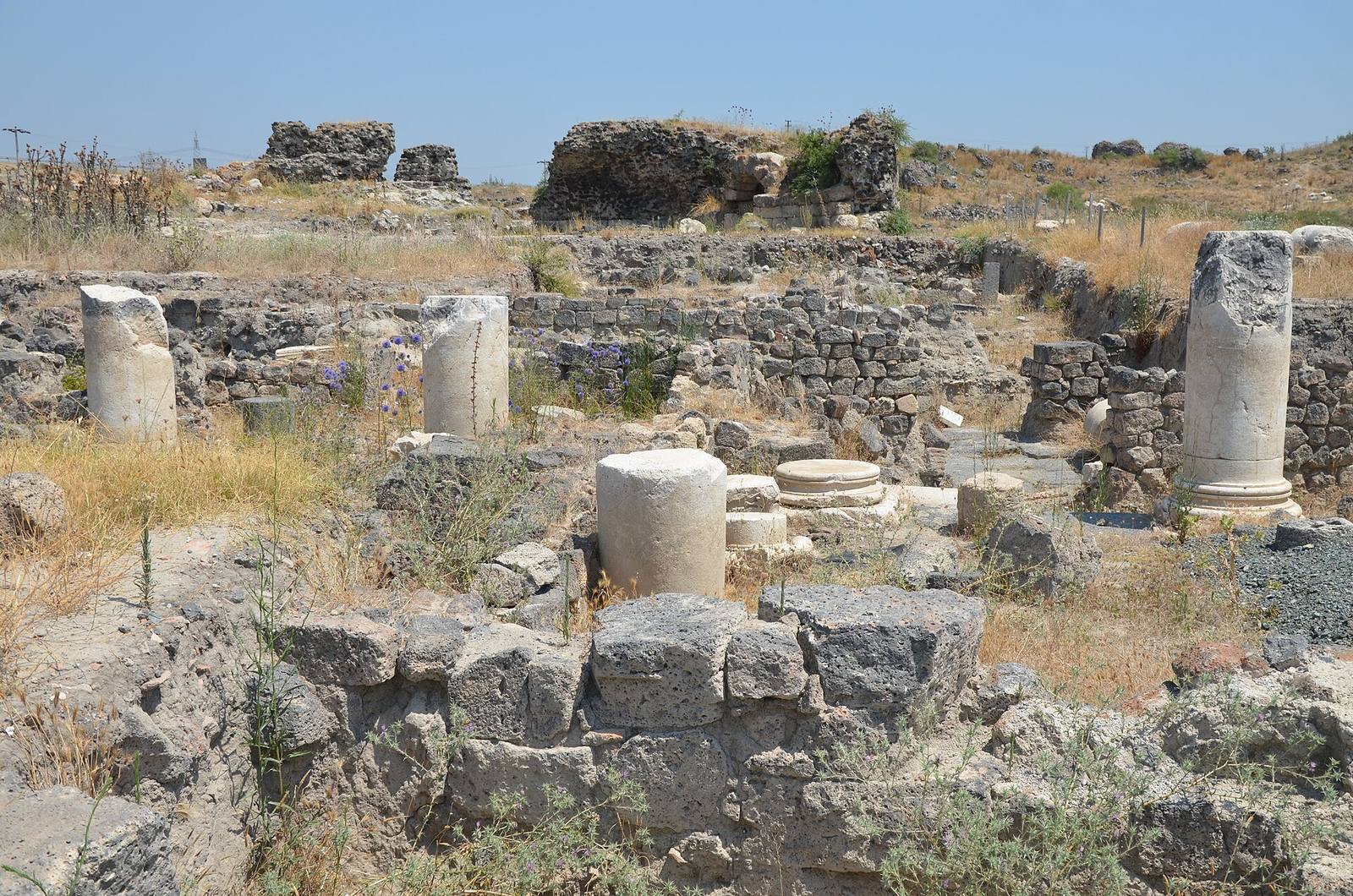
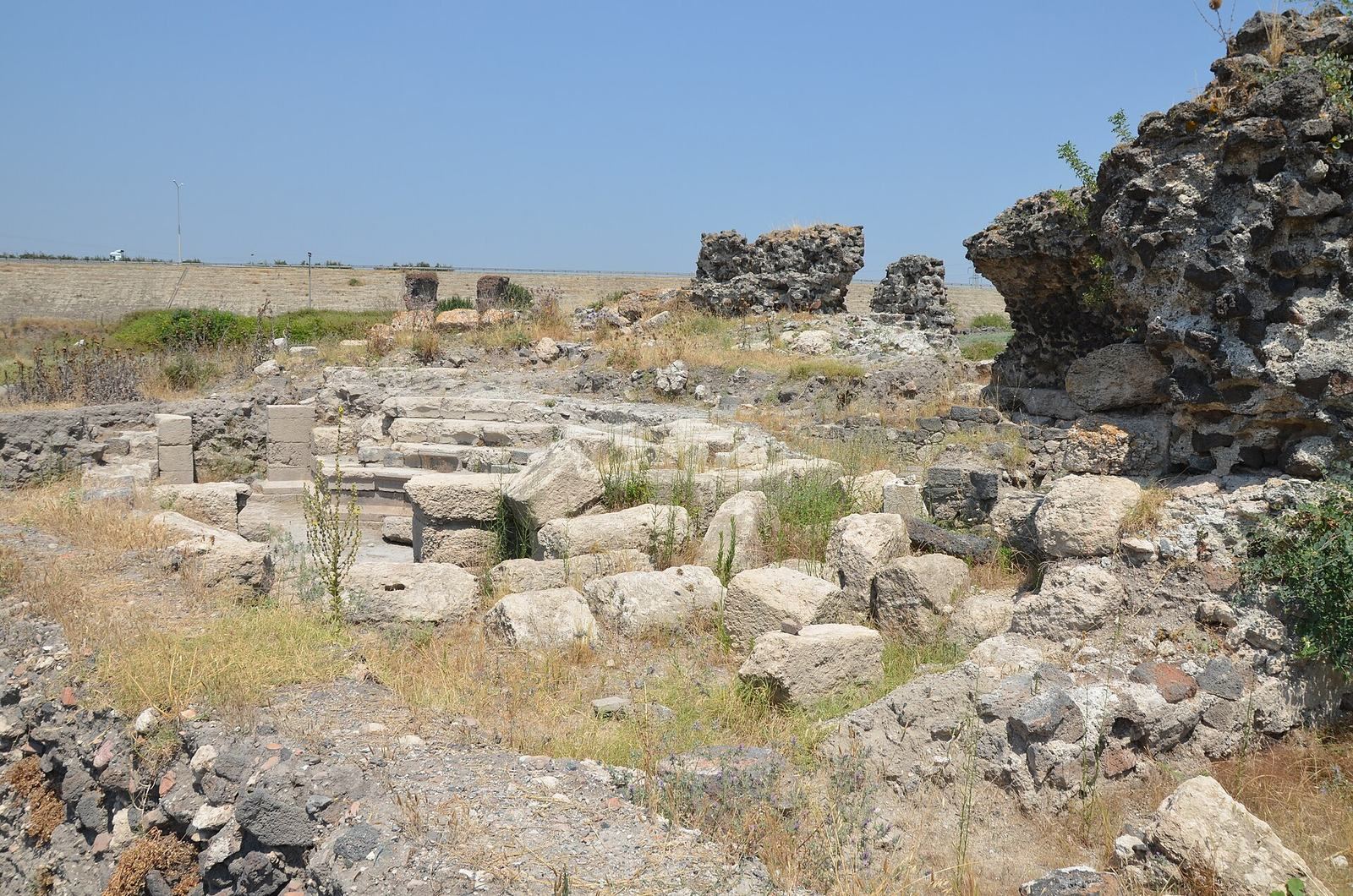
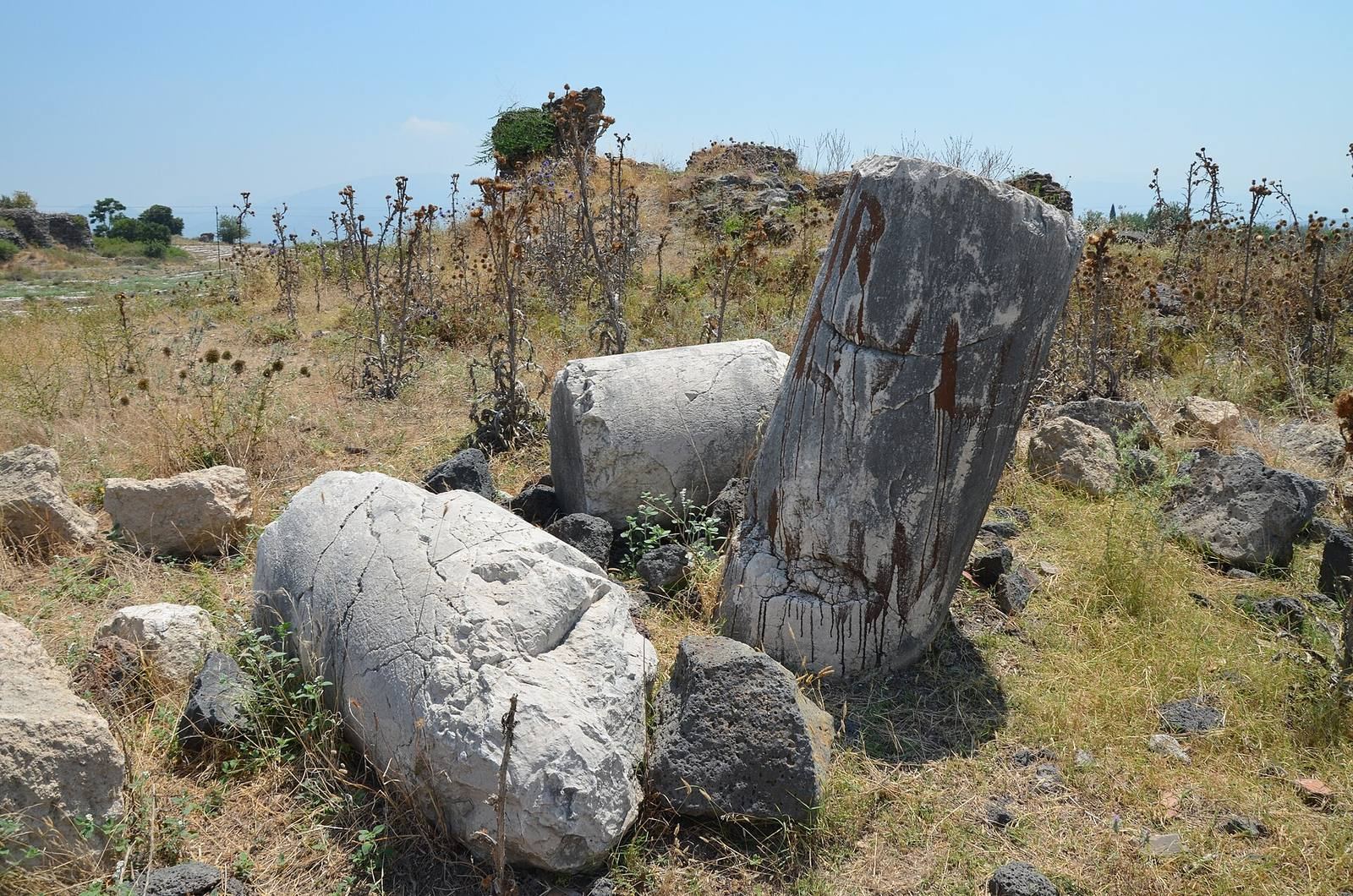
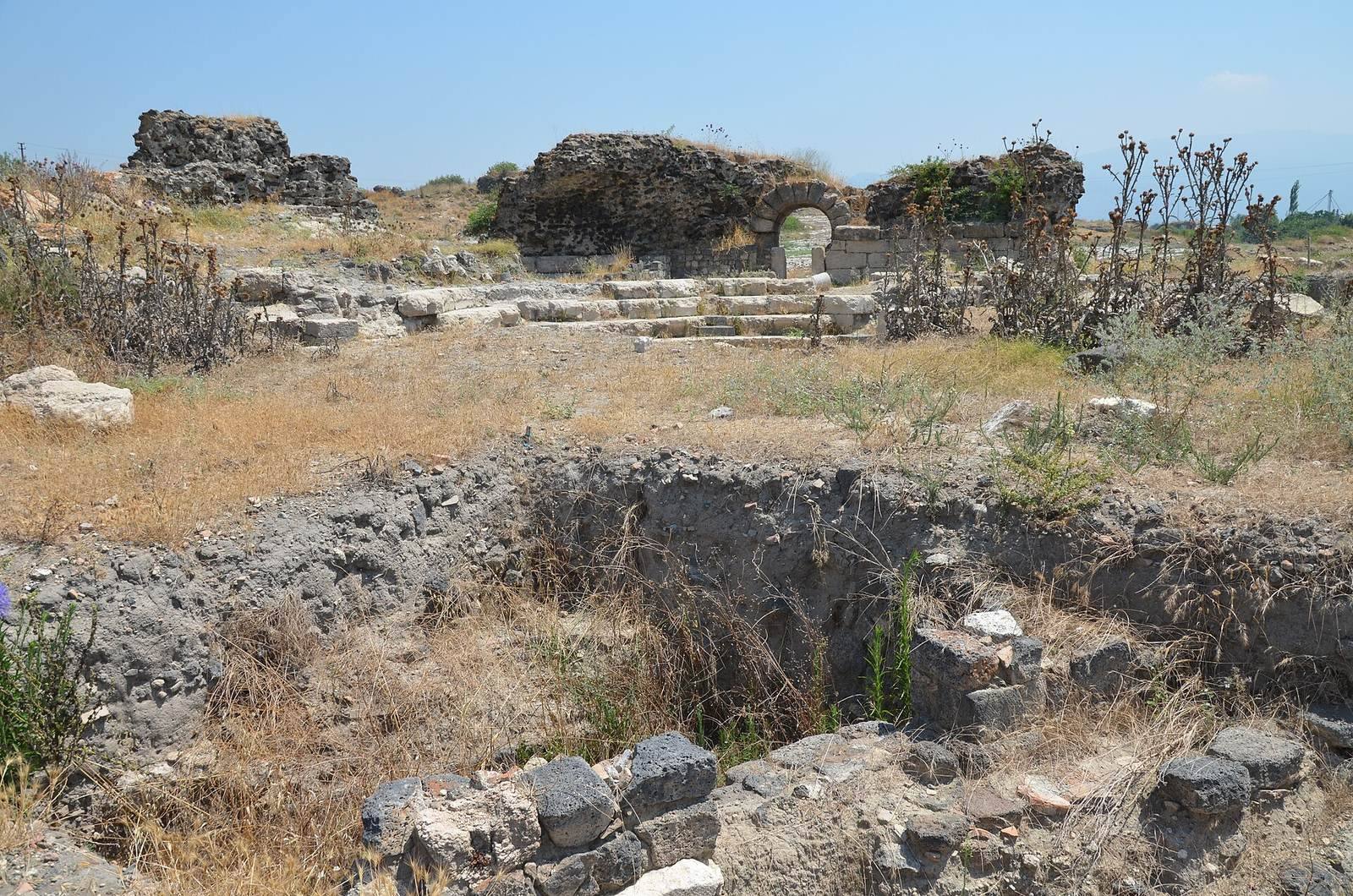
The archaeological area lies near the northern end of the Gulf of Iskenderun, about 91 km southeast of Adana and 6 km west of Erzin, on the right-hand side of the Iskenderun railway. The city stood on the route from Misis to Antioch. The Peutinger Map, a medieval copy of a Roman road map, places Epiphania halfway between Alexandria ad Issum and Anazarbus. Excavated remains include an elevated central area, wall sections, civic buildings, houses, waterworks, and later churches.
Urban and civic remains
Acropolis and buildings
The excavated city includes an acropolis, the elevated or fortified central area, sections of walls, a temple, and a theater. Many houses have also been uncovered; they were built of black basalt.
Aqueduct and cistern
The aqueduct survives in arched sections. Part of its water channel leads into a cistern.
Churches and coinage
Two churches at the ruins date to the fifth and sixth centuries. A bronze coin struck at Epiphania under the Roman emperor Philip I in AD 244–245 bears a laurel-crowned, cloaked, and armored bust on one side. On the other, Tyche, a Greek goddess associated with a city’s fortune, holds a rudder and a cornucopia, a horn-shaped symbol of abundance. An inscription names the city.