Šember: A Former Gothic Castle in Czechia
Site at a Glance
- Rating
- 4.5
- Popularity
- Low
- Country
- Czechia
- Primary era
- Medieval
- Eras represented
- Bronze Age, Iron Age, Medieval
- Civilizations
- Holy Roman Empire, Kingdom of Bohemia
- Site type
- Military
- Remains
- Castle
On this page6 sections
History
Šember is a former Gothic castle in Czechia, located about 1 kilometre southeast of Doubravčice. Built after 1357, it probably served as the administrative center of an estate belonging to the monastery at Klášterní Skalice. The castle was probably towerless, and its builder is unknown.
Prehistoric and Early Medieval Hillfort
The castle occupied the northern end of a spur that had been settled since the Early Bronze Age. Excavated settlement features belong to the Knovíz and Štítary cultures, prehistoric archaeological cultures identified through settlement remains, material culture, and burial practices in central Europe. Some surviving fortification fragments may derive from the Knovíz occupation.
The hillfort, known as Staré zámky, definitely existed during the Hallstatt period, an Iron Age period in central Europe preceding the La Tène period associated with later Iron Age Celtic societies. The spur was also inhabited during the Early La Tène period. Slavs occupied it in the sixth and seventh centuries and built a new rampart at the end of the seventh century. Most of the early medieval occupation belongs to the eighth century.
This Slavic hillfort developed at the same time as the nearby Klučov hillfort. It belongs to the older phase of the Klučov horizon and is considered one of the best-understood hillforts of the Early Hillfort period, when fortified settlements served defensive, political, and administrative purposes. Its main function was probably defensive, although it may also have been connected with the search for mineral raw materials.
Monastic Castle
In 1357, Dětřich of Portice, Bishop of Minden, purchased a suitable site for a castle for the monastery at Klášterní Skalice. Šember was subsequently built on the former hillfort, using its earthwork defenses as an outer ward, or outer castle enclosure. The castle remained monastic property until the monastery ceased to exist in 1421. By 1452, Šember was recorded as deserted.
The castle may have been a mantle-wall castle, meaning one whose main defensive enclosure was a substantial wall without the usual dominant defensive towers. This classification remains uncertain and requires archaeological verification. Research at the site was conducted by Jaroslav Kudrnáč during the 1960s and 1970s. The hillfort and the surviving castle earthworks have been protected as a cultural monument since 1965.
Remains
Hillfort Defenses
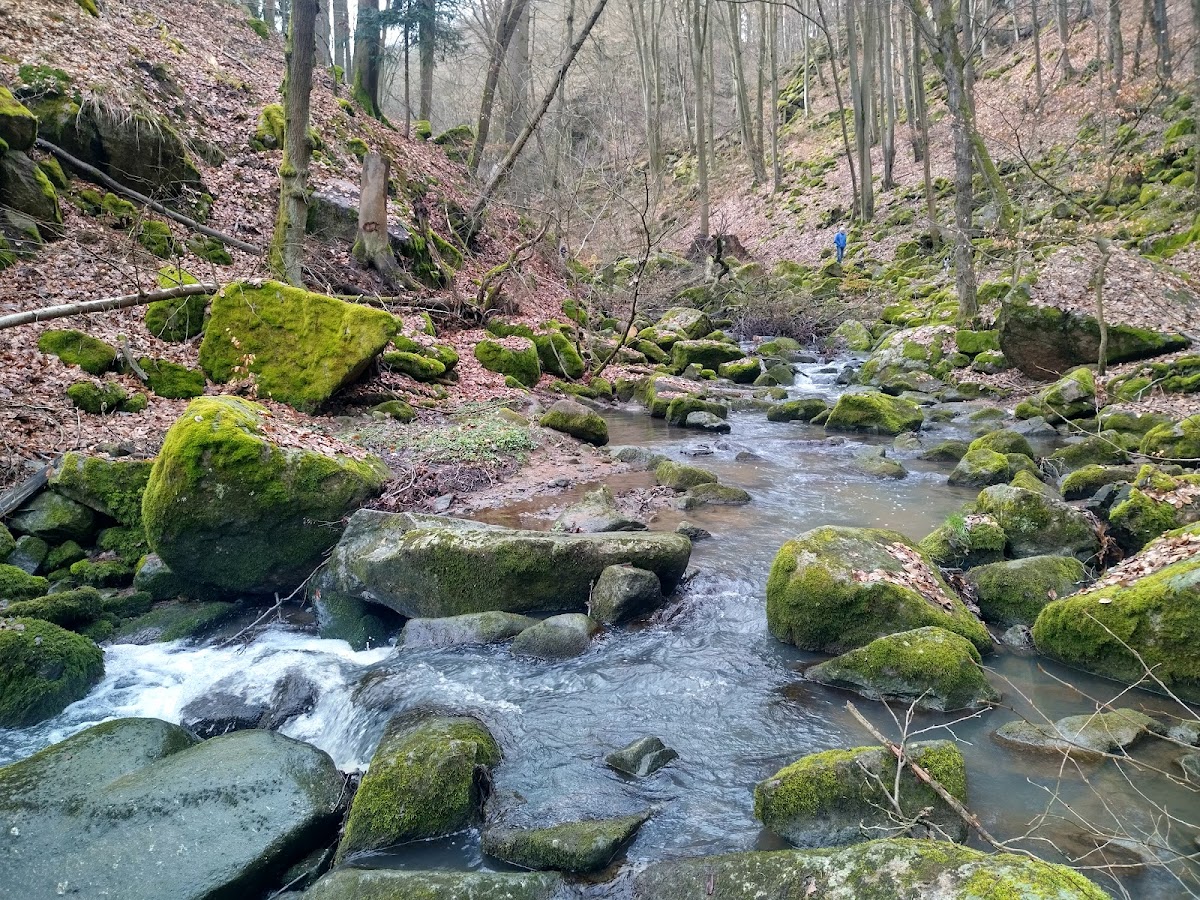
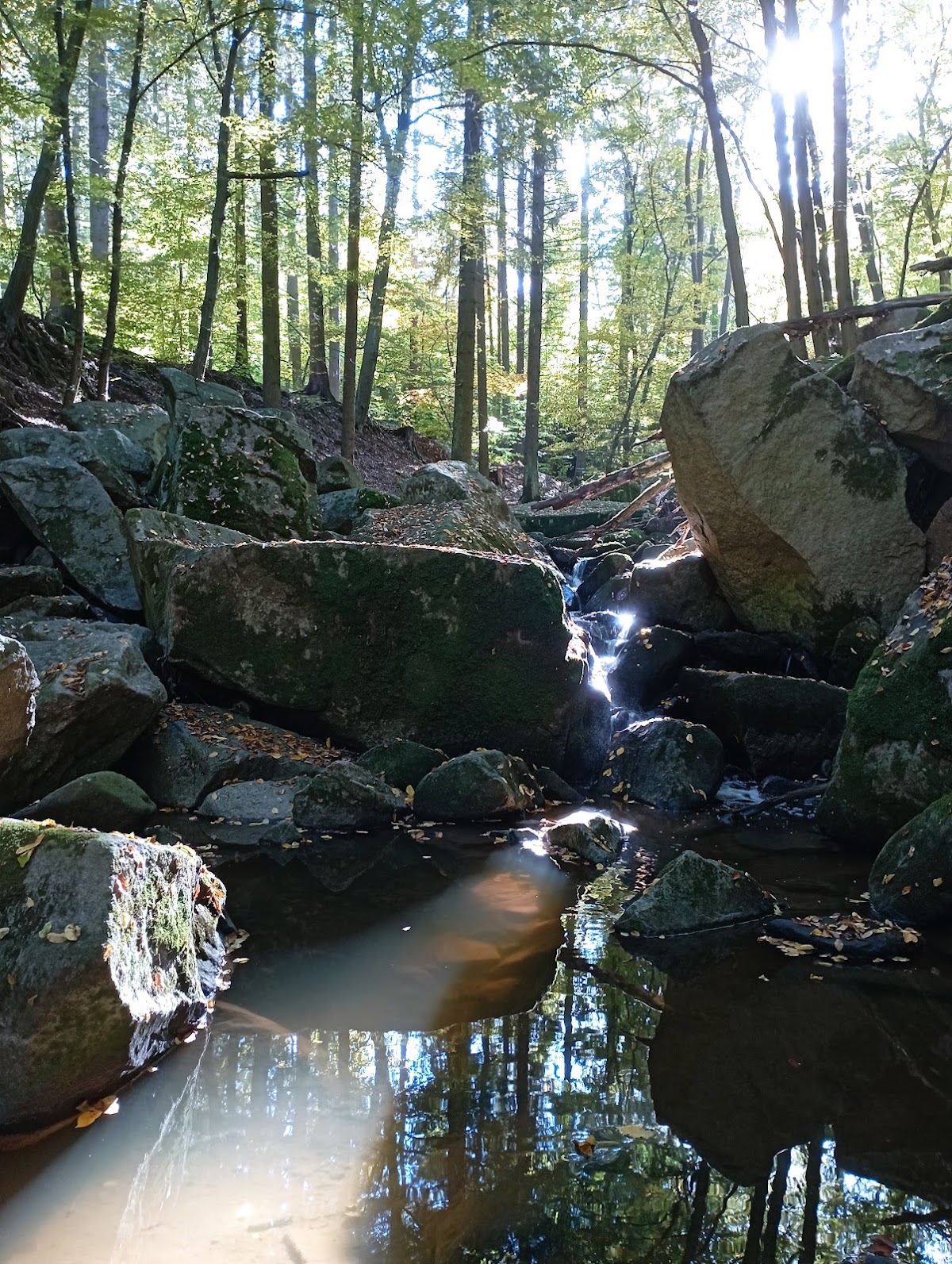
Šember occupies the northernmost part of a spur at about 320 metres above sea level. The spur is surrounded by the Šembera stream and contains the prehistoric and early medieval hillfort. Its more accessible southern side was protected by successive ditches and ramparts.
The outer line consists of a ditch about 12 metres wide and up to 2.8 metres deep, followed by a rampart 147 metres long, as much as 18 metres wide, and 3 to 4 metres high. The rampart retains remains of a fortification wall. Its earliest phase probably dates from the Late Hallstatt period, while a second phase may belong either to the Hallstatt period or to the Early Hillfort period. In its third, early medieval phase, the wall reached 9 metres in width and had a stone-strengthened front. A fragment of a gate survives near the eastern edge.
A second defensive line survives as a terrain ridge 235 metres long and probably dates from the Hallstatt period. A third defensive belt contains two ramparts. The lower outer rampart is considered Hallstatt in date and is preceded by a shallower ditch. The second ditch and rampart belong to the early medieval period and enclose the inner hillfort, which covers 1.3 hectares.
The early medieval ditch is about 12 metres wide and up to 3 metres deep. Behind it stands an earthen rampart whose core was reinforced with timber. At its base, the rampart is 15 metres wide and 3 metres high. A timber superstructure once ran along the crest, but fire destroyed it.
Castle Enclosure
The castle reused the former hillfort area and its ramparts as an outer ward. Its oval inner castle was separated from the rest of the hillfort by a neck ditch. On the front side of this enclosure, a rampart-like formation preserves the remains of a massive wall built without mortar.
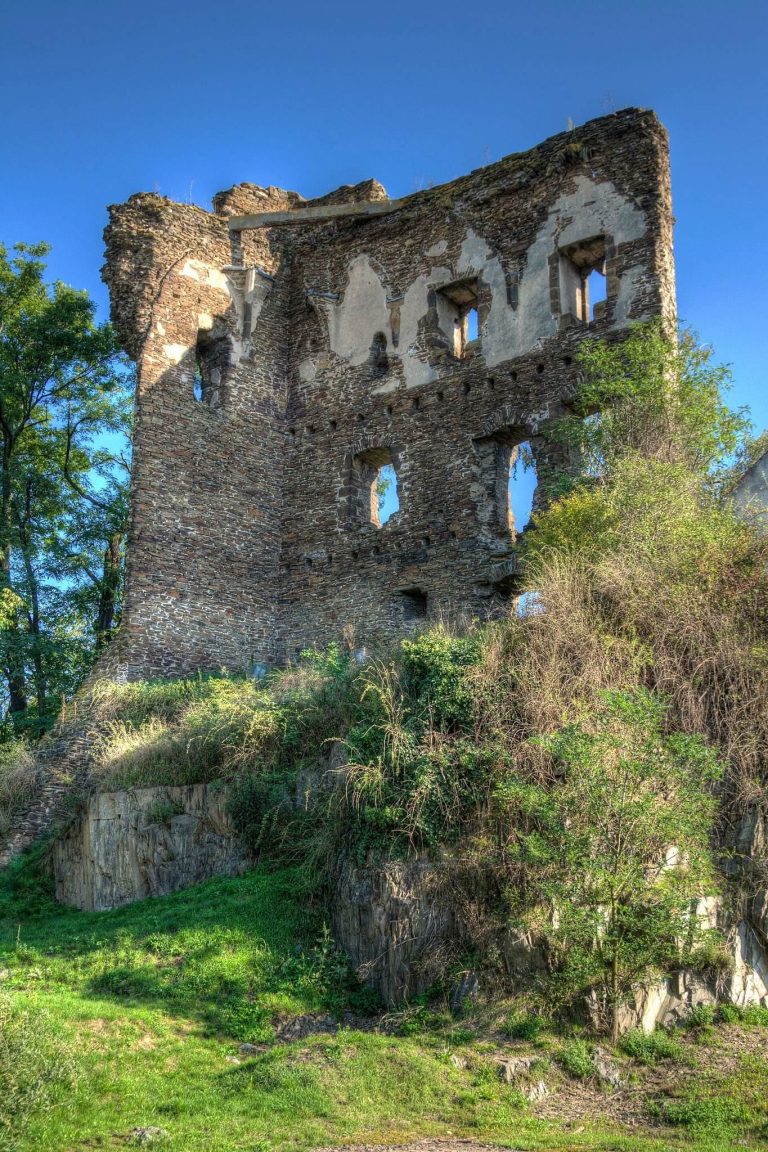
The castle buildings survive as terrain remains along the southwestern and northeastern sides of the inner castle. A log-built or half-timbered building probably stood in the raised northern part. Today, Šember is represented chiefly by wall fragments and earthworks rather than standing buildings.