Eltham Palace: A Medieval Royal Residence and 1930s Home
Site at a Glance
- Popularity
- Very High
- Country
- United Kingdom
- Primary era
- Medieval
- Eras represented
- Medieval, Early Modern, Modern
- Civilizations
- British, English
- Site type
- Domestic
- Remains
- Palace
On this page11 sections
History
From manor to royal palace
Eltham Palace is a former royal residence in the United Kingdom, probably established around 1295. It served English kings from the fourteenth through the sixteenth centuries. The manor at Eltham appears in the Domesday Book, the survey of English land and landholders completed in 1086, as the property of Odo, Bishop of Bayeux and half-brother of William the Conqueror. The estate changed hands several times before Anthony Bek, Bishop of Durham, acquired it in 1295. Bek apparently rebuilt the manor and constructed a defensive wall; the palace probably took shape during his tenure. In 1305, he gave it to Edward II.
A legend connects Eltham with the founding of the Order of the Garter, the chivalric order established by Edward III in 1348. In the story, a garter came loose at the palace, prompting the king to create the order. Eltham was a favourite residence of Henry IV. From December 1400 until mid-February 1401, it hosted Manuel II Palaiologos, emperor of the Byzantine Empire, the medieval state centred on Constantinople. A jousting tournament was held in his honour.
Thirteen letters in Old French, addressed to Henry IV’s daughter Blanche, commemorated or described the tournament. Each praised a combatant in the name of a legendary patron, while heraldic devices identified two of the participants. The letters were probably read aloud during the event.
Royal court and declining use
Edward IV built the Great Hall in the 1470s. Henry VIII grew up at Eltham, where the royal children were educated, apart from their eldest brother Arthur. In 1499, when Henry was nine, Thomas More introduced him to the scholar Erasmus at the palace. Erasmus later composed a poem for Henry, completing it within three days.
Tudor courts often celebrated Christmas at Eltham. After Greenwich Palace was rebuilt around 1500, the court increasingly favoured Greenwich, which was easier to reach by river, and Eltham was used less often, chiefly for hunting. The estate’s enclosed parks were the Great Park, covering 596 acres; the Little or Middle Park, with 333 acres; and Home or Lee Park, with 336 acres. Deer remained plentiful there. Around 1530, Henry VIII renewed the royal residence and chapel.
In 1610, courtier Roger Aston, keeper of the Little Park, built four bridges for the convenience of James VI and I, then king of Scotland and England. By the 1630s, the royal family had stopped using the palace. The Flemish painter Anthony van Dyck was allowed a suite of rooms as a country retreat.
Decline and modern transformation
During the English Civil War, a mid-seventeenth-century conflict between Royalist and Parliamentary forces, trees and deer were stripped from the parks and some buildings were demolished. In 1656, the diarist John Evelyn described the palace and chapel as ruins and said the woods and park had been destroyed by “Rich the rebel.” Eltham never resumed its role as a royal residence. In 1663, Charles II placed the estate in the hands of the merchant John Shaw, who became Baron of Eltham two years later. Shaw built Eltham Lodge elsewhere on the estate, outside the palace grounds.
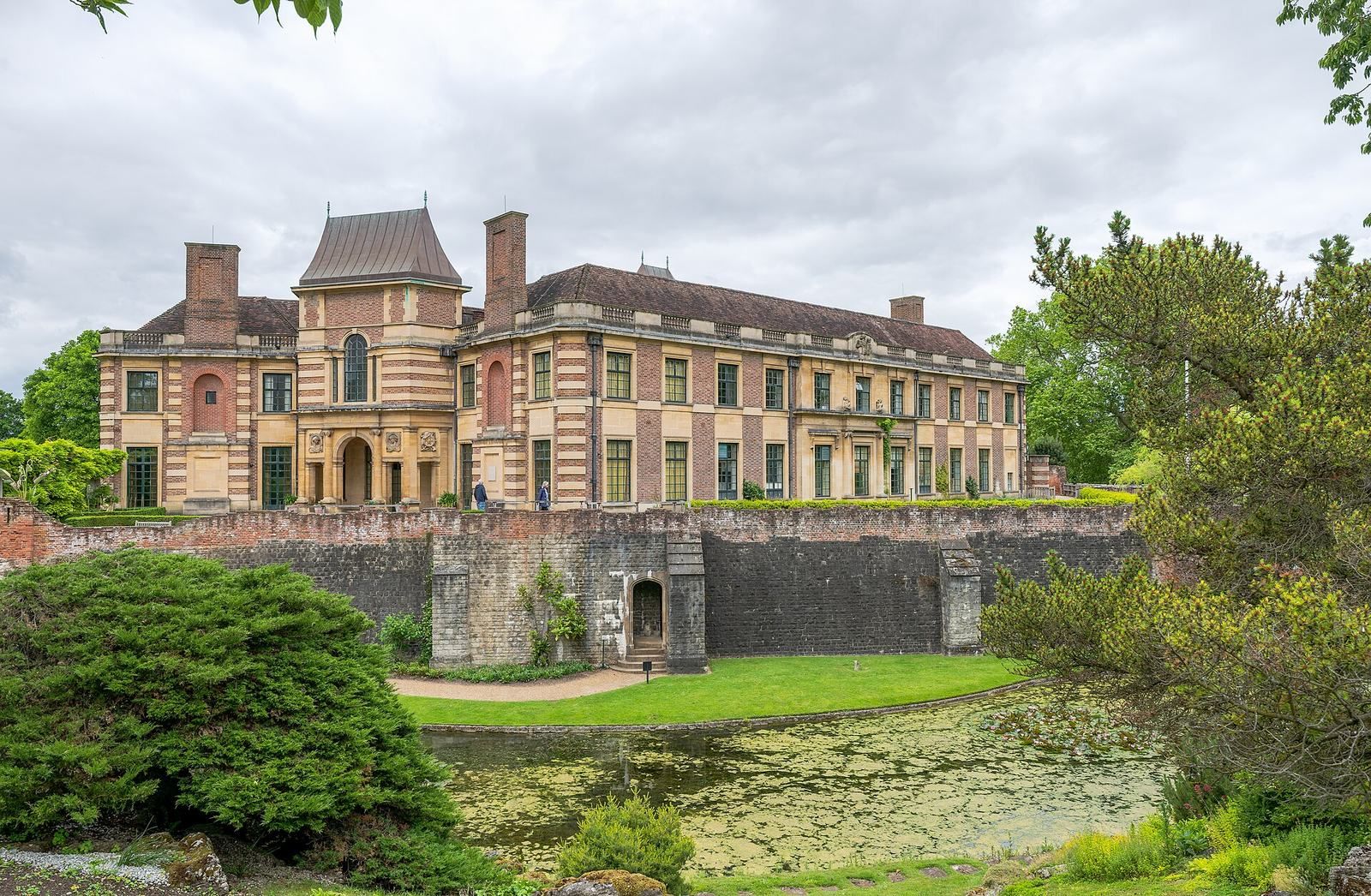
Stephen and Virginia “Ginie” Courtauld took a 99-year lease in 1933 and commissioned Seely & Paget to restore the Great Hall and build a modern house beside it. They also substantially reshaped and improved the grounds and gardens. In September 1940, German incendiary bombs badly damaged the hall while Stephen Courtauld was serving as a civilian fire watcher on its roof. The Courtaulds remained at Eltham until 1944, then moved to Scotland and later to Southern Rhodesia, now Zimbabwe.
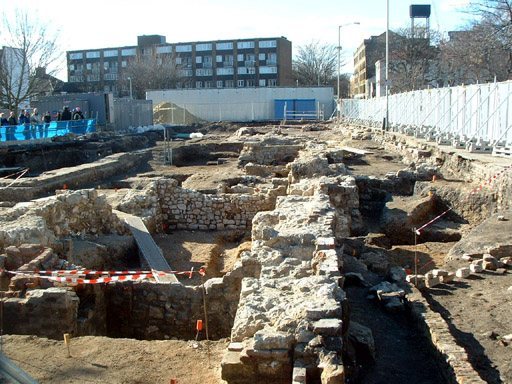
In March 1945, the Courtaulds gave the palace to the Royal Army Educational Corps, a British Army organization responsible for education and training. The corps transferred its administration there in 1948. After the formation of the Educational and Training Services Branch of the Adjutant General’s Corps, its staff left for Worthy Down Camp in 1992. Archaeological excavations in the 1960s and 1970s investigated buildings from Henry VIII’s period. English Heritage took responsibility for the Great Hall in 1984 and the rest of the property in 1995, completing major repairs and interior and garden restoration in 1999. The Crown Estate owns Eltham Palace, which English Heritage manages. The palace is Grade I listed, a category for buildings of exceptional interest. Its components include six Grade I and eleven Grade II* listed buildings, the latter category covering particularly important buildings of more than special interest.
Remains
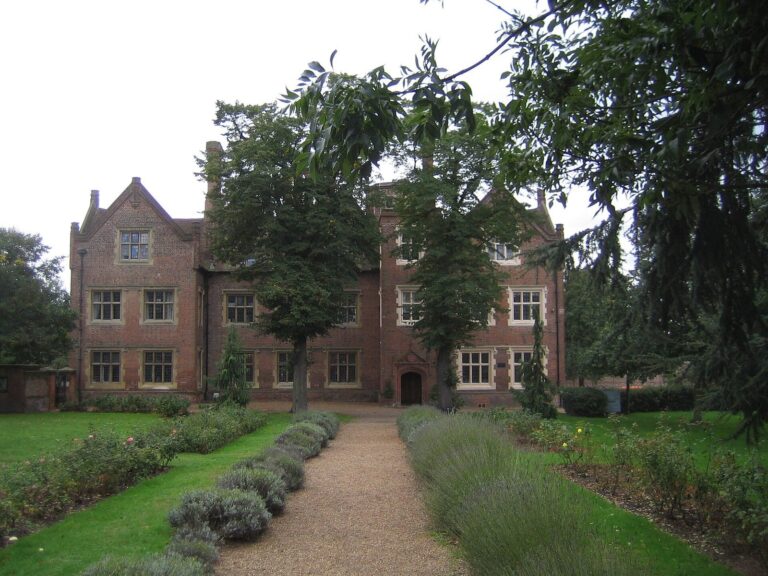
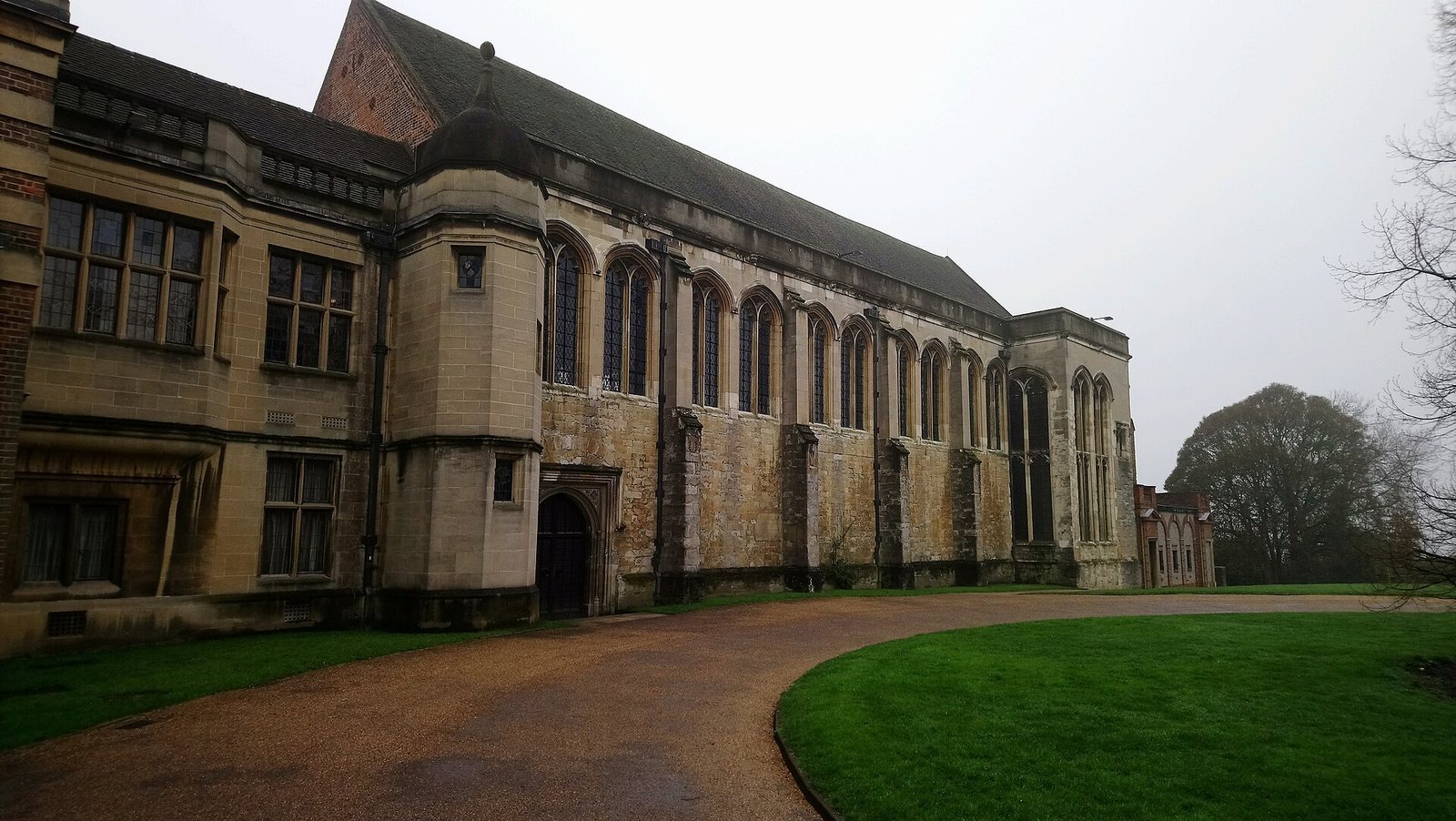
The surviving site brings together the late-Gothic Great Hall, the Courtauld house beside it, and remnants of earlier palace buildings within grounds crossed by a moat. The hall is the oldest complete building on the site, while the adjoining house combines traditional exterior design with richly decorated modern interiors.
The hall and Courtauld house
Great Hall
The Great Hall’s timber hammerbeam roof, in which short horizontal beams project inward from the walls to support the roof framing, is the third-largest of its type in England. Seely & Paget added a minstrel’s gallery, an elevated gallery traditionally used by musicians, and a timber screen.
Courtauld house and interiors
The house adjoining the hall has a traditionalist exterior influenced by the architecture of Christopher Wren, including his work at Hampton Court Palace and Trinity College, Cambridge. Its interiors are Art Deco, a style associated with geometric forms and richly finished surfaces. Swedish designer Rolf Engströmer created the entrance hall, where a glazed dome lights blackbean veneer and figurative marquetry, decoration formed by fitting pieces of material into a patterned surface. Italian designer Piero Malacrida de Saint-August designed the dining room, drawing room, and Virginia Courtauld’s circular bedroom and adjoining bathroom; Seely & Paget designed many of the bedrooms. Painters Winifred Knights and Tom Monnington also contributed to the interiors. Stephen Courtauld’s study contains a statuette of The Sentry by Charles Sargeant Jagger, copied from a Manchester war memorial. The Courtaulds’ pet lemur, Mah-Jongg, had an upstairs room connected by a hatch to the flower room below.
Moat and grounds
Bridges and earlier palace features
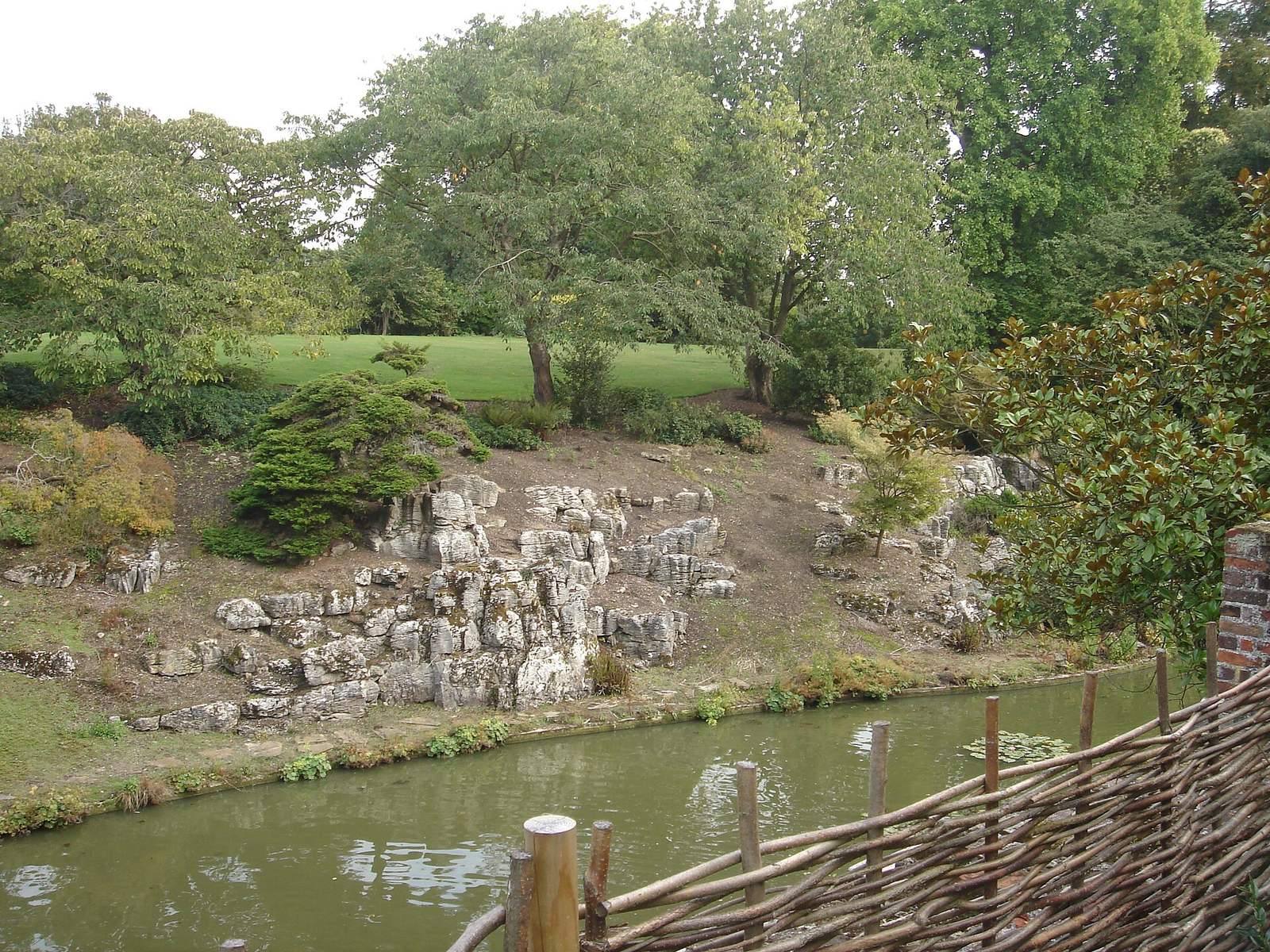
Two bridges dating from the fifteenth and sixteenth centuries cross the moat, including a surviving fifteenth-century bridge. Fragments of walls from other former buildings remain visible around the gardens, among them ruins of Tudor buildings. A jousting tilt yard, an enclosed area used for jousting, also survives.
Gardens
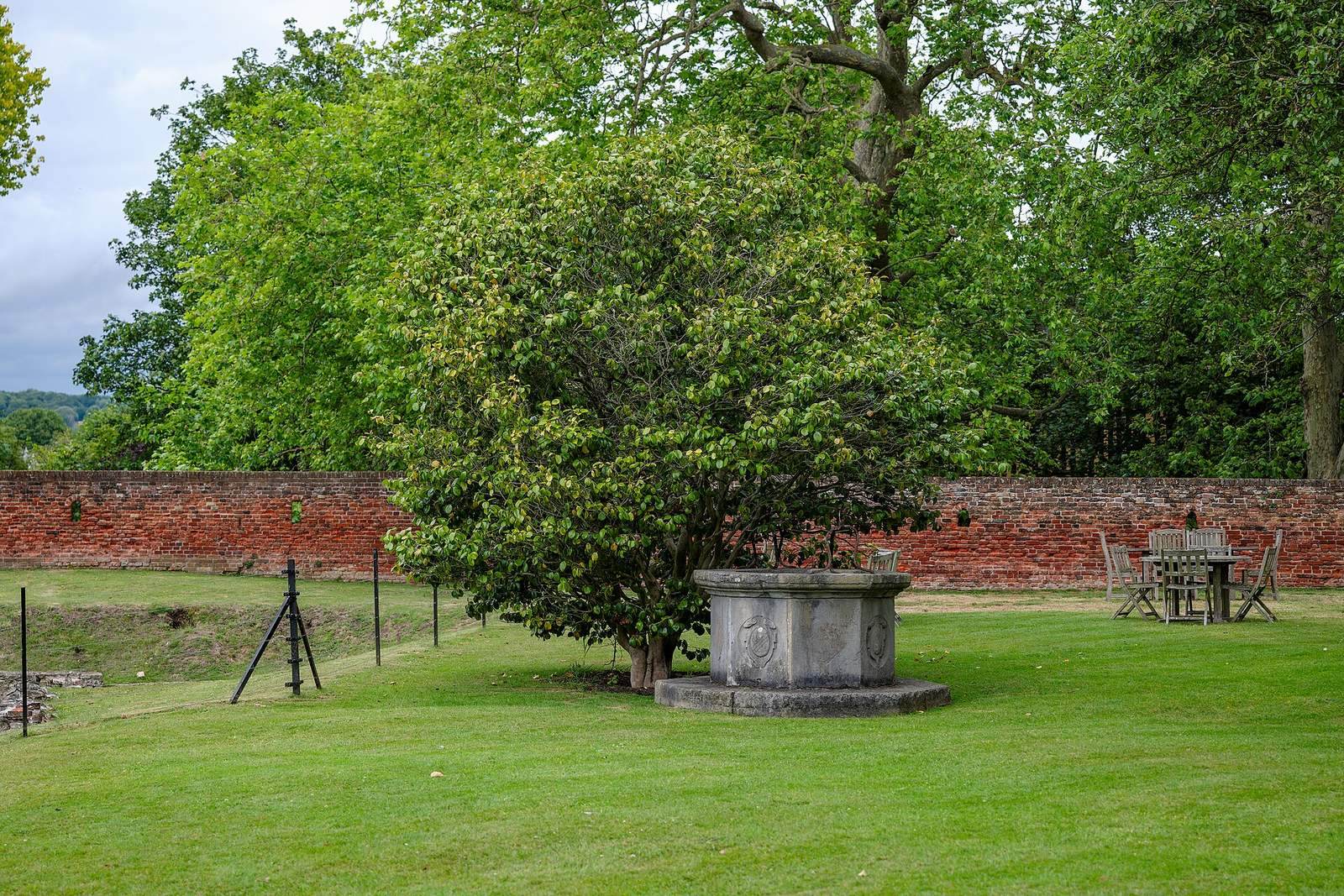
The gardens cover more than seven hectares. Their features include a sunken rose garden, a rock garden, and borders designed by Belgian landscape architect Isabelle Van Groeningen. The garden design draws in part on the layout created in the 1930s.