Elbasan Fortress: A Roman, Byzantine, and Ottoman Stronghold in Albania
Site at a Glance
- Country
- Albania
- Primary era
- Medieval
- Eras represented
- Classical, Medieval, Early Modern, Modern
- Civilizations
- Byzantine, Ottoman, Roman
- Site type
- Military
- Remains
- Wall
On this page16 sections
History
Elbasan Fortress is a fortified enclosure in central Elbasan, Albania, rooted in the Roman settlement of Scampis beside the Via Egnatia. Construction of this major Roman road, which linked the Adriatic coast with Byzantium, later known as Constantinople, began after Rome’s war with Illyrian forces in 168 BC. A road station stood at the site. Archaeological evidence places a settlement here in the first century AD, administratively linked to Dyrrhachium, the ancient name for the Adriatic port of modern Durrës. A Roman military fort was established here generally in the fourth century, though its precise construction date is uncertain. Rebuilt by Byzantine and Ottoman rulers, the fortress later anchored an important administrative and commercial center.
Roman and Byzantine Scampis
Wars in the fourth and fifth centuries destroyed the fortress. In the sixth century, Byzantine emperor Justinian I rebuilt it over the earlier foundations and strengthened its defenses. The stronghold then formed part of the fortifications of Epirus Nova, a late Roman province in the western Balkans.
Scampis was probably the seat of a bishop by the fifth century. In the sixth century, the geographer Hierocles described it as an important city and bishop’s seat. Repeated attacks, especially those associated with Slavs and Bulgars, contributed to its decline. The settlement may have been depopulated in the seventh century; by the ninth century, it had certainly lost its population.
Ottoman reconstruction and urban growth
In 1466, during his campaign against Kruja, a city in central Albania, Ottoman sultan Mehmed II ordered the fortress rebuilt on Byzantine foundations. The settlement took the name Ilbasan, meaning “fortified place.” Mehmed left a garrison of 400 Janissaries, elite Ottoman infantry, while the rest of his army withdrew to Edirne in northwestern Turkey. The Greek historian Kritoboulos, who wrote about Mehmed II, provides the earliest known written reference to the fortress.
From the sixteenth century, the fortress and surrounding settlement served as the seat of the Sanjak of Ilbasan, an Ottoman administrative district. Elbasan developed into an important center for commerce and crafts, with a strong Islamic culture. By the seventeenth century, its economy encompassed 60 kinds of craft organized into 45 guilds. A mid-century description counted about 2,000 houses and 900 shops. Leather, wool, silk, and metalworking, especially silverwork, were among its crafts. The Tanners’ Guild Code, a record of leatherworkers’ rules and organization, was among the Balkans’ oldest. Tradition traced the city’s regular fairs back to the fourteenth century.
Ottoman traveler Evliya Çelebi visited in November 1670 and wrote about the city. In the 1770s, Mehmed Bushatlliu Pasha brought the fortress under his authority; Ali Tepeleni, also known as Ali Pasha of Ioannina, did so in 1811. Elbasan-made firearms and other Albanian crafts were later included among the goods displayed by Turkey at international exhibitions in Paris in 1867 and Chicago in 1894.
Military decline and changing uses
After Ali Tepeleni’s defeat in 1832, Grand Vizier Reshid Mehmed Pasha ordered the fortress disarmed and partly demolished. It ceased to serve a military purpose, and its castle quarter subsequently became Elbasan’s Greek Orthodox neighborhood.
Archaeology and preservation
In 1916, during the First World War and the Austrian occupation, Austrian archaeologists Camillo Praschniker and Arnold Schober investigated the site and identified ancient fortifications beneath the later walls. The fortress was declared a cultural monument by the Institute of Sciences on 16 October 1948.
After Albania’s political transition, unauthorized and incompatible building altered older architecture within the enclosure. In 2006, Elbasan Municipality began a study project to document and assess the fortress and support its preservation. The municipality stopped issuing building permits within the site, as part of an effort intended to recover its character as a museum area.
Remains
The fortress occupies the center of Elbasan and is a rare example of a lowland fortress in Albania. Its rectangular Roman plan measured about 308 by 348 meters; the later Ottoman enclosure expanded to approximately 362 by 327 meters. The Via Egnatia crossed the site from west to east, forming its principal street. A main north–south street met it at right angles and continued through the southern gate. The enclosure’s layout thus preserves the relationship between the Roman road and the city’s two principal axes.
Fortifications and street plan
Walls and defenses
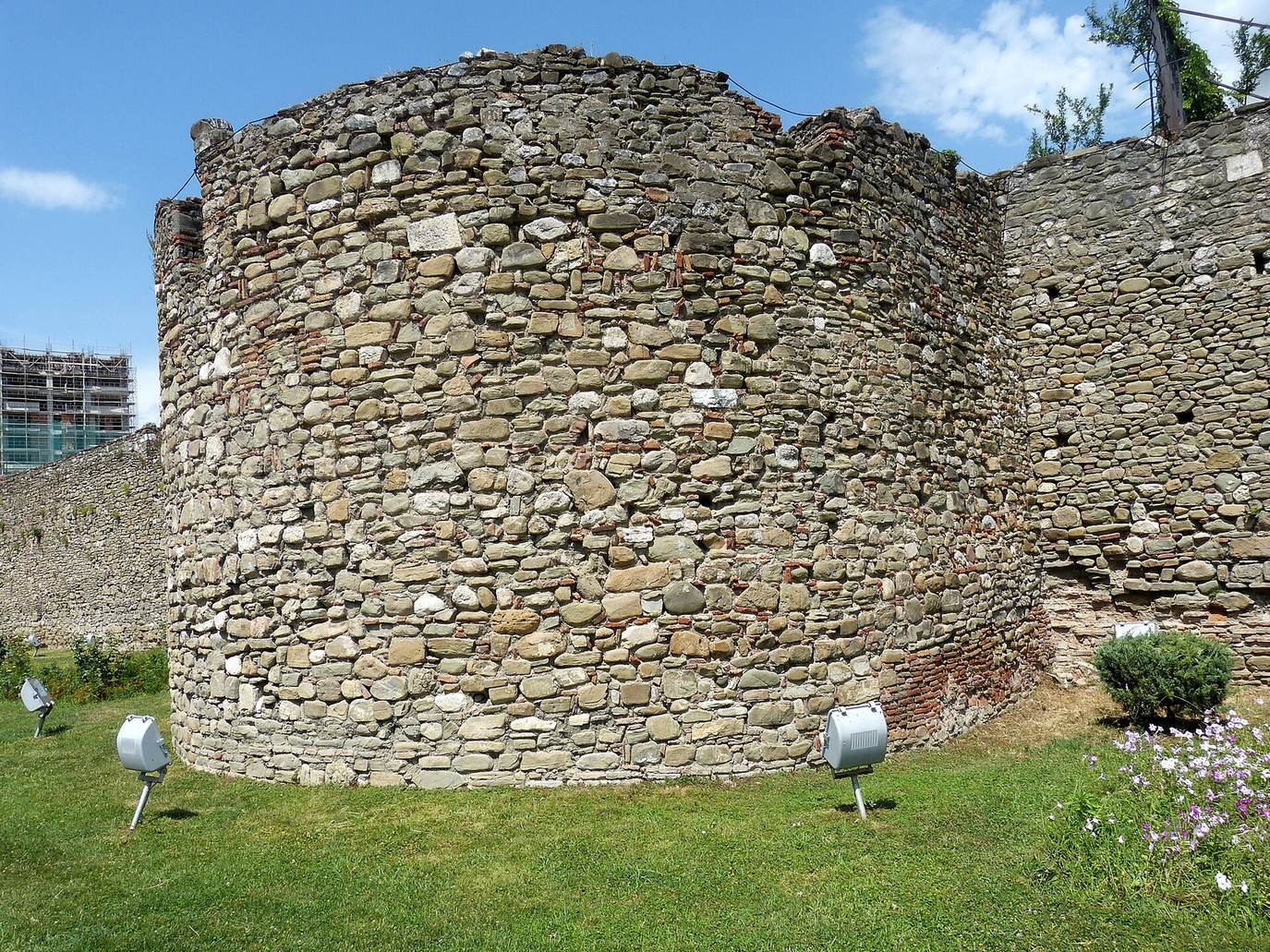
The original Roman walls were about three meters thick, built with mortar and stones taken from a nearby riverbed. In the sixth century, Byzantine builders heightened and strengthened the earlier stonework with brick courses. Ottoman builders later reused material from Roman and Byzantine ruins, particularly at the base of the southwestern tower.
The Roman circuit had 26 towers, set roughly 40 to 50 meters apart and projecting about 8 to 9 meters beyond the wall. The enlarged Ottoman enclosure had 28 towers. The Roman defenses also included a low outer wall and a deep, stone-lined moat, about three meters deep and supplied by the Zaranika stream. Vaulted stone stairs on the inner face of the wall gave access to the towers and ramparts.
Gates and surviving walls
Four entrances, each protected by towers, served the enclosure. The principal gates stood on the western, eastern, and southern sides. The southern entrance became known as the Bazaar Gate. An inscribed stone set into its arch praises Mehmed II, names the architect as Jusufi, and records that work took one month in the summer of 1466.
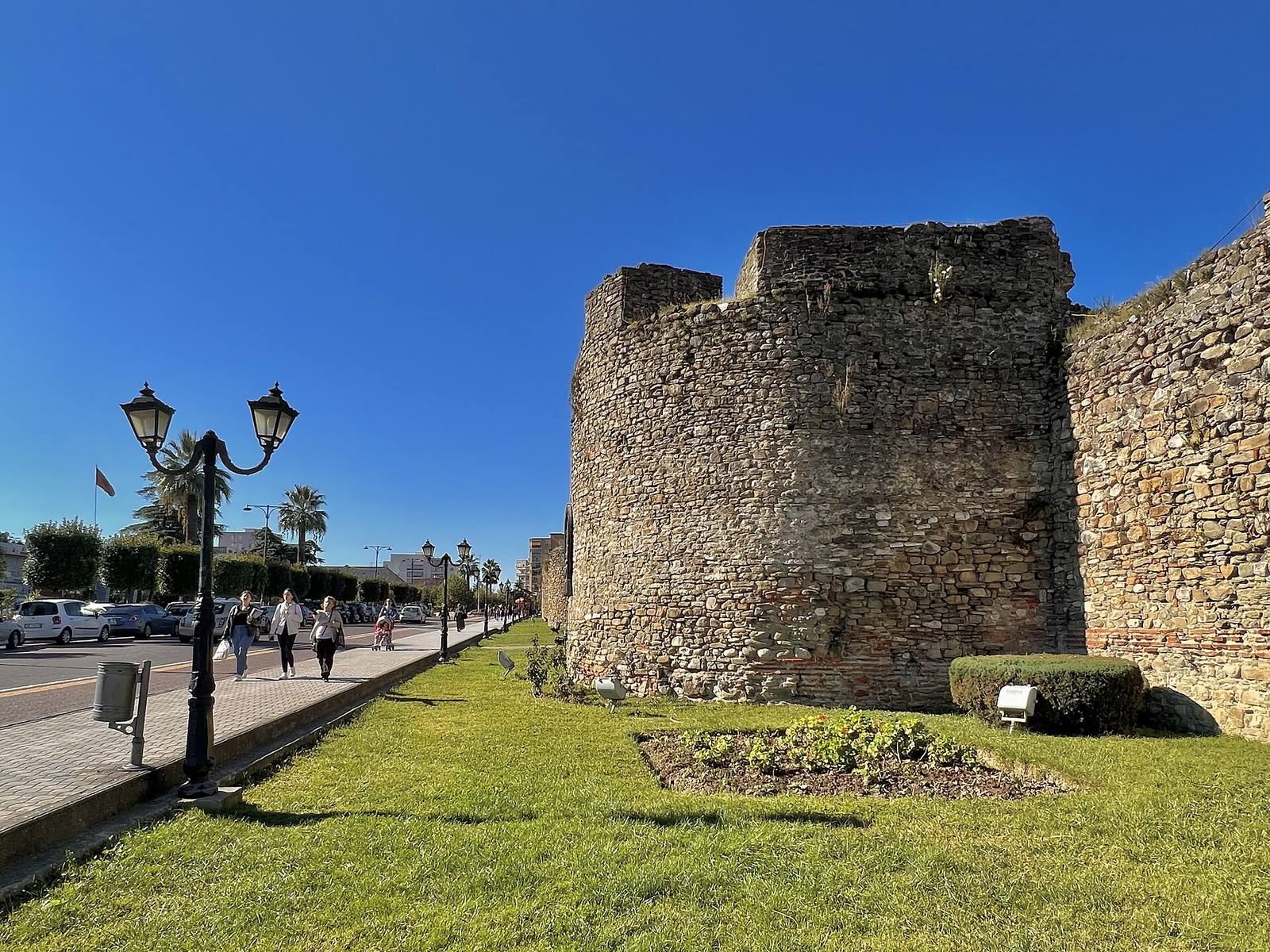
The southern wall survives along its full length, reaching about nine meters in height, with two corner bastions, six towers, and the Bazaar Gate. Parts of the southeastern and western walls also remain. The southern stretch, including its towers and gate, is substantially intact, while much of the rest of the fortress is in ruins. A 30-meter clock tower erected on the southern wall in 1898 replaced a seventeenth-century tower.
Southwestern bastion
Excavated remains and finds
Excavation at the ruined southwestern bastion in 1987–1988 revealed foundations of a Roman barrack, possibly a dwelling, and an early Christian church dated to the fourth or fifth century. Cultural deposits at the site reach four to six meters deep. In the nearby park, foundations of the Roman building stand alongside pagan tombstones, capitals from an early Christian basilica, and Ottoman tombstones.
Buildings and urban fabric
Mosque and baths
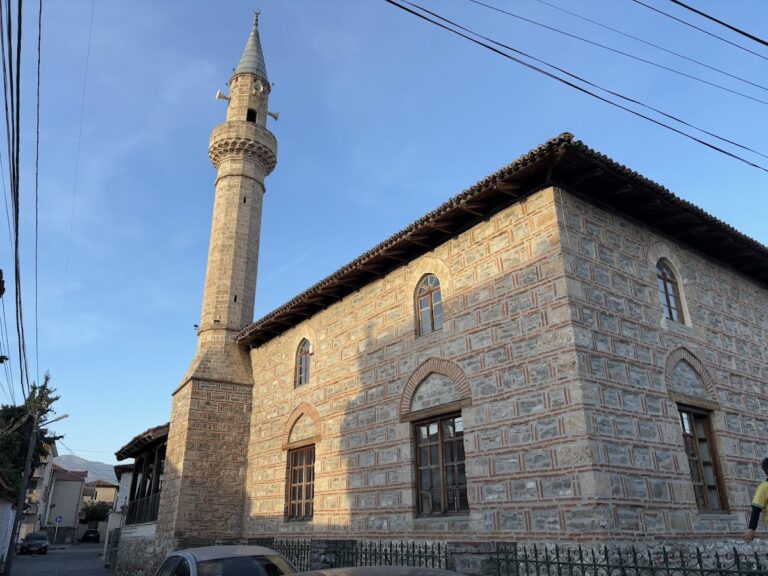
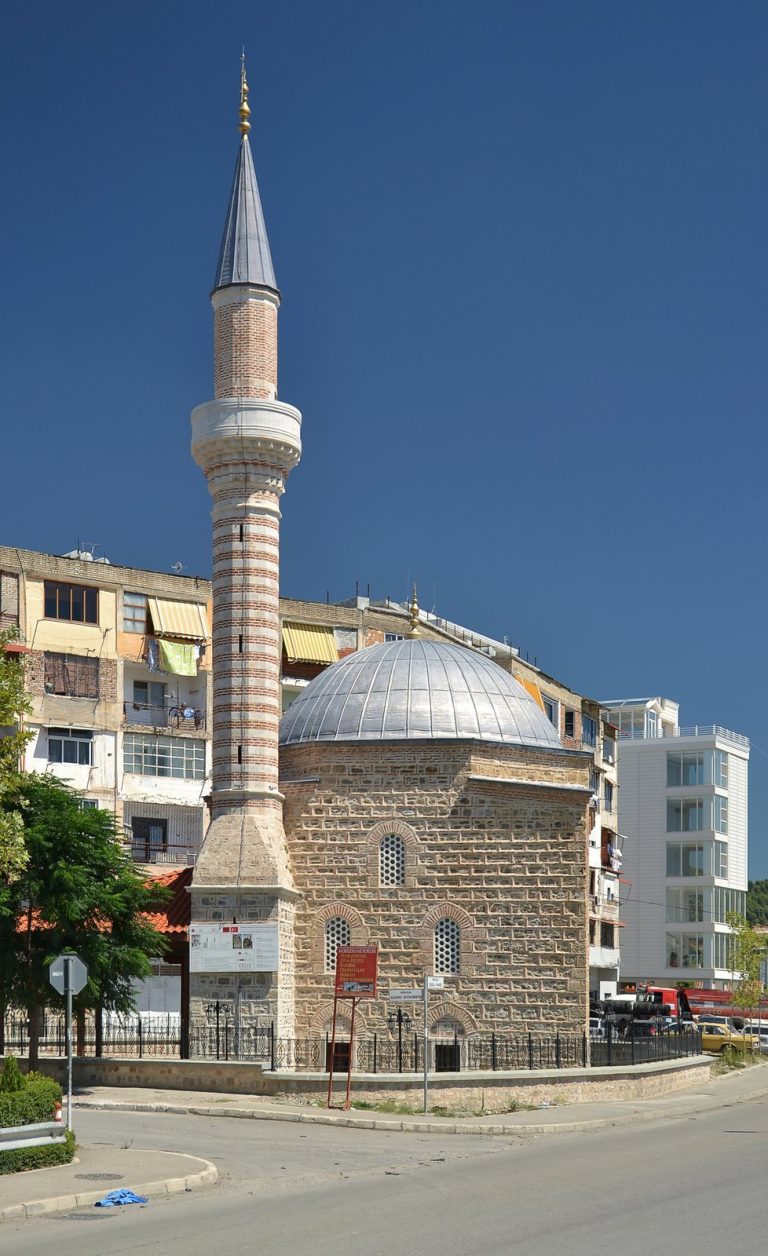
The enclosure contains the King’s Mosque, built in 1492, and several bathhouses: the seventeenth-century Old Bath, a women’s bath, and the early nineteenth-century Sinan Pasha Turkish bath. The Sinan Pasha bath is well preserved.
Churches and memorials
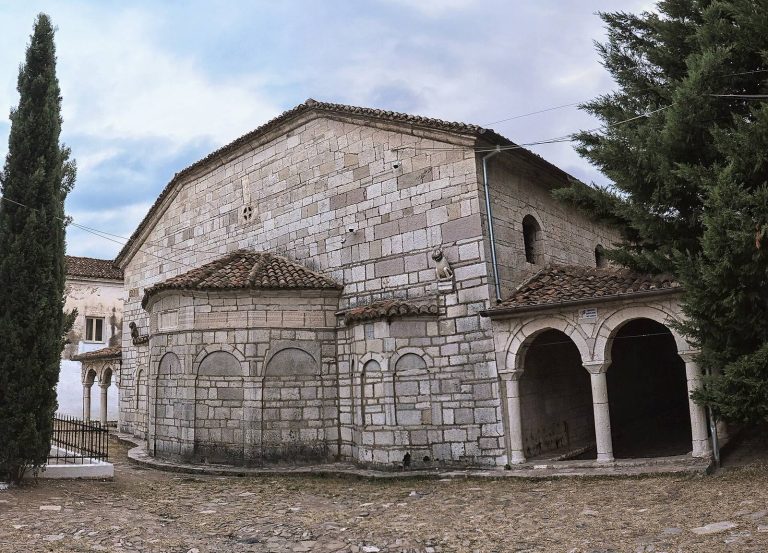
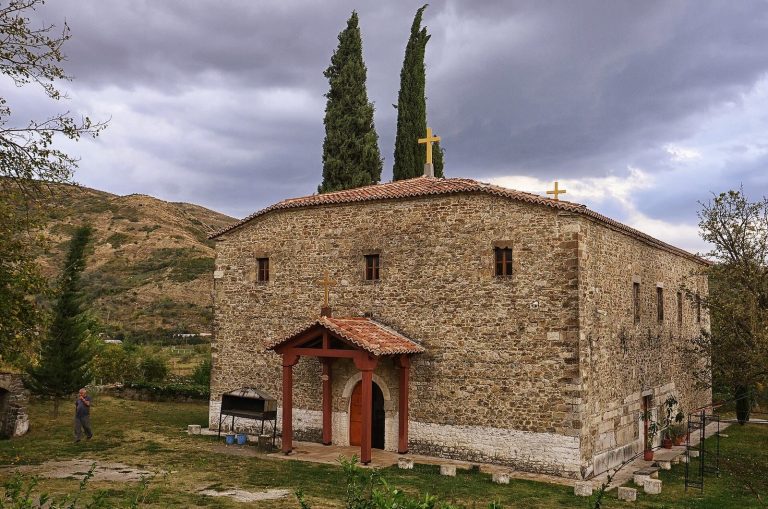
The Orthodox Church of St Mary was completed in 1868. Its garden contains the tomb and bust of Kostandin Kristoforidhi, a nineteenth-century Albanian scholar and Bible translator. The enclosure also includes the Uniate Church of St Peter, an Eastern Christian church united with Rome while retaining an Eastern liturgical tradition.
Houses and streets
Narrow streets and traditional urban buildings and houses form part of the historic fabric. Among the named buildings are the former Lef Nosi house, the Kostandin Kristoforidhi Museum House, and Aleksander Xhuvani’s house, now an art gallery. Irregular modern buildings and commercial premises stand alongside these older structures and have altered the historic fabric.
Promenade and public monuments
A promenade laid out along the exterior of the southern wall in the early twenty-first century includes memorials and statues honoring people associated with Elbasan. Nearby stand a statue of musician Jusuf Myzyri and a memorial to the Cham population. The memorial commemorates 27 June 1944 and identifies the event as a Greek genocide against the Cham in their homeland.