El Rey Archaeological Site: A Maya Coastal Settlement in Cancún
Site at a Glance
- Rating
- 4.5
- Popularity
- Medium
- Country
- Mexico
- Primary era
- Medieval
- External website
- Open
- Eras represented
- Classical, Medieval
- Civilizations
- Maya
- Site type
- City
On this page14 sections
History
El Rey archaeological site is a Maya settlement in the Hotel Zone of Cancún, Quintana Roo, Mexico. Its earliest settlement may date to around 300 BC, while initial construction is placed around AD 300. Occupied until the sixteenth century, it developed as a coastal community whose economy combined fishing, salt extraction, and maritime commerce.
Early settlement and coastal economy
The settlement probably reached its greatest residential development during the Early Classic period, approximately AD 250 to 600. From about AD 200 to 1200, its inhabitants mainly fished and extracted salt. These products supported local consumption, entered trade with inland settlements, and may also have been used to pay tribute to more powerful regional centers.
From the seventh century, El Rey became an important port and transit center for maritime trade. Its position within the commercial network of the Caribbean coast helped it prosper through the Postclassic period, when fishing, salt production, and seaborne commerce remained central to its life.
Political connections and Postclassic growth
El Rey appears not to have been ruled by an independent king. Its community may instead have been led by elders, merchant alliances, or governors representing stronger neighboring states. During the Classic period, it was subject to Coba, a Maya political center in the Yucatán region. From the Classic period until the middle of the twelfth century, it was associated with Chichen Itza, and it later came under Mayapan. From the middle of the fifteenth century, it formed part of the regional state of Ekab.
Maya groups from the interior of Yucatán conquered or politically absorbed the settlement around AD 1200, although El Rey continued to prosper afterward. Migrants from inland Yucatán arrived during the Late Postclassic period, approximately between AD 1300 and 1550. Most structures visible today belong to this later phase.
Abandonment and modern identification
El Rey declined after the Spanish invasion of Yucatán and was abandoned after the arrival of the Spaniards in the sixteenth century. Final abandonment is placed around 1550. In 1909, the travelers Channing Arnold and Frederick Frost found an anthropomorphic sculpture interpreted as a Maya or Toltec ruler, or as another high-ranking person. The discovery gave the settlement its modern Spanish name, El Rey, meaning “The King.” The sculpture’s head is preserved in the Archaeological Museum of Cancún.
Archaeological work in the 1970s and 1980s exposed structures arranged along the principal causeway and around two small plazas. These interventions brought the settlement’s main remains into clearer archaeological view.
Remains
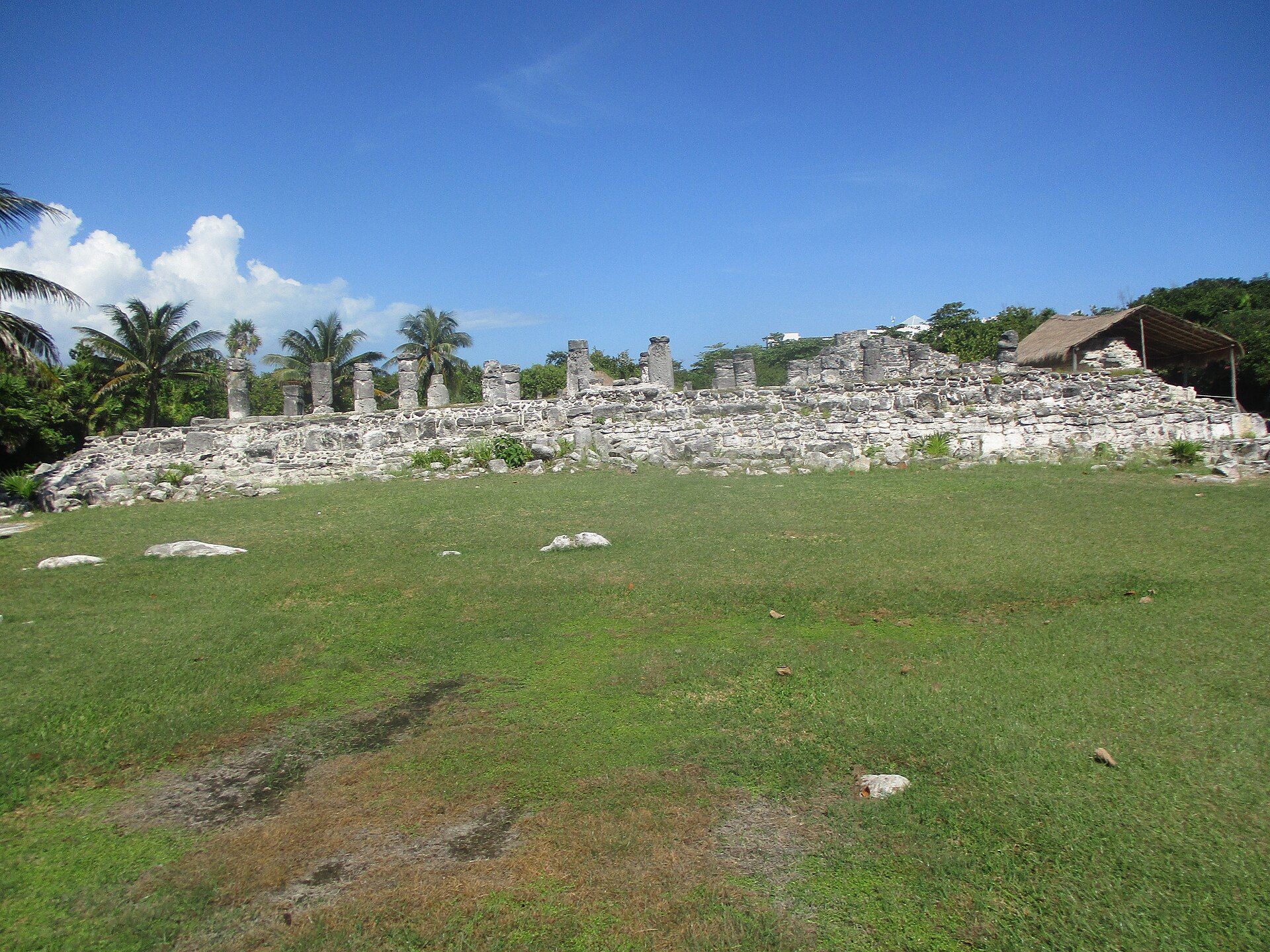
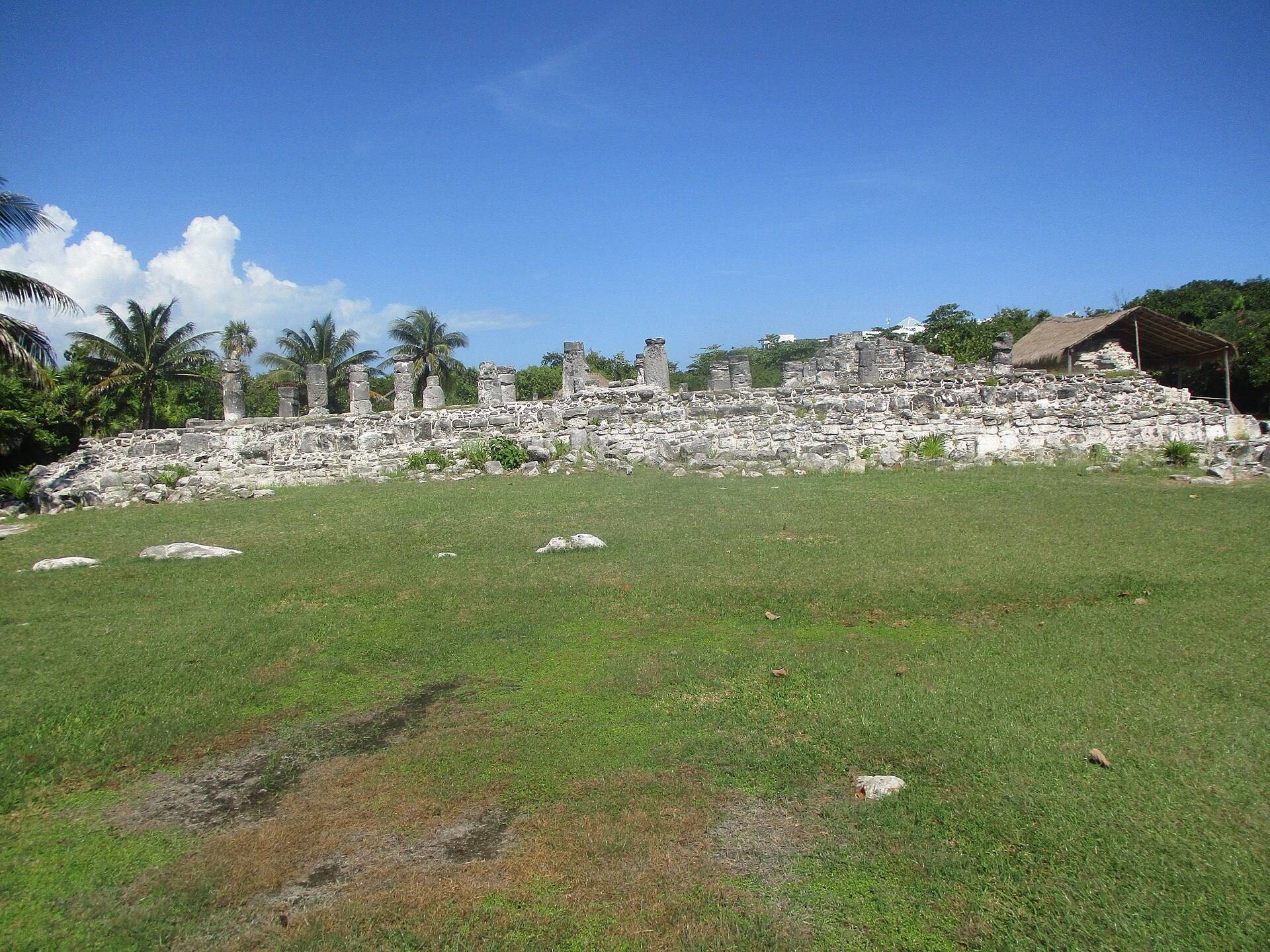
El Rey occupies an elongated area approximately 520 meters long and 70 meters wide, less than 300 meters from the seacoast. Forty-seven structures served religious, administrative, residential, and other purposes. The ceremonial center is organized around two plazas, while the buildings and overall arrangement follow the architectural tradition of Maya settlements on the Caribbean coast and in Quintana Roo.
Residential platforms
Building 18
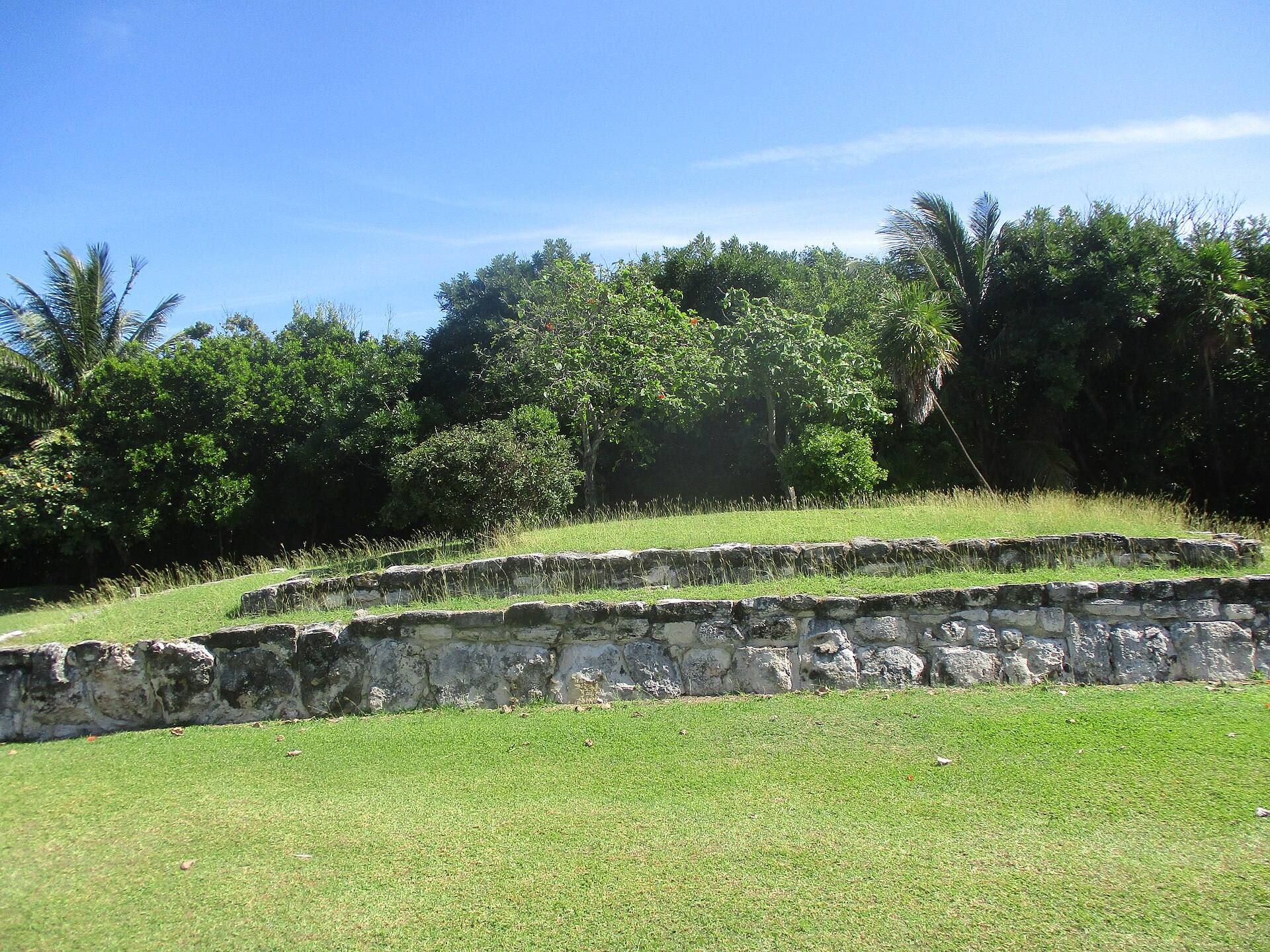
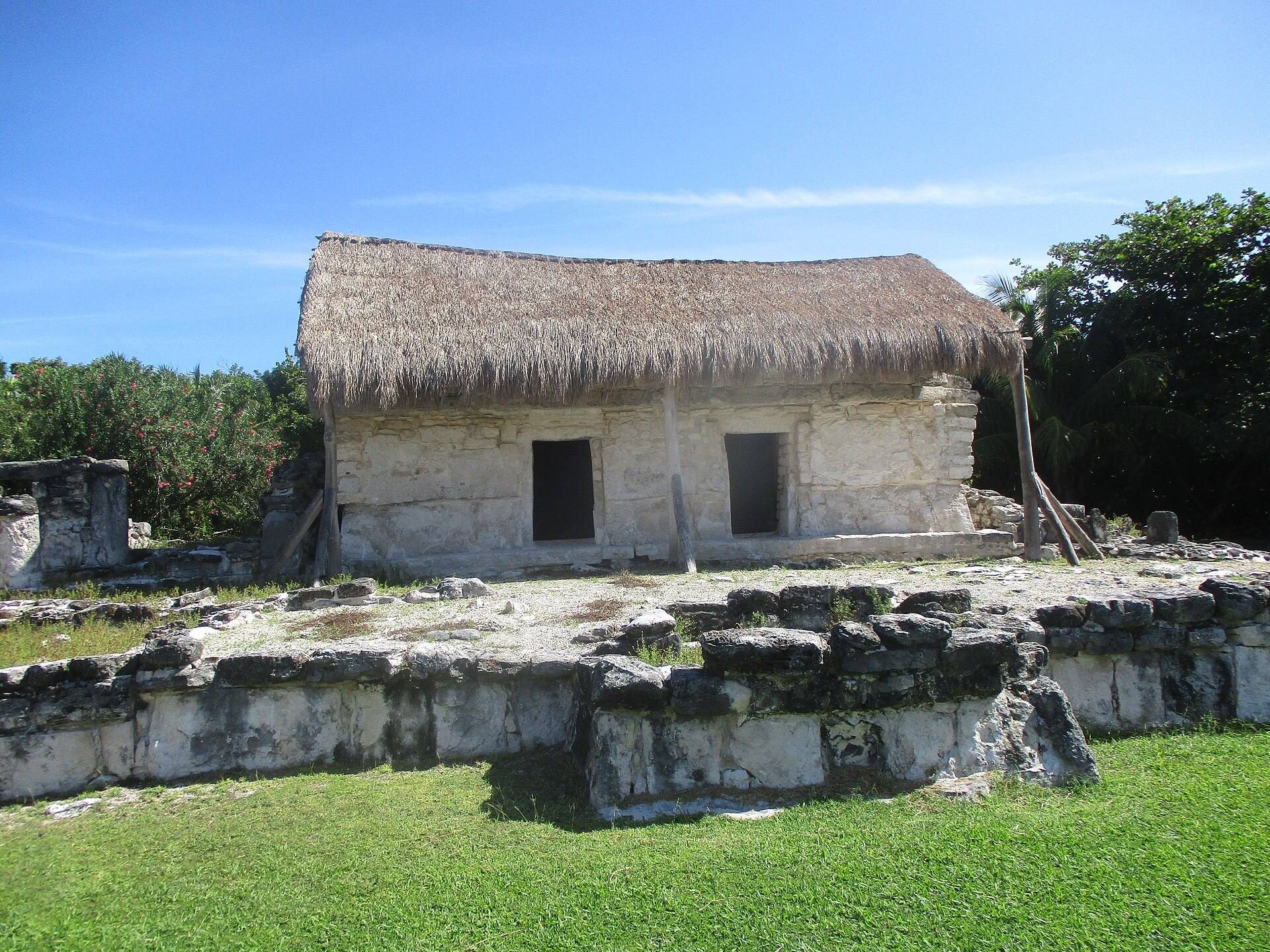
Building 18 is a residential platform approximately 60 centimeters high. Maya houses once stood on its summit and were made from organic materials such as wood and palm thatch. Relatives who died were generally buried at the bases of such buildings in a seated position and with few grave offerings.
Palaces and administrative buildings
Building 22
Building 22 stands beside an important section of the southern road and was built as a Postclassic palace. It contains benches, flat-roofed galleries, a room for seclusion, and another used for daily activities. Similar buildings probably served as residences, with inner sanctuaries containing ceramic incense burners bearing portraits of Maya deities.
Building 4
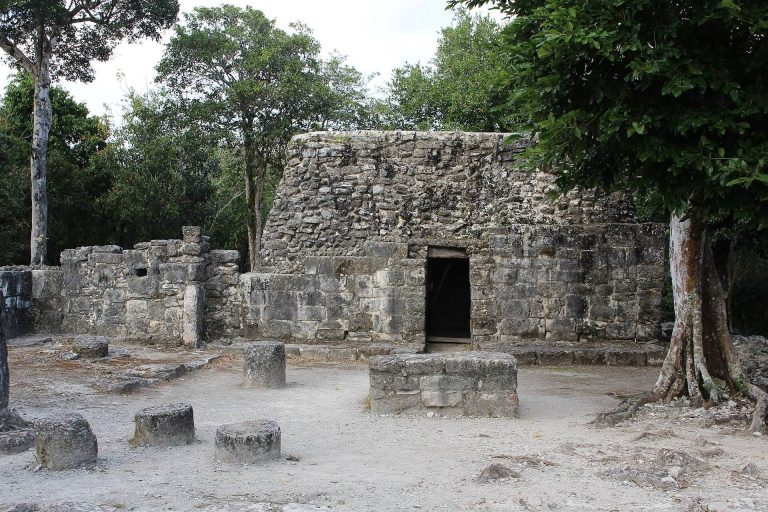
Building 4 is a palace-like structure used by the elite for administrative and residential purposes. Stairways on its northern and western sides lead to the top of the platform. Eighteen columns supported its flat roof, an altar occupied the center, and benches ran along the walls.
Building 1
Building 1 was another spacious palace. Its columns once supported a large flat roof, and the building probably had administrative functions.
Pyramidal temple and archaeological finds
Building 2
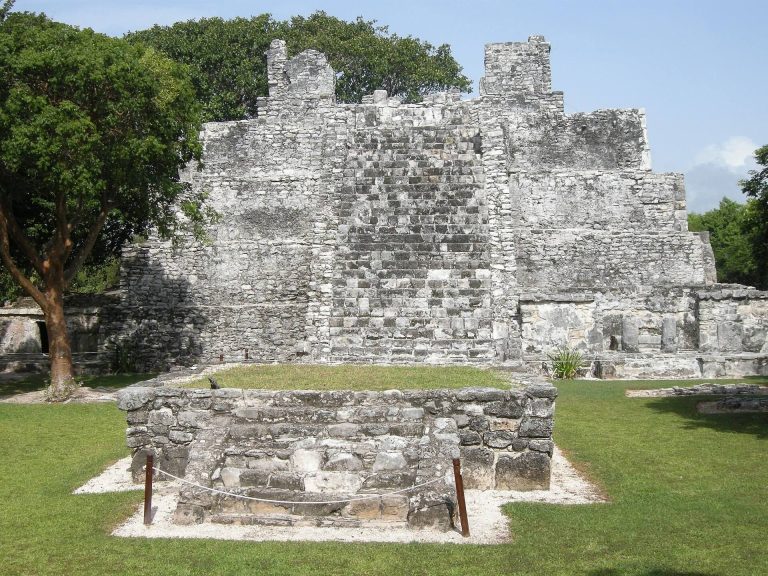
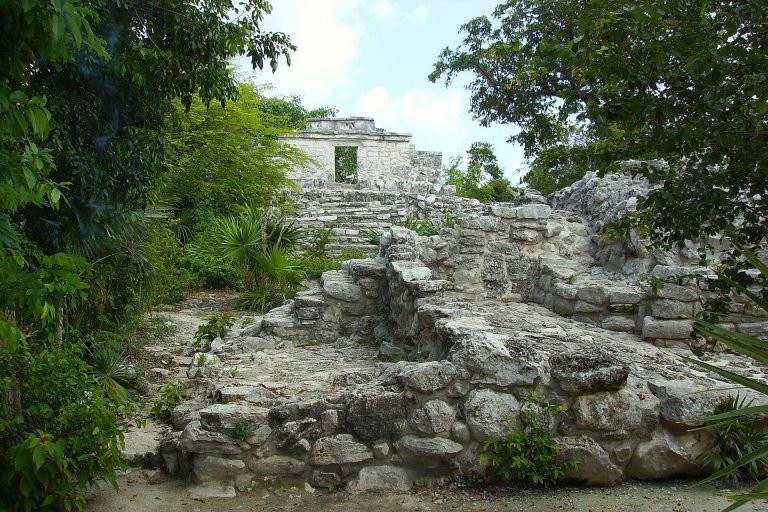
Building 2 is a pyramidal structure 5.5 meters high with three levels and rounded corners. A staircase on the southern side leads to a temple at the summit, where small sections of the outer wall and two altars survive. The structure was built over an earlier building. Its earlier staircase and balustrade, a low barrier beside a staircase, remain visible at the center. At least two construction stages are present. Excavation in 1975 uncovered the burial of a high-ranking person, accompanied by a copper axe, a bracelet, and objects made of ceramic, copper, jade, shell, and bone.
Paintings and traded materials
Several structures contain remains of mural paintings and drawings associated with Maya Postclassic rituals. Excavated materials also include basalt grinding stones, flint, knives, arrowheads, obsidian and obsidian blades, and beads of jadeite and quartz. Together, these objects reflect the developed trade routes that connected coastal communities along the Caribbean shore.