Église Saint-Symphorien de Tours: a Historic Parish Church in France
Site at a Glance
- Rating
- 4.2
- Popularity
- Very Low
- Country
- France
- Primary era
- Medieval
- External website
- Open
- Eras represented
- Medieval, Early Modern
- Civilizations
- French
- Site type
- Religious
- Remains
- Church
On this page11 sections
History
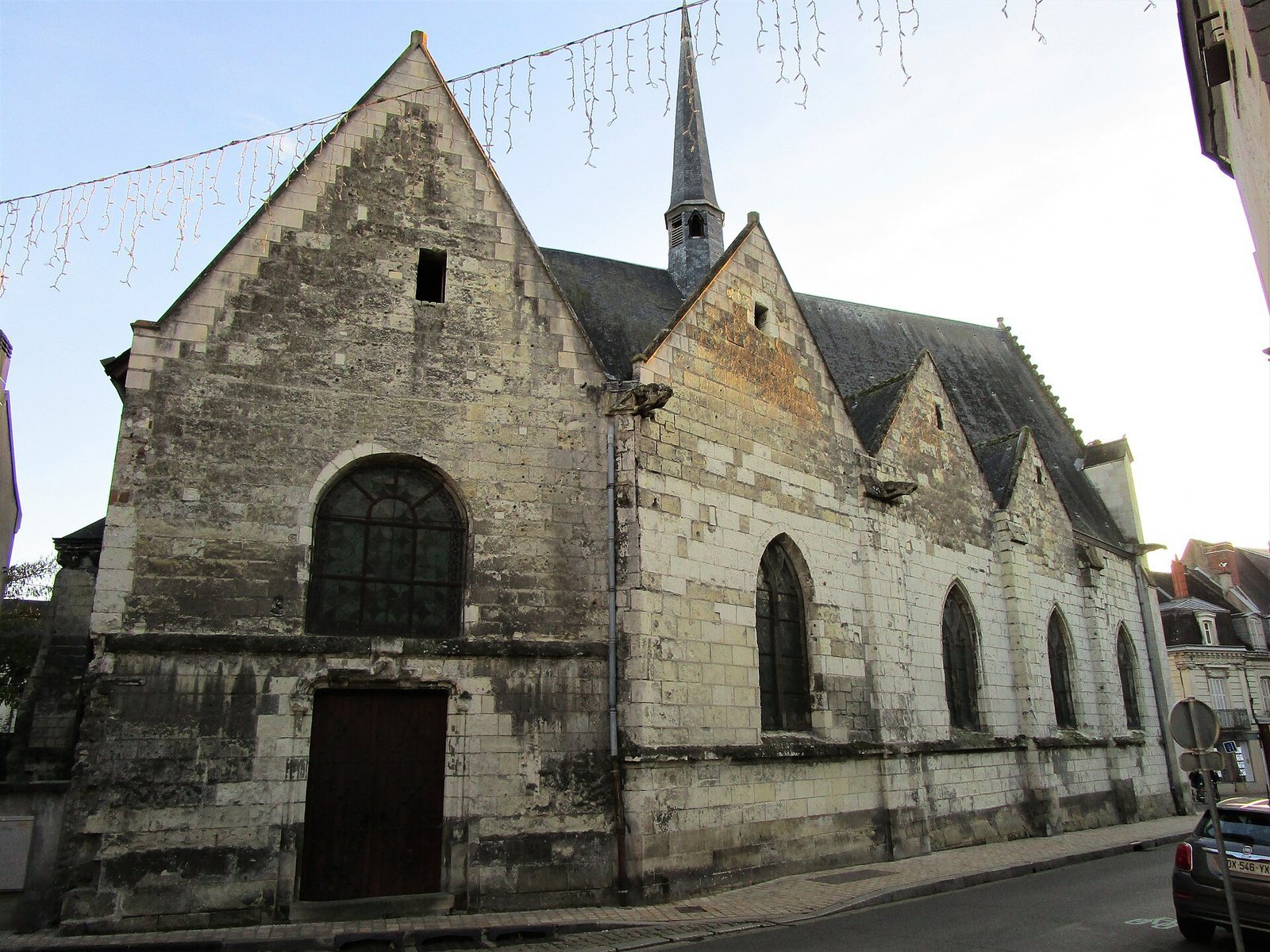
Église Saint-Symphorien de Tours is a historic church in Tours, France, on the north bank of the Loire. Its first recorded mention dates to 852, when Charles the Bald confirmed that the church and two ports opposite one another belonged to Marmoutier Abbey. Marmoutier was a major monastic establishment at Tours associated with Saint Martin, so the church remained administratively and materially linked to the abbey until the eighteenth century.
Foundation and medieval parish
A foundation tradition associates the church with Saint Perpet, the sixth bishop of Tours, whose episcopate lasted from 461 to 491. According to this tradition, Perpet commissioned Euphrône, a priest from Autun, to build Saint-Symphorien. The church was consequently connected with the spread of Christianity in the surrounding suburb. The same tradition also recalls Perpet’s construction of a basilica over Saint Martin’s tomb, a separate undertaking from Saint-Symphorien.
A parish seems to have been established between the end of the eleventh century and the first half of the twelfth century, probably as the local population increased and settlement expanded nearby. The parish church then assumed responsibility for burials, and a cemetery was created on its southern side.
The cemetery and later religious life
The southern cemetery was altered several times before it was moved elsewhere at the end of the eighteenth century. The relocation followed a royal order that prohibited burials inside churches and in urban parish cemeteries. This measure reflected an effort to separate places associated with the dead from the inhabited spaces of the living.
Église Saint-Symphorien de Tours now has a Roman Catholic affiliation with the Archdiocese of Tours and also contains an Antiochian Orthodox parish dedicated to Saint Gregory of Tours. This parish belongs to the Eastern Christian tradition associated with the Greek Orthodox Patriarchate of Antioch. The church was designated a historic monument in 1921. In modern times, its fabric underwent no major structural transformation, although the roofing was renewed and arrangements for benches and chairs were modified.
Remains
Romanesque fabric
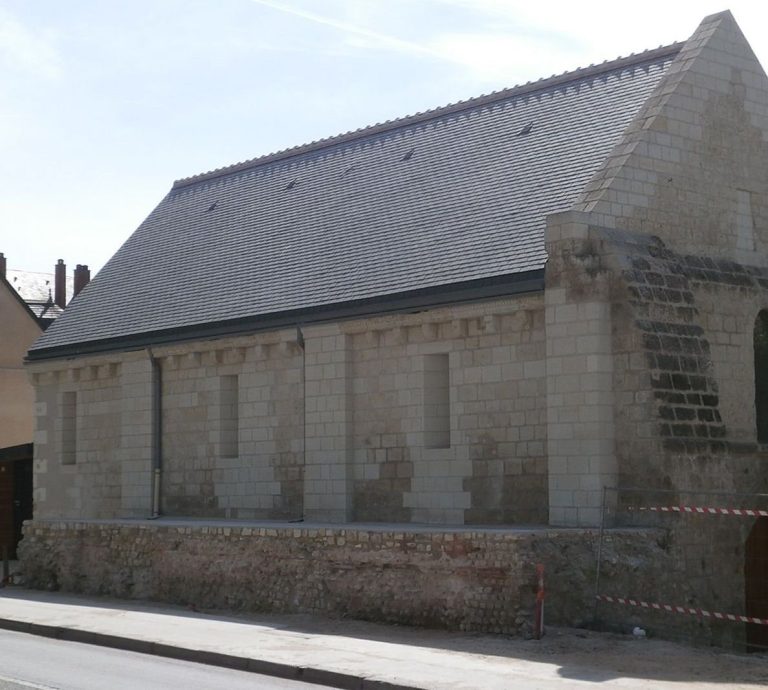
Nothing survives from the original church. The twelfth-century enlargement, however, left three principal elements. At the eastern end is a narrow, shallow apse, the usually rounded or polygonal termination behind the sanctuary. It is covered with numerous designs and figurative motifs whose meaning remains unknown. In front of it lies a bay, a spatial division of the building, supported by massive piers. The capitals are carved, and one pier also carries carved designs. A stone bell tower was inserted between the apse and the nave.
Late medieval enlargement
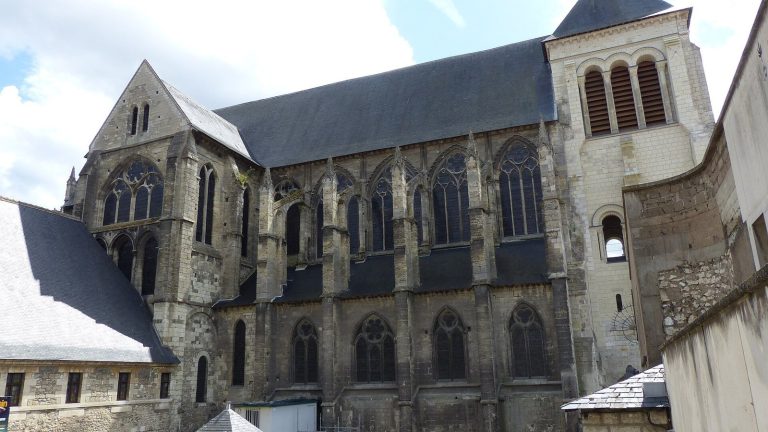
The expansion of the late fifteenth century created a larger church with a very tall nave. Its architecture combines Gothic and Romanesque arches, while the vault keystones, the central stones at the meeting point of the vault ribs, bear heraldic shields. L. Palustre judged the architectural arrangement awkward.
Chapels and internal decoration
Southern chapels
Several chapels occupy the southern side of the church. The first carries the inscription Baptizate cos in nomine Patris et Filii et Spiri’us Sancti. The second is richly decorated and includes a small gallery. In the third, a vault keystone bears a medallion whose meaning has not been deciphered.
Northern side
The northern side has an unusual form and an interior that brings together Romanesque and Gothic elements. Its vault keystones are richly decorated, and one chapel contains an altar.
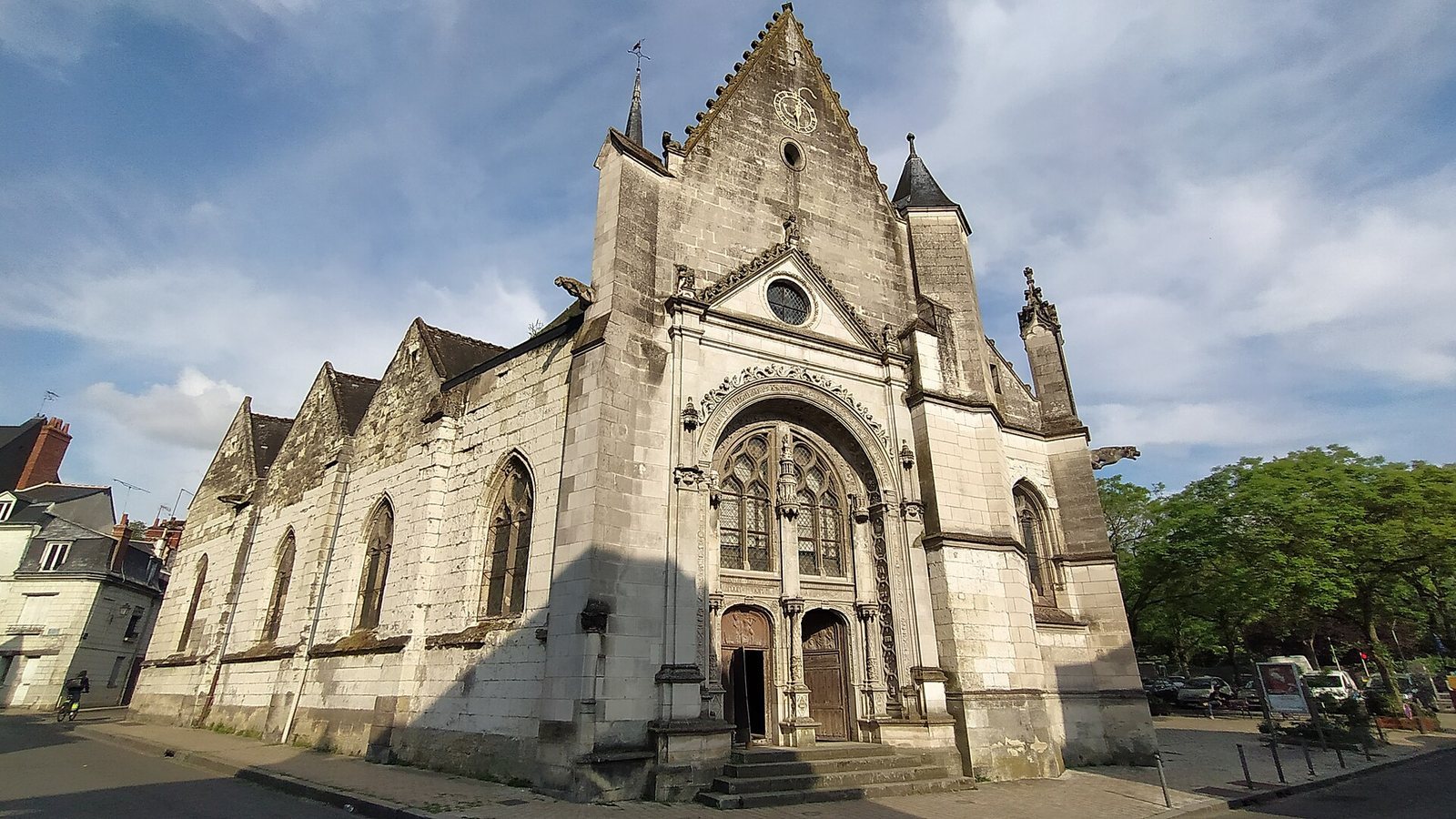
Renaissance portal
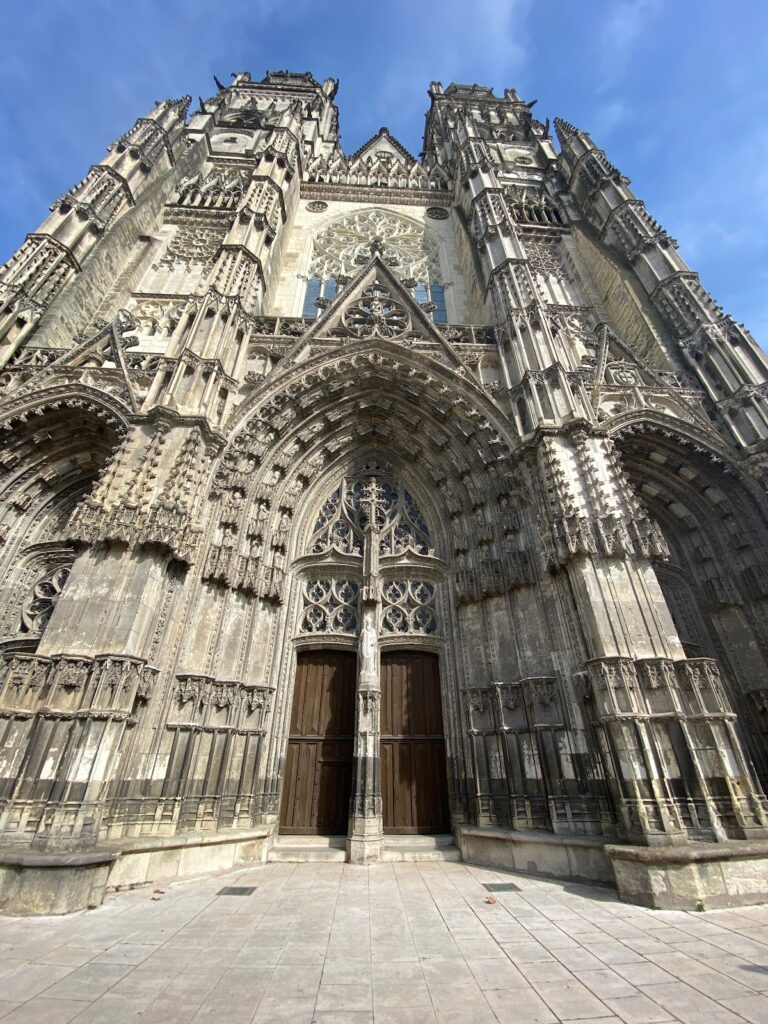
The Renaissance portal is the principal surviving exterior work from that period and is extensively decorated. L. Palustre considered it probably to have been erected in 1531, while L. Bosseboeuf concluded that construction began in 1526 and ended in 1531. Its inscriptions include In domum Domini laetantes ibimus! and four additional Latin verses. Other decoration refers to Saint Symphorian, the Virgin Mary, and passages from Ecclesiastes.
Later surfaces and organ
Paintings on the exterior have almost entirely disappeared. On 27 December 1763, the parish priest, Gayaud, called for the church to be whitewashed throughout, including the vaults, piers, chapels, sacristy, walls, and ceilings. He offered to pay half of the repairs, while the church fabric administration, the body responsible for managing the parish building and its expenses, was to meet the remaining cost.
The church also contains a gallery organ built by Louis Debierre between 1885 and 1887. Installed on an elevated gallery near the entrance end, it has 21 stops controlled from two manuals and a pedalboard.