Dunns Pond Mound: A Hopewell Burial Mound in Ohio
Site at a Glance
- Rating
- 3.6
- Popularity
- Very Low
- Country
- United States
- Primary era
- Classical
- Eras represented
- Classical, Medieval
- Civilizations
- Hopewell
- Site type
- Burial
- Remains
- Burial Mound
On this page6 sections
History
Dunns Pond Mound is a prehistoric Native American burial mound at the southeastern corner of Indian Lake near Russells Point, Ohio, in the United States. Attributed to the Hopewell culture, it was probably constructed between 300 BC and AD 600 as a place associated with funerary rites. Its use as a burial site continued after the Hopewell era, including during the Late Woodland period, giving the mound a funerary history that extended across as much as nine centuries.
Hopewell funerary use
The Hopewell culture was a prehistoric North American tradition known for substantial earthworks, ceremonial activity, and long-distance exchange. Dunns Pond Mound was probably built as a charnel house, a place where human remains were treated or kept before or during burial. Later Native American groups continued to use the mound for burials after the main Hopewell period.
A 1914 survey identified fifteen mounds along the southeastern side of Indian Lake and described the group as Logan County’s principal archaeological area. Four additional mounds on nearby Lake Ridge Island were excluded from that survey. Those mounds and Dunns Pond Mound were listed on the National Register of Historic Places on the same day. Around twenty mounds have been recorded around southeastern Indian Lake in modern times, although many more probably existed historically.
Changes around Indian Lake
The landscape around the mound changed substantially in 1860, when the Miami River was dammed to support canal traffic. The enlarged Indian Lake submerged farmland and turned small hills into islands, bringing Dunns Pond Mound close to the new shoreline. Any villages or mounds northwest of the mound were consequently submerged if they existed there.
For decades after the lake’s expansion, woodland surrounded the little-known mound. An excavation attempted in the early 1940s was soon abandoned and produced no significant finds. During the first half of the twentieth century, local Boy Scouts proposed clearing brush from the mound as a conservation project, but the owner objected and the work did not proceed. Twentieth-century development created the small community of Moundwood around Dunns Pond, with the mound at its edge. In 1974, Dunns Pond Mound was listed on the National Register of Historic Places as a potential archaeological site because it was considered likely to yield information about Native American history.
Remains
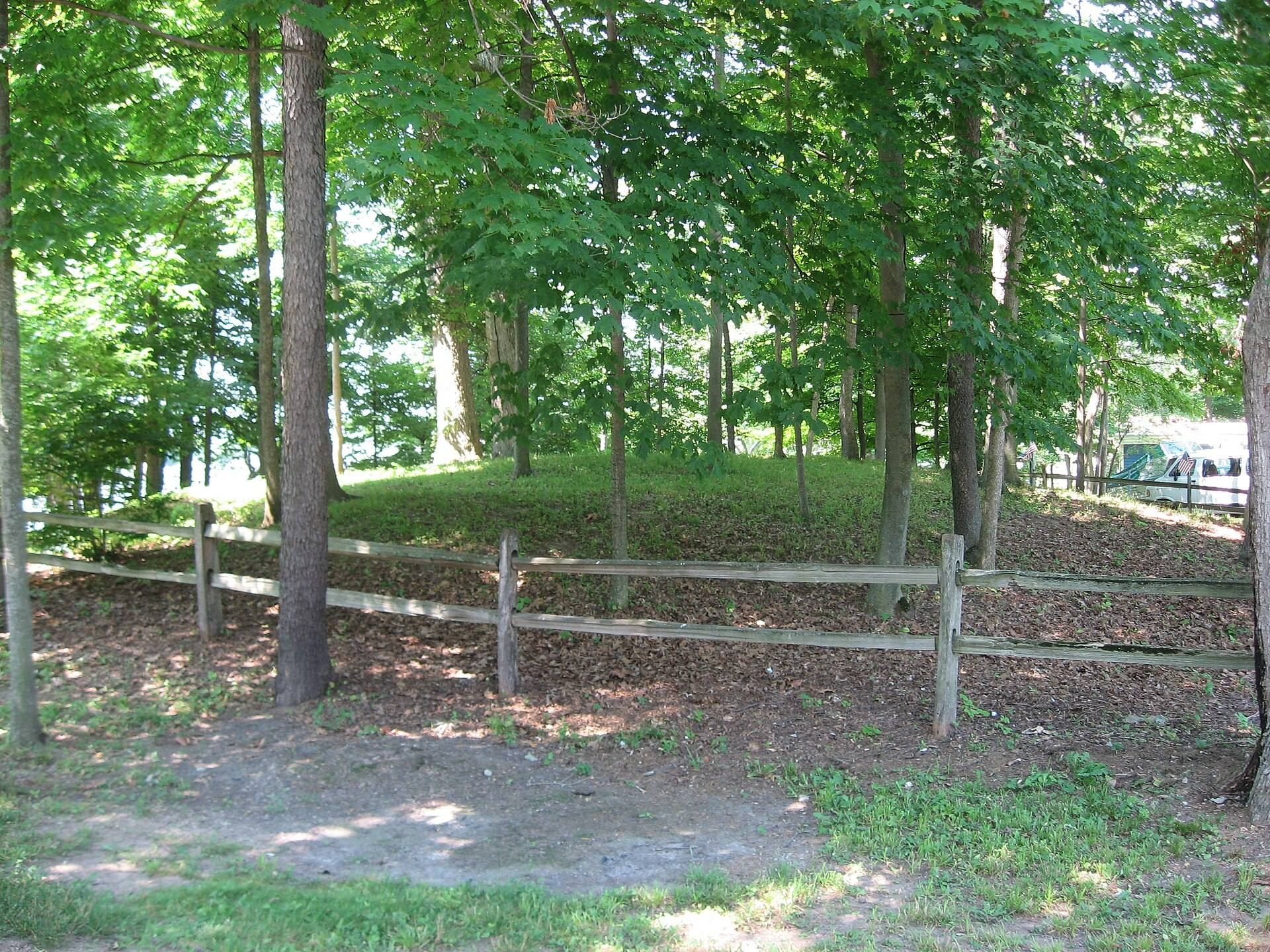
The National Register property covers approximately 1 acre (0.40 hectares) around the mound. Dunns Pond Mound stands near the southeastern corner of Indian Lake beside a small bay to the south that became known as Dunns Pond. Its setting at the edge of Moundwood places the prehistoric earthwork within a landscape reshaped by the nineteenth-century expansion of the lake.
Burial mound
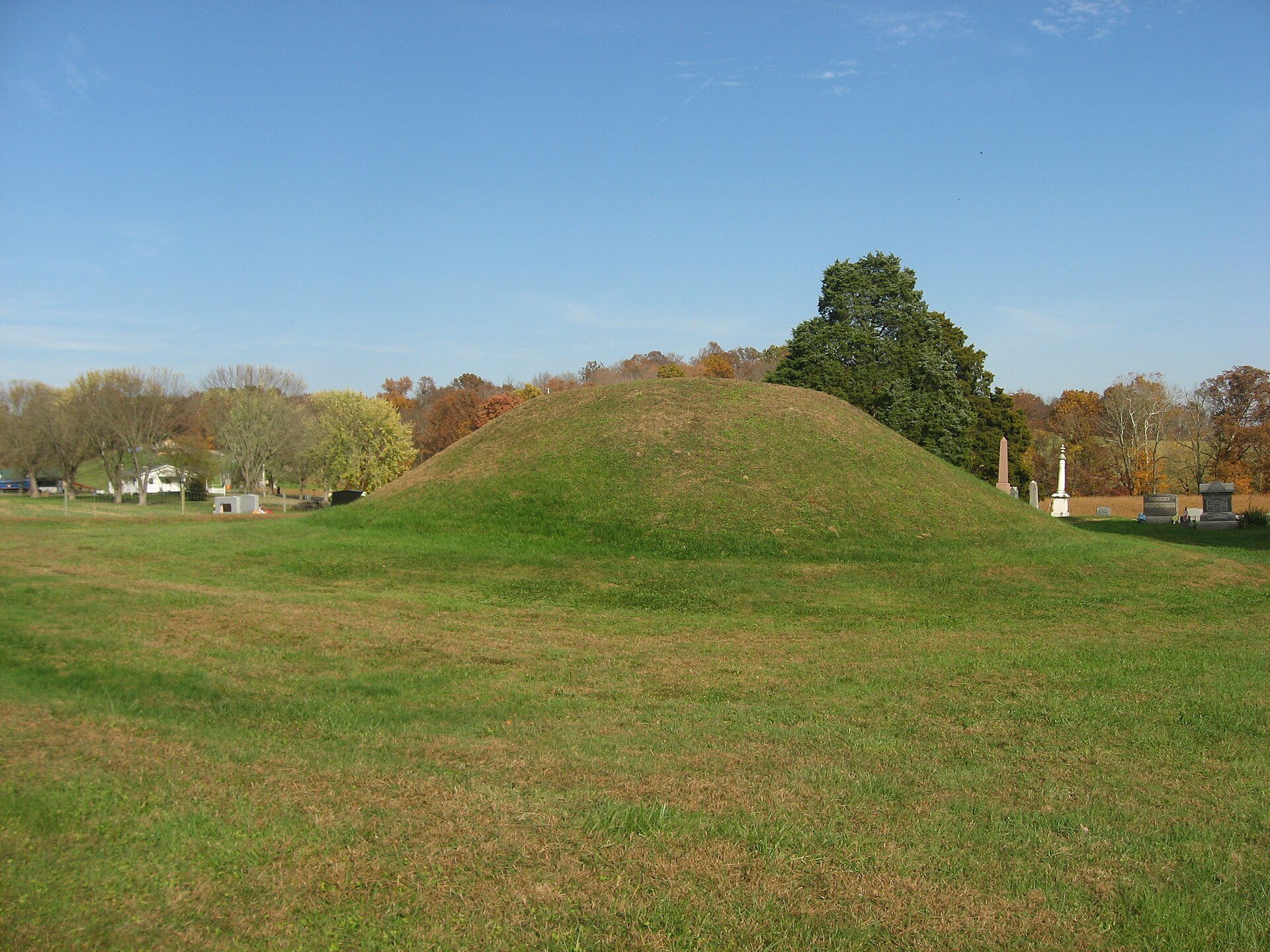
Dunns Pond Mound is an earthwork associated with Hopewell funerary practices and later Native American burials. It was formerly crossed by a bicycle and snowmobile trail, but the trail has been removed. The mound is now enclosed by a protective fence. Apart from the brief and unsuccessful excavation in the early 1940s, it has not been excavated and may preserve information about Native American history and burial practices.
Shoreline setting
The mound lies beside the small bay formed south of it after the Miami River was dammed in 1860. The enlarged lake submerged former farmland and converted nearby low hills into islands. This altered landscape may also conceal villages or mounds that stood northwest of Dunns Pond Mound before the flooding.