Duladeo Temple: A Chandela Shiva Temple at Khajuraho
Site at a Glance
- Rating
- 4.6
- Popularity
- Medium
- Country
- India
- Primary era
- Medieval
- Eras represented
- Medieval
- Civilizations
- Unclassified
- Site type
- Religious
- Remains
- Temple
On this page6 sections
History
Duladeo Temple is a Hindu temple dedicated to Shiva in Sevagram, near Khajuraho in Madhya Pradesh, India, built by Chandela rulers in the Nagara tradition around AD 1000–1150. Shiva is worshipped here through a linga, an aniconic form of the deity, placed in the innermost shrine chamber. The temple is also known as Kunwar Math, while “Duladeo” or “Dulodeo” means “Holy Bridegroom.”
The late Chandela period
The Chandela dynasty ruled parts of central India from approximately the tenth to the thirteenth century and sponsored the major temple complex at Khajuraho. Duladeo belongs to the southern group of the Khajuraho temples, together with the Chaturbhuja Temple. Khajuraho’s 87 Chandela temples included 22 dedicated to Shiva, while the settlement’s main period of temple construction lasted approximately from AD 950 to 1050. The temples are arranged in western, eastern, and southern groups and represent both Hindu and Jain religious traditions.
Duladeo is generally dated to around AD 1000–1150 and is regarded as the last temple constructed during the Chandela period. Its construction is also attributed to Madanavarman, a Chandela ruler whose reign is given as AD 1128–1165. Another dating proposal associates its sculpture with the reign of Kirttivarman, around AD 1060–1100, because of strong similarities with sculpture from the remains of a temple at Jamsor near Kanpur. The Archaeological Survey of India places the temple within Khajuraho’s wider building activity between AD 950 and 1150, using palaeography and architectural style. The name Vasala, carved in several places in the temple, may have belonged to its chief sculptor.
Later history and preservation
The Moroccan traveller and writer Ibn Battuta recorded the existence of the Khajuraho temples by 1335. Chandela cultural influence continued until the Muslim invasion of 1202. By the time of the British arrival, Duladeo Temple was in disrepair and partly ruined. Its shikhara, the tower above the sanctum, together with its side walls and columns, was later restored.
The Khajuraho Group of Monuments, including Duladeo Temple, was inscribed on the UNESCO World Heritage List in 1986 under Criterion III for its artistic creation and Criterion V for its representation of Chandela culture.
Remains
Plan and architectural form
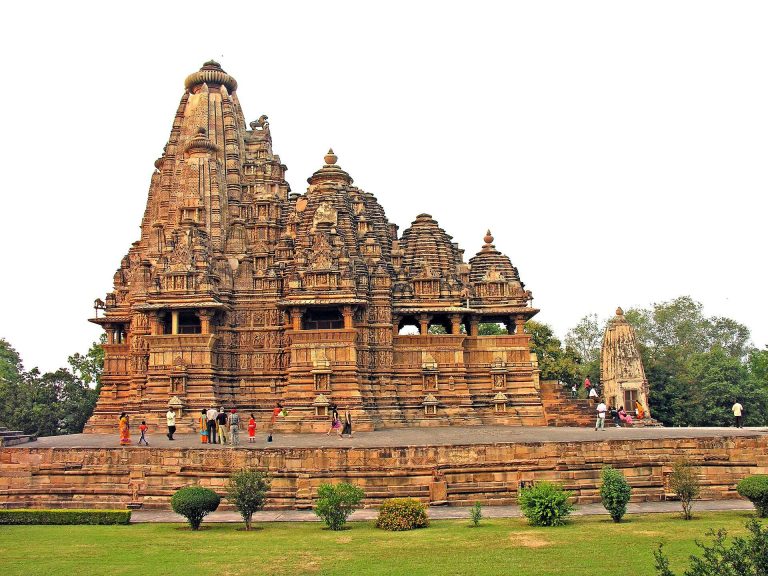
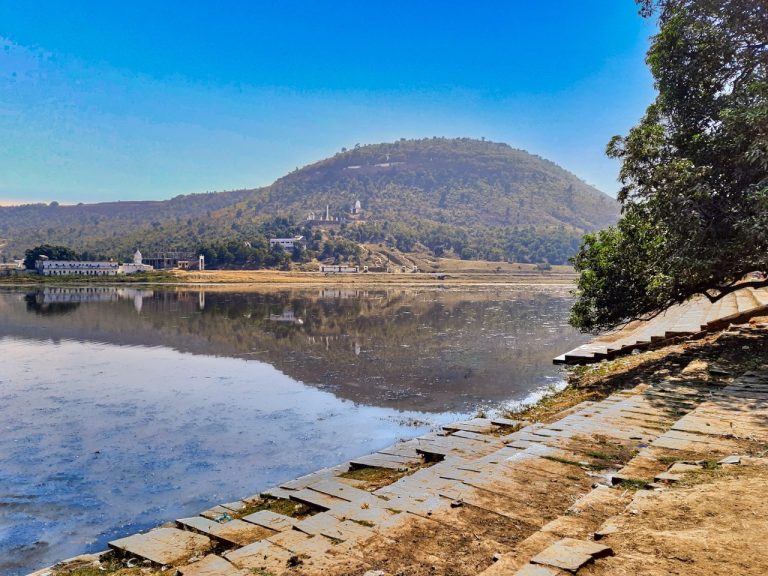
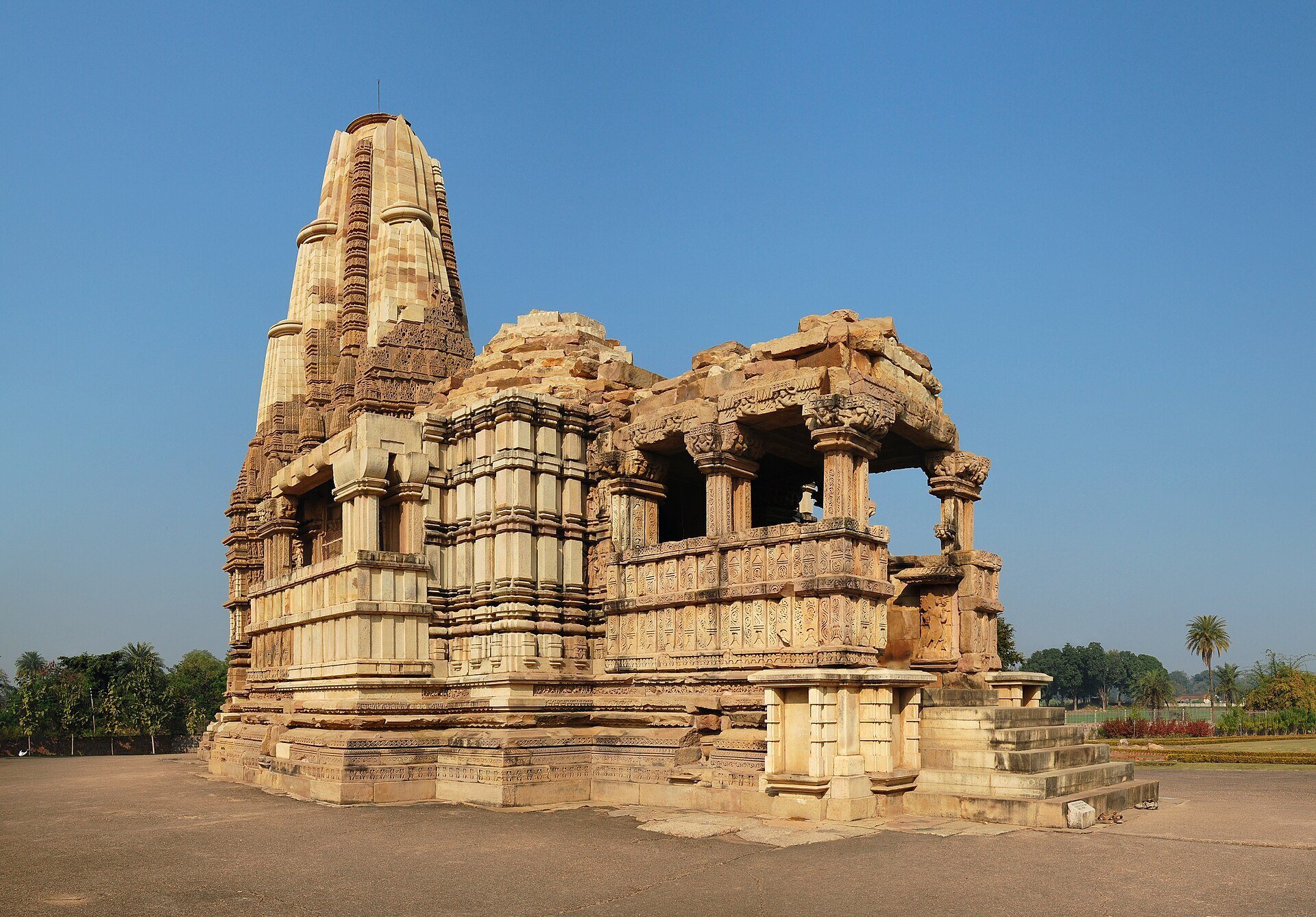
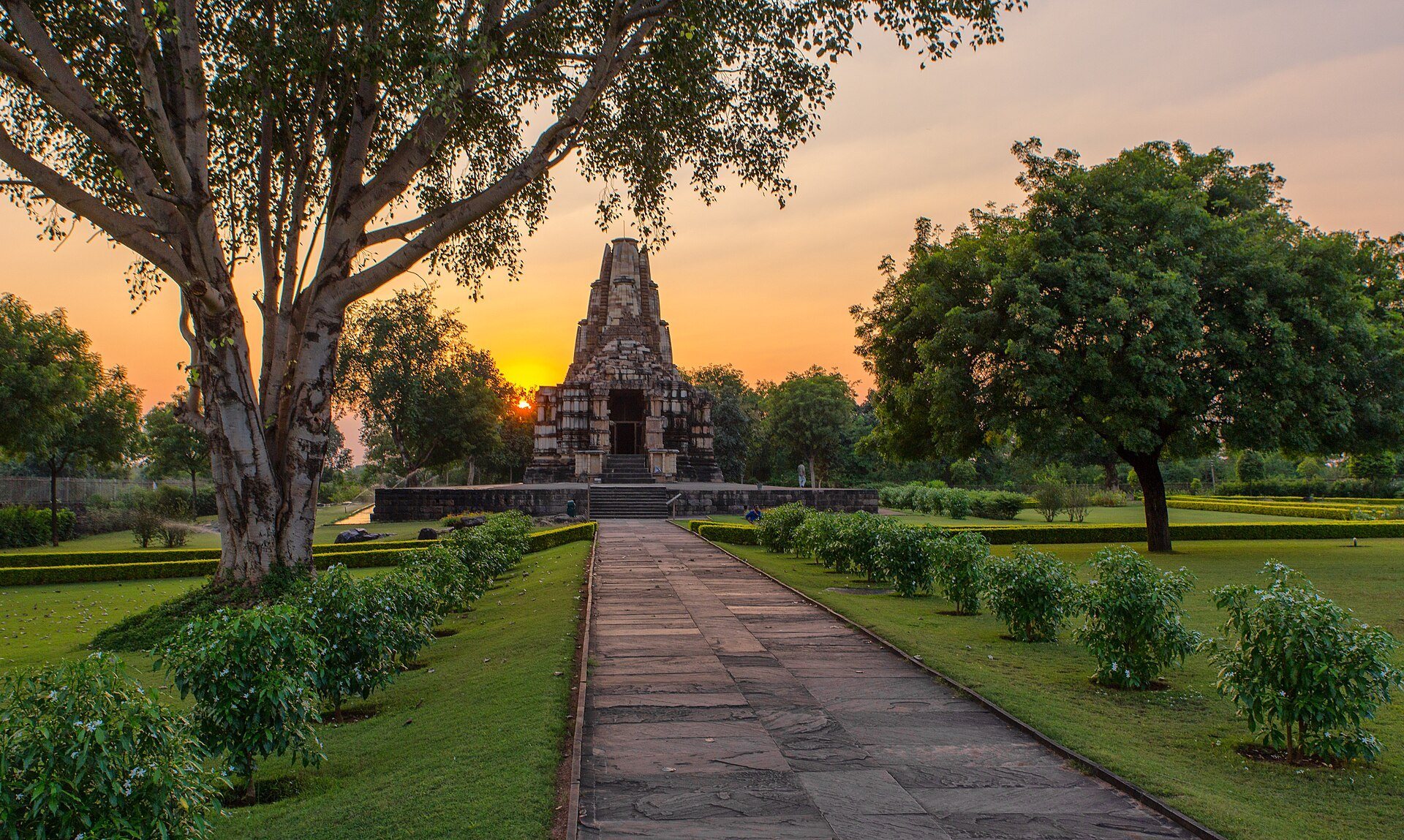
Duladeo Temple stands beside the Khodar River in the southern group of the Khajuraho complex, near the Jain enclosure and approximately 5 kilometres from Khajuraho village. The wider temple area covers about 6 square kilometres. Facing east, the temple follows a seven-projection plan known as saptaratha, with “chariots” referring to the projecting sections of the exterior. It rises on a raised base, above which the richly decorated structure is covered with sculpture.
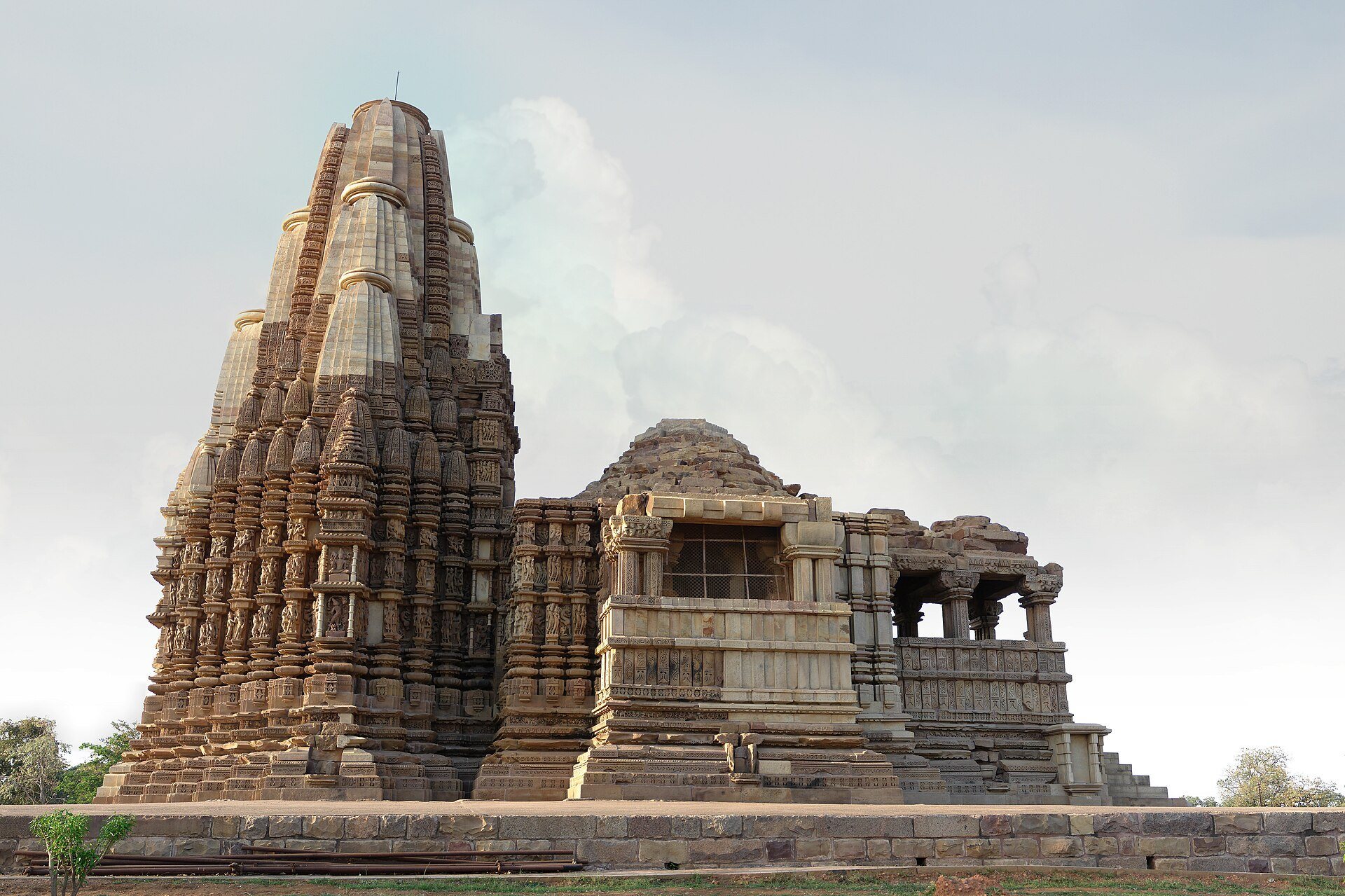
The temple is nirandhara, meaning that its sanctum has no surrounding passage for ritual circumambulation. Its plan consists of the sanctum, a vestibule, a large main hall or maha-mandapa, and an entrance porch. The main hall is notably broad and octagonal. Above the sanctum rises a Nagara-style shikhara formed from three rows of smaller towers. Its design is described as an image of Mount Kailash, the abode of Shiva. The lack of an ambulatory may relate to the temple’s construction at the end of Chandela building activity, after the dynasty’s architectural peak.
Restored portions can be distinguished from the earlier fabric by their lighter-coloured sandstone. The restored tower, side walls, and columns have plain surfaces, allowing the difference between the later work and the surviving carved stone to remain visible.
Sculpture and ritual features
The octagonal hall has a ceiling supported by twenty brackets carved with apsaras, celestial female dancers. Each bracket carries two or three dancers arranged in a circular, corbelled composition. Apsaras also appear on the exterior and interior in erotic poses, while other female figures dance around trees or adopt different amorous attitudes. The upper facade includes flying vidyadharas, supernatural or semi-divine beings, shown in energetic poses. River-goddess figures stand beneath umbrellas in the entrance porch, which also carries pompon-like decoration.
Among the notable carvings in the inner passage is a profile view of a celestial dancer between buttresses. She wears a necklace and holds her hands as if throwing dice. Figures placed among mango trees project outward from the walls and have carefully finished faces, double chins, sharply arched eyebrows, and rich ornament. Canopies of mango trees and carved fruits occur throughout the temple and are interpreted as fertility symbols. Other imagery includes a flying deity wearing a long rectangular necklace and a representation of the triad of Surya, Brahma, and Shiva.
The entrance lintel to the sanctum bears an image of Shiva. The sanctum contains a duplicate linga whose surface carries 999 additional small lingas. Circumambulating this object is understood as equivalent to circumambulating 1,000 lingas, and local people continue to worship at the temple.
Duladeo’s sculpture is described as softer and more expressive than that of other Khajuraho temples. Because the building imitates an older style at the end of the Chandela period, its carving has also been characterized as wooden-looking and stereotyped. The female figures, however, are noted for their elegance and grace. Several mithuna figures, depicting erotic or amorous couples, appear among the temple’s sculptural program.