Beejamandal, Khajuraho: A Ruined Hindu Temple
Site at a Glance
- Rating
- 4.3
- Popularity
- Very Low
- Country
- India
- Primary era
- Medieval
- Eras represented
- Medieval
- Civilizations
- Unclassified
- Site type
- Religious
- Remains
- Temple
On this page5 sections
History
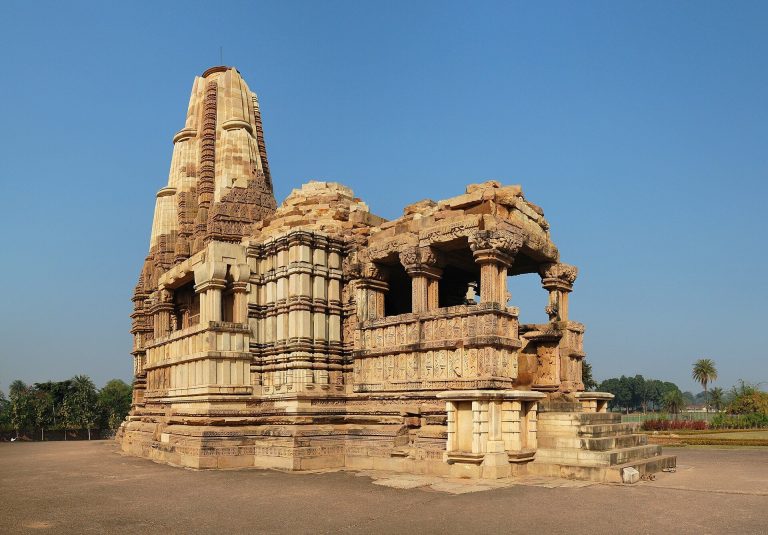
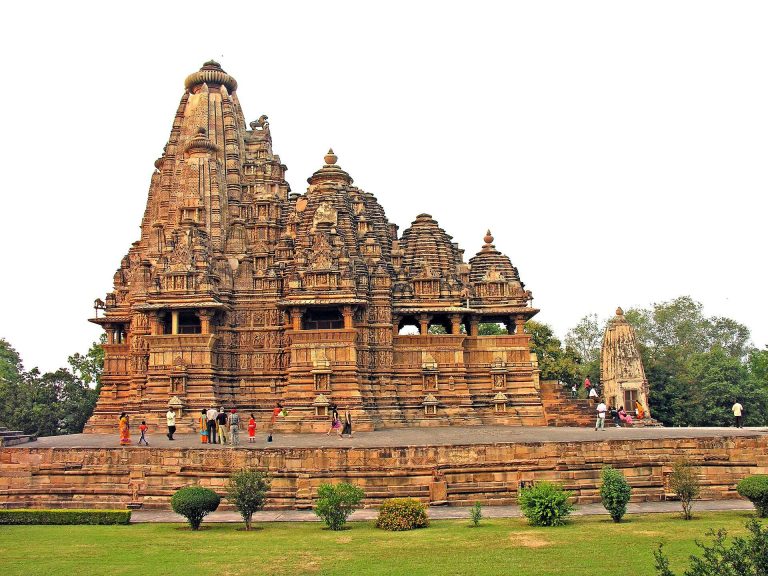
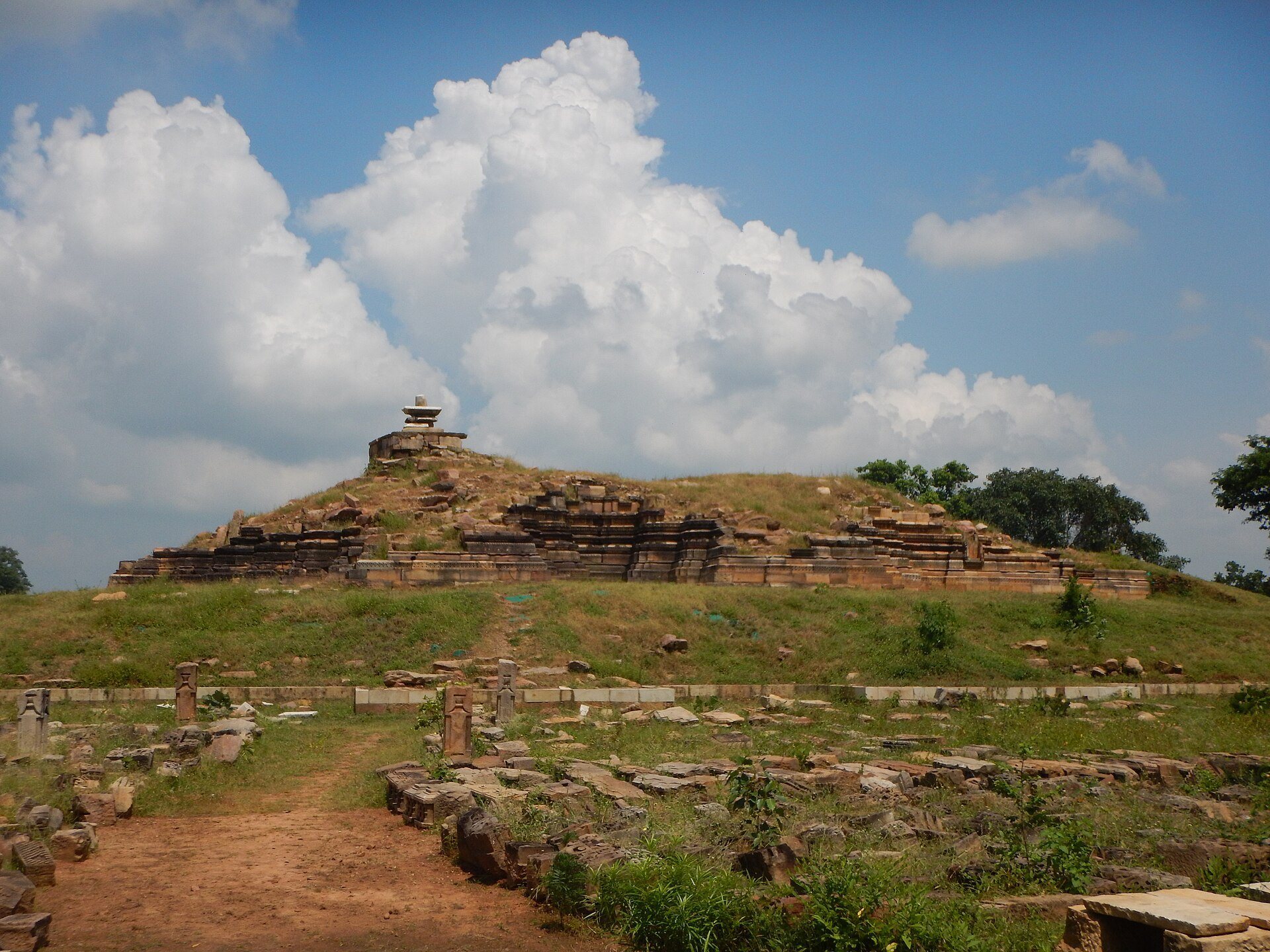
Beejamandal, Khajuraho is a ruined Hindu temple in Sevagram near Khajuraho, Madhya Pradesh, India. Traditionally attributed to the eighth century and reconstructed during the Paramara period in the second half of the eleventh century, it is associated with Naravarman, a ruler of the Paramara dynasty, which governed parts of central India during the medieval period.
Origins and Paramara Reconstruction
The monument is also popularly called the Vijaya Temple. Naravarman was devoted to Charchika, a Hindu goddess also known as Vijaya, and this association is traditionally given as the reason for the temple’s alternative name. Beejamandal stands near Jatkara village, about 2 kilometres from Eidgah Square on the Vidisha to Ashoknagar road and close to the Chaturbhuj Temple.
The temple was never completed. Its unfinished condition forms an important part of the site’s history and is visible in the incomplete architectural work around the structure.
Interpretations and Archaeological Exploration
Cunningham and Phanikanta Mishra identified Beejamandal with the Vaidyanatha Temple mentioned in an inscription of Grahapati Kokkala. Vaidyanatha is an epithet of the Hindu god Shiva, so this interpretation connects the monument with a Shiva sanctuary. The identification remains an interpretation rather than an established fact.
Beejamandal is one of 18 unexplored mounds identified in the vicinity of Khajuraho. Excavation and exploration of the site remain incomplete, while the Archaeological Survey of India has no authority to excavate the other mounds.
Remains
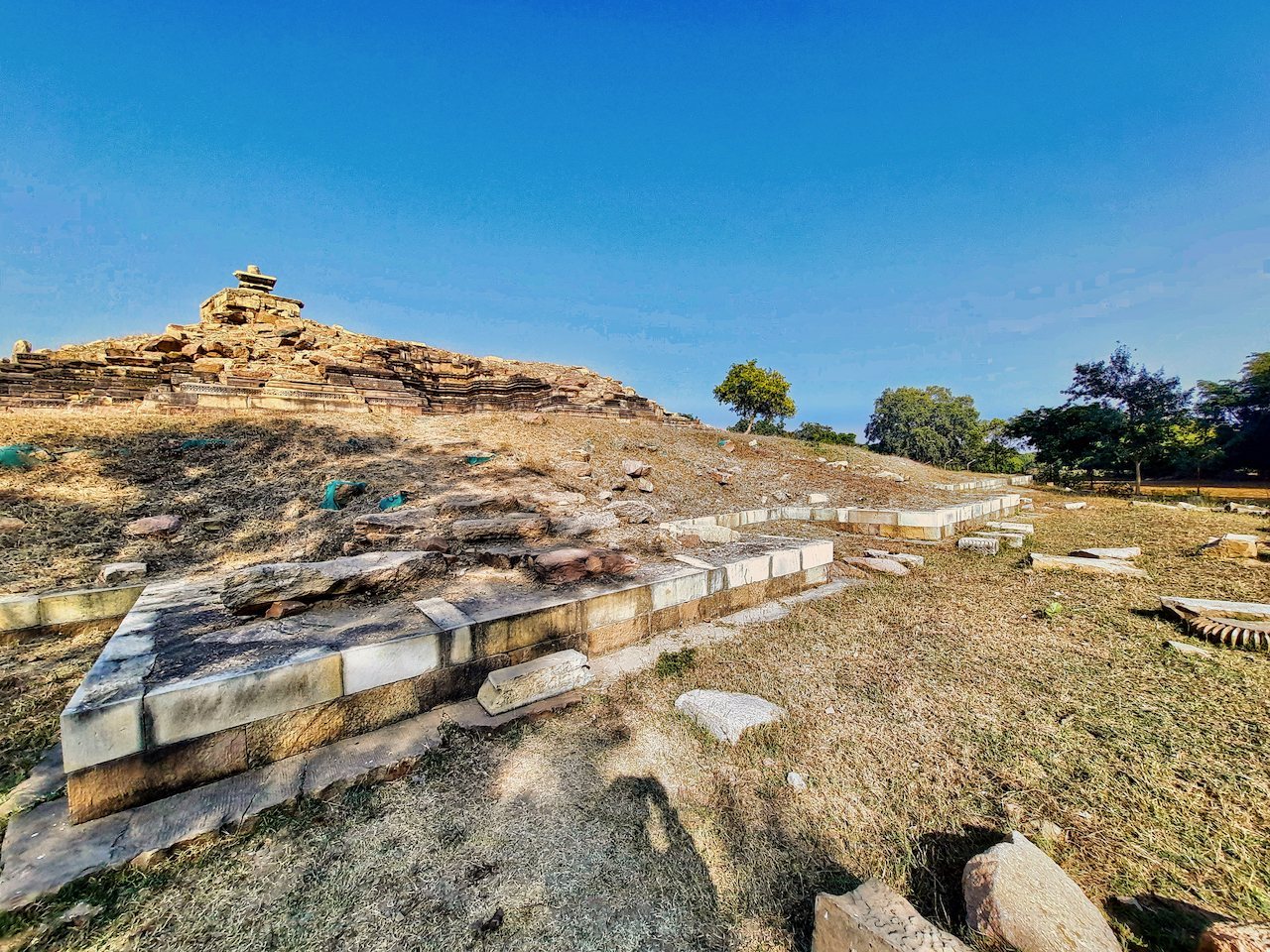
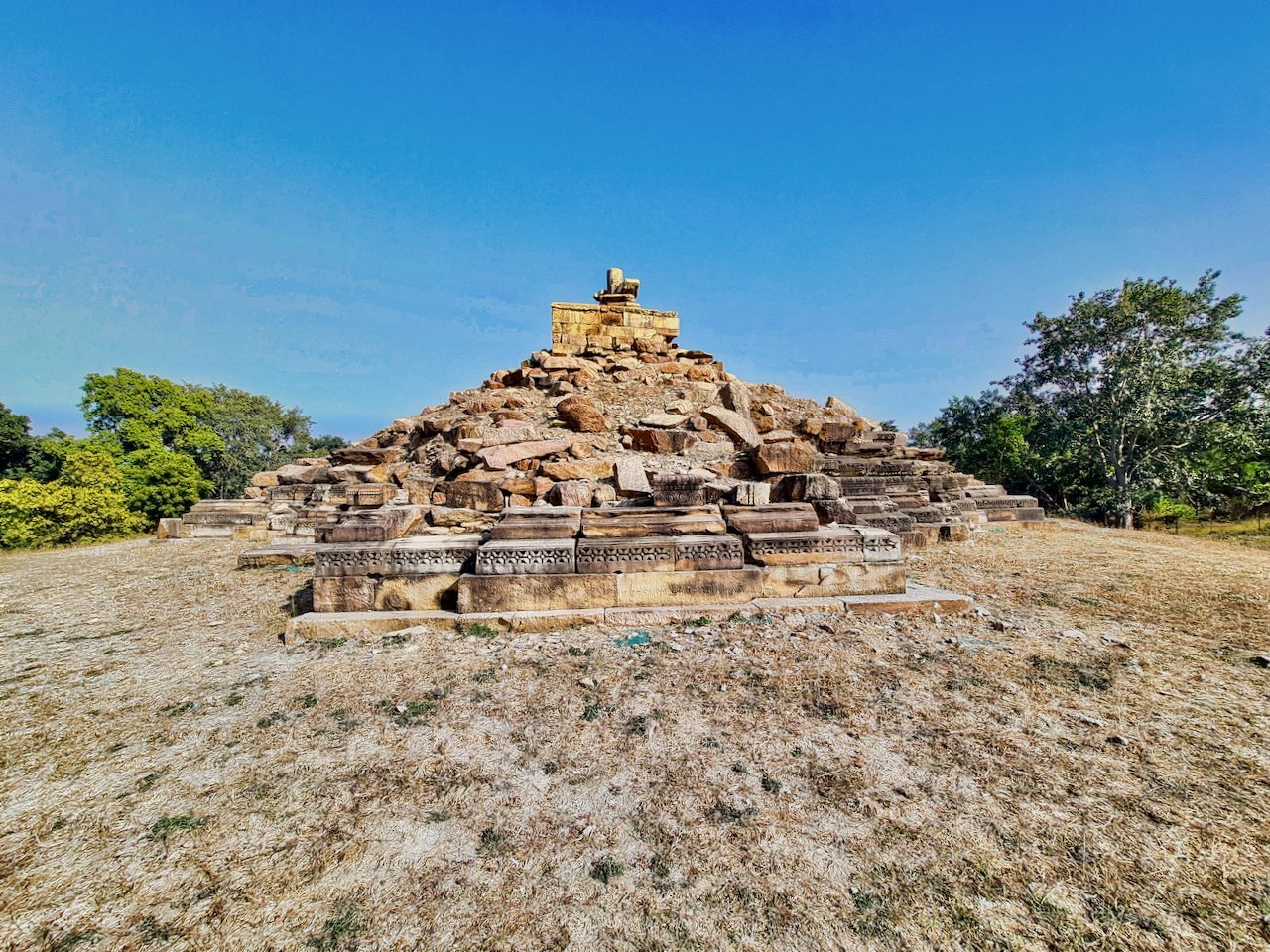
The surviving temple measures 34.60 metres in length. This makes it longer than Khajuraho’s Kandariya Temple, which measures about 30 metres. The remains include the temple platform, carved niches, and unfinished architectural pieces gathered around its base.
Temple Platform and Unfinished Work
Carved niches and incomplete architectural elements around the platform reveal that construction stopped before the building reached completion. These pieces form part of the site’s archaeological evidence and help distinguish the present ruin from a fully finished temple.
Local villagers say that a substantial part of the structure remains buried underground. They also describe a summit or spire marked by white stone. According to local tradition, villagers have long lit an oil lamp and made offerings at that point.