Draiser Hof: A Cistercian Estate and Winery in Eltville
Site at a Glance
- Popularity
- Medium
- Country
- Germany
- Primary era
- Early Modern
- Eras represented
- Early Modern, Modern
- Civilizations
- Electorate of Mainz, Holy Roman Empire
- Site type
- Domestic
- Remains
- Manor House
On this page10 sections
History
Foundation and monastic estate
Draiser Hof is a former Cistercian estate in Eltville, Germany, near the boundary with Erbach in the Rheingau. Cistercians belonged to a Catholic monastic order whose communities commonly maintained agricultural estates. In 1141, Archbishop Markolf of Mainz granted marshy land west of Eltville to the monks of Eberbach Abbey. After draining it, they established the abbey’s first farm and wine storehouse there. A short time later, the abbey founded another farm at Reichartshausen, near Oestrich.
The estate appears in a record from 1163 as a monastic storehouse. Its name may derive from an Old High German word meaning “water-rich.” It grew through gifts and purchases, including land on the opposite bank of the Rhine at Nonnenaue, near Heidesheim. Eberbach shared this area with Gottesthal Abbey and used it to grow fruit. Before the Rhine was regulated, the river ran directly past Draiser Hof, and its connection to the waterway was important to the abbey’s economy.
Rebuilding and transfer to secular ownership
Draiser Hof suffered damage during the Thirty Years’ War, the European conflict fought from 1618 to 1648, and was subsequently rebuilt. In 1727, Eberbach monk Bernhard Kirn prepared plans for the present manor house.
In 1803, the secularization of church property transferred the estate to Friedrich August, Duke of Nassau-Usingen. He gave it to his minister Hans Christoph Ernst von Gagern for his work on Nassau’s negotiations over the transfer of church lands. Von Gagern sold the farm in 1815 to Georg Herber, Eltville’s local administrative official, known as an Amtskeller. Karl Wilhelm Georg von Bodelschwingh-Plettenberg acquired it from Herber in 1818, and Karl’s grandson Carl Gisbert Wilhelm inherited it in 1845. The estate passed through Carl’s only child, Wilhelmine, to the barons of Innhausen and Knyphausen when she married Dodo Alexander in 1867.
Winery and later rebuilding
Since the late nineteenth century, Draiser Hof has been the seat of the Baron Knyphausen winery. A fire around 1890 was followed by the rebuilding of the estate’s other farm buildings.
Remains
Estate layout and buildings
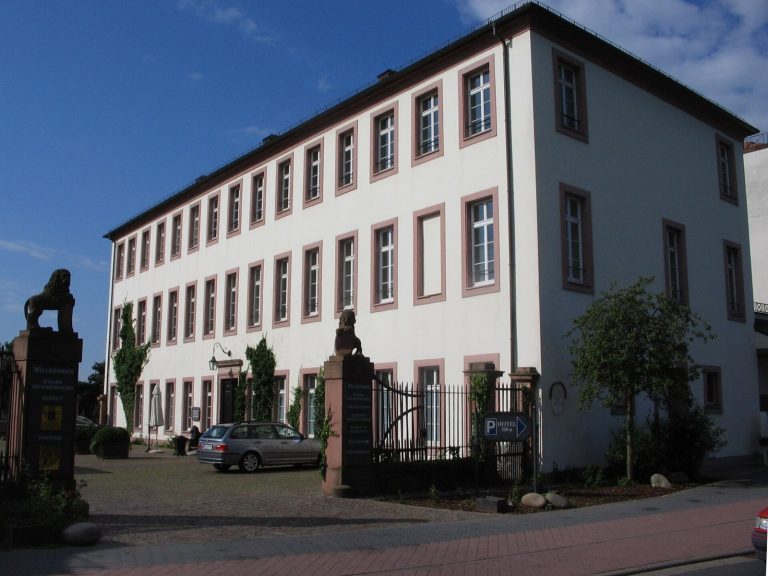
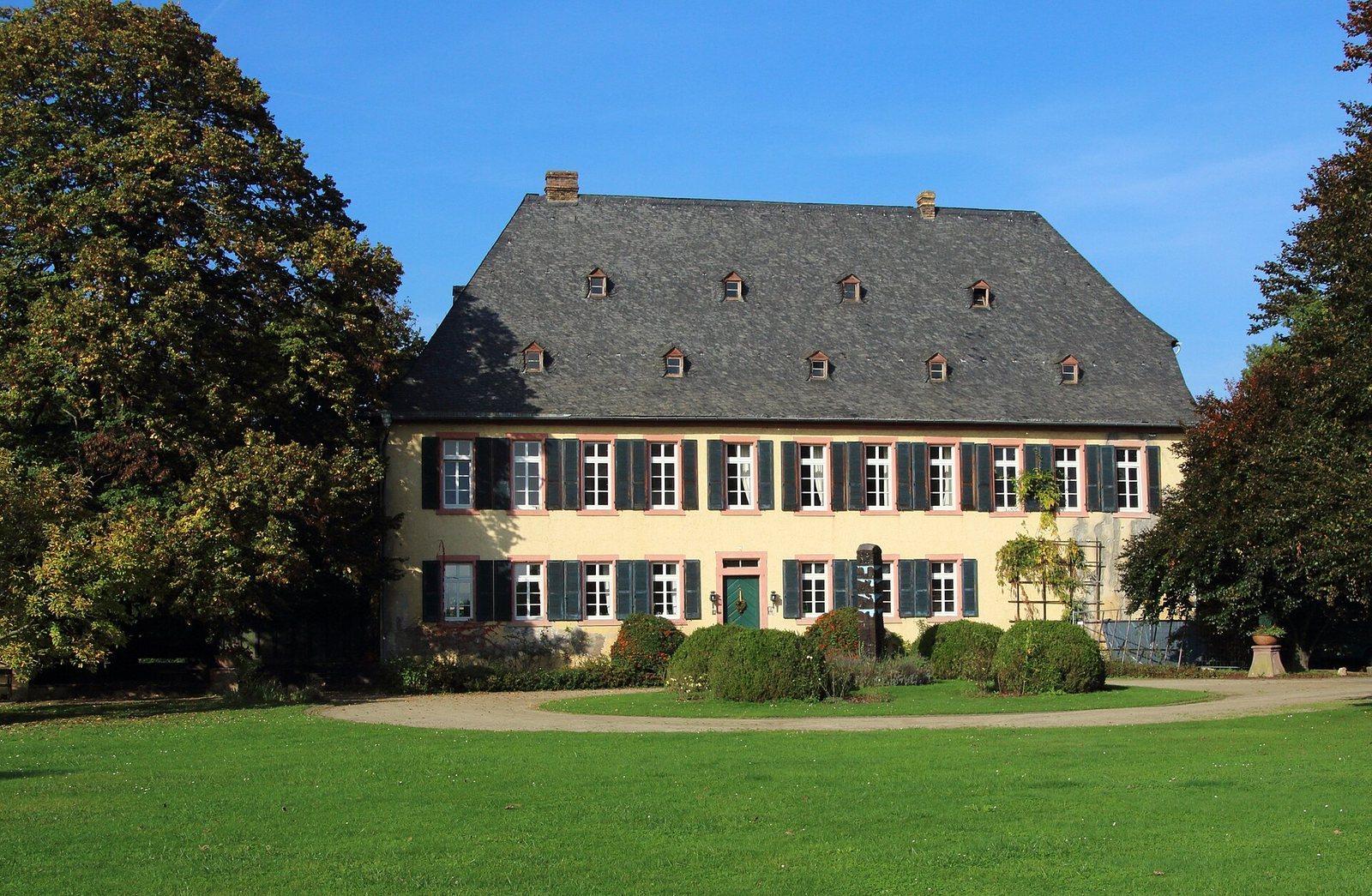
The estate stands among vineyards in a park enclosed by an old wall. Its buildings include a two-storey manor house, a coach house to the west, and a wine-press house to the northeast. A pond also forms part of the grounds.
Manor house
The manor house is two storeys high. Plans for the present house were prepared in 1727.
Coach house
The eighteenth-century coach house stands west of the manor house and is also known as the Coal House.
Wine-press house
The wine-press house is situated northeast of the manor house and dates to the early nineteenth century.
Pond and former Nonnenaue land
The estate pond is believed to date from the farm’s foundation period. The former estate land at Nonnenaue lies across the Rhine near Heidesheim and is now silted up.