The Door of Mher: An Urartian Sanctuary near Van
Site at a Glance
- Rating
- 4.4
- Popularity
- Medium
- Country
- Turkey
- Primary era
- Iron Age
- Eras represented
- Iron Age
- Civilizations
- Urartian
- Site type
- Religious
- Remains
- Sanctuary
On this page10 sections
History
Urartian sanctuary
The Door of Mher is an Urartian sanctuary near the Van fortress in Turkey, dedicated to Ḫaldi, the principal god of Urartu, an ancient kingdom centered on the region around Lake Van. Its inscription is dated to about 820 BCE, during the reigns of Išpuini (825–810 BCE) and Menua (810–786 BCE). The sanctuary belongs to a tradition of structures known as God’s Gates, which Urartian kings built for Ḫaldi.
The inscription names Ḫaldi, Teišeba, the weather god, and Šiwini, the sun god, along with many local deities. It records offerings of cattle and sheep to 79 recipients in the month Šiuini. These include passes, lakes, mountains, Ḫaldi’s weapons, and the Ḫaldi Gate itself. The inscription is regarded as the most important known source for Urartian religion. The sanctuary was also associated with the names Door of Ḫaldi and God’s Gate.
Later worship and Armenian tradition
After the Kingdom of Van fell, the sanctuary lost much of its importance. Worship of Ḫaldi became joined with that of Mihr, a deity associated in Armenian tradition with a return and the defeat of evil. Popular belief nevertheless continued to treat the place as an important sanctuary into the twentieth century.
Armenian tradition identifies the rock and its cave with the imprisonment of Little Mher, a hero in the epic Daredevils of Sassoun. He is the son of David and was named for his grandfather, Great Mher. In the story, David’s curse confines Little Mher inside the rock. Another explanation says that the aging earth could no longer bear his extraordinary weight, and his horse’s hooves sank into the ground.
Accounts describe the rock opening in different ways. In one, its doors open on the nights of Ascension, the Christian feast marking Christ’s ascent to heaven, and Vardavar, an Armenian festival. Little Mher rides out on his fiery horse when heaven and earth meet, but returns because the ground still cannot support him. Another version says the doors open once a year, when manna from heaven feeds Mher and his horse, then close again.
Tradition also anticipates Mher’s future return to free the Armenian world from evil and establish a just, peaceful way of life. In this telling, he and his horse remain inside until humanity, justice, nobility, and peace prevail. The legend thus retains an expectation of Mihr’s return and the world’s release from evil spirits. Friedrich Eduard Schulz, a German scholar, made the first copy of the inscription between 1826 and 1828.
Remains
Rock sanctuary and associated remains
Setting and layout
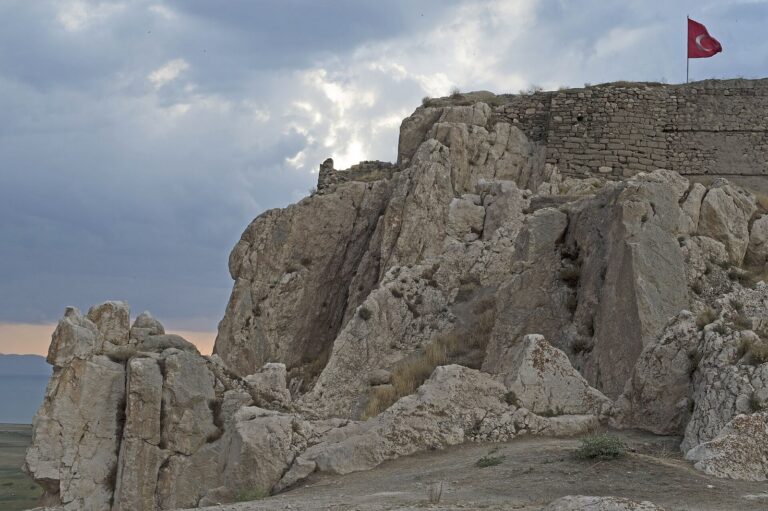
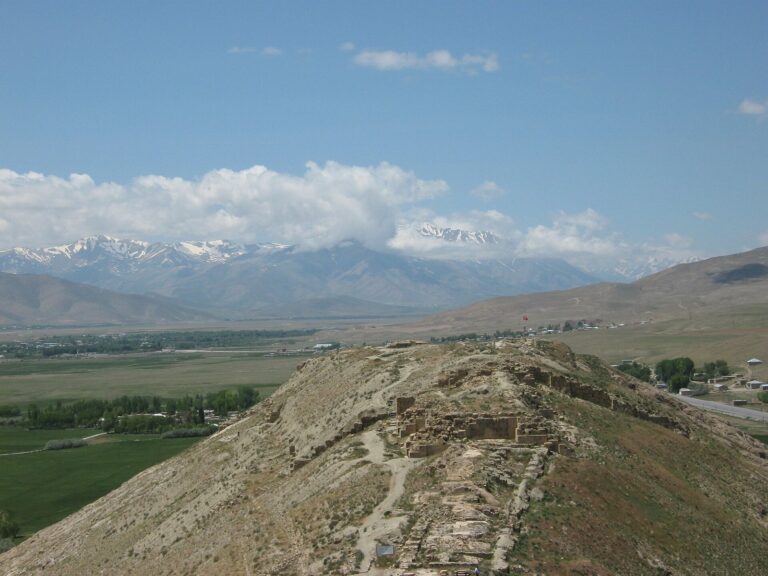
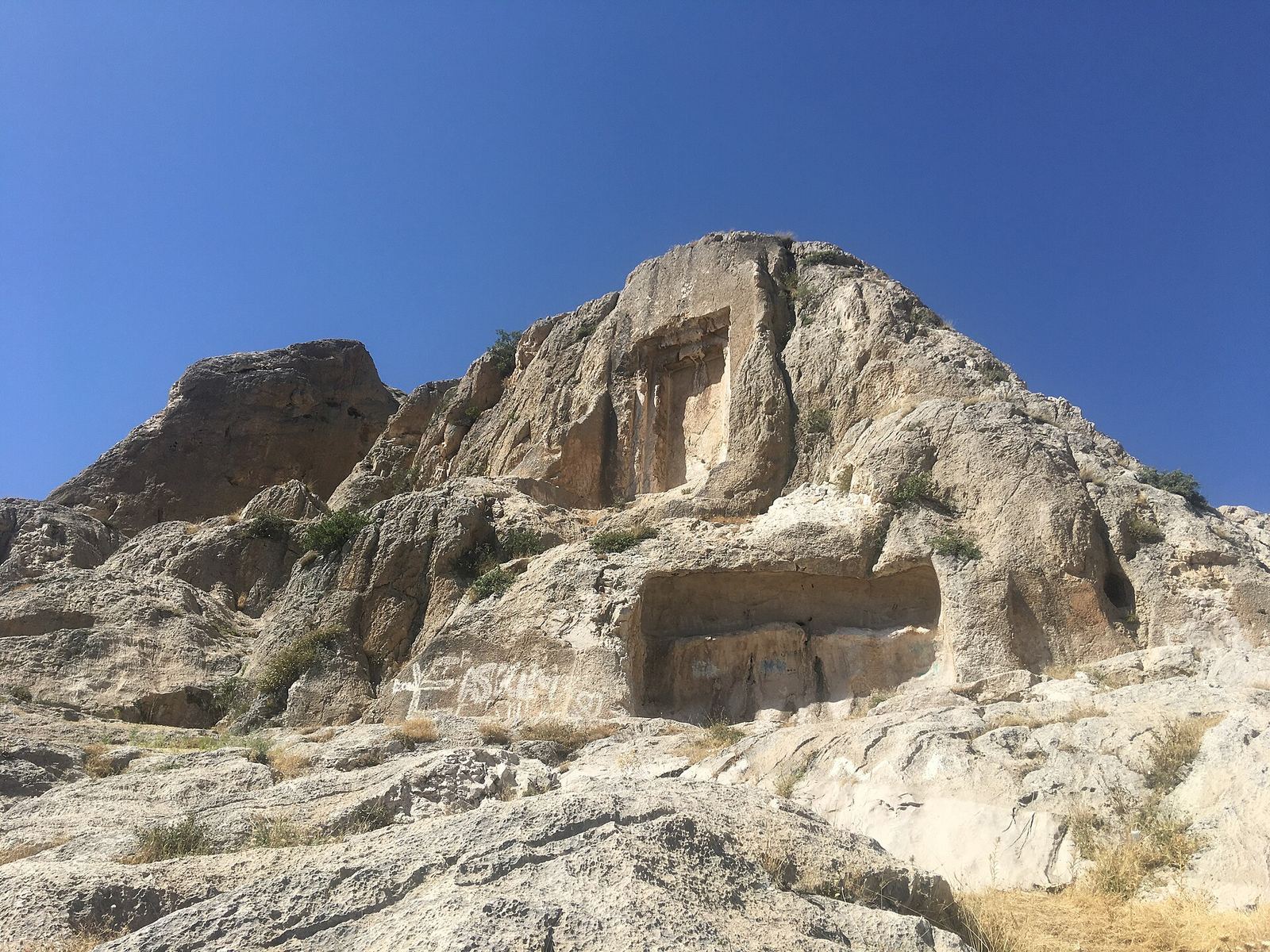
The sanctuary lies in a belt of hills extending northeast from the Van fortress toward the Varag mountains. Armenian tradition calls this area the Tospian Hills and holds that it was once joined to the fortress rock before an earthquake separated them. The site is described as two limestone hills joined at their base, with the sanctuary entrance carved into the western face of an elongated rock.
Inscribed doorway
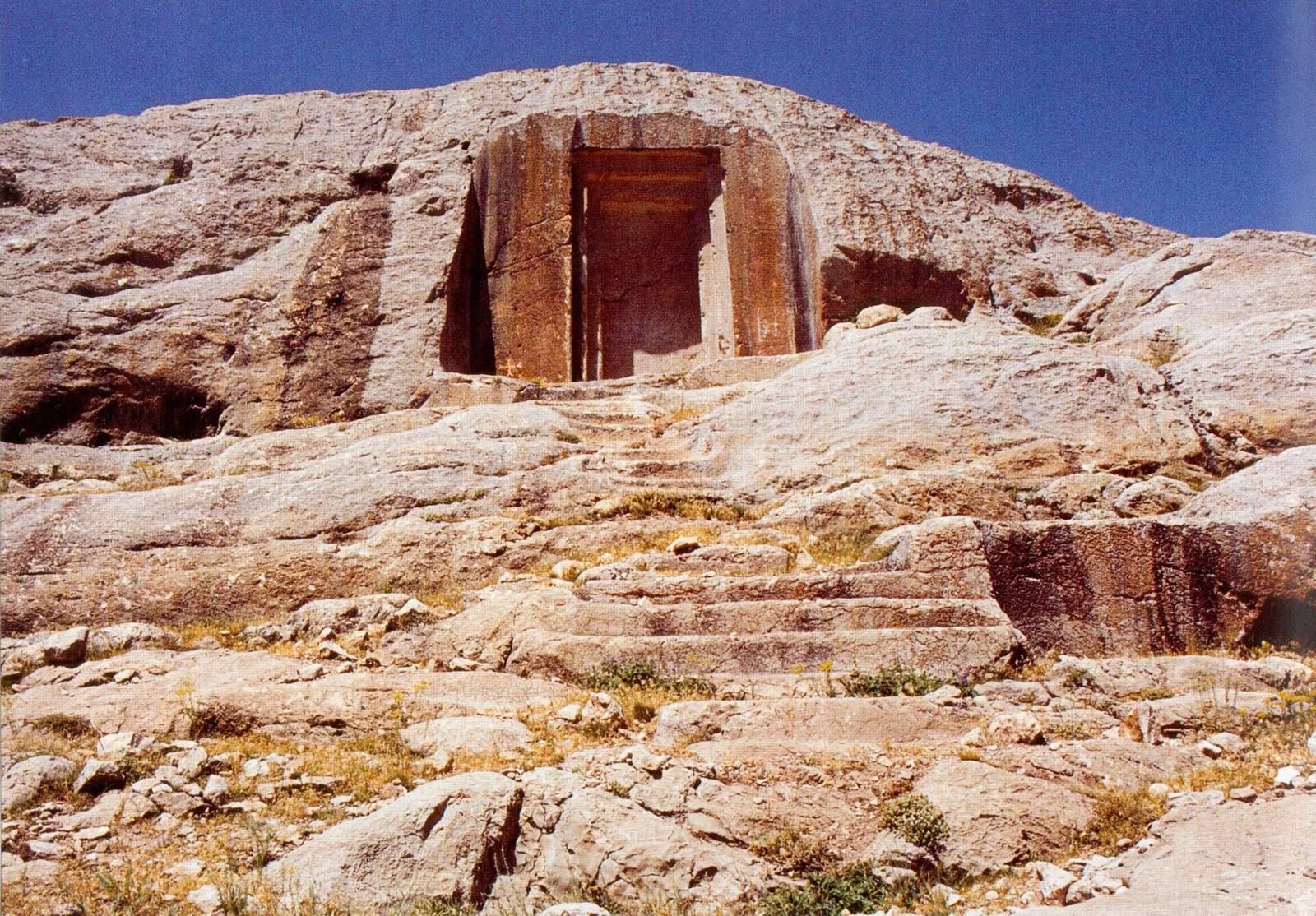
A rectangular opening, framed within the rock face, forms the sanctuary’s entrance. Stairs lead up to it. Descriptions place the recess more than 50 metres up the rock, while giving the climb from its foot to the threshold as about 20 metres. The doorway is approximately 2 metres wide and 4.5 metres high. A long bilingual inscription covers its entrance surface. It is written in cuneiform, a script made from wedge-shaped marks, and describes the sanctuary recess as a door.
Lower terrace and underground structure
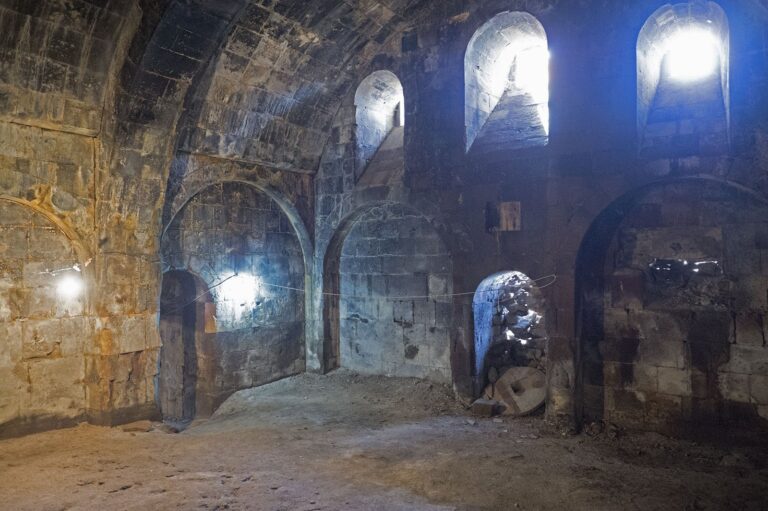
A terrace below the sanctuary is thought to have been used for sacrifices. An underground structure is also located at the foot of the rock.
Caves and passage
Artificial caves and extensive carved features occur within the rock, and some caves served as tombs. A passage runs from the mountain summit into its depths. Tradition says it leads to the Wheel of Fortune.
Comparable sanctuary entrances
Similar carved gate forms occur at the Urartian sanctuaries of Yeşılalıç, Tabriz Kapısı, and Hazine Kapısı. These examples are associated with the period of Sarduri II, a later Urartian king.