Dolmen de Saillant (Saint-Nectaire): A Chalcolithic Monument
Site at a Glance
- Popularity
- Low
- Country
- France
- Primary era
- Stone Age
- Eras represented
- Stone Age
- Civilizations
- Unclassified
- Site type
- Burial
- Remains
- Tomb
On this page7 sections
History
Prehistoric construction and reuse
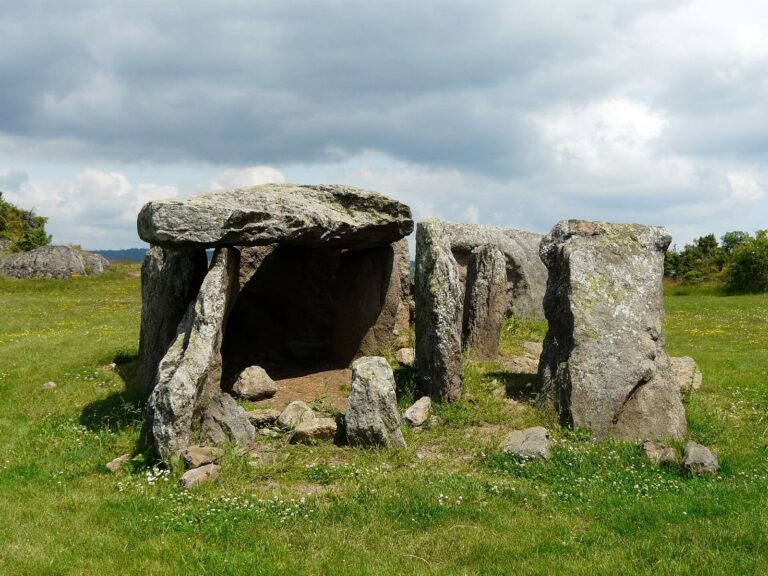
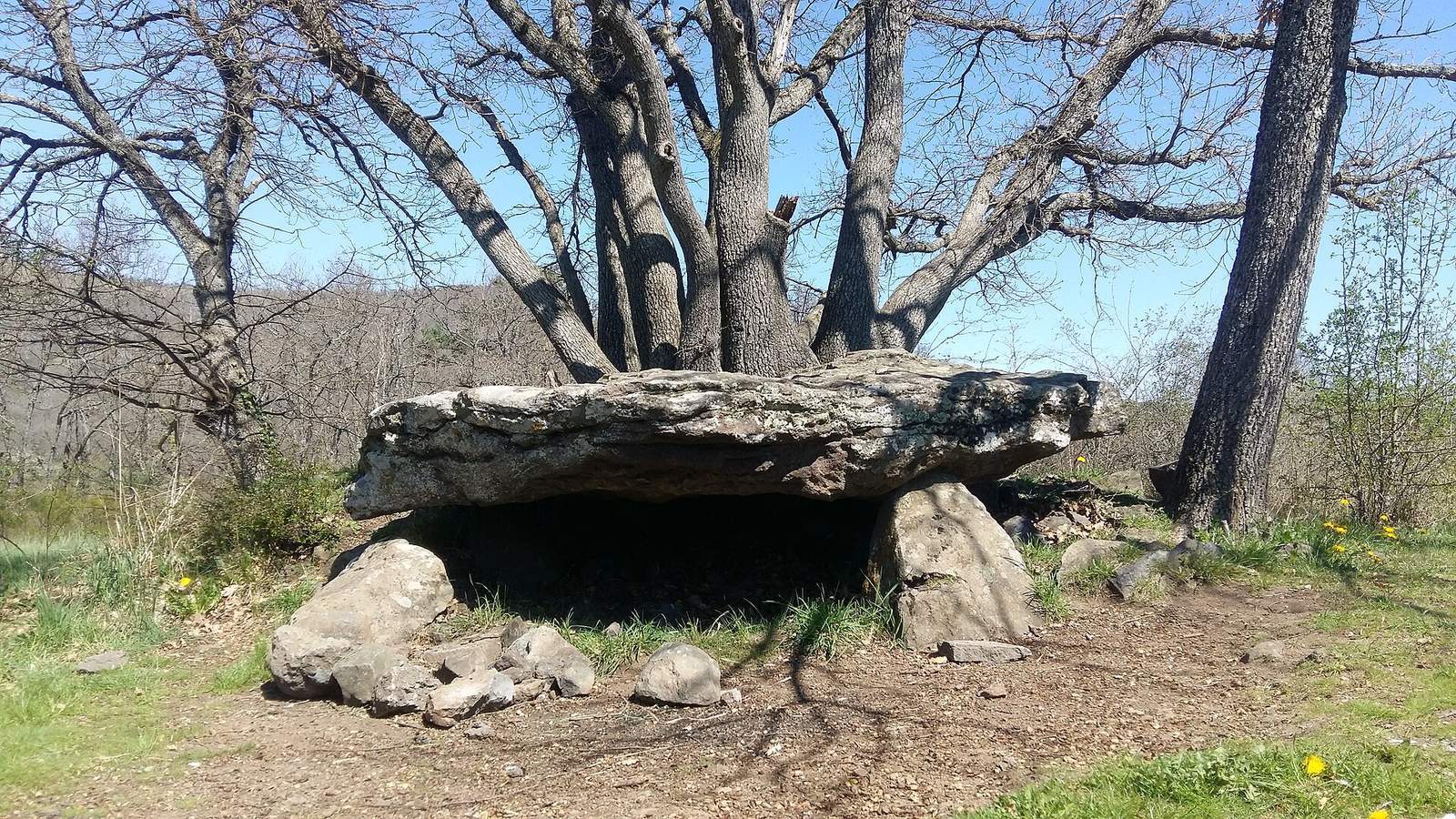
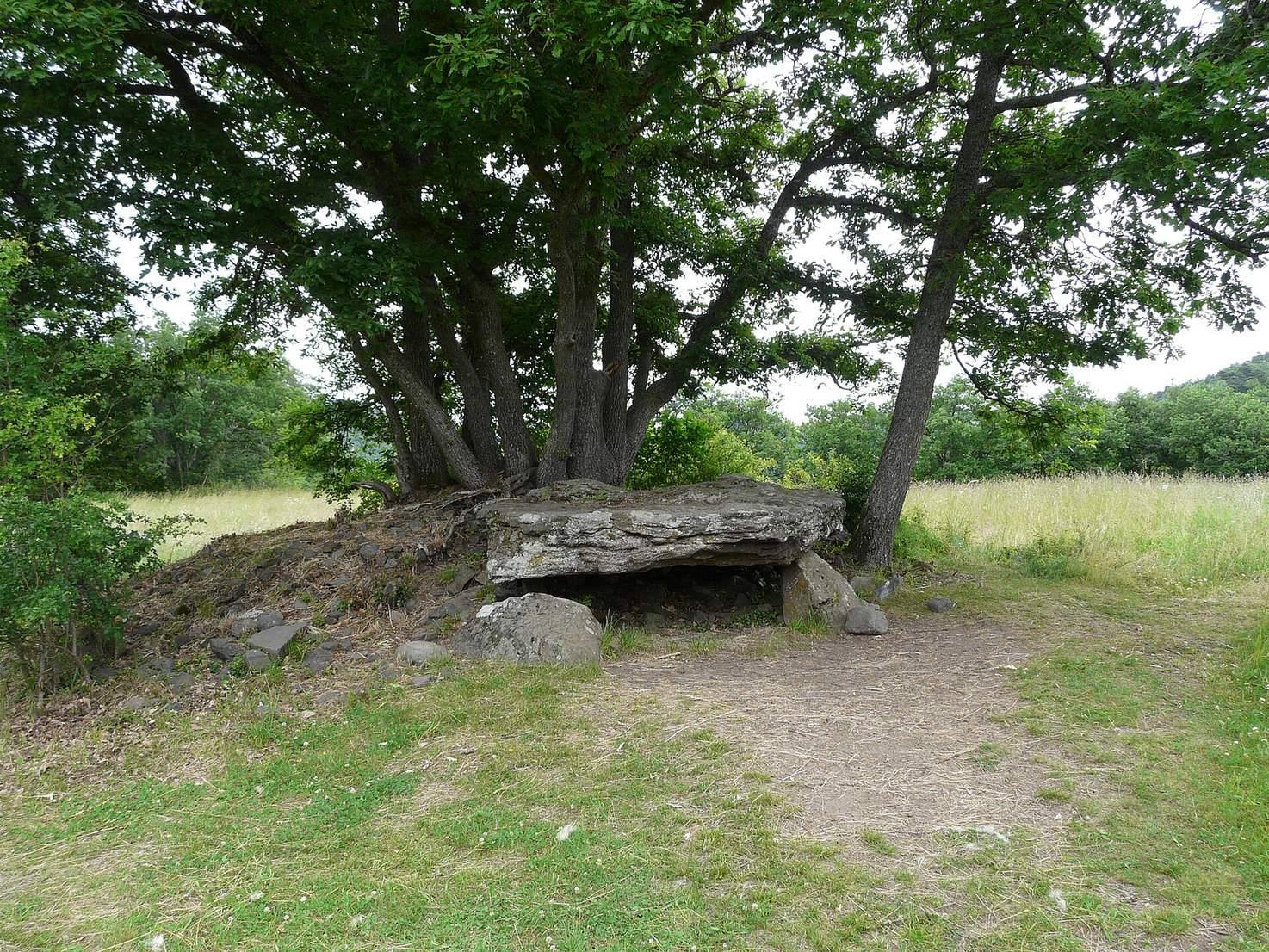
The Dolmen de Saillant (Saint-Nectaire) is a prehistoric monument in France, formed by upright stones supporting a large capstone and built during the Chalcolithic, or Copper Age. It is broadly classified as Neolithic, although its construction is dated more specifically to the Chalcolithic. The monument was later reused during the Bronze Age, a period marked by the widespread use of bronze.
Classification and excavation
France classified the dolmen as a historic monument in 1862. François Pommerol first described it in the late nineteenth century and excavated it in 1876.
Remains
Setting and structure
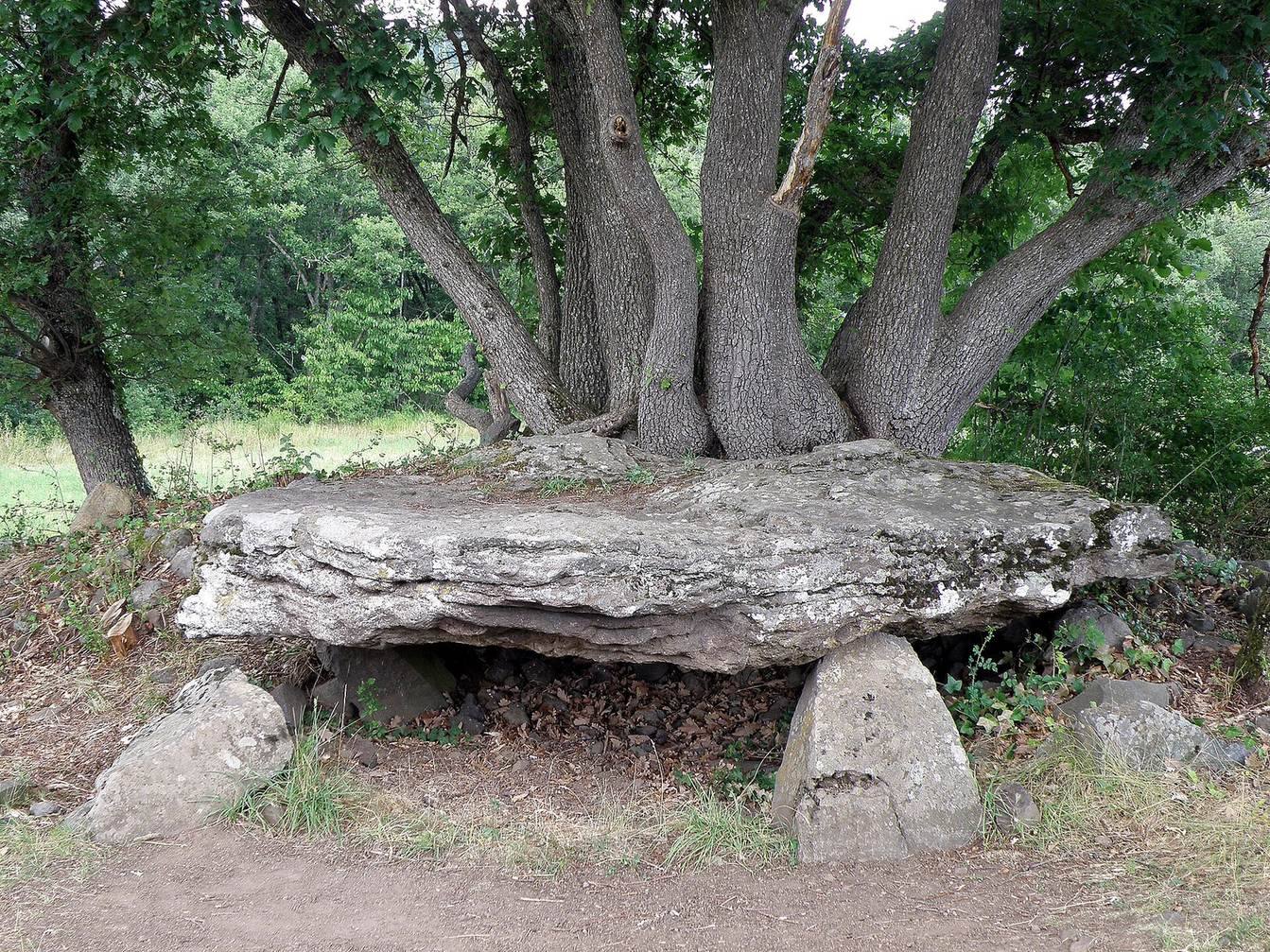
The dolmen lies southeast of Saillant in Saint-Nectaire, near the Saint-Roch Menhir, a Christianized standing stone about 2.2 m high, and the Dolmen of Saint-Nectaire-le-Bas. Built of basalt, it measures 3.50 m long, 3.07 m wide, and 1.20 m high. Its slightly hollowed, irregularly octagonal capstone measures about 3.1 by 2.7 m and reaches 0.55 m in thickness. Five upright stones, or orthostats (stones supporting the capstone), hold it in place. A small slab partly buried near the first orthostat may be a sixth original support. The monument remains partly buried in the northern part of a mound made of stones and earth, about 7 m across and 1.8 to 2 m high; a clump of trees grows on the mound.
Chamber and floor
The chamber is octagonal, measures 2.20 m long, 2 m wide, and 0.60 m high, and opens to the west. Pommerol described its floor as paved with irregular slabs 0.20 to 0.40 m wide and about 5 cm thick on average.
Excavated finds
Human remains represent two people, an adult and a child. They include part of an adult femur, a molar from the child’s first dentition, and a child’s skull. The excavation also yielded numerous pottery fragments from three or four vessels, with large handles and flat bases; the well-fired clay vessels date to the Bronze Age. The stone finds from the excavation included a single flint flake. Several polished axes have also been found in the surrounding area.