Cowane’s Hospital: A Seventeenth-Century Almshouse in Stirling
Site at a Glance
- Rating
- 4.8
- Popularity
- Low
- Country
- United Kingdom
- Primary era
- Early Modern
- Eras represented
- Early Modern
- Civilizations
- British, Kingdom of Scotland
- Site type
- Civic
- Remains
- Hospital
On this page7 sections
History
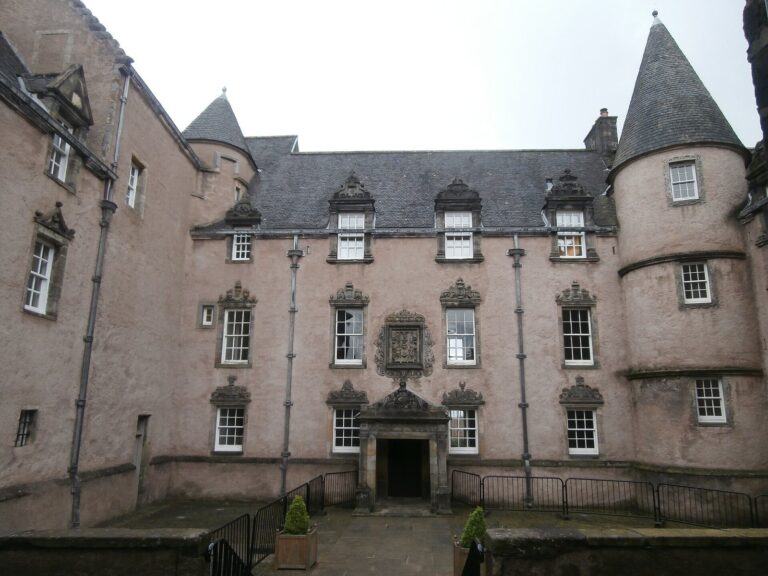
Cowane’s Hospital is a seventeenth-century charitable residence in Stirling, Scotland, United Kingdom, founded to provide a rent-free home for twelve elderly members of the town’s Merchant Guildry who could no longer support themselves. Its Dutch-influenced design and later use as the Guildhall link John Cowane’s charitable bequest with the civic life of Stirling’s organized body of merchants.
John Cowane and the foundation
John Cowane (1570–1633) was a Stirling merchant, property owner and civic politician. His family had traded with the Dutch since the early sixteenth century, exchanging fish, coal and wool for luxury goods such as prunes, saffron and spices, which were supplied to the royal court at Stirling Castle. Cowane also lent money and invested in shipping. He served on the town council, became Dean of Guild in 1624, an office connected with the merchants’ organization and civic affairs, and sat in the Parliament of Scotland from 1625 to 1632.
When Cowane died in 1633, he left 40,000 merks, a historical Scottish currency, for the almshouse, a charitable residence for people unable to support themselves. It was his largest charitable bequest. He also gave 500 merks to the Church of the Holy Rude. His brother and executor, Alexander Cowane, signed the hospital’s Deed of Foundation on 13 February 1637. The land passed to Stirling Town Council, and plans were commissioned from John Mylne, a senior mason appointed to work for the Crown. A trust, with patrons drawn from the council, the guilds and church ministers, was to manage the institution.
Construction and changing use
Buildings already on the site were demolished in early 1637, and construction began under master mason Rynd. Work continued amid conflicts in Scotland and Britain during the mid-seventeenth century. The hospital was substantially complete by 1643, though it may not have been fully finished until 1660. Additions were made around 1648, and the building appears to have remained unoccupied until at least 1661, when repairs were needed.
Pensioners used the hospital in the later seventeenth and early eighteenth centuries, but its strict rules seem to have discouraged some from living there. In the 1720s, the trustees shifted towards supporting pensioners in their own homes and adapted the building for the Merchant Guildry. It became known as the Guildhall. During the cholera epidemic of 1832, which killed about one-third of Stirling’s population, the building served as an isolation hospital. Interior alterations followed in 1852.
The trust and the building’s modern history
The hospital trust acquired substantial property holdings during the nineteenth century. From 1957, its income was divided equally, with half allocated to the Stirling Educational Trust and half used by the patrons to provide housing. In the later twentieth century, the councillors’ role as trust patrons came under scrutiny after land dealings between the council and the trust were alleged not to have fully served the charity’s interests. Irregularities connected with a trust land sale led to Stirling provost Tommy Brookes losing his office in 2003. In 2009, the trust asked the Court of Session to amend its constitution and restrict councillors’ influence. A later agreement retained councillors as a majority of the patrons, in keeping with Cowane’s wishes, while limiting their votes on certain matters.
The building remains in use by the Merchant Guildry and also serves as a venue. The Cowane’s Hospital Trust manages it, with the aim of using income from the building to secure its future. It was listed in category A in 1965, and the gardens entered Scotland’s Inventory of Gardens and Designed Landscapes in 2012. Historic Scotland regarded the hospital as a rare survival of seventeenth-century town architecture and its gardens as a rare survival of an institutional garden of that period. A major conservation programme began in April 2019, addressing the historic fabric, including the statue, stained glass, lanterns and inscribed stone panels, as well as the roof, openings and exterior wall finishes.
Remains
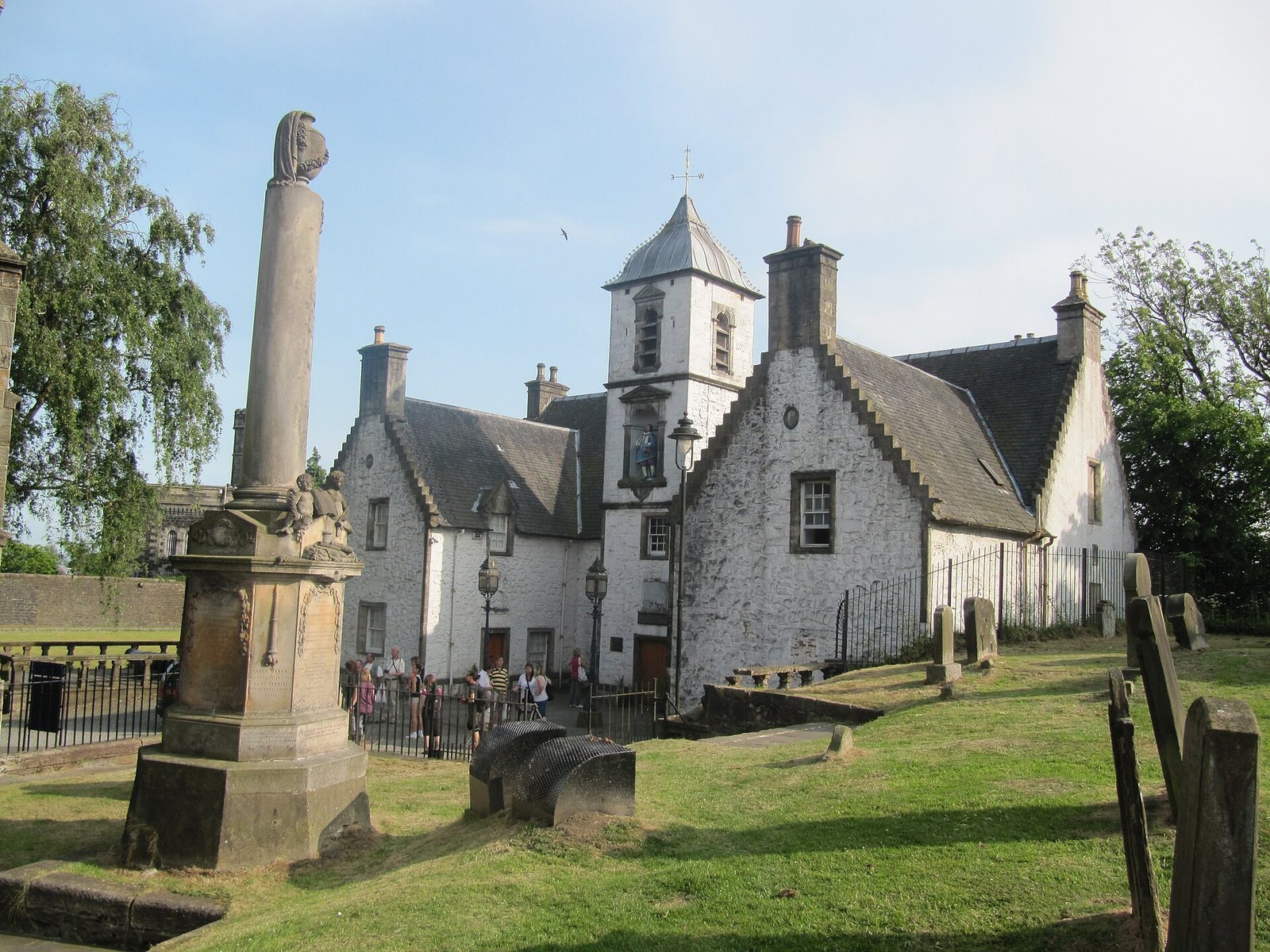
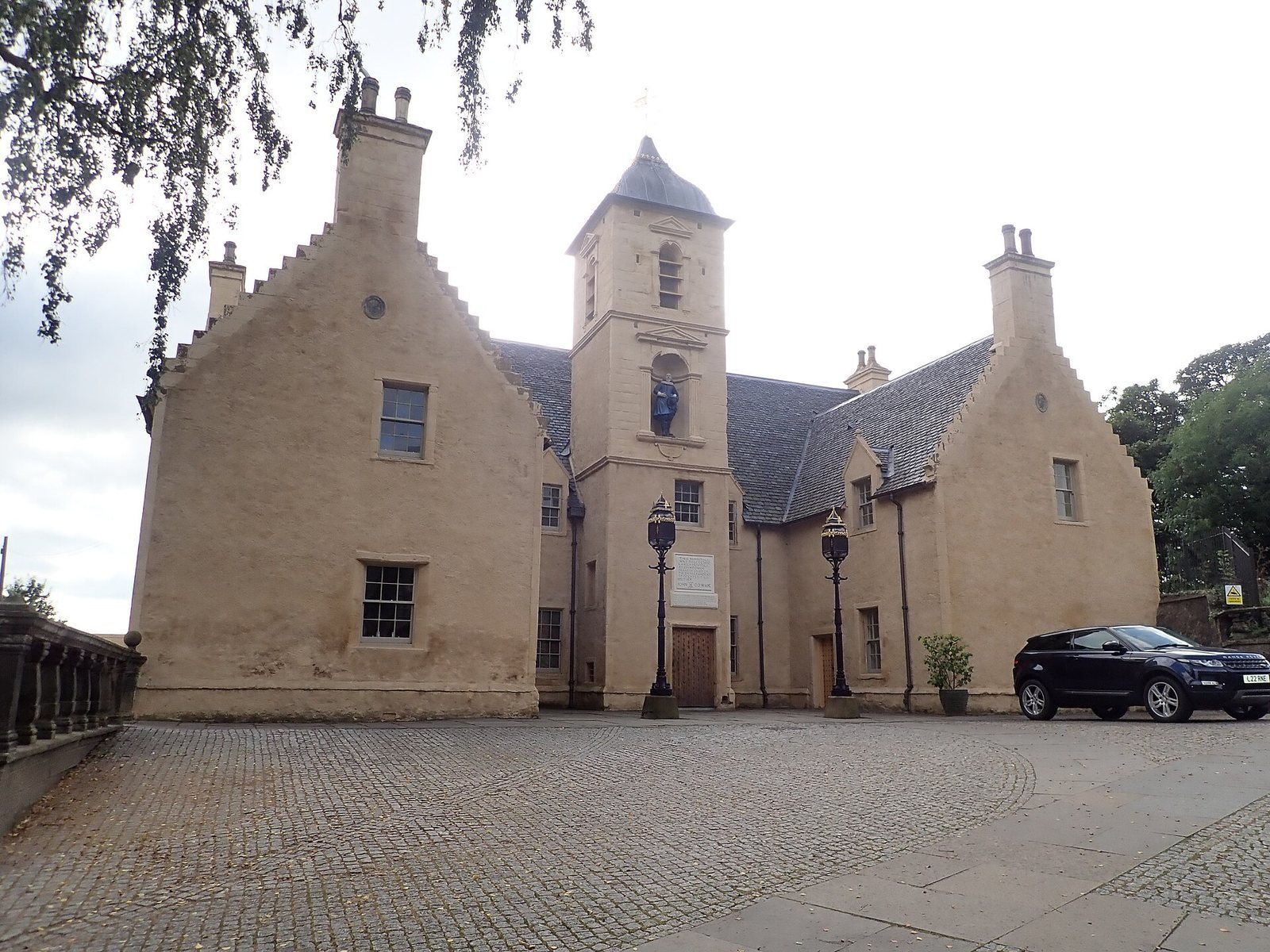
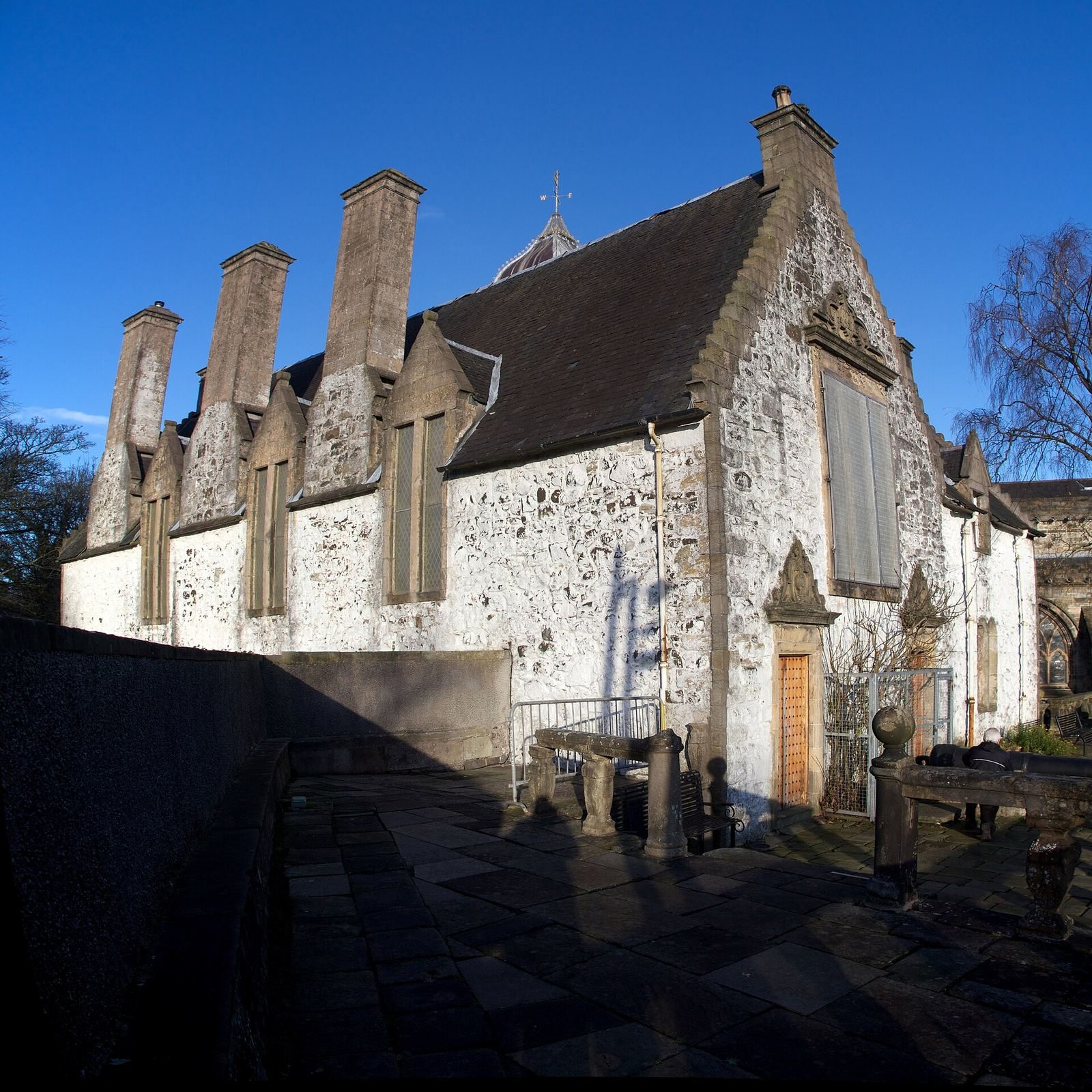
The hospital and its grounds occupy a site on St John Street between the Church of the Holy Rude and the nineteenth-century Old Town Jail. The building combines Dutch-influenced features with a layout that was altered as its use changed. Its grounds include garden areas arranged on levelled ground, with terraces facing east towards the low-lying Carse of Forth.
The hospital building
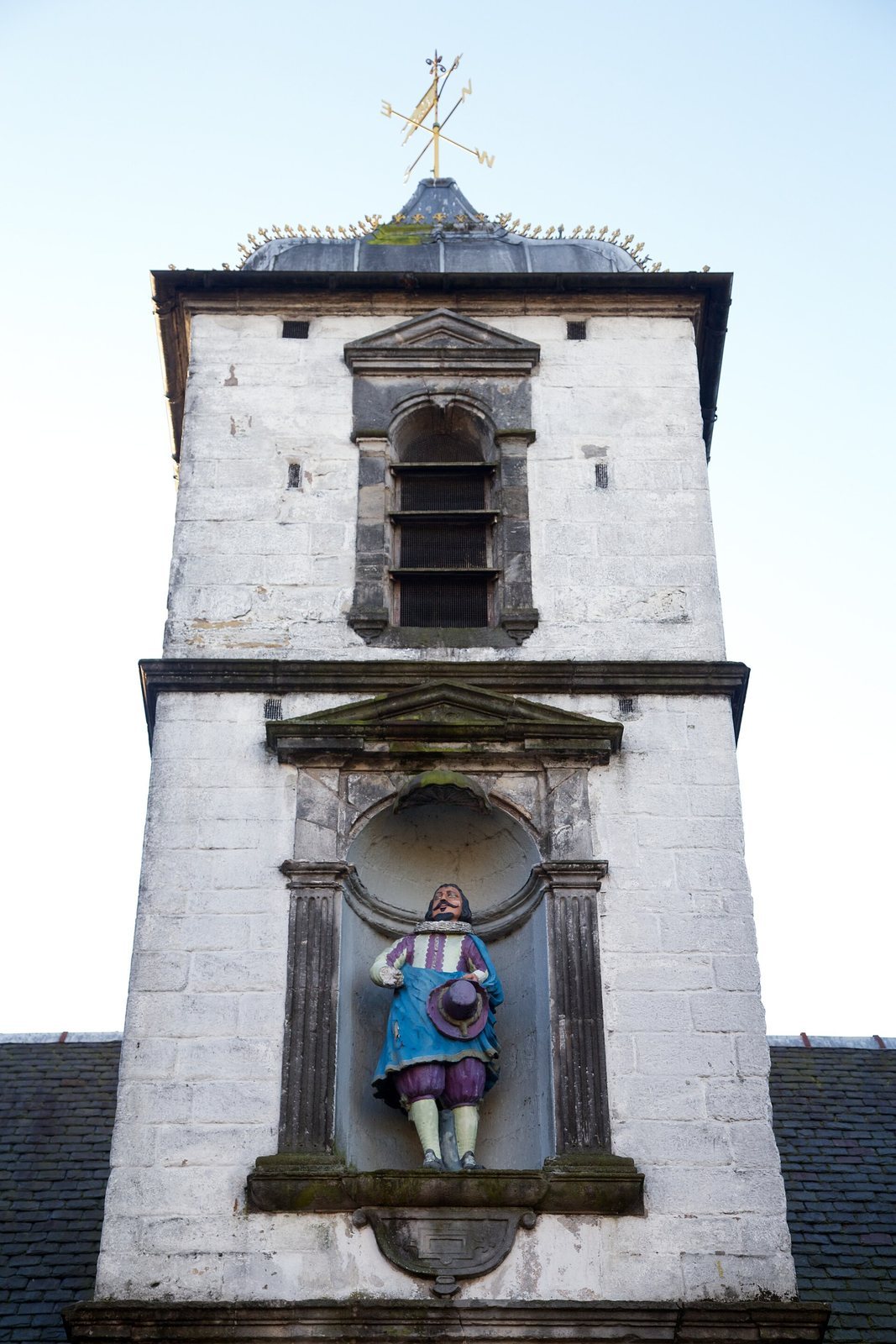
The building’s tower and crow-step gables, whose upper edges rise in a series of steps, reflect contemporary Dutch influences. A statue of John Cowane, sculpted by John Mylne and William Ayton, stands in a niche in the tower. To prepare the uneven site, peat was burned to fracture the hard rock beneath it. A sixteenth-century defensive town wall runs behind the hospital, which may have been intended to contribute to Stirling’s defences. During the conversion for Guildry use, internal partitions were removed to open the interior. Later work formed a single large hall with a timber gallery and panelling, and included a new roof while leaving the exterior unchanged.
The gardens and sundial
The grounds were levelled and arranged for ornamental, vegetable, fruit and herb gardens. William Stevenson, the hospital gardener from 1667, ordered apricot, peach and almond trees from Holland. In 1712, further plans were commissioned from Thomas Harlaw, gardener to the Earl of Mar. They included a bowling green, terraces with balustrades and formal garden beds, or parterres, laid out with box hedges, herbs and flowers. Although the grounds were later altered, much of the garden retains the arrangement established in this period. An elaborately carved sundial was installed in 1673.