Convent de Sant Agustí Vell, Barcelona: An Augustinian Religious Complex

Site at a Glance
- Rating
- 4.7
- Popularity
- Very Low
- Country
- Spain
- Primary era
- Medieval
- Eras represented
- Medieval, Early Modern
- Civilizations
- Crown of Aragon, Spanish
- Site type
- Religious
- Remains
- Monastery
On this page8 sections
History
Convent de Sant Agustí Vell is a historic Augustinian convent in Spain whose construction began in 1349 and was completed around 1506. The Augustinians were members of a Christian religious order following the Rule of Saint Augustine. The complex combined Gothic architecture, a medieval style associated with pointed arches and ribbed vaults, with later Baroque features.
Foundation beside the Rec Comtal
The convent stood in Barcelona’s Ribera district, in an area occupied by artisan tanners. Their work required abundant water, concentrating their workshops beside the Rec Comtal, a historic water channel that supplied the city and supported water-intensive crafts. The channel ran along Carrer del Rec and through the area now occupied by Mercat del Born, linking the convent to a densely worked urban environment.
The late-medieval crisis in Catalonia, intensified by warfare, plague, and demographic decline, encouraged the growth of guilds and brotherhoods. A guild was a corporate association of people practising the same trade, while a brotherhood was a religious or charitable association whose members supported one another. These organizations provided forms of physical, professional, and spiritual security, and expressed their shared values through chapels and altarpieces within churches.
The Tanners’ Brotherhood
The Guild of Tanners had a brotherhood from the early fifteenth century. King Martí l’Humà, or Martin the Humane, the last king of the senior Barcelona branch of the Crown of Aragon, approved its ordinances at Segorbe on 18 October 1401 at the request of the guild’s leading members. The ordinances were confirmed in Barcelona on 23 June 1405. The tanners venerated Saint Augustine as their patron and maintained a chapel in the convent from 1401.
Destruction and relocation
The convent church was destroyed in 1716 because of its active collaboration in resistance against Philip V, the first Bourbon king of Spain, during the War of the Spanish Succession. The Augustinian order subsequently moved to the Church of Sant Agustí, inaugurated in 1750. The former convent site then made room for Plaça de Sant Agustí Vell.
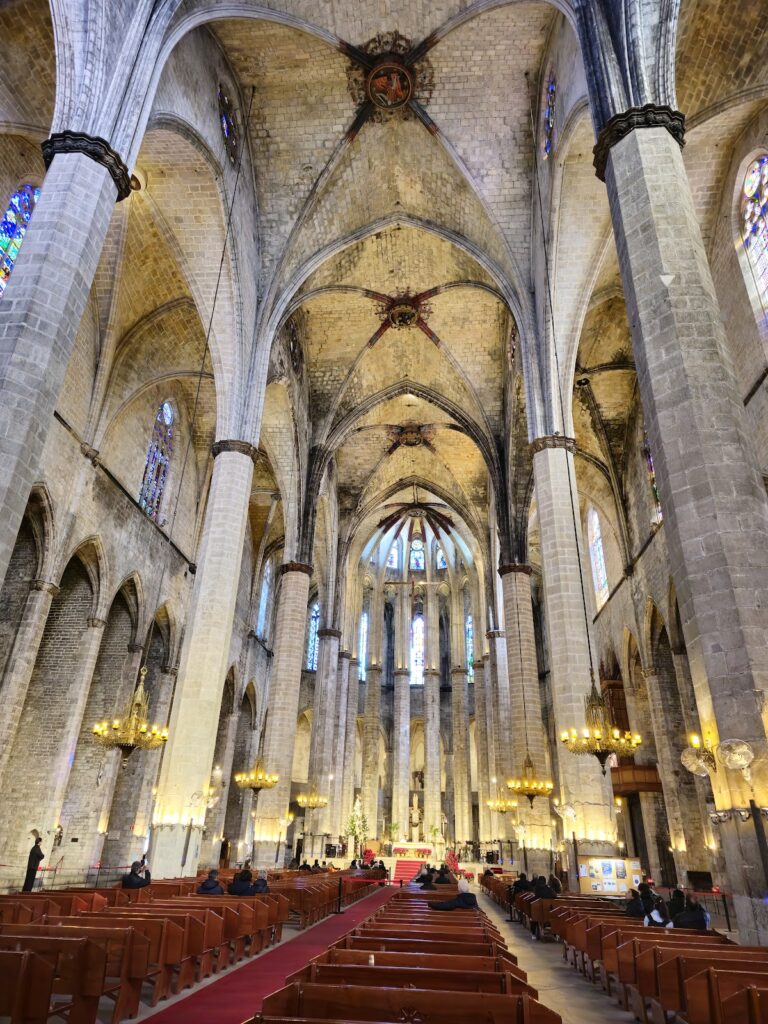
The lost church’s form can be approached through the Church of San Juan Bautista in Valls. In 1569, that church was taken as a reference for the Church of Sant Agustí, allowing its approximate dimensions and appearance to be reconstructed by comparison.
Later institutional history
After convent properties were confiscated in 1835, collections from Sant Agustí were preserved by the Reserve Library of the University of Barcelona. The collection now comprises nearly 1,000 editions, and the library has recorded and described ownership marks that identified books belonging to the convent during its existence.
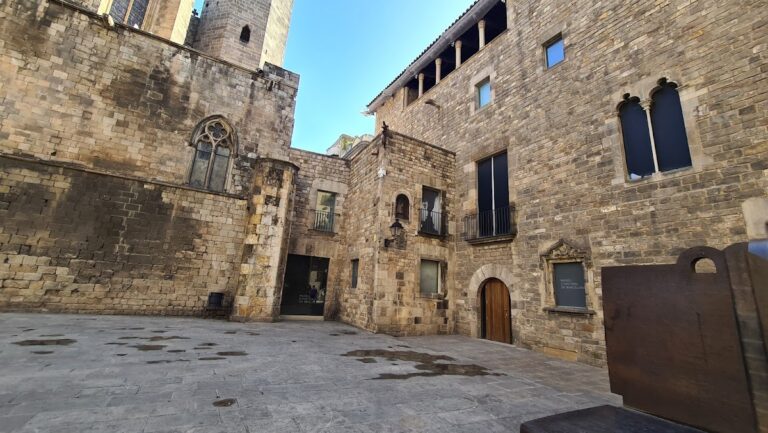
Today, the former convent houses the Photographic Archive of Barcelona and the Chocolate Museum. It is classified as a Local Cultural-Interest Property and is protected through urban planning.
Remains
Convent setting and architectural fabric
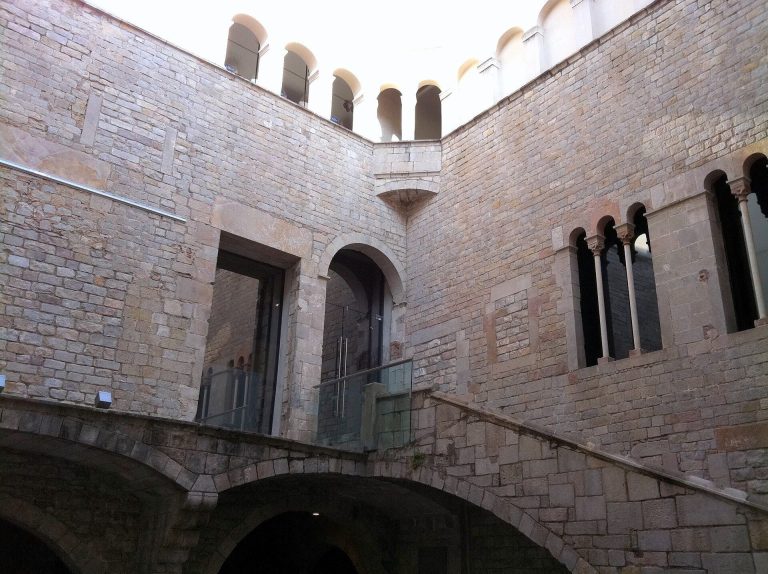
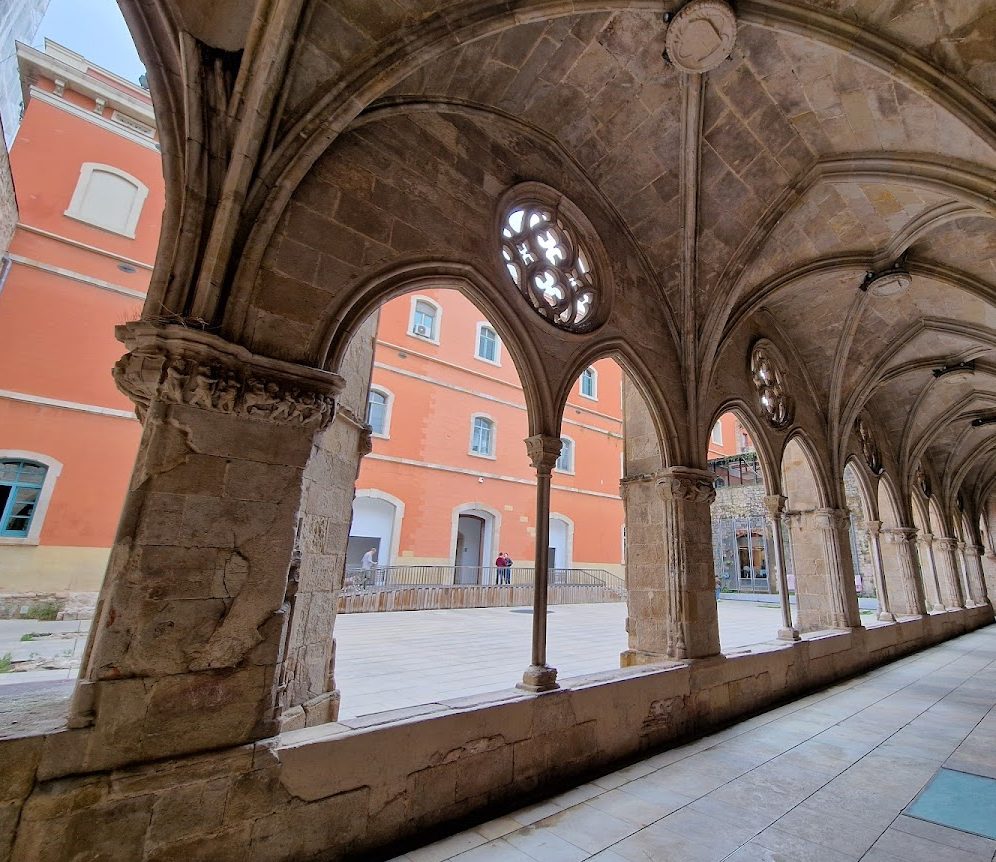
The surviving complex brings together Gothic and Baroque architectural features. Its physical setting was associated with the Rec Comtal watercourse and with the artisan-working area along Carrer del Rec and around the present Mercat del Born. This relationship places the convent within the same water-dependent urban landscape that supported the tanners’ workshops.
The former church and chapels
The church itself was lost in 1716, but its form and scale are reconstructed by comparison with San Juan Bautista in Valls. On that basis, it was probably just over 58 metres long, almost 15 metres wide excluding the side chapels, and approximately 25 metres high. Side chapels opened from the main body of the church, including the chapel held by the Tanners’ Brotherhood from 1401. That space was connected with the guild’s religious activity and with the decoration of its altarpiece, a structure placed behind an altar and often containing paintings or sculpture.