Concangis: A Roman Auxiliary Fort at Chester-le-Street
Site at a Glance
- Popularity
- Medium
- Country
- United Kingdom
- Primary era
- Classical
- Eras represented
- Classical
- Civilizations
- Roman
- Site type
- Military
- Remains
- Fort
On this page9 sections
History
Concangis, also known as Chester-le-Street Roman Fort, was a Roman auxiliary fort at Chester-le-Street in County Durham, United Kingdom, first built in turf and timber probably in the AD 70s. It lay in Lower Britain, the Roman province commonly called Britannia Inferior. The Brittonic name Concangis has an uncertain meaning but may derive from a word for “horse”; Concangium is an alternative form.
Foundation and rebuilding
The fort’s first phase is attributed to Legio IX Hispana. In the early second century, probably while Legio II Augusta was helping to build Hadrian’s Wall, the fort was rebuilt in stone. Further alterations followed in the third century. An inscription confirms that Legio II Augusta built or rebuilt Concangis, but does not identify its garrison. Legionaries constructed fortifications, while auxiliary troops, who belonged to separate military units, served as garrisons.
Later garrisons and written references
An incomplete inscription mentions an Ala Antoninae, an auxiliary cavalry unit, and may refer to routine patrols and repairs to an aqueduct and latrines. The damaged text does not securely identify the unit. Comparisons with nearby finds and similarly named units have led to a tentative identification as the Ala Secundae Asturum Antoniniana. Its service elsewhere included campaigns in Caledonia, the Roman name for northern Britain, under Emperor Septimius Severus (AD 193–211), as well as postings at Lindum and Cilurnum. These associations do not establish that the unit was stationed at Concangis.
A tile bearing the initials NV suggests that the Numeri Vigilum, a Roman watchmen’s unit, was present in the fourth century. The late Roman Notitia Dignitatum, a record of offices and military units, lists a prefect of the watchmen at Concangis. The fort also appears in that work, dated to the fourth or fifth century, and in the seventh-century Ravenna Cosmography, a geographical work listing places in the Roman world.
Civilian settlement and modern investigation
Finds from the surrounding area indicate that a vicus, or civilian settlement associated with a Roman military installation, developed alongside the fort. Excavations took place in 1978 and 1990–91. Concangis is a Scheduled Monument, a nationally protected archaeological site in England.
Remains
Setting and layout
The fort covered about six and a half acres on a high bluff overlooking the Wear valley to the east and Cong Burn to the north. Dere Street, the principal Roman road in the area, ran west of the fort, linking forts near Hadrian’s Wall with Eboracum, or York, farther south. Concangis lay east of Longovicium and Vindomora, and about 13 km south of Pons Aelius; the road north to Pons Aelius passed to its west. Nearby Cade’s Road was thought to run between Eboracum and Pons Aelius. A westbound branch connecting Concangis to Dere Street by way of Longovicium remains a possibility. An abutment found on Cong Burn suggests that a bridge linked the fort with Vindomora to the west.
Surviving fort structures
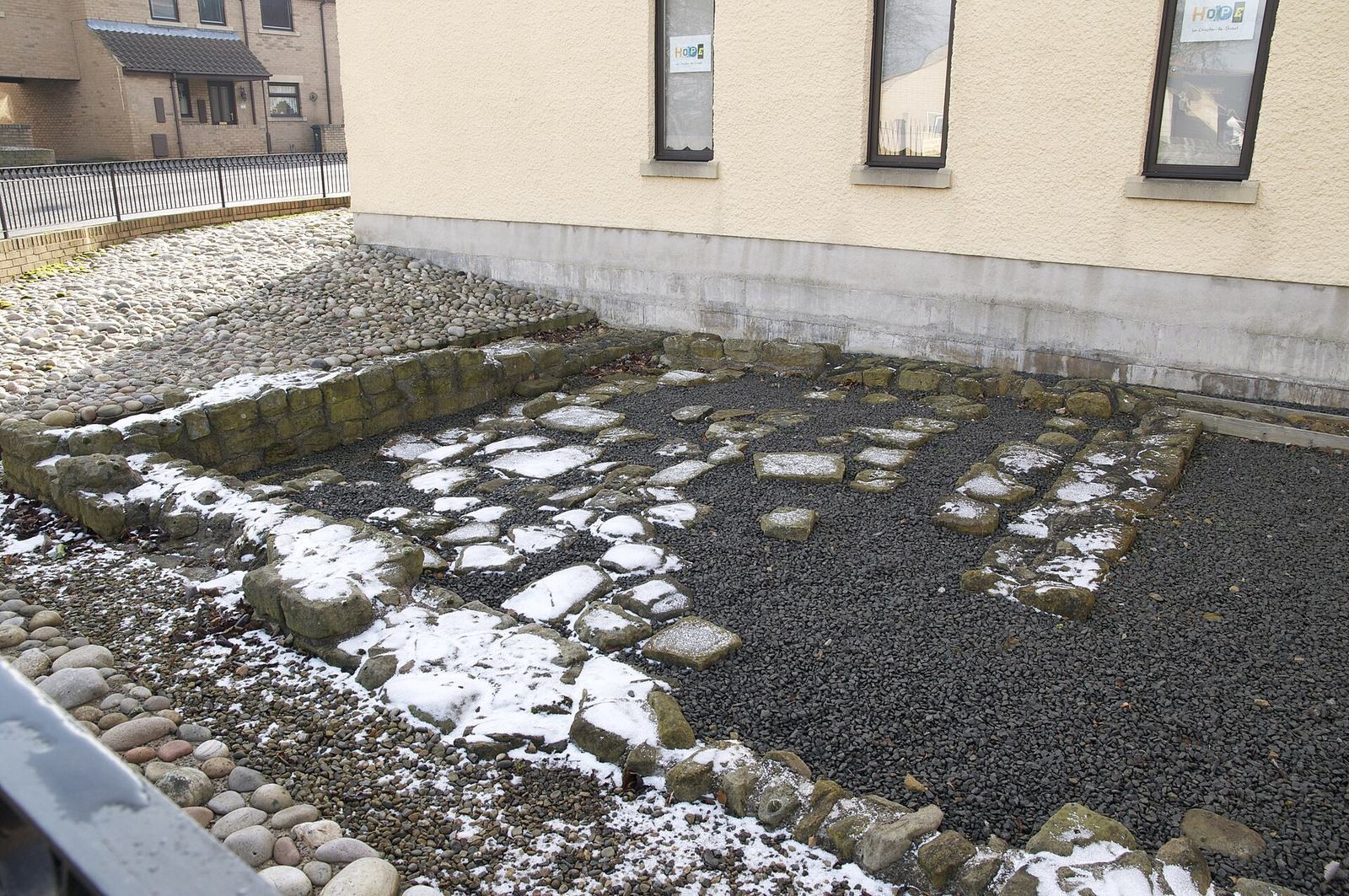
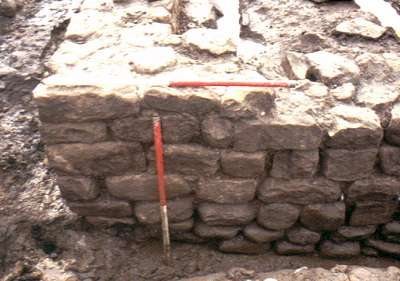
Much of the fort lies beneath Chester-le-Street. A small excavated portion of the officers’ quarters is on display, and stone remains of the north wall are among the visible features.
Finds and altars
Finds from the fort include pottery, fine table wares, coins, animal bones, a cheese press and a tile bearing a dog’s footprint. Eight altars were found. Three were dedicated to patron deities associated with the wellbeing of veteran soldiers, a pattern that suggests a high proportion of the fort’s inhabitants may have been former military personnel. Other dedications name Mars, the Roman war god, Apollo, a classical deity associated with the sun, and the Celtic and Germanic deities Digenis and Vitiris.
Reused Roman stone
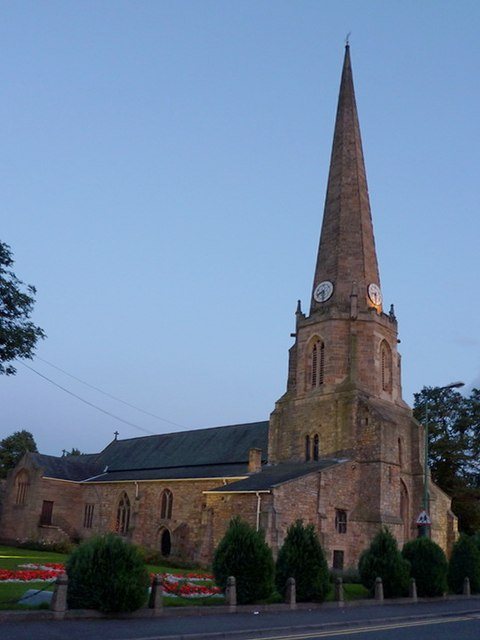
Two large stones incorporated into a buttress of the parish church of St Mary and St Cuthbert have lewis holes, sockets cut into stone for a lifting device. Their presence suggests that the blocks were reused from the Roman fort.