Notre-Dame Collegiate Church of Les Andelys: A Roman Catholic Church in Normandy
Site at a Glance
- Rating
- 4.5
- Popularity
- High
- Country
- France
- Primary era
- Medieval
- Eras represented
- Medieval, Early Modern, Modern
- Civilizations
- French
- Site type
- Religious
- Remains
- Church
On this page14 sections
History
Notre-Dame Collegiate Church of Les Andelys is a Roman Catholic church in Les Andelys, France, built in 1225 on the remains of a women’s monastery founded in 511. It belongs to the Diocese of Évreux, a church district governed by a bishop. Its collegiate status reflects service by a chapter, or body, of canons.
Monastery and church foundation
Saint Clotilde, wife of the Frankish king Clovis I, founded the monastery. It is the oldest monastic foundation known in Upper Normandy. The church replaced it in 1225, and construction and embellishment continued until the end of the seventeenth century.
Devotion and later history
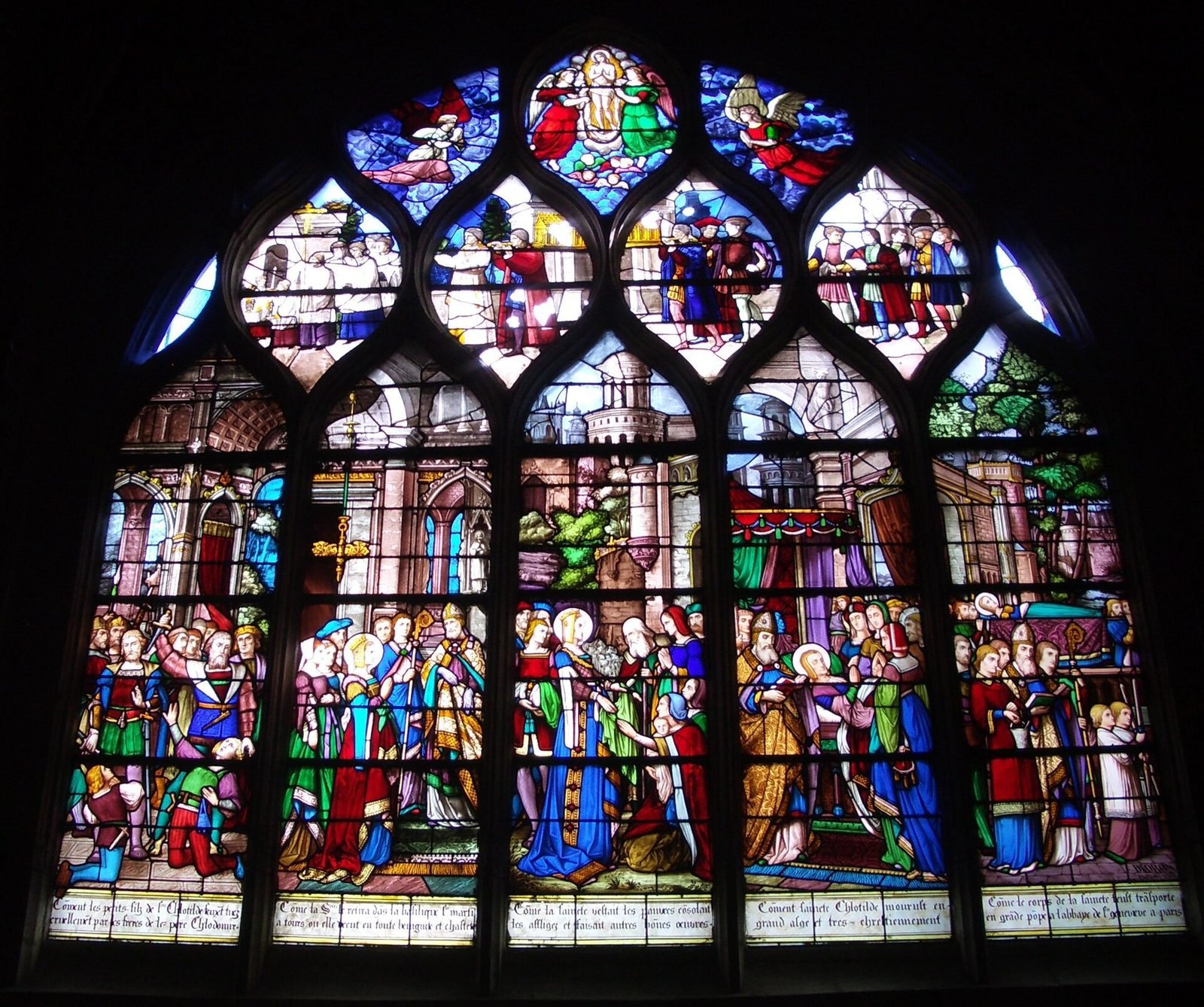
A rib relic of Saint Clotilde was given to the church in 1656, after which she received particular veneration there. Around 1540–1550, Alexandre La Vache, lord of Radeval, and his wife Marguerite Hallé d’Orgeville donated a stained-glass window showing episodes from her life. In 1718, travel writer Nicolas Bertin described tombs of former lords of Radeval beside the high altar. Marie de Lampérière, wife of Pierre Corneille, and Thomas Corneille, Pierre’s brother-in-law, were also buried in the church.
Restoration and wartime damage
The church was classified as a historic monument in 1840. Diocesan architect Alphonse Durand undertook major restoration work in 1860. During the Second World War, the central tower above the crossing and its spire were destroyed.
Remains
Plan and exterior
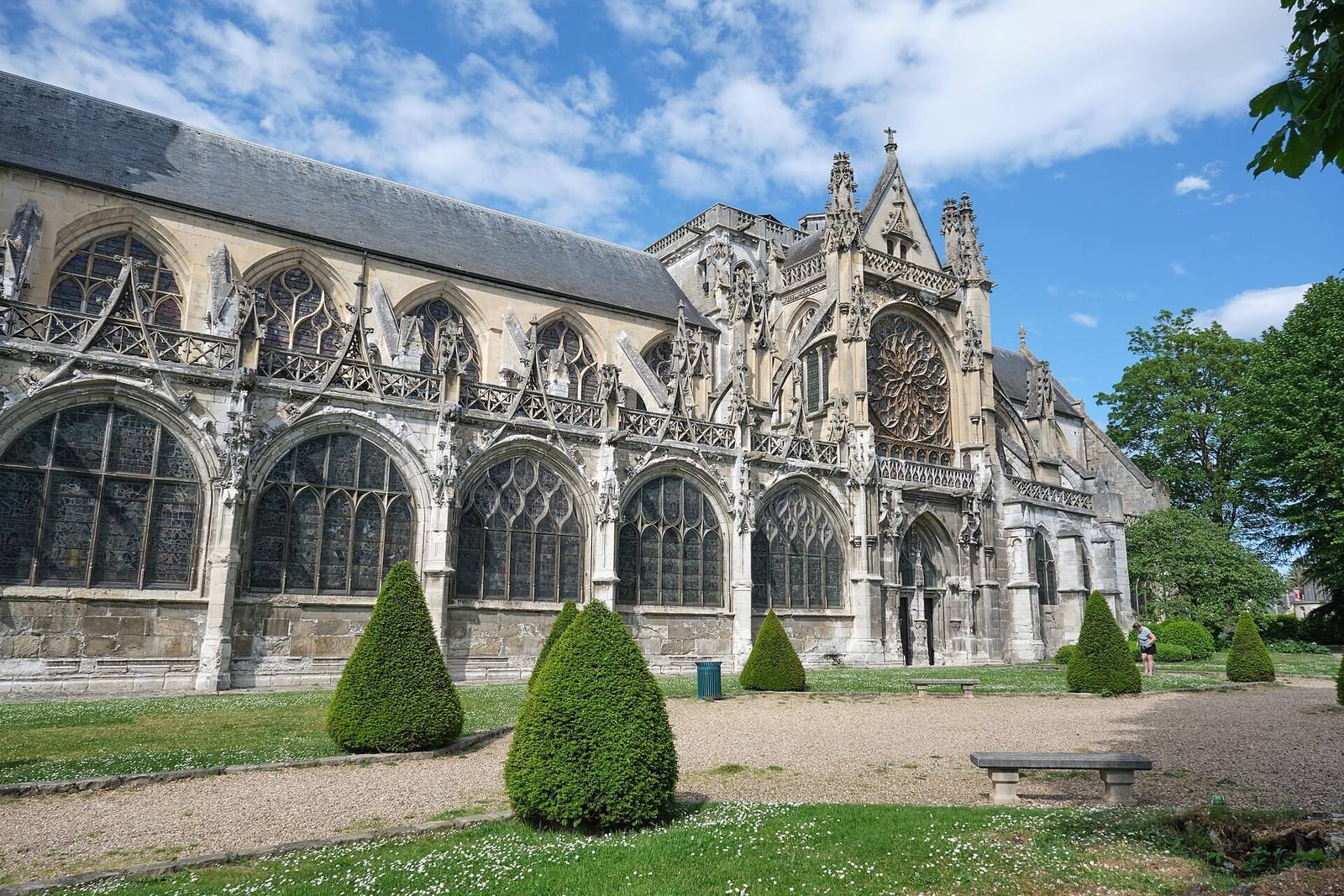
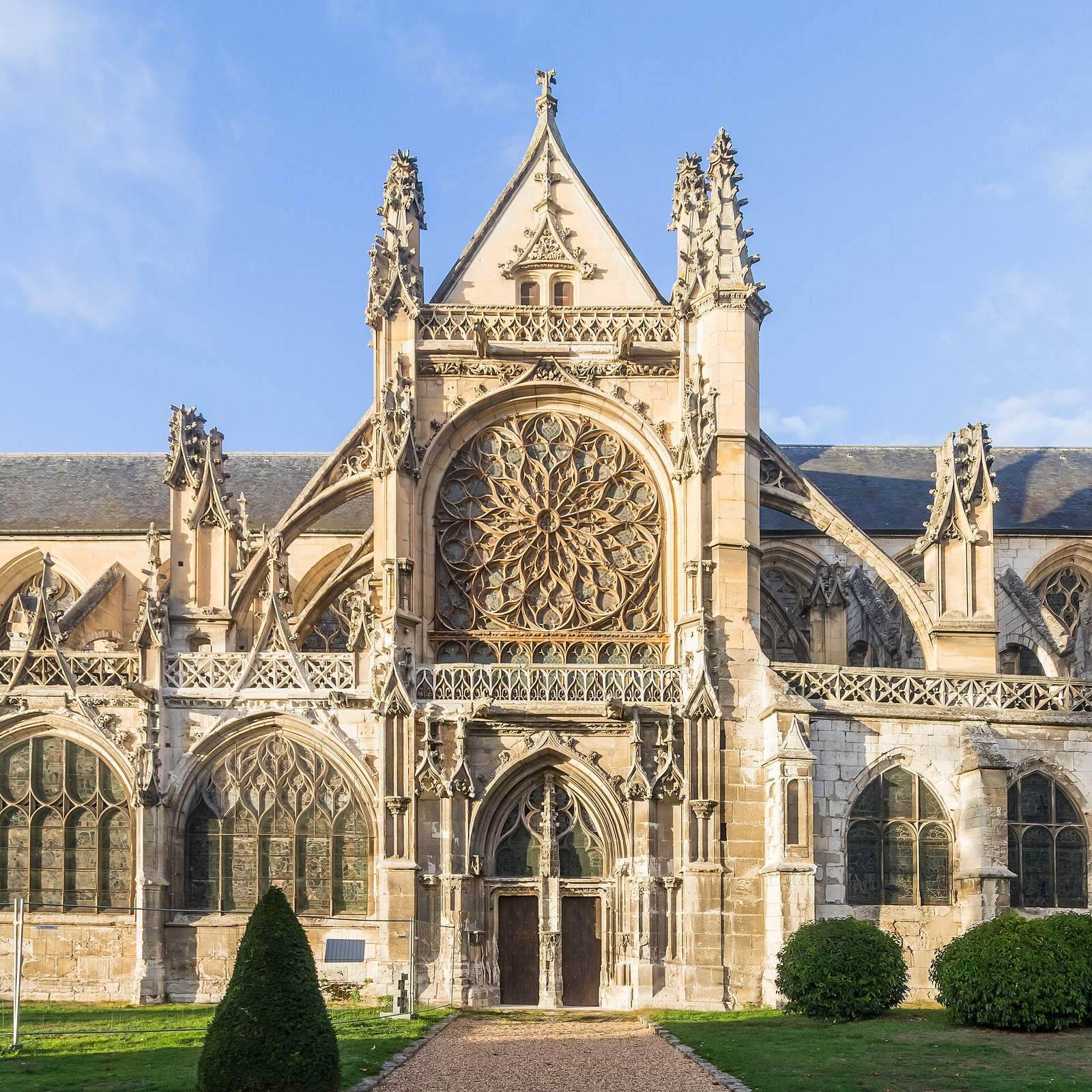
The church has a square-plan choir and measures 70 metres long, 24 metres across the transept, and 21 metres high beneath the vault. Its thirteenth-century west façade was partly restored in the nineteenth century, and its two flanking towers contain three bells. The south portal, built in the fifteenth and sixteenth centuries, has Flamboyant Gothic detailing, a late Gothic style with flame-like tracery. The north portal dates to the Renaissance and was built during Henry II’s reign, from 1547 to 1559. The former central tower stood over the crossing, where the nave and transept meet; its position can be made out from Boulevard du Chapitre.
Stained glass
Windows by date and maker
Much of the stained glass was made by fifteenth-century master glassmakers. Windows in the south aisle date to 1540, while those in the upper nave date to 1560; Romain Buron was among the makers. The Flemish artist Arnoult de Nimègue (1475–1540) made windows depicting Saint Sebastian, Saint John the Baptist, the Virgin, and Saint John the Evangelist.
Figural windows and later works
Other glass includes a sixteenth-century image of the Crucifixion of Saint Peter. Pierre Gaudin created two stained-glass works, one for the large choir window. The carved frieze beneath the north-side windows depicts scenes of rural life.
Saint Clotilde window
A sixteenth-century window portrays the life of Saint Clotilde. Édouard Didron restored and supplemented it in 1866, and the stained-glass painter Pierre Gaudin later took part in restoration work at the church.
Paintings and sculpture
Paintings
Three paintings by Quentin Varin date to around 1612: The Triumph of the Virgin, The Martyrdom of Saint Clair, and The Martyrdom of Saint Vincent. Varin also painted The Marriage at Cana and taught Nicolas Poussin, a French painter. Jacques Stella’s Jesus Found in the Temple by His Parents, dated 1640, was originally intended for the chapel of Saint Francis Xavier in a Jesuit training house in Paris, which has since been destroyed.
Chapel of the Sepulchre
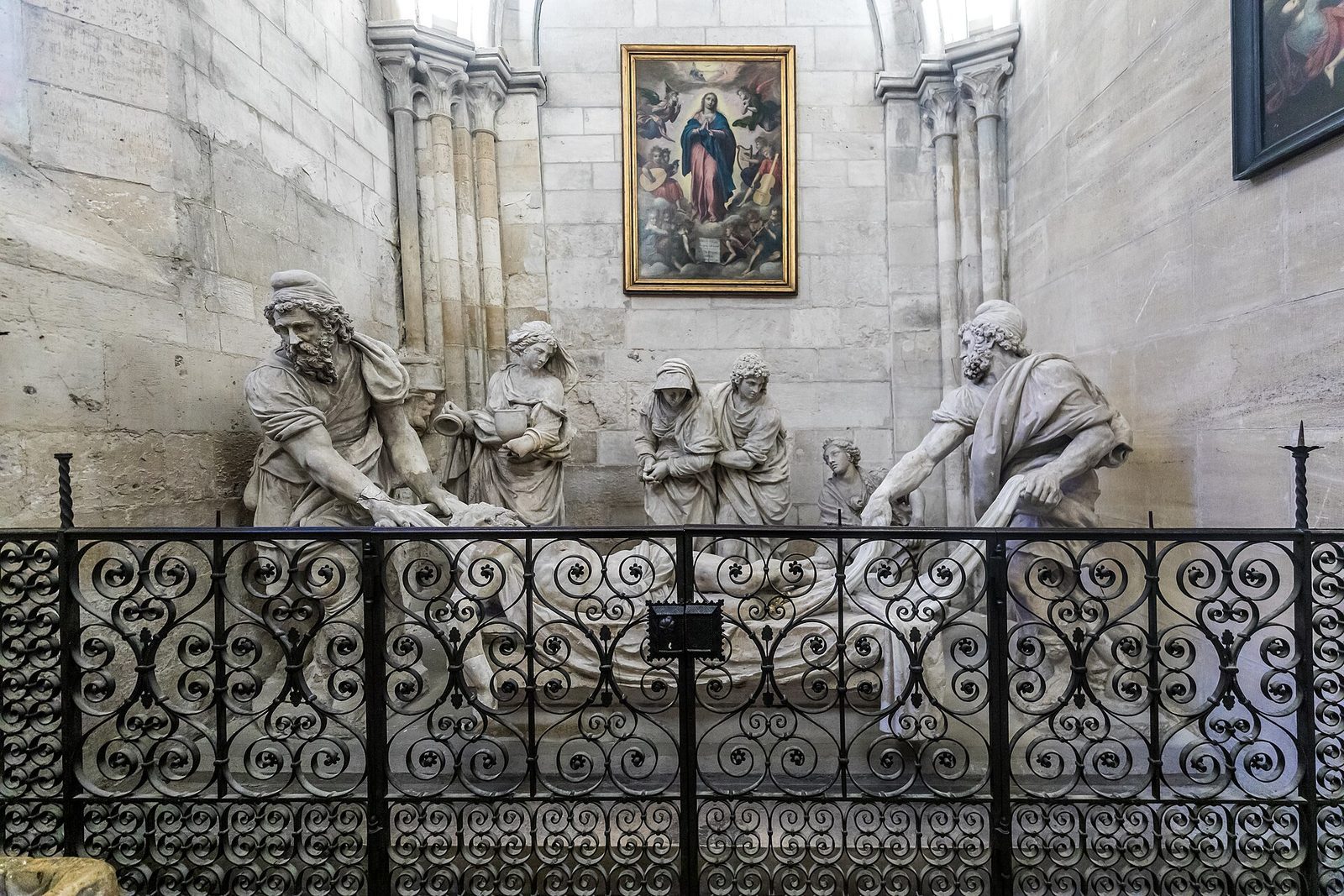
The Chapel of the Sepulchre contains a large sculptural group of the Entombment. Made in the sixteenth century, it came from the Charterhouse of Bourbon-lèz-Gaillon, a monastery of the Carthusian order.
Organ and tombstones
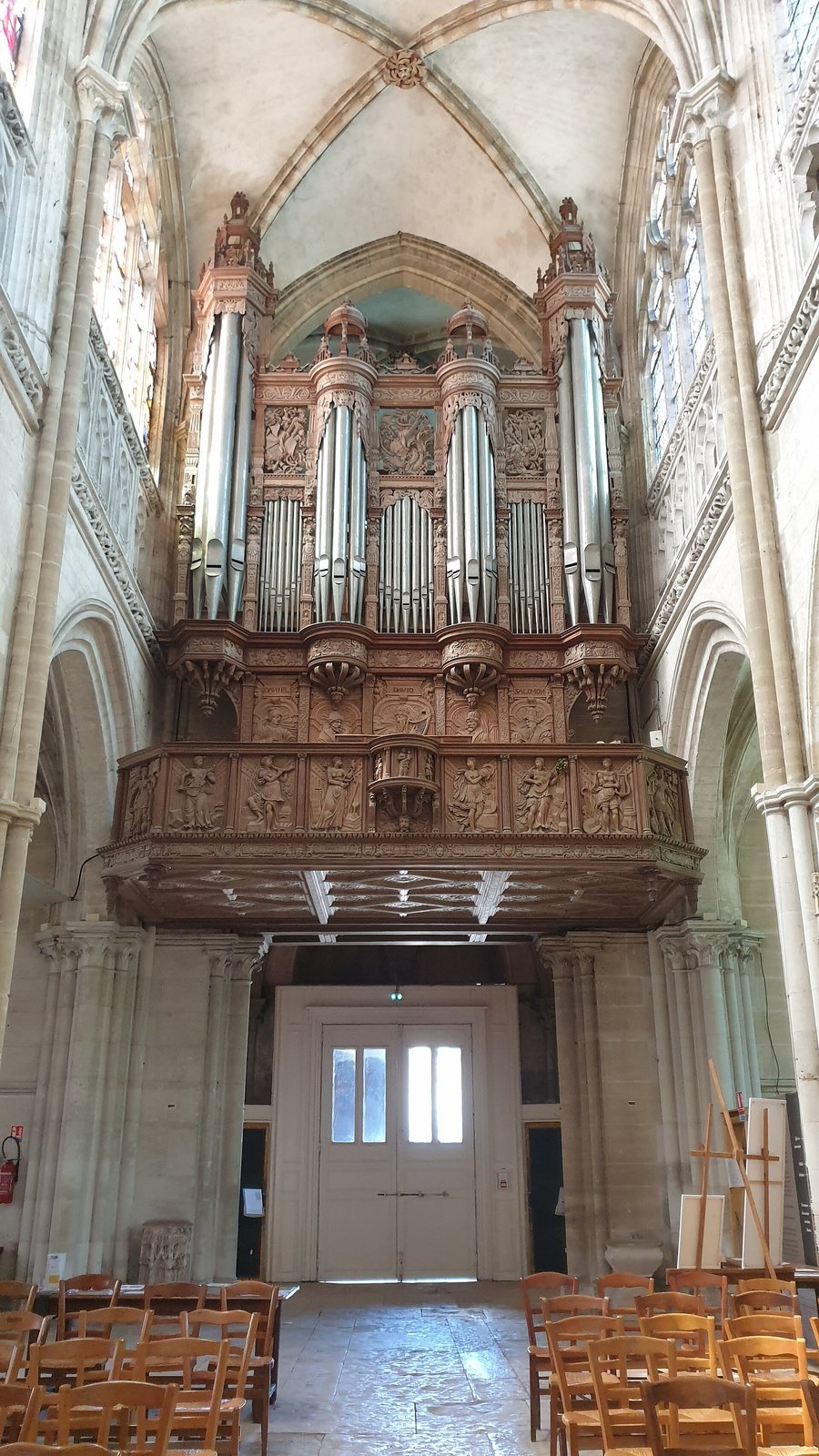
The carved wooden organ case dates to 1573 and shows biblical and mythological scenes, as well as representations of the sciences known at the time. Organ builder Aristide Cavaillé-Coll made the present organ in 1892. It has 24 stops, which control ranks of pipes, two manuals, or keyboards, and a pedal operated by the feet. Tombstones in the church date from the thirteenth and seventeenth centuries. One commemorates Richard de Saint-Laurent, dean of the Andely chapter, and dates to around 1254.