Ciudad Vieja: The Archaeological Site of San Salvador’s First Permanent Town
Site at a Glance
- Rating
- 5
- Popularity
- Very Low
- Country
- El Salvador
- Primary era
- Early Modern
- Eras represented
- Early Modern
- Civilizations
- Habsburg, Habsburg Spain, Spanish
- Site type
- Settlement
- Remains
- Town
On this page8 sections
History
Ciudad Vieja is the archaeological site of San Salvador’s first permanent town, in El Salvador. Spanish leader Diego de Alvarado founded the town on 10 April 1528. It was the first Spanish-founded city in what is now El Salvador and the second in Central America, after Santiago de Guatemala, founded in July 1524.
The first settlement and permanent foundation
A first settlement of San Salvador had been established by May 1525, probably at this location, though its exact position is uncertain. Pedro de Alvarado ordered it as a frontier settlement amid the advance of Pedro Arias Dávila, governor of Panama, and the arrival near Cuscatlán of a small force from León, Nicaragua. Explorer Hernando de Soto led the force, which Francisco Hernández de Córdoba had dispatched. Diego de Holguin served as the settlement’s municipal mayor. The settlement was probably abandoned after resistance from warriors of the lordship of Cuzcatlán.
Diego de Alvarado, a different man from Pedro de Alvarado, formally established the permanent town in 1528. San Salvador’s authorities governed the province from there. At first, its administration included a chief magistrate and a lieutenant governor and captain general appointed by Guatemala’s governor. Later, the town council’s municipal mayors held authority.
Relocation and the city’s changing role
Around 1545, San Salvador and its authorities moved to the Valley of the Hammocks, where the city stands today. The Real Audiencia de Los Confines, a Spanish colonial high court and governing institution in Central America, authorized the permanent transfer. Buildings at the old settlement were taken apart so their materials could be reused. The town’s abandonment and lack of later construction helped preserve its foundations.
On 27 September 1546, Prince Felipe granted San Salvador city status in the name of his father, Charles V. Felipe later ruled Spain as Philip II. The city’s administrative role developed after its relocation: it became the seat of the mayoralty of San Salvador in 1579 and, by royal decree of Charles III in 1785, the capital of the Intendancy of San Salvador, an administrative district governed by an intendant. The intendancy became the province of San Salvador in 1821. After independence from Spain, San Salvador became the capital of the State of El Salvador in 1824 and later of the republic.
Rediscovery and archaeological study
Archaeological investigations began in 1996 under William R. Fowler of Vanderbilt University. Later work involved archaeologists from the United States and El Salvador, including Roberto Gallardo, Marlon Escamilla, and José Heriberto Erquicia. El Salvador’s National Council for Culture and Art led the work, with support from Spanish institutions and contributions from archaeology students and staff at the Technological University of El Salvador. The findings have made Ciudad Vieja an important site for studying Spanish conquest-era and early colonial urban life in Central America.
El Salvador declared the site a National Historic Site in 1975, and it joined UNESCO’s World Heritage Tentative List in the cultural category in 1992. Much of the urban core considered most important has been acquired, while the town’s historic limits extend beyond that land.
Remains
Urban layout and setting
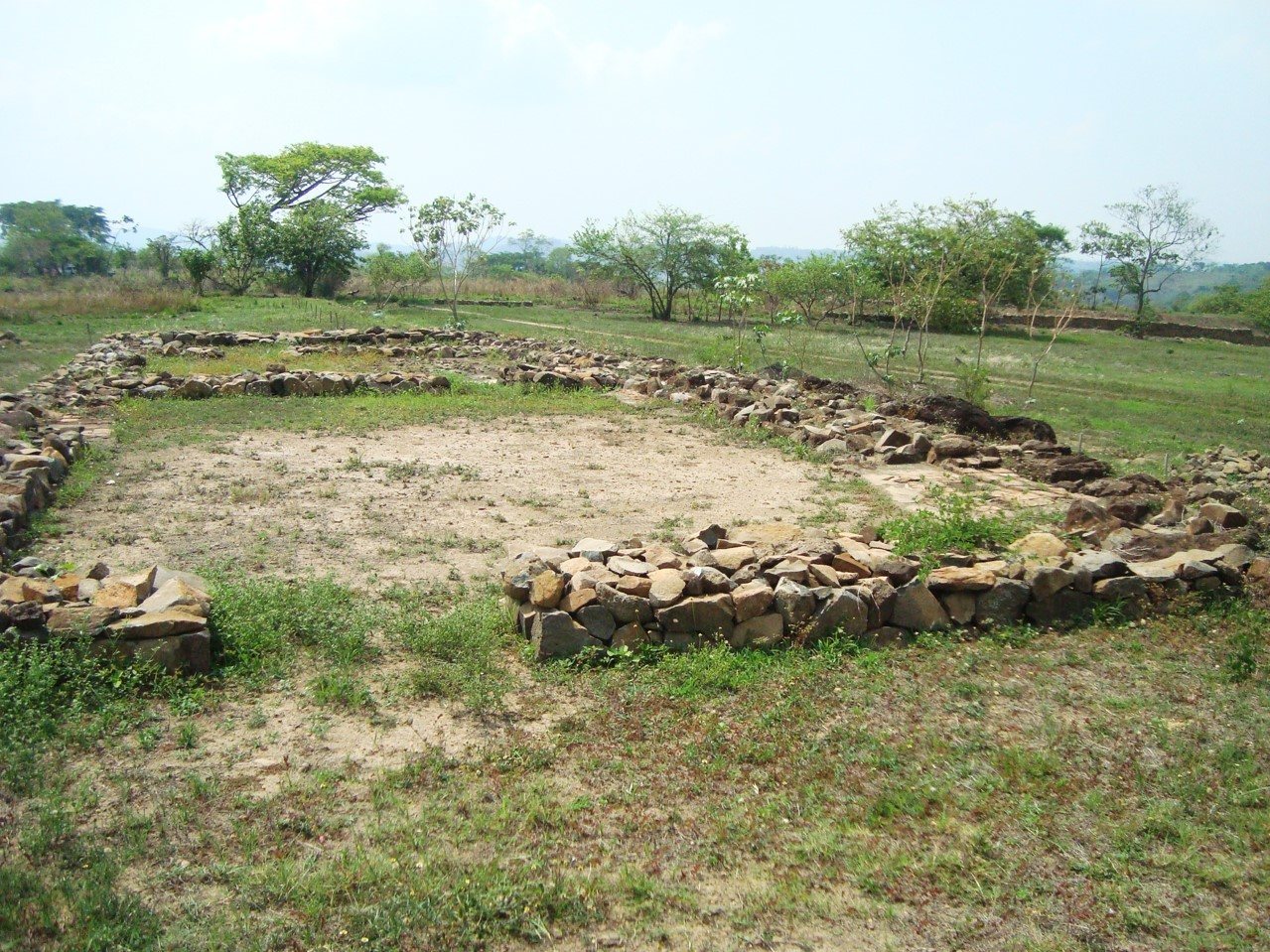
The archaeological area covers more than 30 hectares. The town’s streets extend from a central square in a grid plan, and foundations of the sixteenth-century settlement survive close to the surface. Because the abandoned town was not built over, its original foundations and layout remain unusually well preserved. The plan is among the oldest surviving examples of Spanish colonial urban planning in the Americas. Ciudad Vieja lies at the foot of Tecomatepe Hill beside the El Molino River, which runs through a deep valley and partly encircles the site. This landscape offered a defensive advantage.
Buildings and settlement
Excavations have revealed private houses, public buildings including the council house, and traces of early blacksmith workshops. The town may have contained more than seventy households of Spanish settlers, many of them encomenderos, colonists authorized to collect tribute and claim labor from Indigenous communities under the colonial system. Some households included mestizo children. Indigenous people lived in the surrounding area, and a nearby neighborhood housed Indigenous auxiliaries, including Tlaxcaltecs and Mexica, peoples of central Mexico.
Church and possible defenses
The colonial Catholic church was dedicated to La Trinidad and appears to have stood away from the central square. A broad atrium may have been positioned in front of it. A surviving stone construction may represent part of a defensive wall.