Church of St James, Bramley: A Norman Parish Church in Hampshire
Site at a Glance
- Rating
- 4.8
- Popularity
- Low
- Country
- United Kingdom
- Primary era
- Medieval
- Eras represented
- Medieval, Early Modern, Modern
- Civilizations
- British, English
- Site type
- Religious
- Remains
- Church
On this page8 sections
History
The Church of St James is an Anglican parish church in Bramley, Hampshire, United Kingdom, founded in 1150 during England’s Norman period (1066–1154), when the English form of Romanesque architecture was known as Norman.
Reformation and later alterations
During the Reformation, a period of religious change that included the English church’s break with the papacy, the church’s paintings were covered with whitewash in 1550–1551. In 1636, a red-brick west tower was built to replace an earlier wooden tower.
Soane and the Brocas Chapel
Around 1800, architect John Soane added the Brocas Chapel as an aisle for the tomb of Bernard Brocas of Beaurepaire, which had previously stood outdoors exposed to the weather. Soane added part of the nave in 1802. Bernard, who died on 8 November 1777, was Lord of Beaurepaire, a magistrate and a militia colonel. The Brocas family had English-Gascon connections in the 13th and 14th centuries; Bernard descended from a namesake executed in 1400, who was the son of Member of Parliament Bernard Brocas, who died in 1395. Gascony was a region in southwestern France.
Rediscovery and modern parish
In the 1870s, vicar Charles Eddy uncovered wall paintings and painted scriptural texts that had been hidden beneath the whitewash. Physicist Lise Meitner, whose work contributed to understanding nuclear fission, is buried in the churchyard near her brother Walter. The parish belongs to the benefice of Sherfield on Loddon, Stratfield Saye and Hartley Wespall with Stratfield Turgis, Bramley and Little London, a church arrangement with pastoral responsibility, within the Diocese of Winchester, the area under a bishop’s jurisdiction. The church has been Grade I listed since 26 April 1957. Grade I is England’s highest listed-building category, for buildings of exceptional interest.
Remains
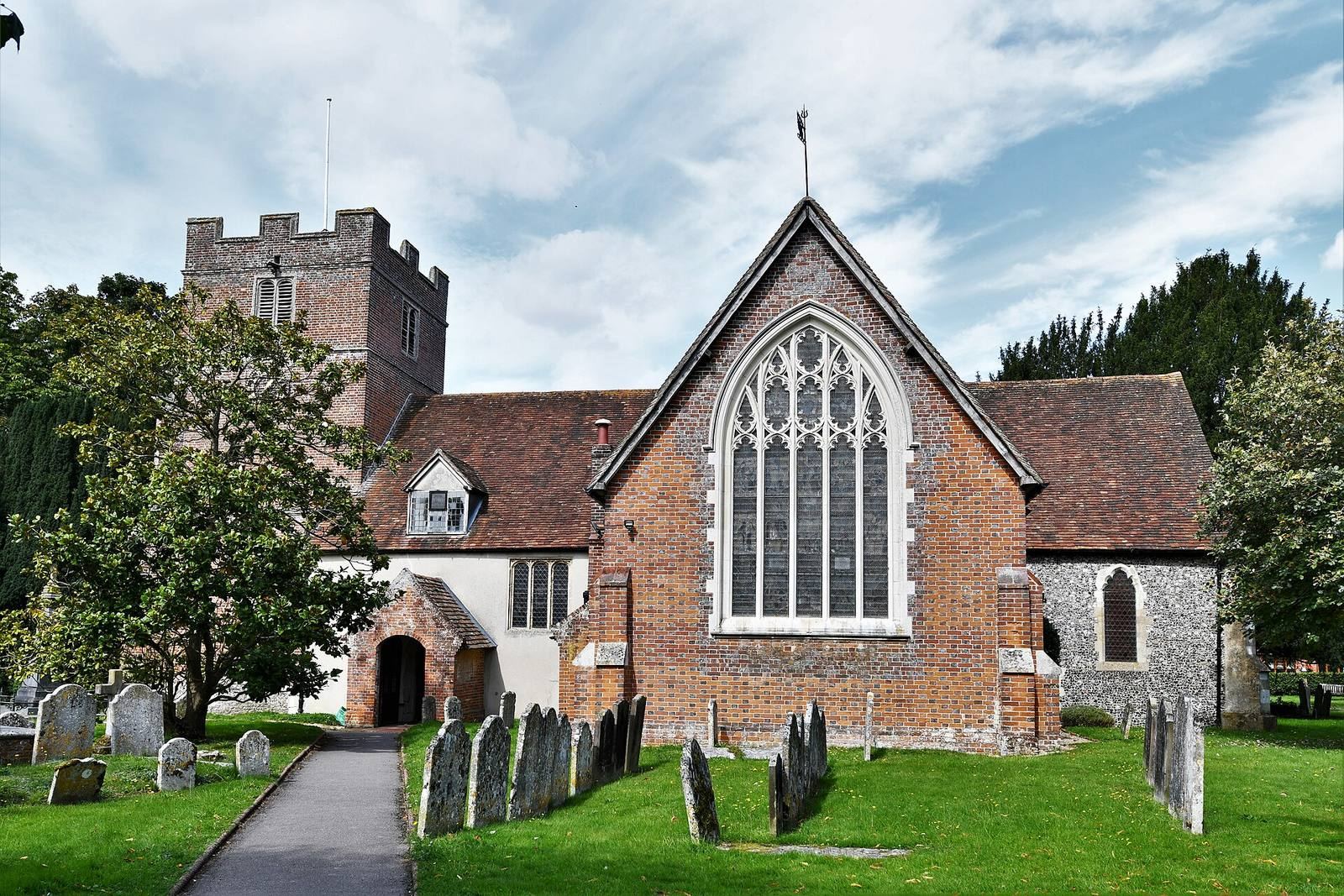
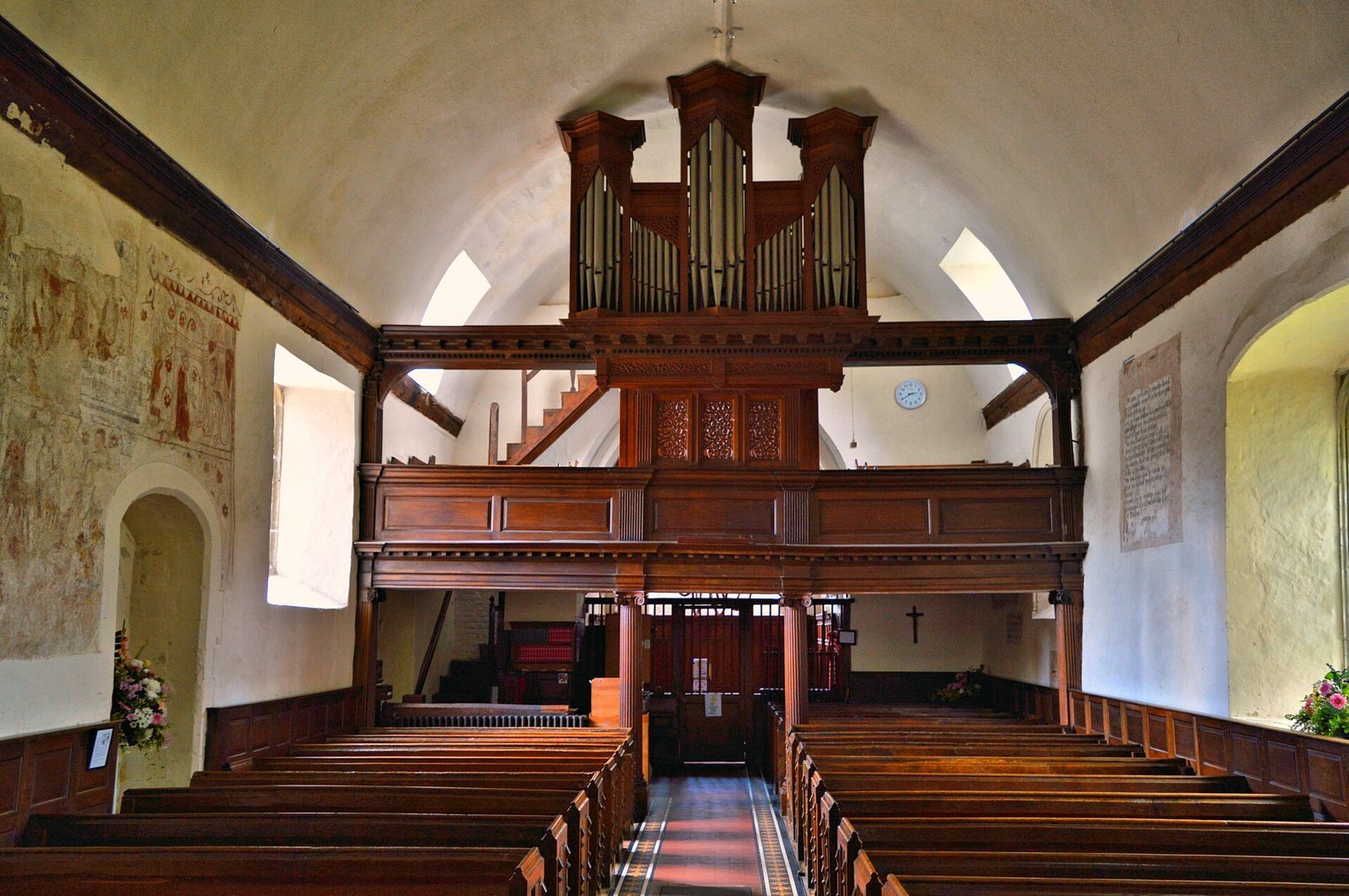
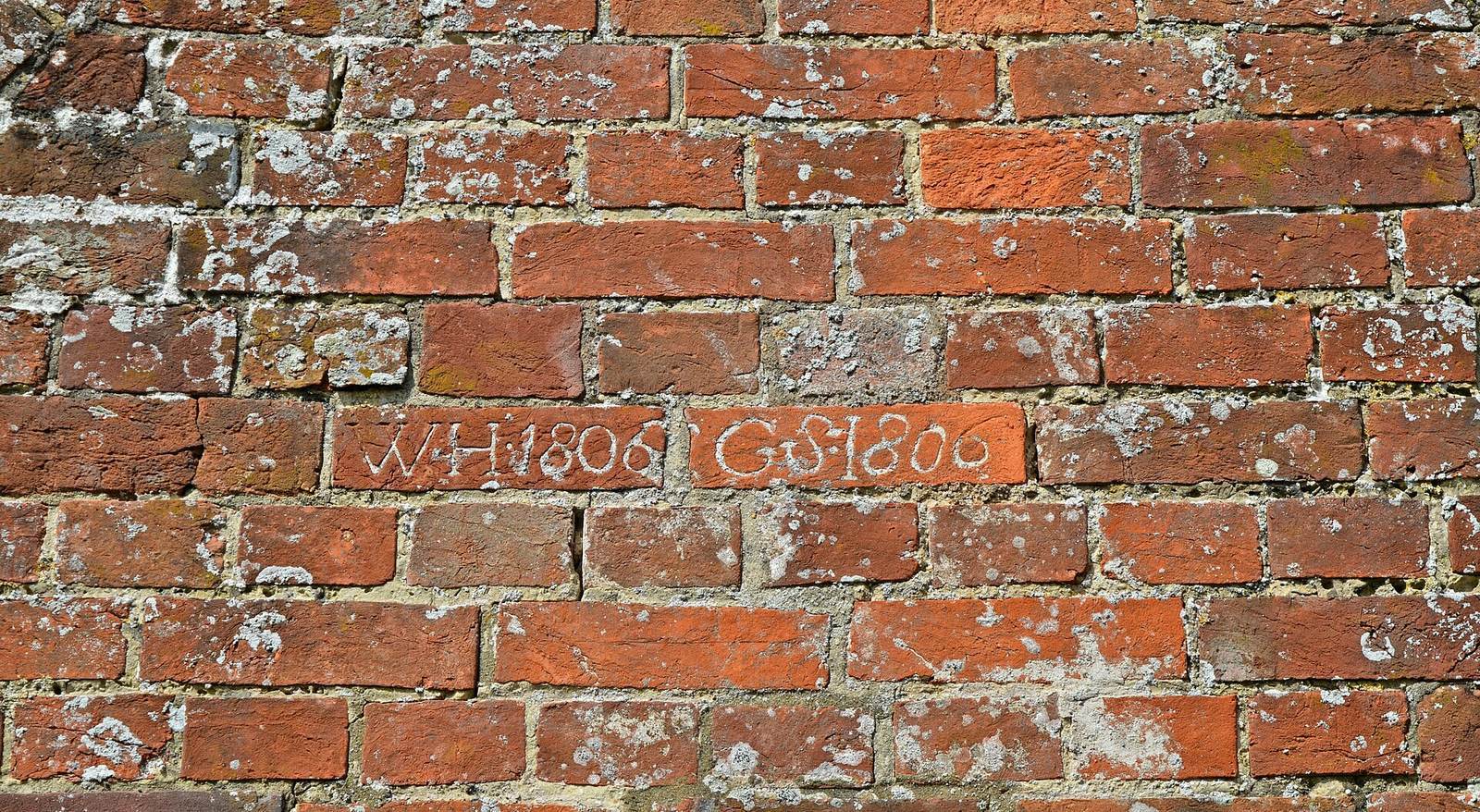
The church is built of flint with stone dressings and a tiled roof, and buttresses support its walls. The south porch and three-stage tower are made of red brick. Several windows in the north wall survive from the original Norman building.
Interior fittings
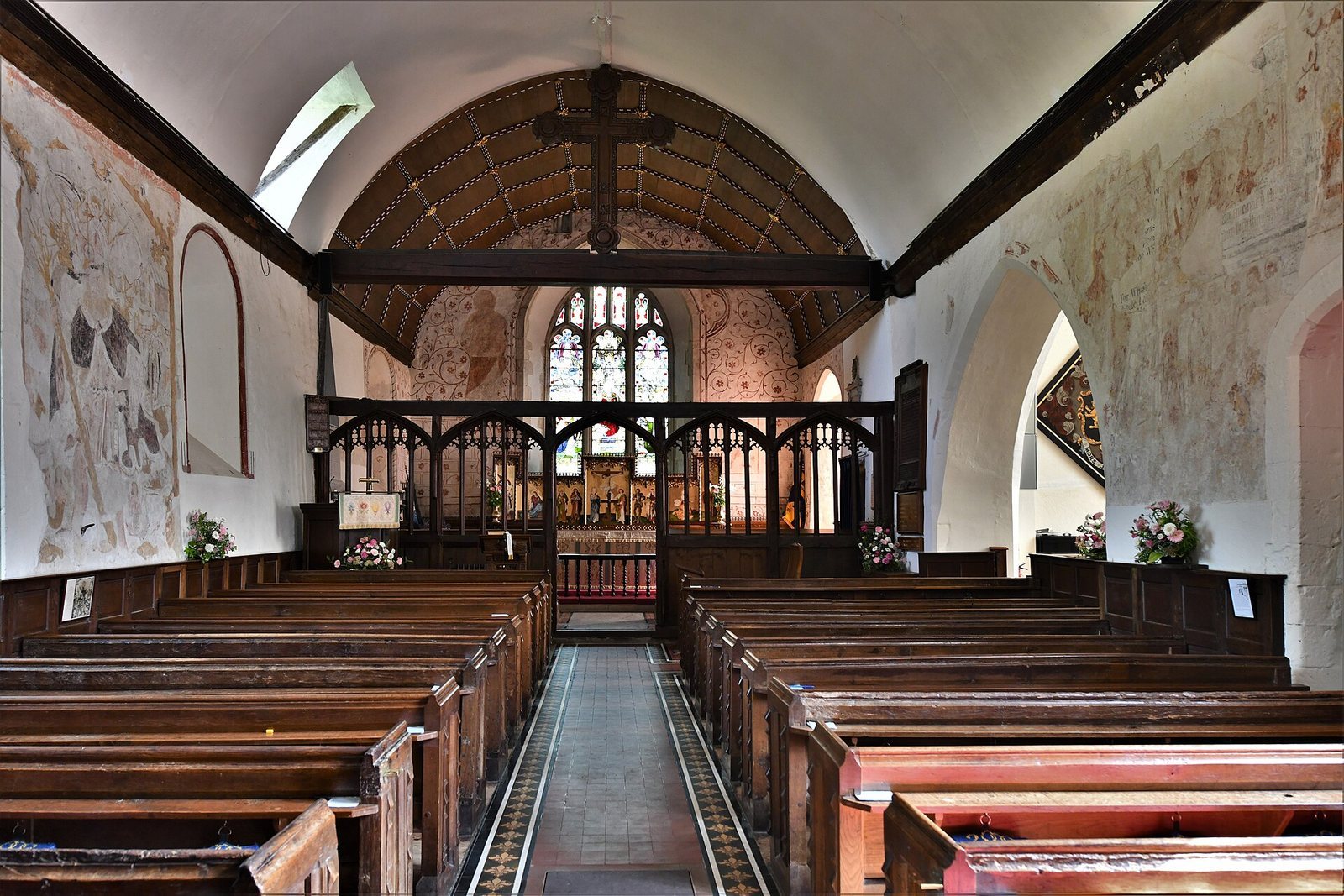
The interior contains a 13th-century piscina, a basin and drain used when washing sacred vessels. The screen, benches, pulpit and communion rail date from the 16th to 18th centuries.
Wall paintings
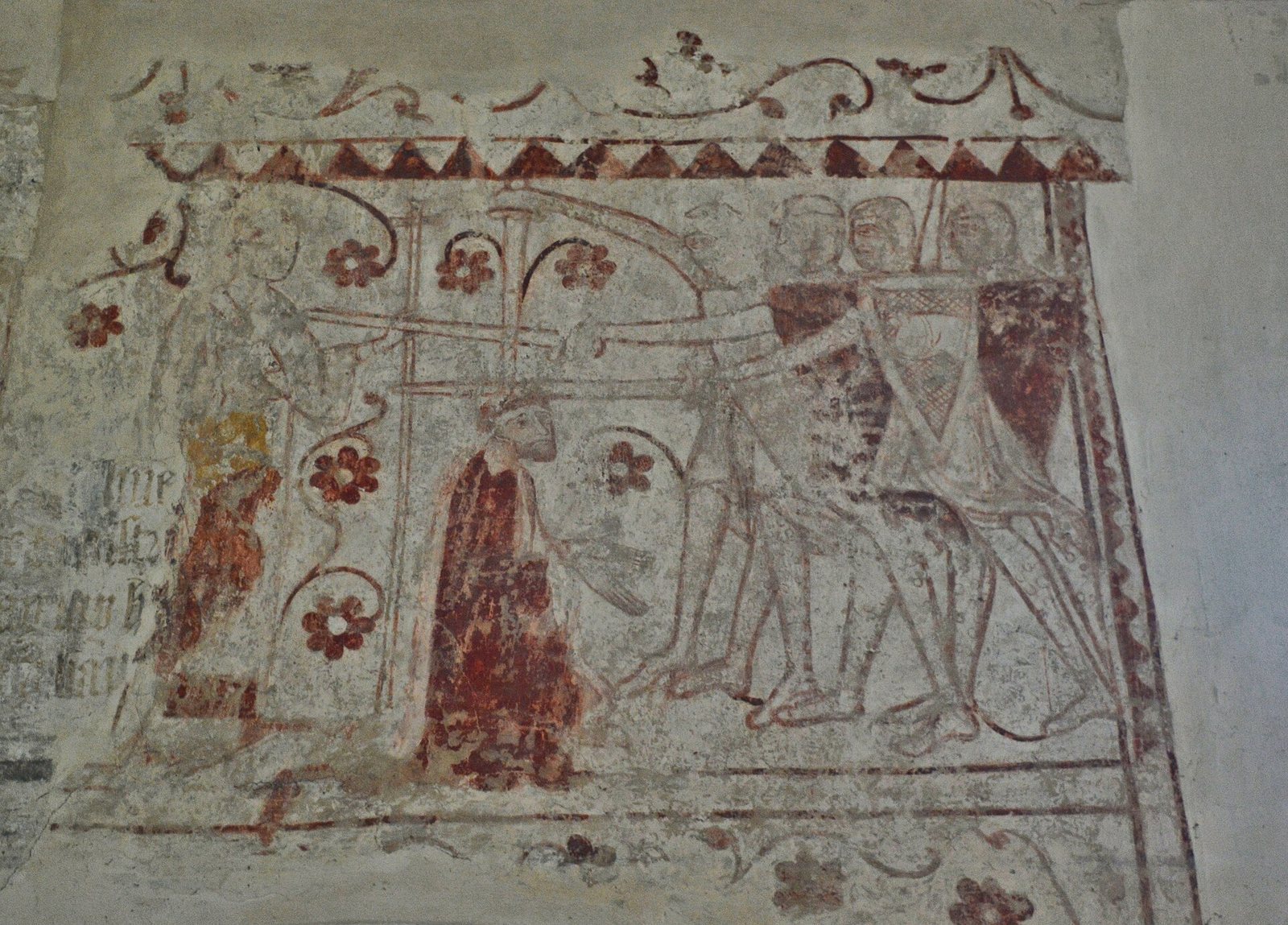
Paintings and scriptural texts in the church date from the 13th through the 16th centuries. The earliest paintings, on the south wall, show a series of martyrdoms; the best-preserved depicts four knights killing Thomas Becket, Archbishop of Canterbury, in 1170. His murder became a major event in English religious history. A 16th-century painting of St Christopher on the north wall resembles contemporary portraits of Henry VIII, king of England from 1509 to 1547. The north wall also bears painted texts citing John 3:5, Psalm 26:6 and Psalm 95, along with two consecration crosses, marks associated with the consecration of a church. Other painted decoration appears in the chancel, around the north and south windows, and on the east wall, where paintings of saints flank the east window.
Brocas Chapel and tomb
The Brocas Chapel forms an aisle of the church and houses Bernard Brocas’s white marble tomb, sculpted by John Bacon the Elder, an English sculptor.