Church of St Editha: Tamworth’s Parish Church
Site at a Glance
- Rating
- 4.6
- Popularity
- Medium
- Country
- United Kingdom
- Primary era
- Medieval
- Eras represented
- Medieval, Early Modern, Modern
- Civilizations
- British, English
- Site type
- Religious
- Remains
- Church
On this page9 sections
History
Early churches and the college
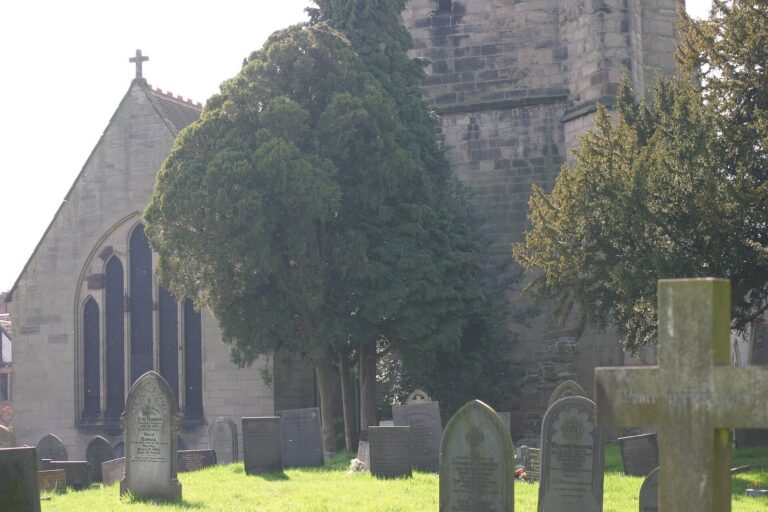
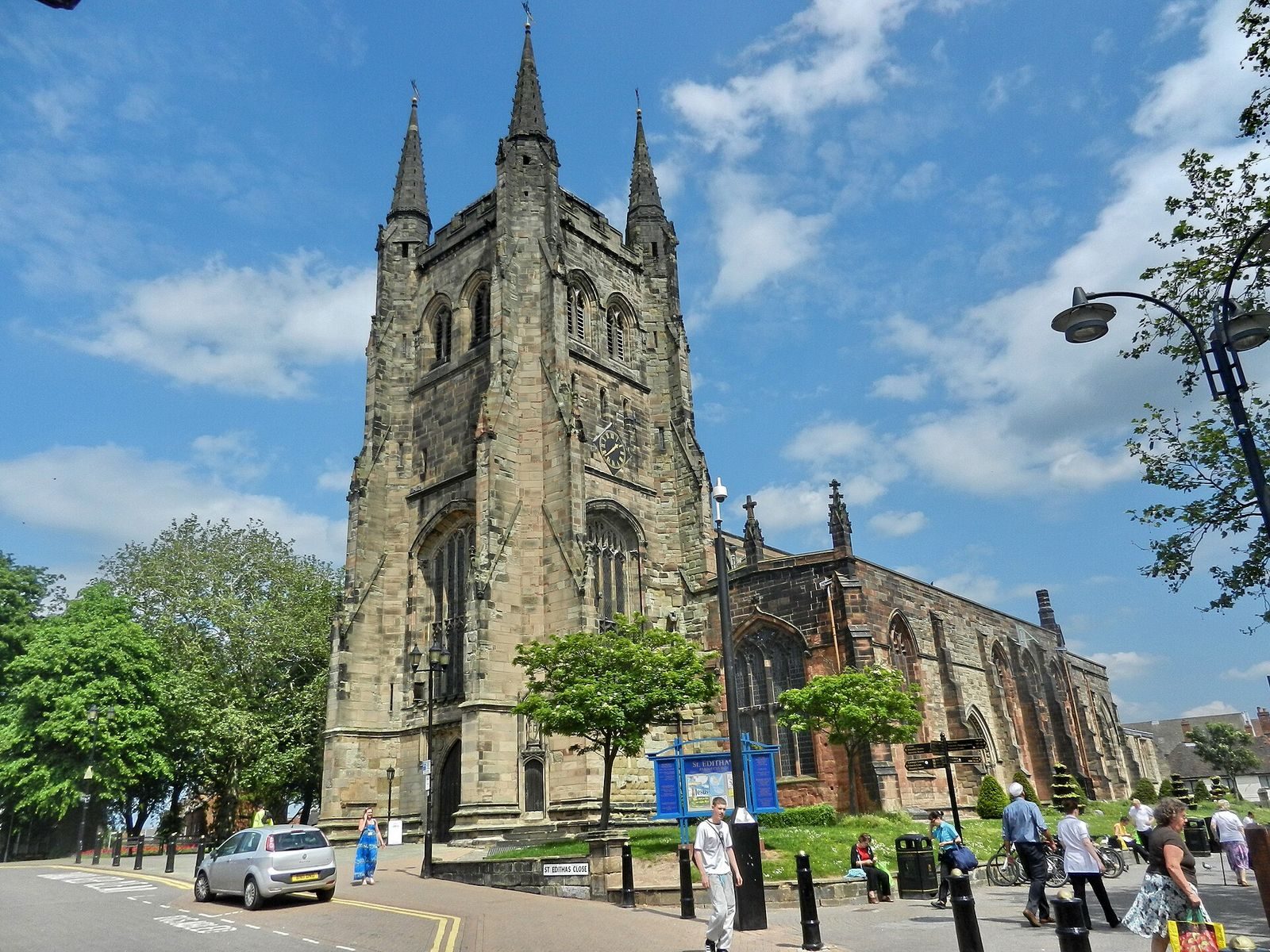
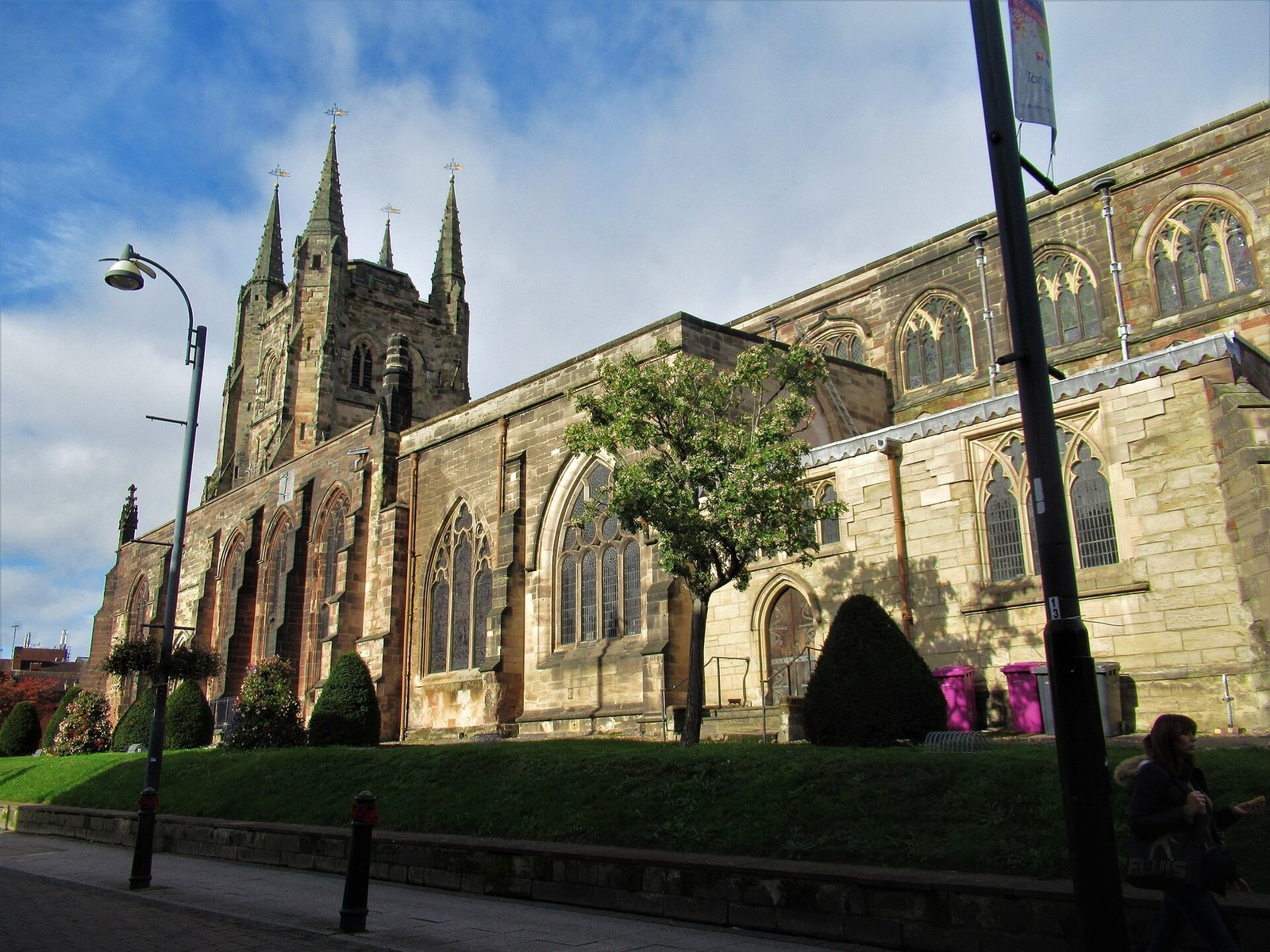
The Church of St Editha is a parish church in Tamworth, United Kingdom, on a site occupied by successive churches since the 8th century. The present church, the fourth on the site, was built between 1350 and 1369. It is Staffordshire’s largest parish church.
The first church was destroyed along with the town by Danish forces in 874. A second church was established during the rule of Æthelflæd, a ruler of Mercia in the early 10th century, but the Danes destroyed it in 943. King Edgar re-founded the church around 963. Its patron saint, Editha, was probably Edgar’s aunt. She died in the 960s and was canonized soon afterward for her devotion and piety.
The College of Canons of St Editha was probably established as a royal institution during the 10th century, although its foundation date is unknown. Canons were clergy serving a collegiate church. The right to appoint them was contested, but by the 12th century the Crown made the appointments. The college had a dean, a senior church official, and six prebendaries, clergy whose posts were supported by assigned church revenues.
Medieval rebuilding
A fire destroyed Tamworth and its church in 1345. Work on the replacement church began in 1350 and finished in 1369. Dean Baldwin de Witney led the rebuilding, which also enlarged the church.
Parish church and later changes
The College of Canons was dissolved in 1548 under the Dissolution of Colleges Act 1547, and the church became Tamworth’s parish church. Extensive restoration in the 1850s was carried out by architects Benjamin Ferrey and George Gilbert Scott, followed by further work by William Butterfield around 1871. A substantial programme of restoration and renewal began in 2022.
Samuel Parkes was baptized at the church on 24 December 1815. He later received the Victoria Cross, Britain’s award for exceptional gallantry in the presence of the enemy, for saving trumpeter Hugh Crawford during the Charge of the Light Brigade. The church belongs to the Church of England, within the Province of Canterbury and Diocese of Lichfield. It is a Grade I listed building, the highest listing category in England for buildings of special architectural or historic interest, and follows the Church of England’s modern catholic tradition. It also serves civic functions in Tamworth and the wider Tamworth Deanery.
Remains
Most of the church’s surviving fabric dates from the mid-to-late 14th and 15th centuries, with additions from the 19th century. Among its features are the tower and its unusual stairway, stained glass from several periods, the historic organ and a churchyard memorial.
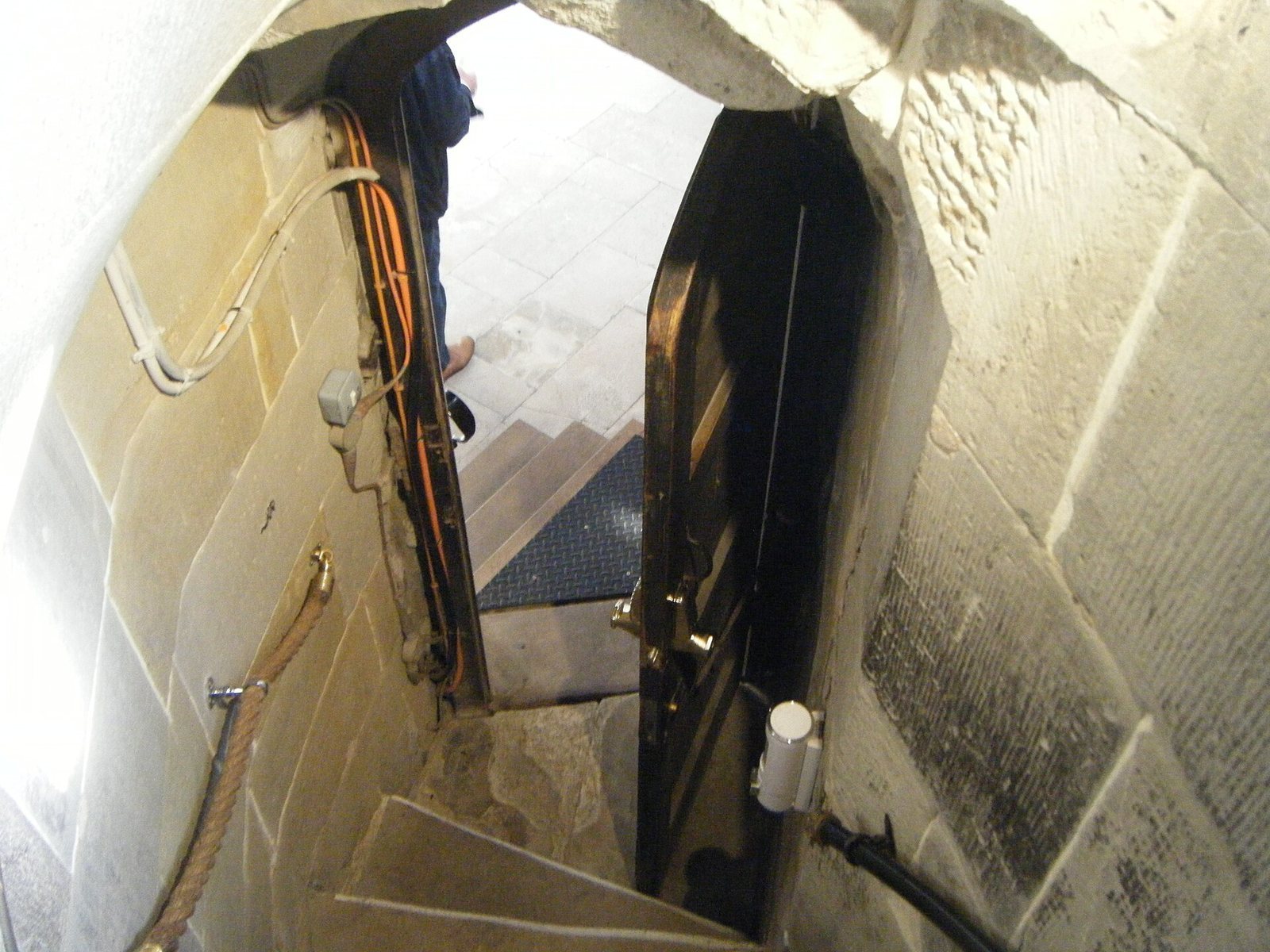
Tower and staircase
The tower contains a double spiral staircase, a rare arrangement with comparable examples at the Château de Chambord in France and All Saints’ Church in Pontefract.
Stained glass
Fragments of medieval stained glass survive in the east window of the vestry. The chancel’s east window, made by stained-glass artist William Wailes, dates to 1870. The high windows above the south side’s lower roofline, known as the south clerestory, were made in 1873 by artist Ford Madox Brown for the design firm Morris & Co. The chapel’s east window was made by artist Edward Burne-Jones for the same firm and dates to 1874.
Organ
The organ’s history includes an instrument installed by Nathaniel Dudley in 1766 and a replacement built by Samuel Green in 1792. Green took Dudley’s instrument to Isleworth. An organ division is a group of pipes controlled as a unit; Alexander Buckingham added a choir division in 1809, and William Hill added a pedal division, played using a pedal keyboard, in 1841. George Holdich, Brycesons Bros and Nicholsons of Worcester also worked on the instrument. Harrison and Harrison built a new organ in 1927, incorporating much of the earlier pipework. The historic organ underwent comprehensive restoration in 2016–17.
Churchyard memorial
A tombstone in the churchyard commemorates Samuel Parkes’s parents, Thomas Park(e)s and Lydia Fearn.