Church in Garzin: A Medieval Gothic Hall Church in Germany
Site at a Glance
- Rating
- 4.5
- Popularity
- Very Low
- Country
- Germany
- Primary era
- Medieval
- Eras represented
- Medieval, Early Modern, Modern
- Civilizations
- Holy Roman Empire, Kingdom of Prussia, Margraviate of Brandenburg
- Site type
- Religious
- Remains
- Church
On this page13 sections
History
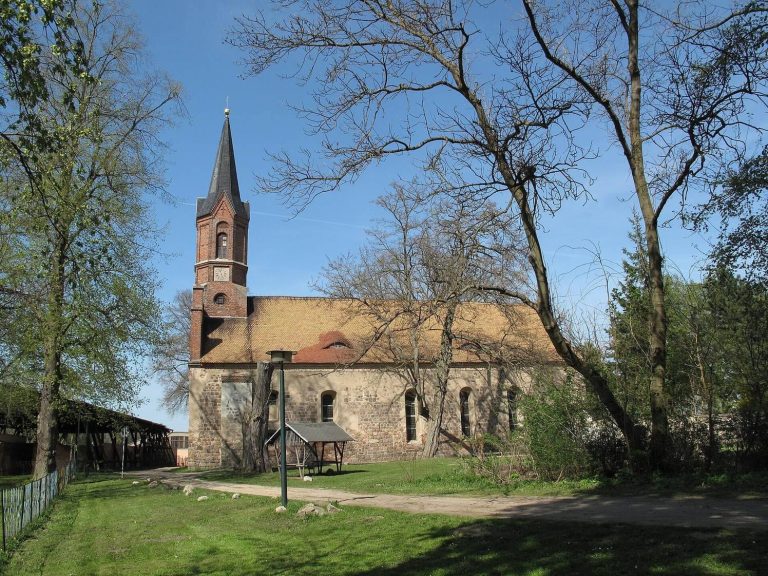
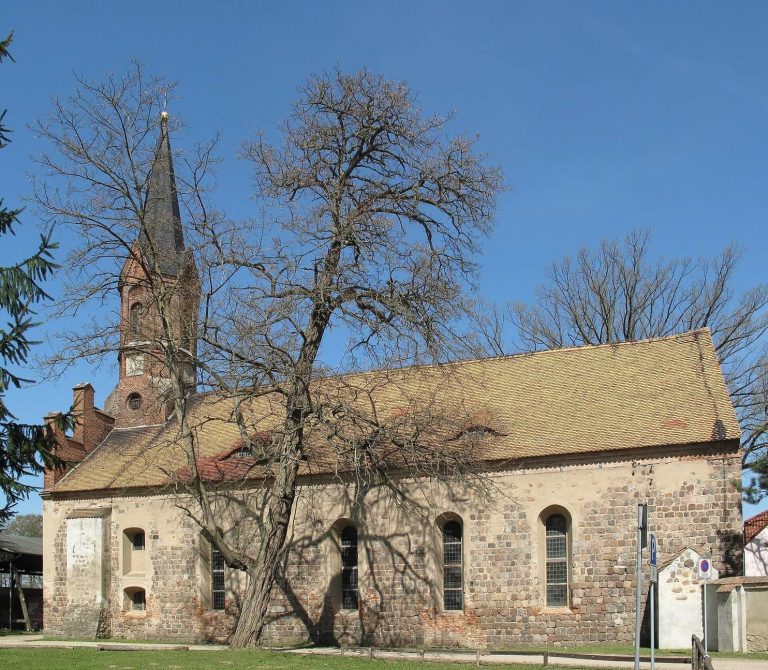
The Church in Garzin, Germany, is a Gothic (medieval architectural style) hall church, a church organized around one main interior space, built between 1286 and 1315. Its tower and later furnishings reflect centuries of change in the village church.
Medieval construction and affiliations
The west tower was probably raised above the nave in the second half of the 15th century; a smaller raising may have taken place earlier. The church was initially affiliated with the Diocese of Lebus, a bishop’s area of jurisdiction. A record from 1375 counted 72 Hufen, medieval landholding units whose area varied by place and period, including four parish holdings.
By 1459, the church was listed within the Strausberg subdivision of the Diocese of Brandenburg. This church jurisdiction did not follow the regional divide exactly: Garzin lay west of the Löcknitz–Stobber boundary, which largely separated the historic regions of Barnim and Lebus.
Noble patronage and early modern history
The noble Wulkow family held Garzin until the beginning of the 16th century, when it passed to the von Pfuel family. The church’s weather vane bears the von Pfuel arms and is dated 1574. Its date suggests that repairs or alterations took place around then, probably at the initiative of a von Pfuel church patron.
The church probably escaped major devastation during the Thirty Years’ War (1618–1648), a major European conflict. In the 19th century, a member of the von Pfuel family arranged rooms at the family manor in Jahnsfelde as a collection of mementos from family properties. It included a portrait from the Garzin church.
Later history and continuing use
A Hamburg-cast bell dated 1580 bore a medallion showing the Judgment of Paris, the Greek myth in which Paris chose the fairest of three goddesses. Its inscription gives the dates 1580 and June 1594, names caster Hans van Damme, and urges listeners to remember Christ’s coming judgment, avoid sin, and trust in Christ for salvation. The bell had been recast by 1903. A medieval bell, probably from the 14th century, was destroyed in Müncheberg in 1945.
The church now belongs to the Märkische Schweiz parish district within the Oderland-Spree church district of the Evangelical Church of Berlin-Brandenburg-Silesian Upper Lusatia. Regular services are held there.
Remains
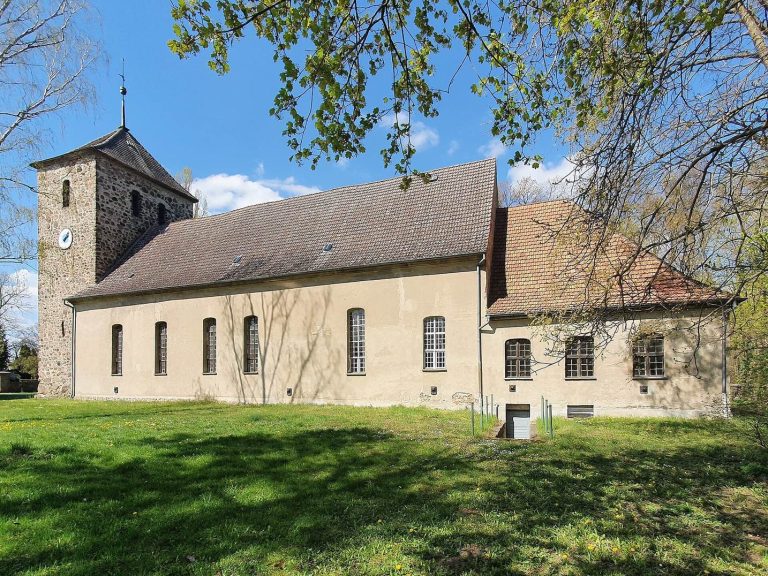
The church and its churchyard stand east of Garzin’s village green, enclosed together by a fieldstone wall. The building’s rectangular nave connects to a west tower, while a later sacristy extends from its south side.
Exterior
Nave and east end
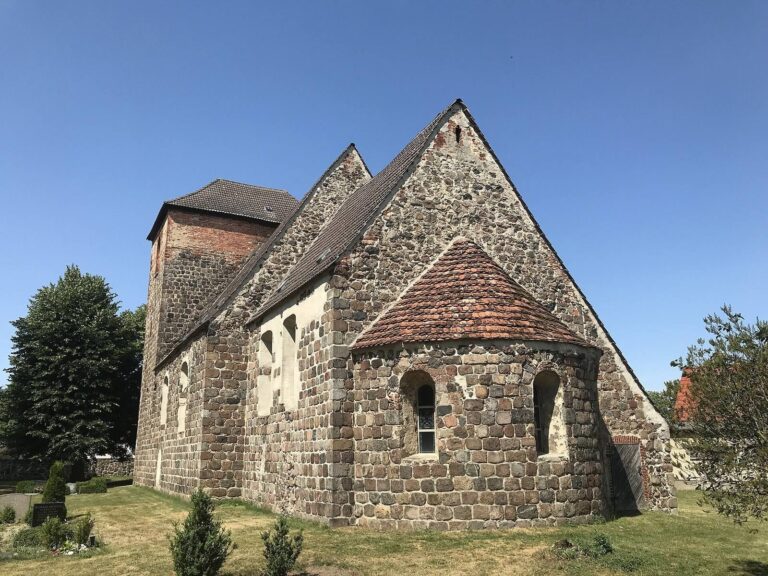
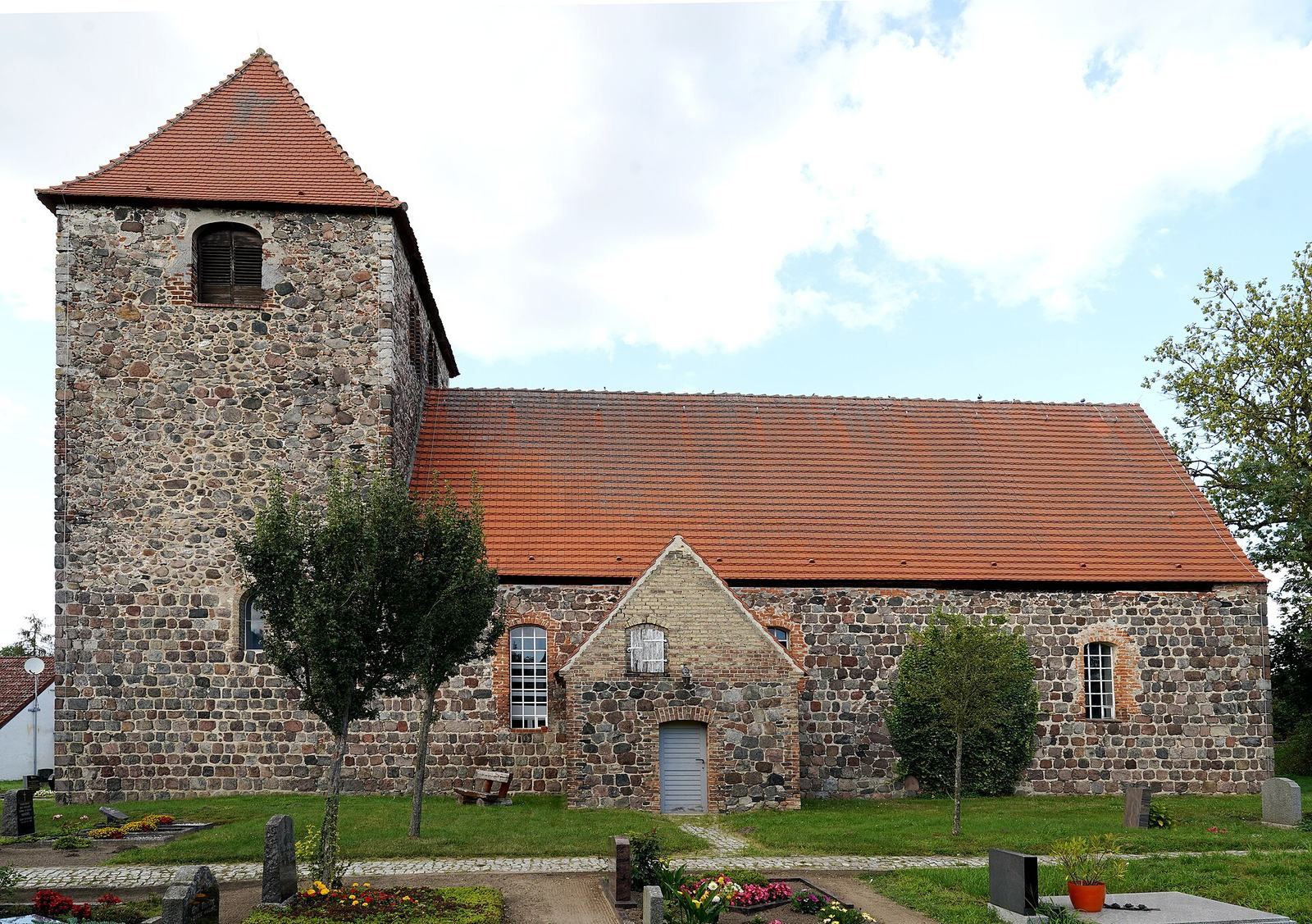
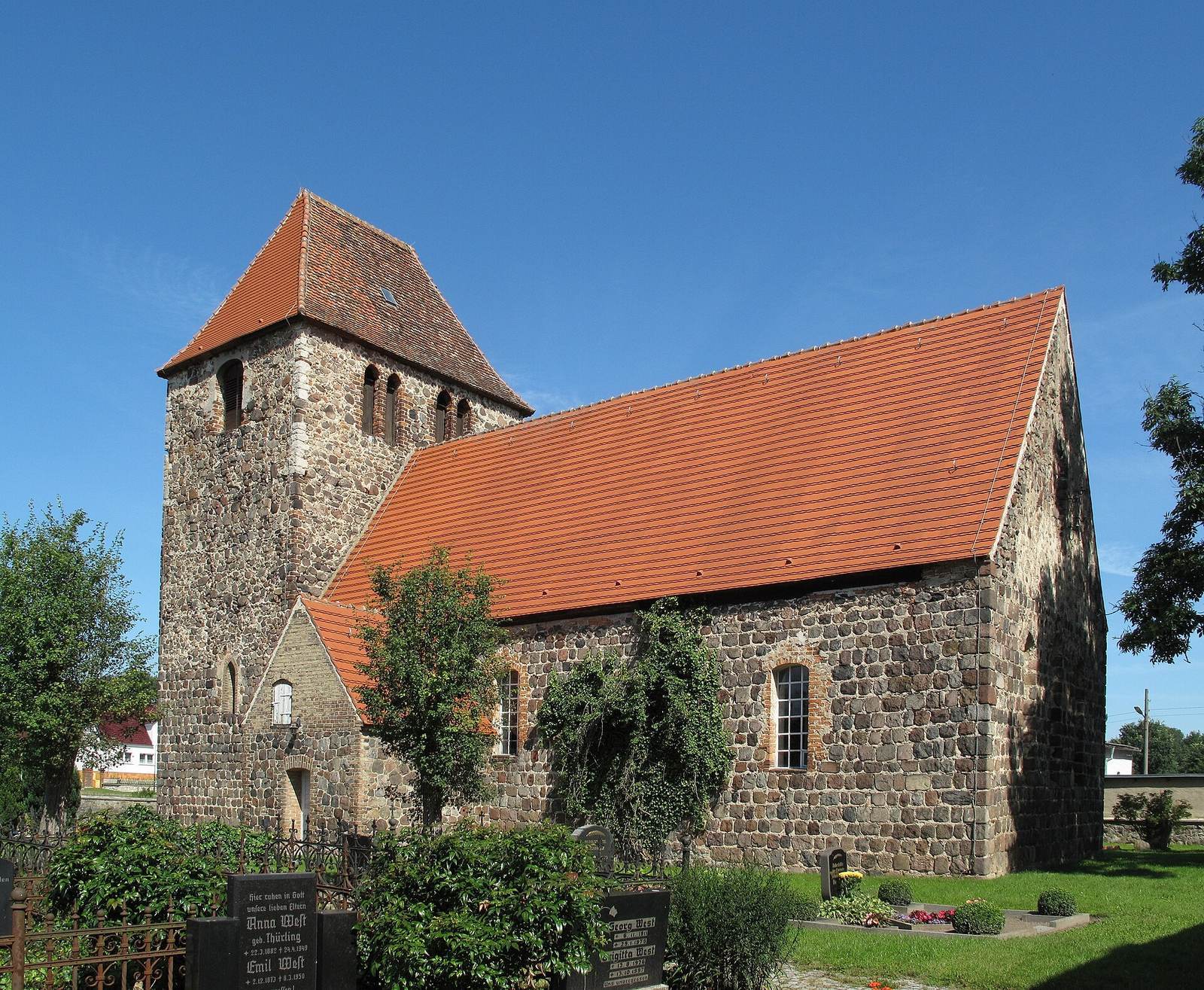
The rectangular nave measures 18.2 m long and 9.5 m wide. Its fieldstone masonry, built from stones gathered from fields, uses regularly laid blocks. At the east end, a pointed group of three windows retains its original form and fieldstone surrounds, with a small round-headed window above in the gable.
West tower
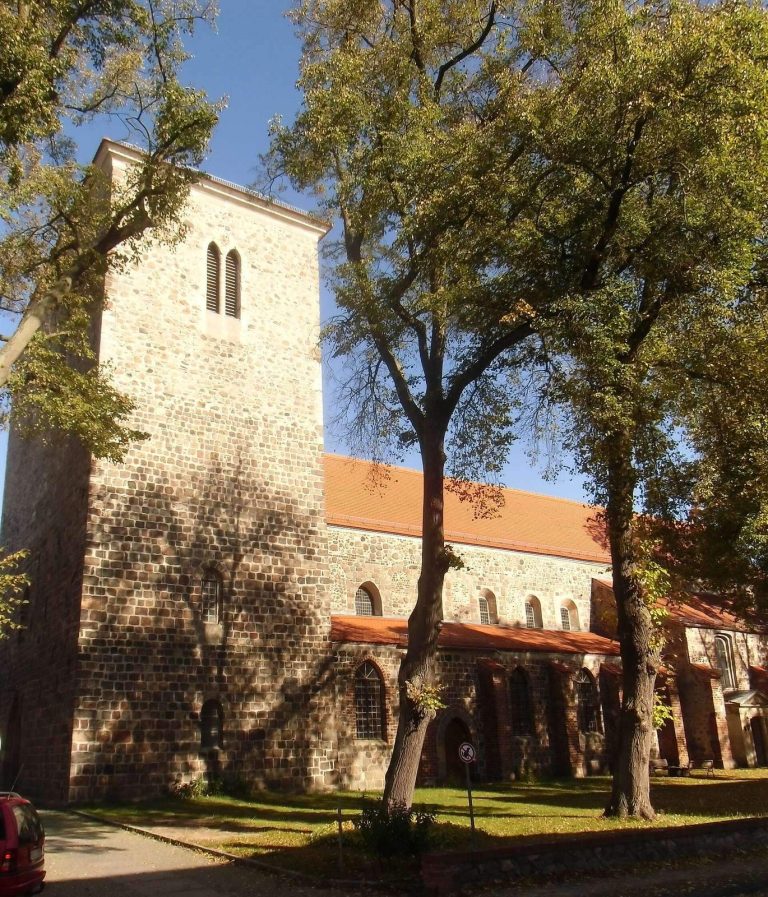
The rectangular tower measures 7 m long and 9.5 m wide. Its masonry uses regularly laid fieldstone up to the height of the nave, then irregular fieldstones above. Limestone marks the upper corners where the nave’s roof ridge meets the tower roof. The plastered, pointed-arch west portal dates from the 19th century, with a very narrow, slit-like brick window above it.
Four narrow, round-arched bell openings sit beneath the roof on the west face, with a clock bearing a Roman-numeral dial between them. The east face has four similar openings; each of the other faces has one wider opening, and the north opening contains a second Roman-numeral clock. Brick surrounds and slatted covers protect the openings from driving rain. The tower has a red-tiled roof with sloping ends.
South sacristy
The later sacristy has a portal and a boarded, round-arched opening in its gable. Three narrow windows on its south wall were originally pointed and are now round-headed; they have red-brick surrounds. The north wall has four similar windows.
Interior furnishings
Altarpiece
The late-Gothic carved altarpiece dates to around 1490. Its central Crucifixion scene is flanked by six apostles on each side, arranged in two rows. The Crucifixion group is considered exceptional among altarpieces from the pre-Reformation Barnim region. The same carver also made altars at Bernikow and Zicher. The original arrangement may have been a three-part altarpiece, with the apostles on its side panels. Its rectangular shrine was added in the 19th century.
Font, chalice, and bell
The baptismal font and its brass bowl, as well as a silver chalice, are attributed to the 17th century. One bell in the tower is said to date from that century and is still rung on special occasions.
Portrait of Anna von Pfuel
A life-size, full-length portrait of Anna von Pfuel bears the place and date Garzin, 1594. She appears in richly decorated clothing and what seems to be a bridal crown. The clothing is rendered stiffly, with almost no folds.