Santa Maria di Gesù Church at Monte Grifone: A Franciscan Complex in Palermo
Site at a Glance
- Popularity
- Low
- Country
- Italy
- Primary era
- Medieval
- Eras represented
- Medieval, Early Modern, Modern
- Civilizations
- Crown of Aragon, Kingdom of Sicily, Kingdom of the Two Sicilies, Spanish
- Site type
- Religious
- Remains
- Monastery
On this page17 sections
History
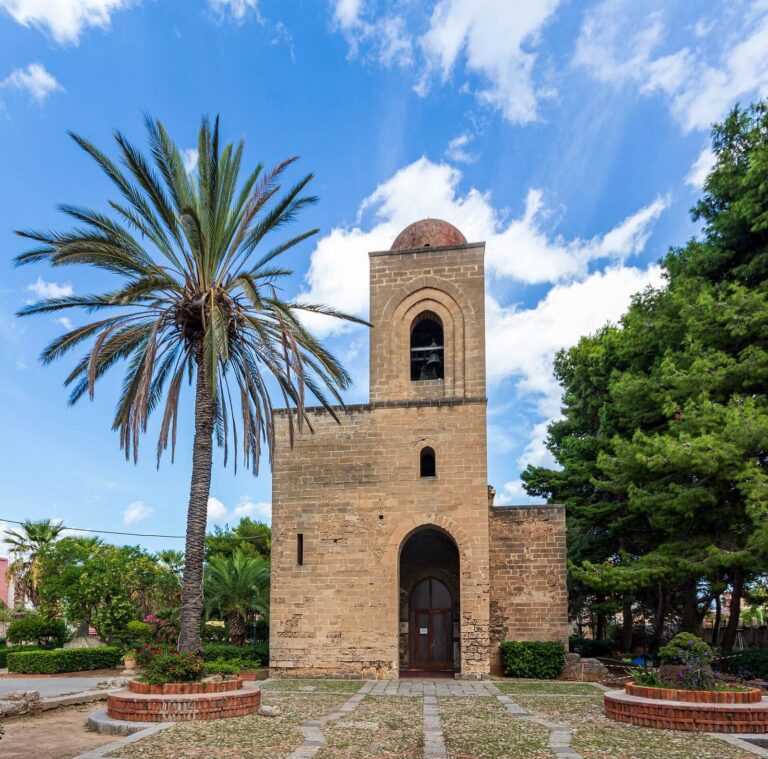
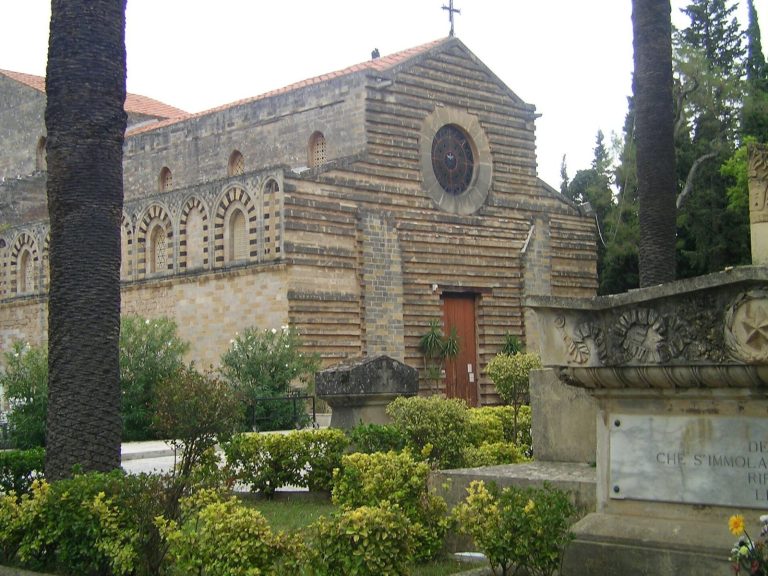
Santa Maria di Gesù Church is a Roman Catholic church in the Archdiocese of Palermo and part of a Franciscan convent complex at the foot of Monte Grifone in Palermo, Italy. The church is Gothic, an architectural style marked by pointed arches. Established in 1424, the convent became the first Franciscan settlement in Palermo and Sicily.
Early Franciscan presence and foundation
Saint Anthony of Padua, a Franciscan preacher, is recorded as having passed through Palermo in 1229. An oratory dedicated to him was built in 1232, and parts of this early building were later incorporated into the convent.
Pope Martin V formally established the convent by papal bull on 9 May 1424, following an initiative by the Franciscan preacher Matteo de Gallo, also known as Matteo of Agrigento. Matteo promoted construction in 1426. The community belonged to the Reformed Franciscans, a branch of the order seeking stricter observance of its rule.
Expansion and devotional traditions
In 1470, a wooden Madonna and Child was ceremonially installed, alongside the start of work on a Baroque altar. Tradition says a ship captain gave the image in gratitude for bringing grain to Palermo during a famine. It travelled on an ox cart and stopped first at the church of Madonna di Buon Riposo before reaching Santa Maria di Gesù. The episode became linked with the church’s name. A portal was later opened in the church’s left side.
In 1484, Lombard craftsmen Lorenzo and Antonio de Barrile made a funerary chapel for merchants Gaspare Bonet, also known as Bonetti, and Giovanni Corsini. The chapel was given to the convent the next year. Work associated with it included the choir and decoration of the west portal; the Grua–Talamanca chapel was probably incorporated during this phase.
A second level was added to the convent from 1578, with the work completed in 1609. Benedict the Moor, a Franciscan religious figure later venerated as a saint, died there on 4 April 1589 after spending the final part of his life as a hermit at the convent.
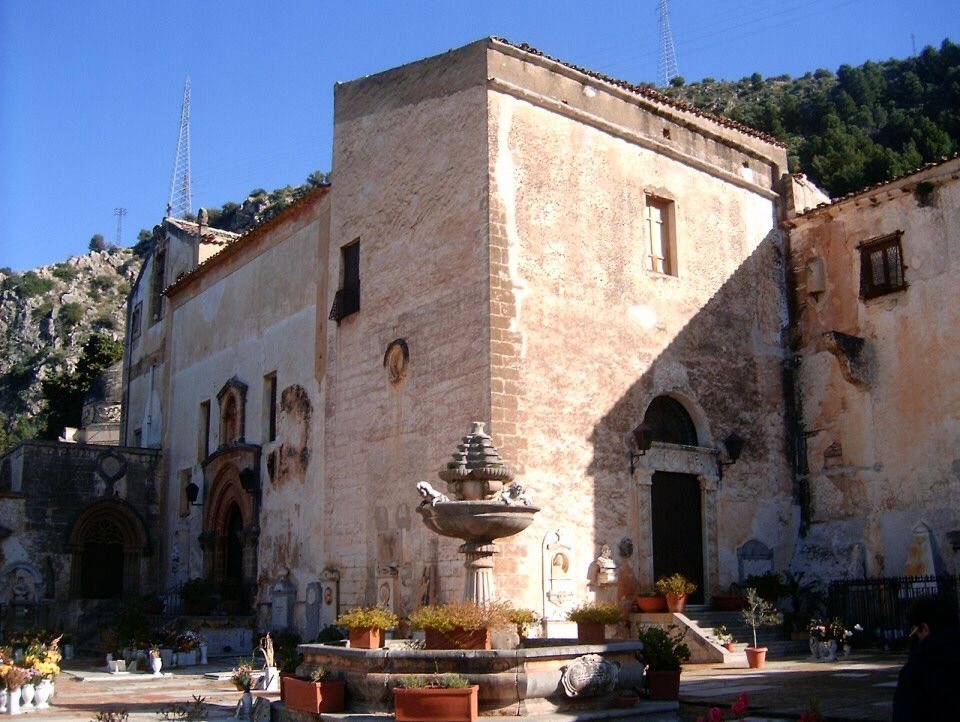
In 1634, a fountain was erected in the open ground facing the church’s north side. Its sponsor, Fernando Afán de Ribera y Enríquez, Duke of Alcalá and Viceroy of Sicily, was devoted to the Ecce Homo image venerated at the church. After suppression laws were enacted, the convent’s library holdings were transferred to the municipal library at Casa Professa.
Cemetery and later changes
In 1787, Palermo’s Senate, represented by Viceroy Francesco d’Aquino, Prince of Caramanico, issued an edict requiring burial outside settlements and churches. The application of Saint-Cloud burial provisions in the Italian peninsula from 1806 helped make the complex’s peripheral position suitable for a cemetery. The cemetery became a burial place for much of Palermo’s nobility and continued in use into the late twentieth century.
In 1837, Antonio Lucchesi Palli, Prince of Campofranco, commissioned a cemetery chapel for his wife, Maria Francesca Pignatelli Aragona. Its architect may have been Emmanuele Palazzotto. The family held memorial services in the church, especially at the Ecce Homo altar, and also used that area for family burials.
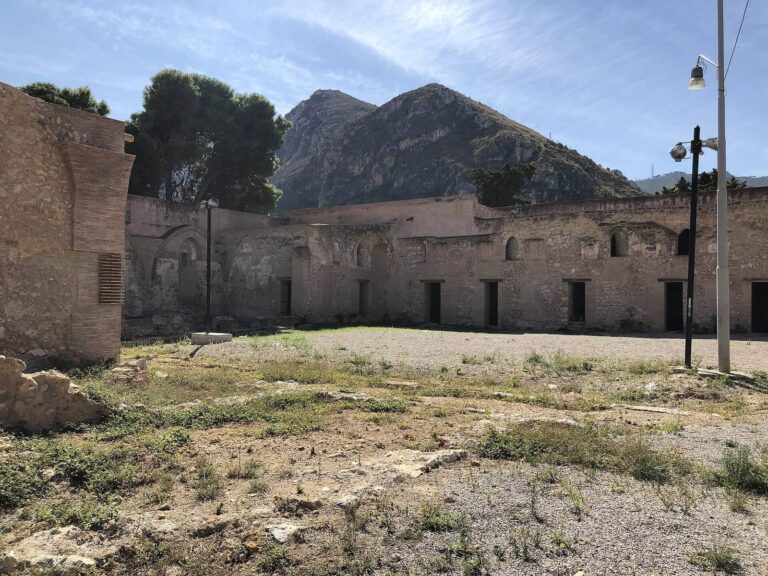
The 1968 Belice earthquake damaged the complex and brought down parts of the convent’s south wing. During the night of 24–25 July 2023, an arson fire on nearby Monte Grifone spread through the cemetery and reached the church, causing extensive destruction to the complex and its artworks.
Remains
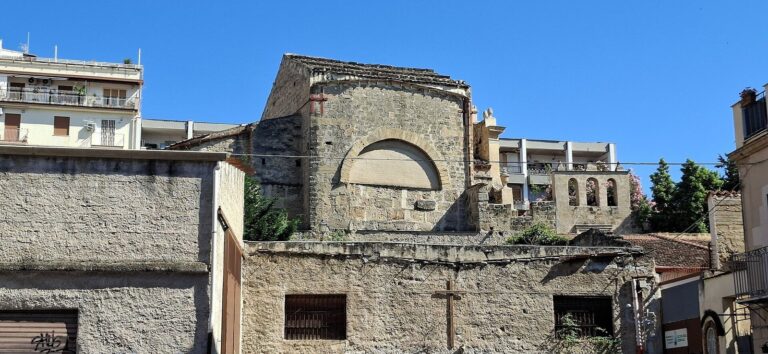
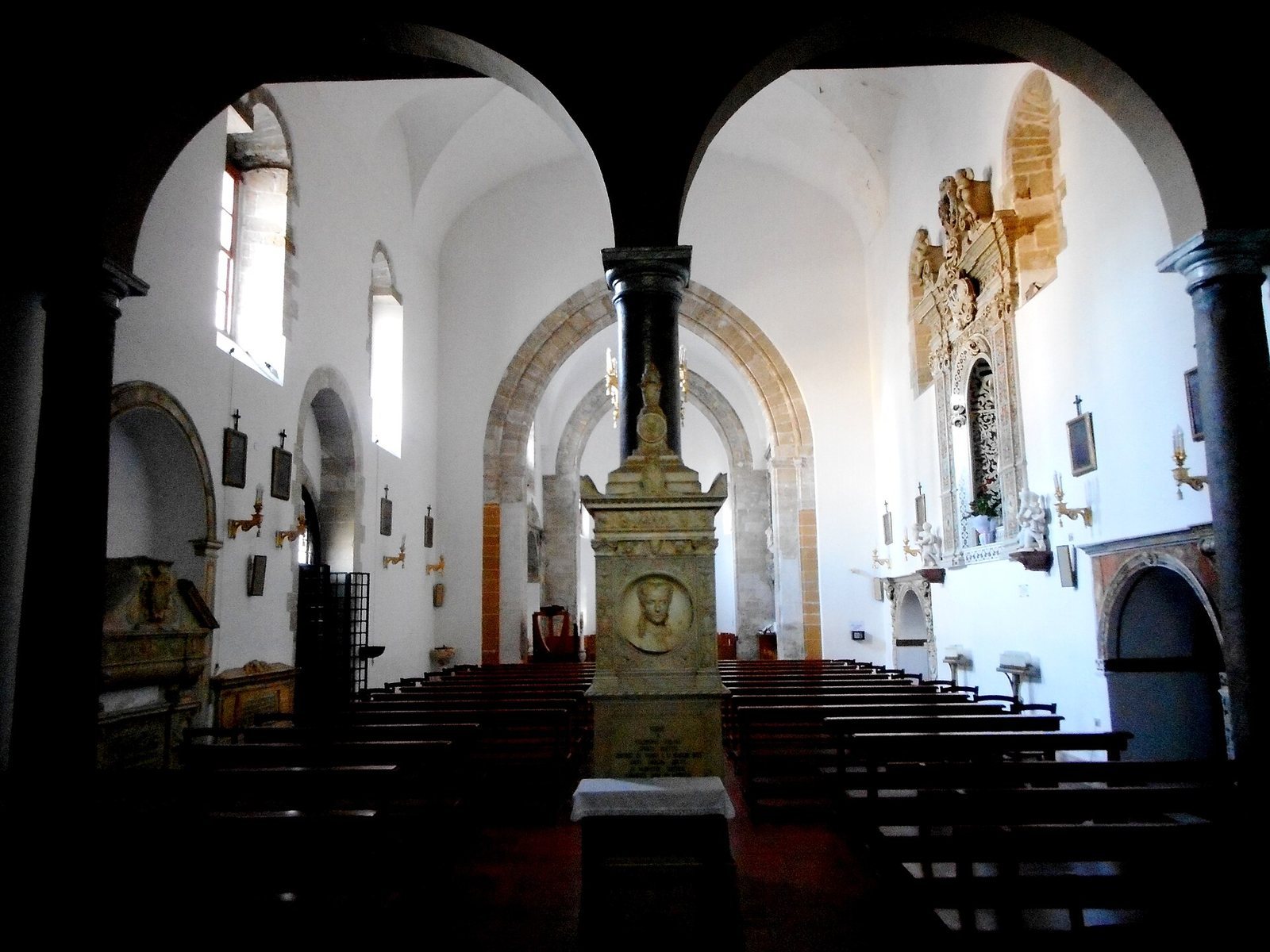
The complex at the foot of Monte Grifone brings together a Gothic church, convent, cemetery, adjoining aristocratic chapels and a small square. The church’s north-facing front looks onto the open ground where the Baroque fountain stands. A covered entrance porch, chapels, funerary monuments and an apse form part of the church interior.
Church portals
Renaissance main entrance
The main entrance is a marble Renaissance portal, from the artistic period that began in Italy in the fourteenth century, attributed to sculptor Giuliano Mancino. Christ appears blessing on its lintel, surrounded by cherubs and adoring angels. Slender twisted columns frame panels of apostle busts. Their halos bear names, and their scrolls set out passages of the Creed on God the Father and Christ, Christ’s life and resurrection, the Holy Spirit, the Church, forgiveness and eternal life. The figures named are Peter, John, Paul, James the Greater, Andrew, Thomas, Bartholomew, Philip, Matthew, James the Lesser, Simon, Thaddeus and Matthias. The tilted scrolls create the effect of a long text winding around the columns. The scroll associated with John and Paul also refers to glorying in Christ’s cross.
Side portals
A separate Gothic portal on the church’s left wall has two layers of recessed pointed ribs. A niche between them contains a marble relief of the Madonna and Child, attributed to an unidentified South Tyrolean sculptor. Barred and blind windows and funerary markers occupy or stand against the surrounding wall.
The entrance to the Grua–Talamanca chapel, beside the left side of the altar area, reflects Gothic forms associated with Catalan traditions. It has three layers of recessed moulding, an openwork ribbed semicircular panel and an outer moulded band following the arch. The family coats of arms appear above the arch’s pointed crest.
Church interior and monuments
Entrance porch
Two chapels face each other in the entrance porch, one dedicated to Benedict the Moor and the other to Blessed Matteo. Matteo had earlier been buried on the Gospel side of the church, the side associated with the Gospel reading. The porch also contains a marble relief by Fazio Gagini dated 1544.
Altars and side chapels
The right aisle contains altars dedicated to the Immaculate Conception, the Child Jesus and Santa Maria di Gesù, as well as the Great Chapel and a chapel of Saint Francis of Assisi. The Immaculate Conception altar includes marble statues, a painting on slate of the Visitation and an image of Ecce Homo, depicting Christ presented before his crucifixion.
The mixed-marble altar of Santa Maria di Gesù housed the wooden Madonna and Child. A scar on the image’s forehead is traditionally attributed to a gambler who threw a stone at it in anger after losing at play. Beneath the altar table stood a statue of the Sleeping Virgin made by Vincenzo Genovese in 1869. Maria Teresa, queen consort of Ferdinand II of the Two Sicilies, gave the statue its costly vestments. The fire in 2023 completely destroyed it.
A chapel once dedicated to Saint Jerome became the chapel of Saint Michael the Archangel. A painting by Pietro D’Asaro, dated 1607, was associated with it. To the right of the altar is the Madonna chapel; the Ecce Homo chapel stands to the left and contains the old devotional image, formerly placed on the high altar.
Funerary chapels and nave monuments
The Alliata funerary chapel is a marble work by Antonello Gagini, commissioned in 1517 by Andreotta Alliata, Baron of Villafranca, as a tomb for Antonio Alliata, who died in 1512. Completed in 1524, it has an arch, supporting piers, a horizontal beam, friezes and the family arms. Figures of Saint Francis and Saint Anthony and a relief of the Virgin Mary, once associated with its altar, were later dispersed within the complex.
The left aisle contains a small shrine-like structure, a sarcophagus, other sarcophagi, a side entrance and a chapel dedicated to Saint Bernardino of Siena. Its marble funerary monument for Carlo d’Aragona, Baron of Avola, was made in 1508 by Bartolomeo Berrettaro and Giuliano Mancino. The monument combines an arch, piers with capitals, a decorated horizontal beam and shields bearing the Alliata arms. A reclining female figure and angels adorn the sarcophagus.
Apse and choir
A triumphal arch in a style associated with Norman-era Sicily marks the apse, the end section around the altar. The apse contains a fresco of the Virgin Mary surrounded by angels, reliefs of Saint Francis and Saint Anthony in the style of Gagini, and a crucifix that may be the one carried in a penitential procession during Palermo’s 1624 plague. Choir spaces flank the apse, and the Alliata family sponsored the original choir. Frescoes from the Grua–Talamanca chapel are also present. On an exterior wall, a closed window bears a carved inscription naming Jesus.
Convent, burials and cemetery
Cloister and upper grounds
The surviving original cloister, a covered walkway around an open courtyard, has a square plan and low arches. Its short columns have roughly worked capitals. A fountain clad in majolica, glazed earthenware, and a well occupy the centre. The convent’s south wing has been rebuilt. In the upper grounds stands a cypress more than 500 years old. Oral tradition says Benedict the Moor planted it by pushing a stick into the rocks.
Burial spaces and convent art
A network of crypts for members of religious orders lies beneath or within the complex. Tombstones cover parts of the church floor and the square; one names Vincenzo La Grua and gives the year 1621. The convent also contains a sixteenth-century sarcophagus for Alonso Manrique, Conservator of the Kingdom of Sicily, a royal administrative official. Its lid bears a reclining figure.
A painting of Saint Sebastian by Tommaso De Vigilia, dated 1484, was first kept in the refectory and later in the cloister courtyard. A cycle of fifteenth-century frescoes was associated with the hermitage.
Cemetery chapels and family monuments
The cemetery includes the chapel commissioned for Maria Francesca Pignatelli Aragona. Its funerary buildings include works by Ernesto Basile, Francesco Paolo Palazzotto, Giovan Battista Palazzotto and Emmanuele Palazzotto, and represent families including the La Grua, Colonna di Cesarò and Florio. The Lucchesi Palli family also used the church’s Ecce Homo chapel for burials.
The 2023 fire collapsed the church ceiling and destroyed or damaged numerous artworks. Only parts of Benedict the Moor’s body survived.