Chavarri Palace: A Government Building in Bilbao
Site at a Glance
- Rating
- 4.6
- Popularity
- Medium
- Country
- Spain
- Primary era
- Modern
- Eras represented
- Modern
- Civilizations
- Spanish
- Site type
- Civic
- Remains
- Palace
History
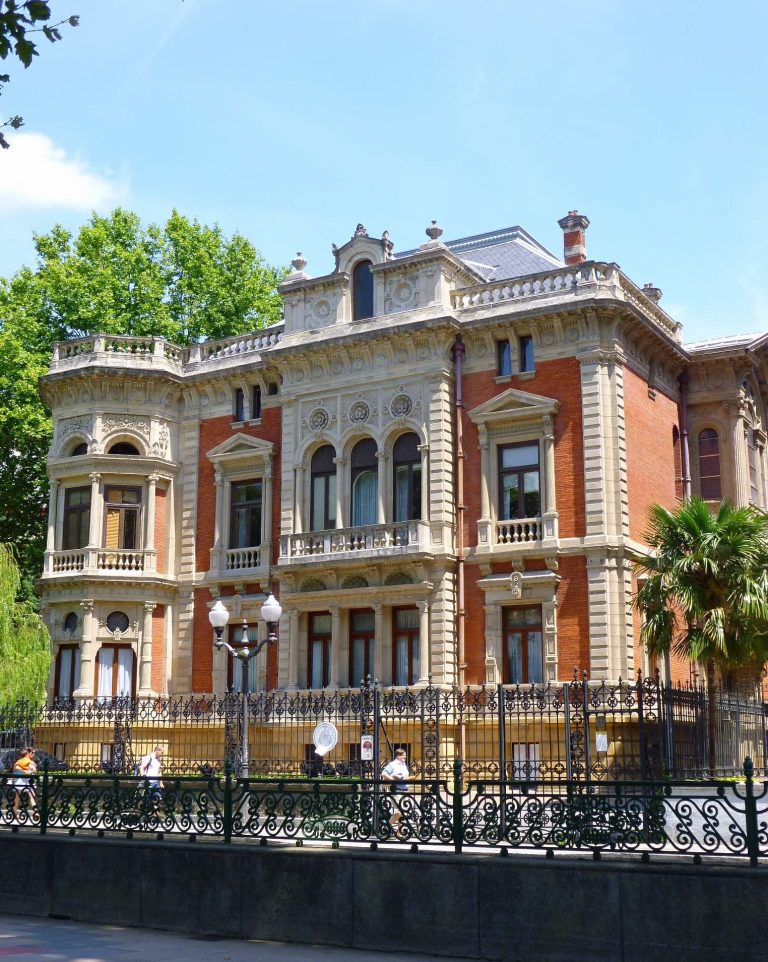
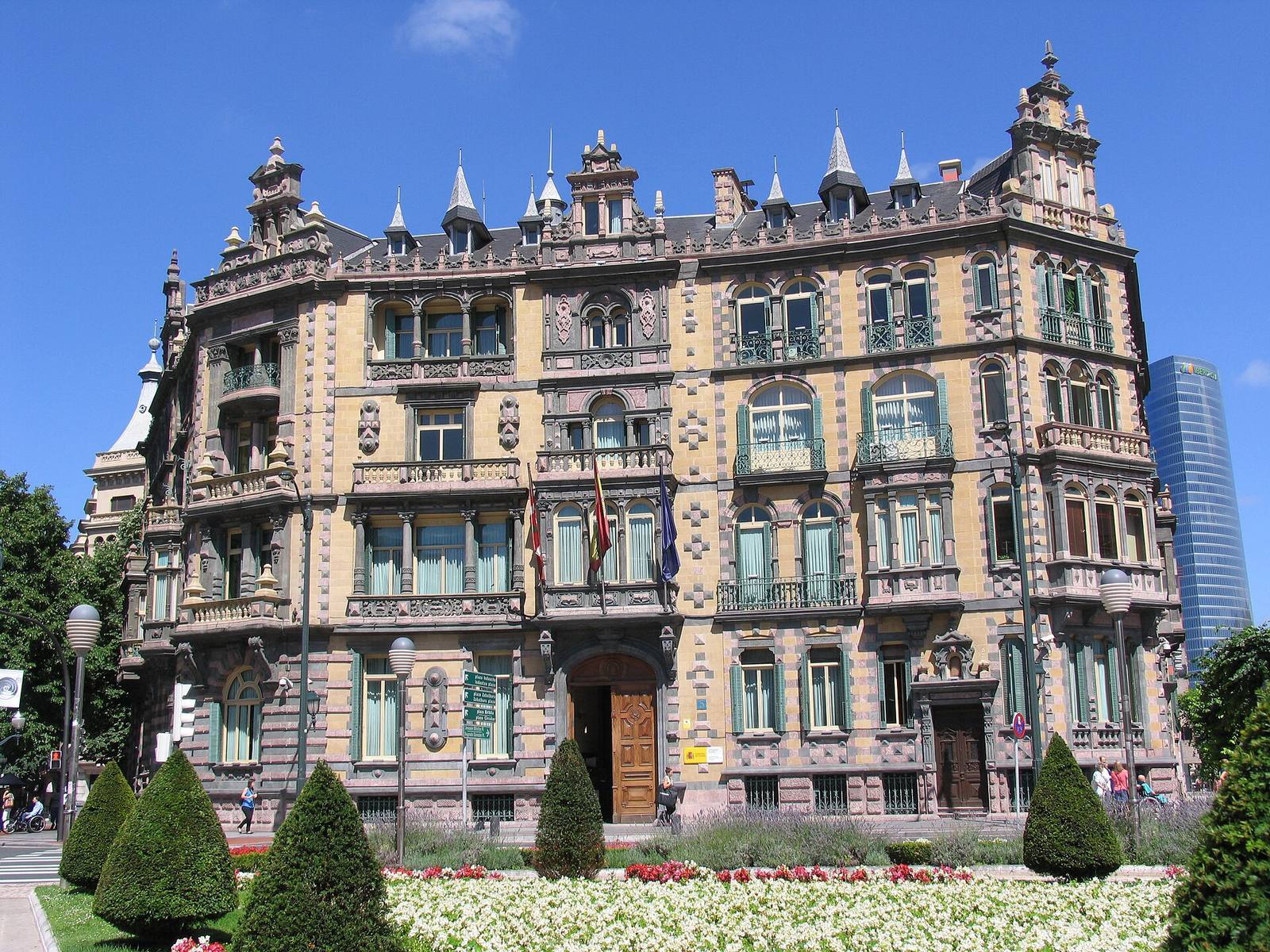
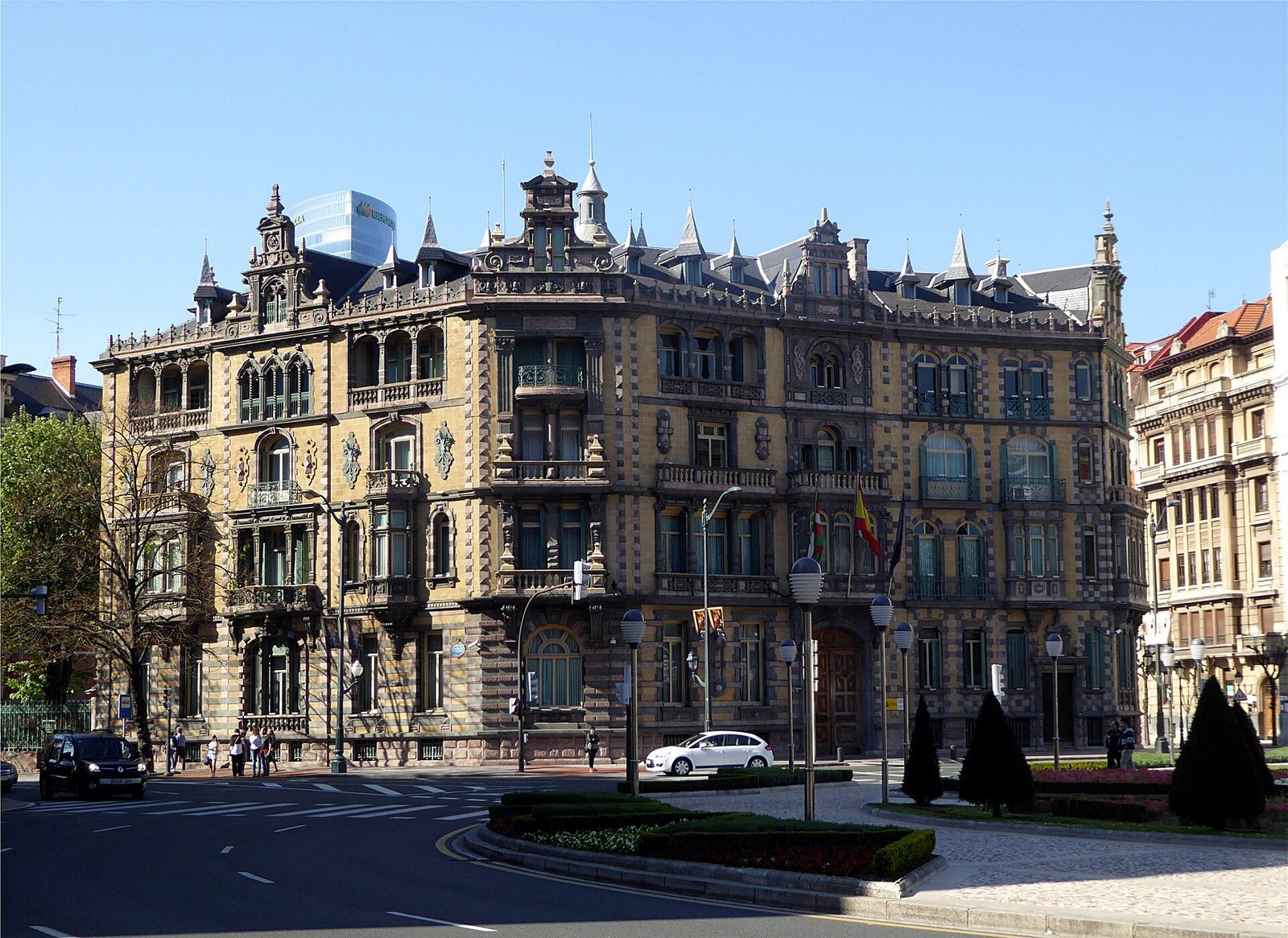
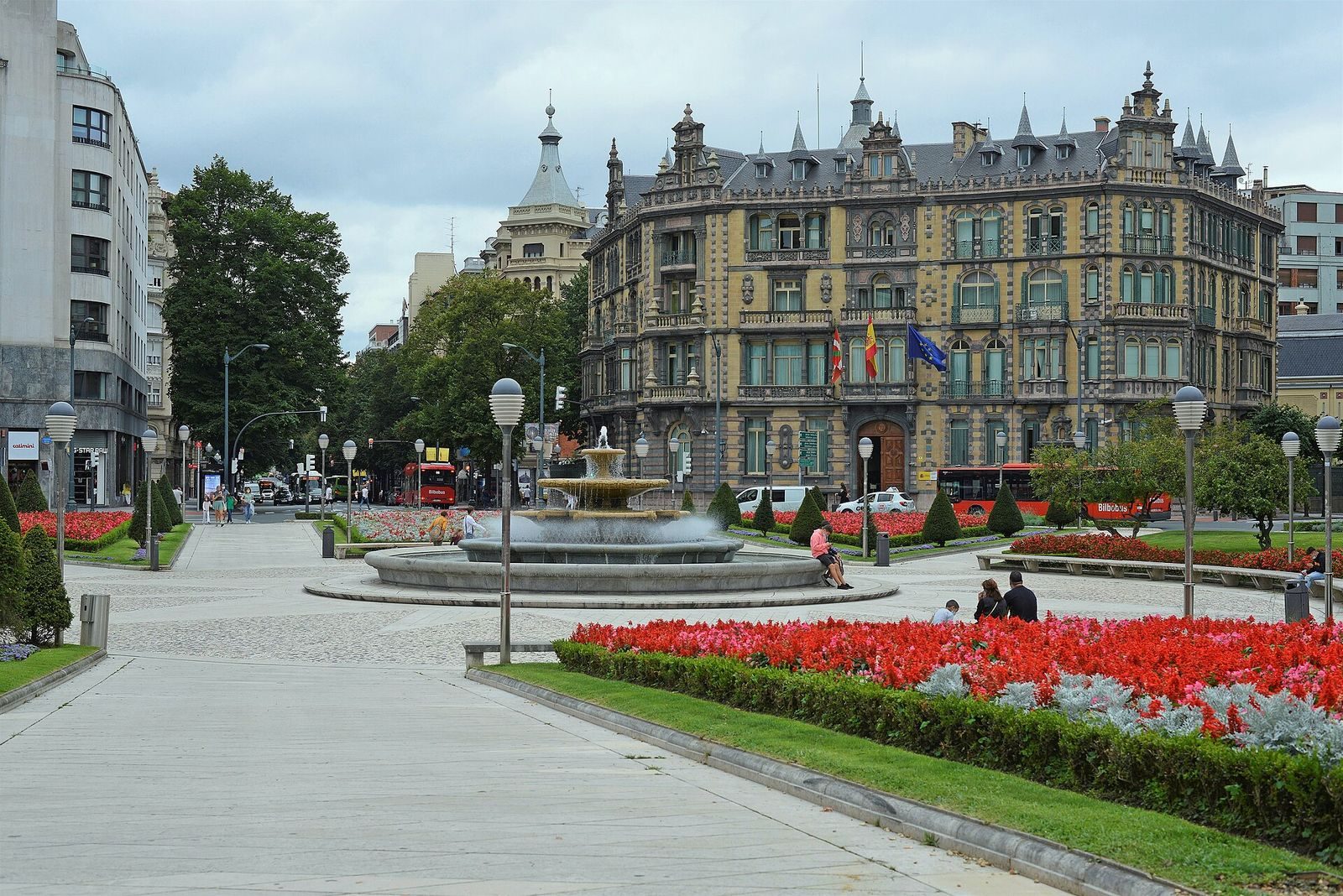
Chavarri Palace is a palace in Bilbao, Spain, built in 1888 for Basque entrepreneur Víctor Chávarri and his brother Benigno. Its eclectic design draws on Flemish Renaissance revival architecture. Belgian architect Paul Hankar designed the building, while Atanasio de Anduiza carried out its construction.
Government administration
In 1943, the palace became the seat of the Civil Government of Biscay, a provincial office of Spain’s central government. Architect Eugenio María de Aginaga oversaw major alterations from 1943 to 1947 to adapt it for this function. The building now houses the Subdelegation of the Spanish Government in Biscay, the provincial office that succeeded the Civil Government. In 1995, the palace was declared an Asset of Cultural Interest, a formal Spanish designation for protected cultural heritage.
Remains
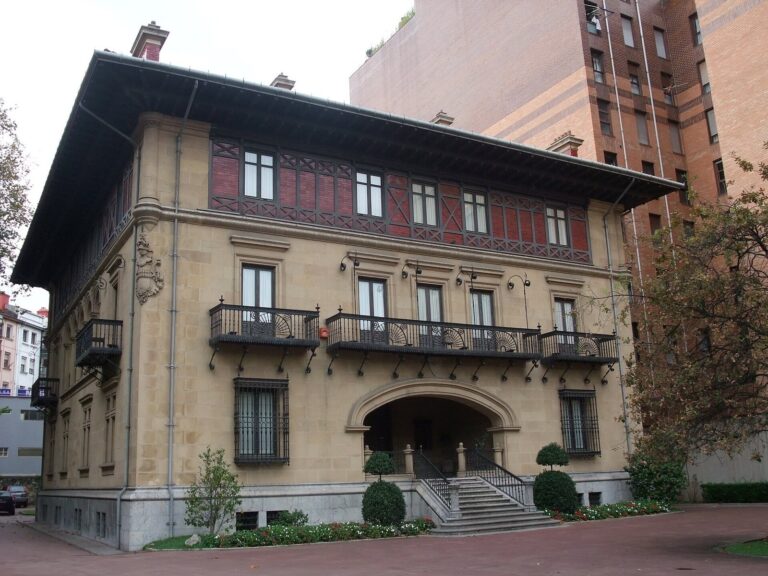
The palace stands in central Bilbao’s Ensanche, a planned urban expansion district. It occupies a chamfered corner beside the La Aurora building. Its principal façade faces Plaza Elíptica, also known as Plaza de Moyúa, and continues along Gran Vía and Elcano Street. The building has a base, a ground floor, three upper floors and a mansard storey beneath a roof whose steep lower slope creates usable space. Its exterior is faced with multicoloured, finely dressed stone blocks, with stucco decoration and prominent wrought-iron motifs.
The principal entrance has a segmental arch, a shallow arch with a curve of less than a semicircle, and was opened when the building’s function changed. A second entrance, topped by a horizontal beam, is positioned on the right-hand axis of the angled façade. Numerous windows, bay windows and balconies are arranged asymmetrically across the three upper floors. Their openings vary between horizontal tops and rounded arches; balconies have either stone balustrades or iron parapets, and the mansard storey has dormer windows of differing forms. Inside, some salons were decorated by painter José Echenagusia.