Château du Fou: A Late-Fifteenth-Century Château in Vouneuil-sur-Vienne


Site at a Glance
- Rating
- 4.2
- Popularity
- Very Low
- Country
- France
- Primary era
- Medieval
- Eras represented
- Medieval
- Civilizations
- French
- Site type
- Military
- Remains
- Castle
On this page7 sections
History
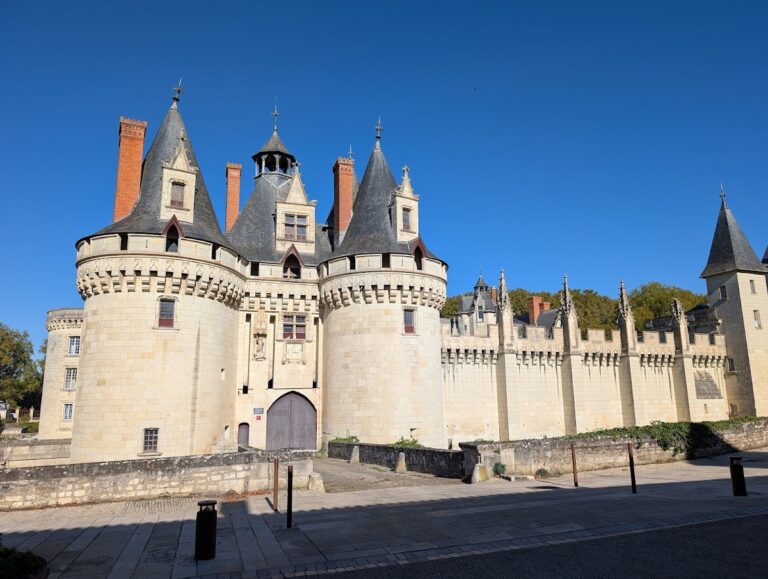
Château du Fou is a late-fifteenth-century château in Vouneuil-sur-Vienne, France, built by Yves du Fou, a seneschal of Poitou, the historic region of west-central France. As a senior official who could exercise administrative, judicial, and military authority for a territorial ruler, Yves du Fou established the castle during a period when noble residences also expressed local authority.
Royal Meeting and Noble Ownership
In 1539, the château hosted a meeting between François I, king of France from 1515 to 1547, and Charles V, the Habsburg ruler who was Holy Roman Emperor and controlled a vast European and imperial realm. The encounter placed Château du Fou within the political history of sixteenth-century France and Europe.
During the seventeenth and eighteenth centuries, the lordship of Fou belonged to the Tiercelin d’Appelvoisin family, marquesses of La Roche du Maine, at Prinçay. In 1795, Charlotte Félicité Elisabeth Tiercelin d’Appelvoisin de La Roche du Maine married François-Gabriel-Thibault de La Brousse, marquis of Verteillac and baron of La Tour-Blanche. Through this marriage, Château du Fou passed into his possession. He died at the château on 26 October 1854.
Sale, Wartime Damage, and Protection
The castle was sold in 1855 and came into the ownership of the La Borie de Campagne family from the late nineteenth century through the twentieth century. During the Second World War, British bombers attacked Château du Fou on 2 August 1944 in an attempt to drive out a German general occupying it with his staff. The south and north wings suffered particularly heavy damage. Some German soldiers who were killed or wounded were buried beneath the castle, while the general escaped by plane the following morning. The damaged parts were later restored.
The postern, moat, towers, stair turret, staircase, and vault were classified as historic monuments by decree on 6 February 1953. In France, classification as a monument historique is a strong form of legal heritage protection. The remainder of the château, including its undeveloped areas, was registered in the Supplementary Inventory of Historic Monuments by decree on 9 November 2010. The property is privately owned.
Remains
The surviving château fabric is organized around defensive and circulation features. It includes the moat, the remains of the entrance postern, two towers, and a stair turret with its staircase and vault. These elements form the specifically protected historic fabric, while the rest of the château and its undeveloped areas have separate heritage protection.
Entrance and Defensive Features
Moat and Postern
The moat and the remains of the entrance postern belong to the château’s defensive approach. The postern is associated with two towers, which survive as part of the entrance complex. Together, these remains define the castle’s fortified threshold and preserve the principal elements of its protected entrance fabric.
Stair Turret and Vault
The stair turret, staircase, and vault form the surviving vertical circulation feature identified within the château. Their inclusion in the protected historic fabric preserves both the turret and the enclosed construction associated with movement through the building.
Nearby sites