Miribel Castle: A Fortified Seigneurial Residence in France
Site at a Glance
- Popularity
- Medium
- Country
- France
- Primary era
- Medieval
- Eras represented
- Medieval
- Civilizations
- Holy Roman Empire
- Site type
- Military
- Remains
- Castle
On this page6 sections
History
Miribel Castle, at Mas Rillier in the commune of Miribel, Ain, France, was a small fortified residence first attested in the eleventh century. It served as the seat of Miribel’s lordship, which later became a barony and then a marquisate. A Roman military post may have stood nearby, but this possibility remains unconfirmed.
Early lords and the house of Beaujeu
In the eleventh and twelfth centuries, Miribel meant the castle alone. The settlement below was then called Puncto Bovis, and the name Miribel later spread to the inhabited area of the Rhône plain. The castle first belonged to lords who bore its name. In 1097, Gui de Miribel witnessed a donation by Count Humbert II of Savoy to the priory of Bourget; the deed identified Gui as a man from the Lyonnais. During the twelfth century, the counts of Mâcon and Chalon held the lordship, probably through marriage.
Around 1180, Miribel passed to the house of Bâgé after a daughter of Count Guillaume married Ulric de Bâgé, lord of Bresse. Marguerite, daughter of Gui de Bâgé and granddaughter of Ulric, brought the lordship to Humbert V of Beaujeu as her dowry on 18 July 1218. In 1222, Humbert agreed with the abbot of Île-Barbe, a monastery near Lyon, on authority over the castle. Marguerite confirmed the arrangement in 1229 and recognized the castle as a fief of the abbey, meaning an estate held from a superior lord under obligations. After Humbert’s death in 1250, his son Guichard V succeeded him. In June 1253, Guichard granted Miribel’s inhabitants a charter of local rights and liberties.
Conflict and changing control in the fourteenth century
In 1308, Jean II, Dauphin of Viennois and ruler of the Dauphiné, a historical principality in southeastern France, besieged Miribel to punish Guichard VI of Beaujeu for supporting the count of Savoy in a war against him. A traitor opened the town gates. Guichard later recovered the town, but after his capture at the battle of Varey he accepted the Dauphin’s authority over Miribel and its territory in 1327, with a square tower and the small mound below it excepted. In May 1330, the Dauphin besieged the castle but was driven off by Savoyard forces.
In 1348, Édouard I of Beaujeu refused to accept the Dauphin’s authority, prompting a declaration of war. A large army reached Miribel in early April. The town fell to an assault on 6 April and was pillaged, while the castle resisted until its surrender on 22 April. On 12 May at Crémieu, the Dauphin promised never to surrender Miribel or detach it from the Dauphiné. He sealed the pledge symbolically by “marrying” Miribel with the ring of the bishop of Grenoble. Under the Treaty of Paris on 5 January 1354, King John and his eldest son Charles, the new Dauphin, ceded Miribel to Count Amadeus VI of Savoy. Fear of an attack led to the construction of eight projecting timber defenses in 1363.
Savoyard and French rule
The counts and later dukes of Savoy held Miribel until French troops took it on 25 March 1536, during Francis I’s conquest of Bresse. They occupied it until the Treaty of Cambrai. After its return, Duke Emmanuel-Philibert pledged Miribel to Jean-Louis de Costa, count of Châtillon and Pont-de-Veyle, who held it as a barony for several years. On 21 October 1579, Emmanuel-Philibert made Miribel a marquisate and transferred it, in exchange for the county of Tende, to Henriette of Savoy, marquise of Villars.
On 9 March 1594, after several days of siege, Miribel surrendered to troops of Henry IV commanded by Alphonse d’Ornano. Artillery severely damaged the castle, which was dismantled after the surrender. In August 1600, the royal army entered Valbonne again and partly destroyed it.
The castellany and later ownership
The castle also served as the administrative center of the castellany, a territory governed from a castle, also called the mandement of Miribel. Under Savoyard rule, the territory belonged to the bailiwick of Valbonne, a larger administrative district whose chief town was Montluel, eight kilometres east. The same arrangement continued under the French crown. The castellany lay between the Dauphiné to the south, Lyon to the west, and the lands of Beaujeu and Thoire-Villars to the north. It covered roughly the area of the former canton of Miribel, from the Rhône’s banks to the Côtière hills. Under French administration, its parishes included Caluire, Neyron, Rillieux, Sathonay, Thil in whole or in part, Tramoyes, and Miribel. An appointed, removable officer called the castellan administered the territory, collected taxes, and supervised upkeep of the castle.
Henriette’s daughter Gabrielle des Prés brought the marquisate as her dowry to Gaspard de Saulx, viscount of Tavannes, on 28 August 1601. Their descendants retained it until Henri-Charles de Saulx sold it on 4 July 1738 to Marguerite Fayard, widow of Charles-Henri-Alphonse Chapuis and mother of Louis Chapuis de Margnolas. Louis sold it in 1763 to Jean-Marie de la Font-de-Juis, who transferred it on 4 July 1767 to Jean-Baptiste-Côme-Catherine-Damien de Pure du Roquet, the last marquis of Miribel. In 1938, the castle was almost entirely demolished to make room for the Virgin of Mas Rillier monument.
Remains
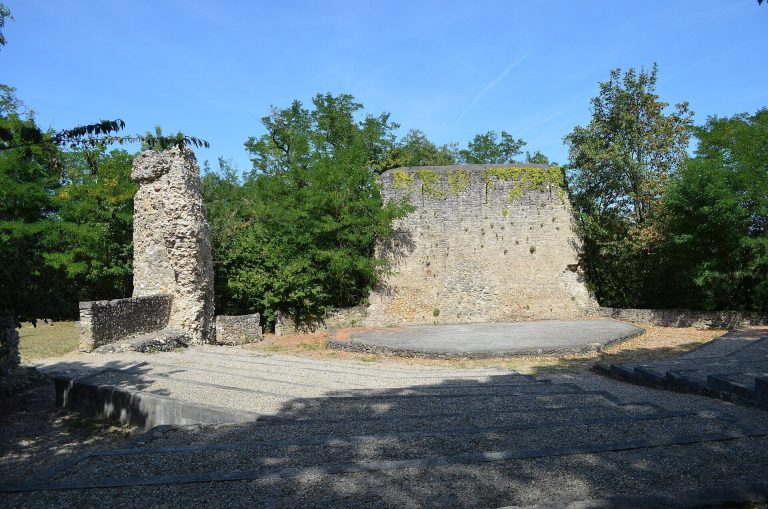
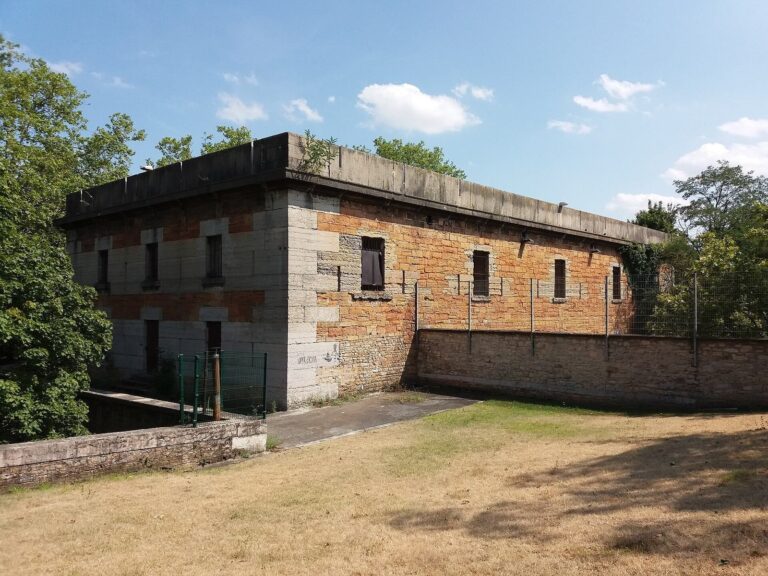
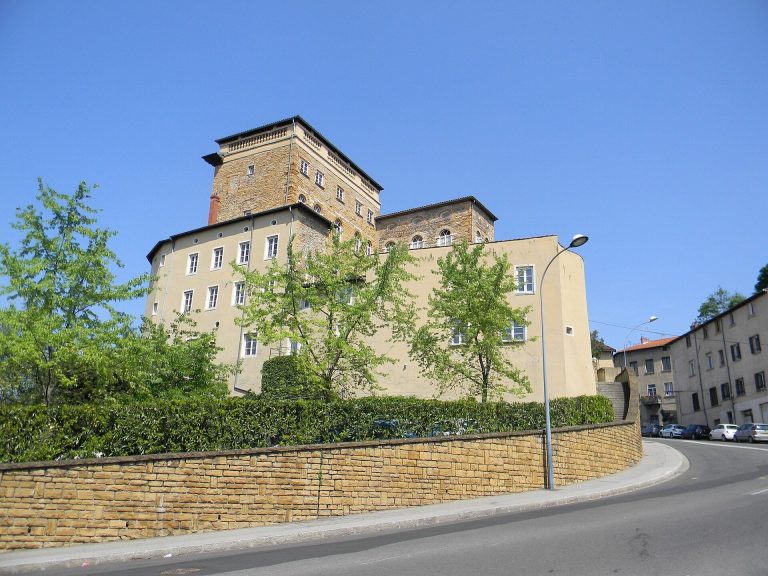
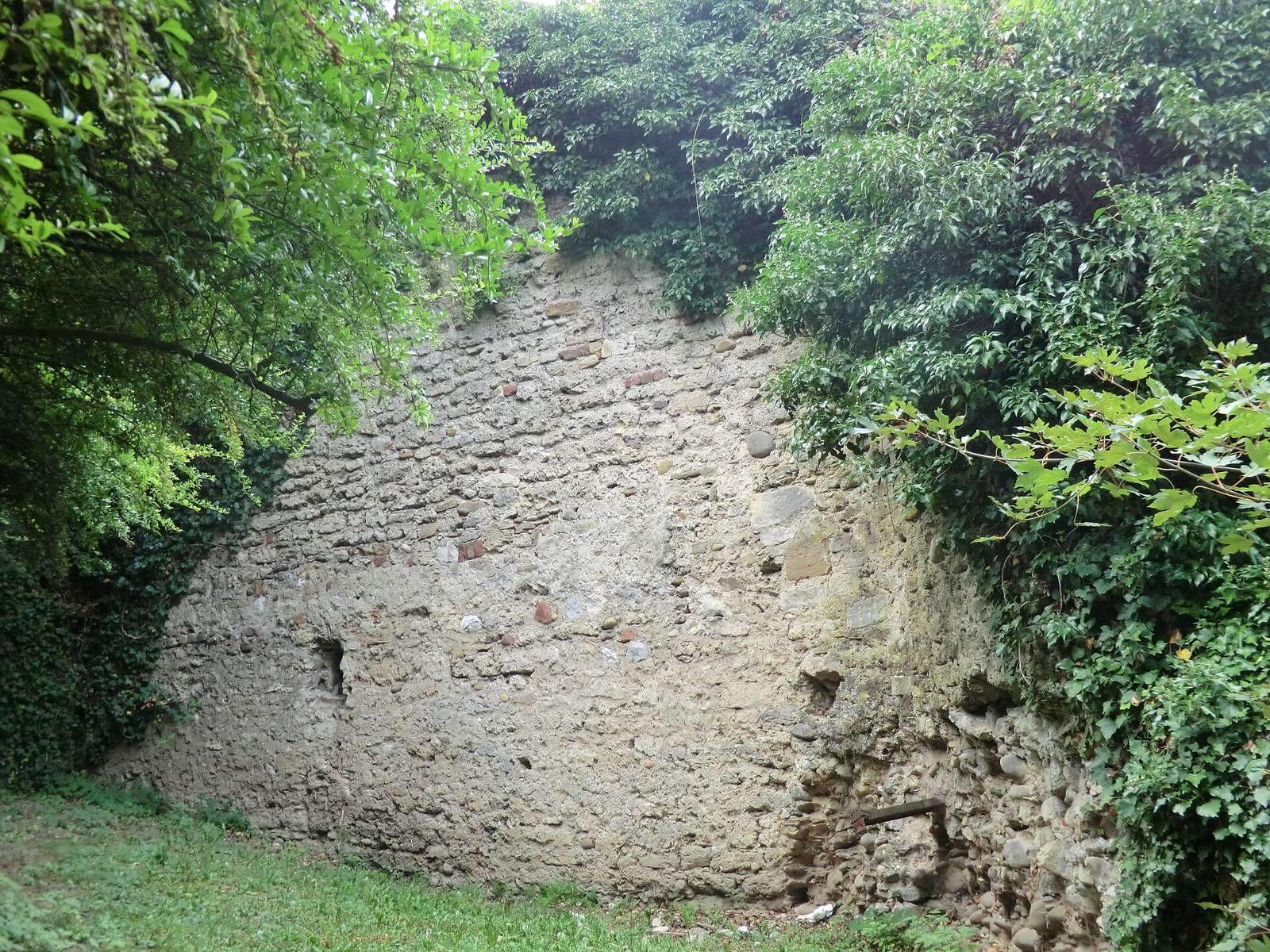
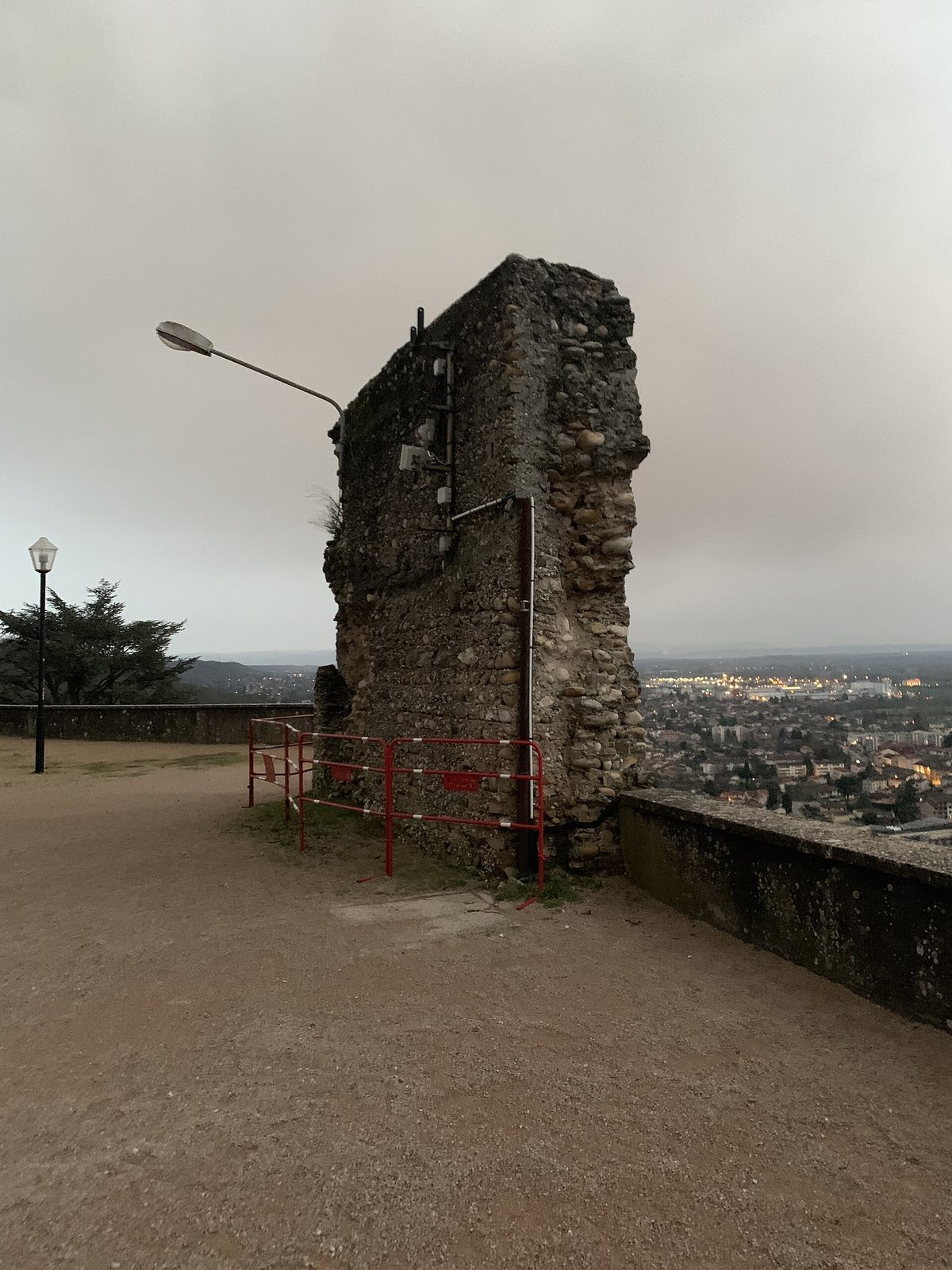
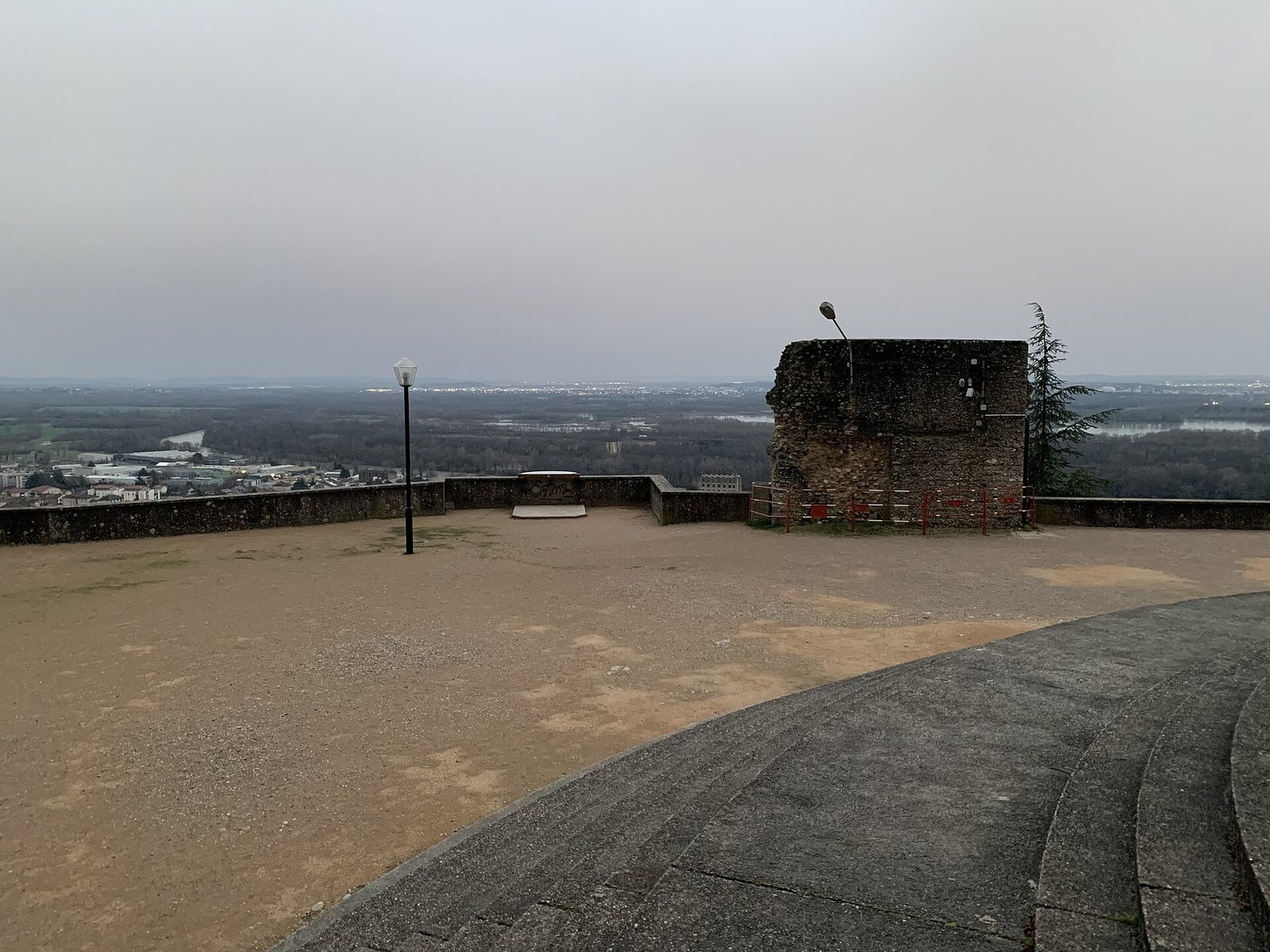
The castle stood on the Côtière slope, about 300 metres above sea level, on a hill overlooking the Rhône plain. Its surviving fabric consists of fragments of the walls that enclosed the castle and a severely damaged round tower, on private land. A square tower stood on a small artificial mound called a poype, a raised mound associated with a fortified site. The mound is probably the feature now known as Torche à Guillet. In 1300, the lord of Beaujeu held an old tower of Miribel from the abbey of Île-Barbe; this may have been the square tower later excepted from the transfer of Miribel’s territory.