Château de Lissieu: An 11th-Century Castle in France
Site at a Glance
- Popularity
- Low
- Country
- France
- Primary era
- Medieval
- Eras represented
- Medieval
- Civilizations
- Unclassified
- Site type
- Military
- Remains
- Castle
On this page10 sections
History
An 11th-century foundation and competing claims
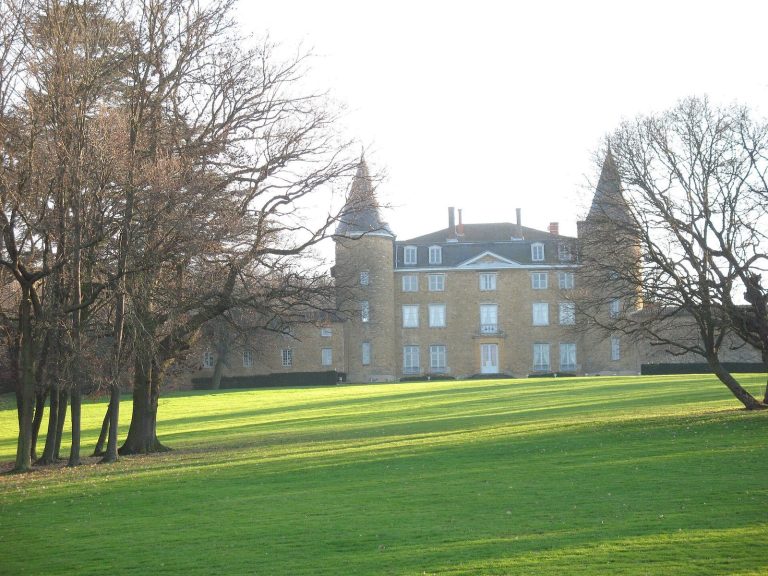
Château de Lissieu is an 11th-century castle in the village center of Lissieu, northwest of Lyon, France, built by a lord of Beaujeu. Its lordship became a point of conflict between the lords of Beaujeu and the archbishops of Lyon. Most of the castle’s construction dates to the 11th century.
By the 12th century, the castle belonged to the lords of Beaujeu, while the Church of Lyon also claimed the land. In 1132, Pope Innocent II ordered the demolition of both Lissieu and Illié castles to end the continuing dispute. The order had not been carried out by 1143.
From Beaujeu knights to the archbishop of Lyon
During the 13th century, knights in feudal service to the lords of Beaujeu held the castle and took the name of Lissieu. In 1298, Guichard VI d’Albon-Forez, lord of Beaujeu, granted the lordship to Henri de Villars, archbishop of Lyon, the senior bishop of the area’s church district.
Later holders recognized the archbishop’s authority over their tenure. Guillaume de Gleteins held the castle in 1326, followed by Henri Lambert in 1359. In 1379, a lord Lambert was ordered by the king to make himself available to the castle official at Chazay for service against English troops.
The Lambert and d’Arces families
Ennemond Lambert, lord of Lissieu, died in 1450. His family retained the land until about the middle of the 16th century. Louise Lambert, the last of the family, brought the lordship to the d’Arces family as her dowry.
Antoine d’Arces, lord of Lissieu and Bâstie, was known as the “White Knight.” He had served King James IV of Scotland as lieutenant-general of the kingdom. In September 1517, a Scottish gentleman, David Hume, murdered him, and Antoine’s son Jean II inherited his position. Around 1544, Jean II married Jeanne de Maugiron. He held Lissieu and Condrieu in Lyonnais and commanded the Livarot regiment during the civil wars. He was also a knight of the king’s order, a gentleman of the royal chamber, and a marshal of the camp, a senior rank in the French army.
Religious conflict and later owners
In 1591, a band of Huguenots, French Protestants of the Reformed tradition, attacked the fortress and blew up its main gate. Hugues Athiaud, lord of Lissieu, was a doctor of law and a strong supporter of the Catholic League, a Catholic political and military association active during the French Wars of Religion. Troops of the Latour-Corcenay company captured him, but he escaped on All Saints’ Day that year. He died in 1593, leaving his estate to his niece, Marie Athiaud.
Through Marie’s marriage to Pierre III de Boissat around 1593, the lordship passed to the Boissat family, and Pierre became lord of Lissieu. Their son André Athiaud de Boissat (1610–1664), a knight and marshal of the king’s camps and armies, later succeeded them. He died unmarried.
18th-century ownership and modern preservation
In 1771, the lordship belonged to Anne Nicolas Mermier, who had bought it from Louis Tolozan de Monfort. Tolozan, a knight, later became sub-governor of Lyon in 1785. Considering the residence too dilapidated, Mermier ceded it to Lambert in 1780. Lambert held the lordship until the French Revolution and transferred it to the Château de la Roue at Chalamont.
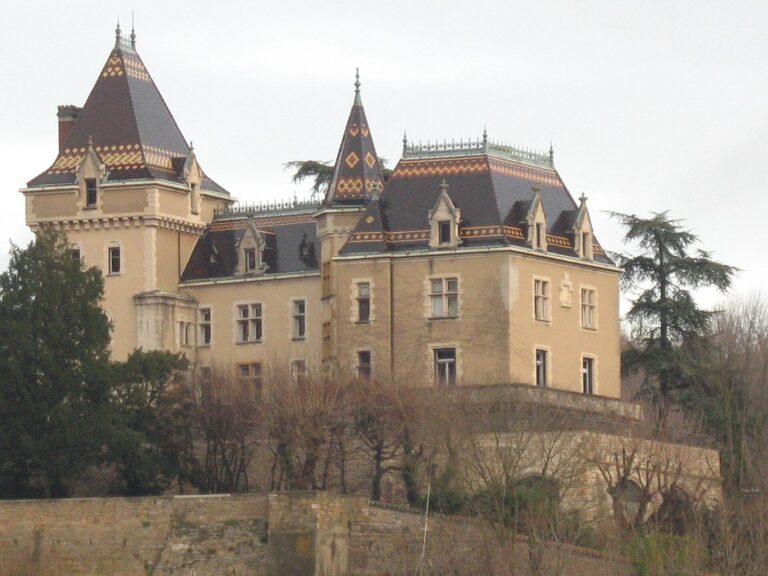
Alterations disfigured the castle at the end of the 16th century and again during the 19th century, when restoration work also took place. The fortified gate was listed as a historic monument on 28 April 1936, followed by the large tower on 8 May. The castle is privately owned.
Remains
Surviving medieval fabric
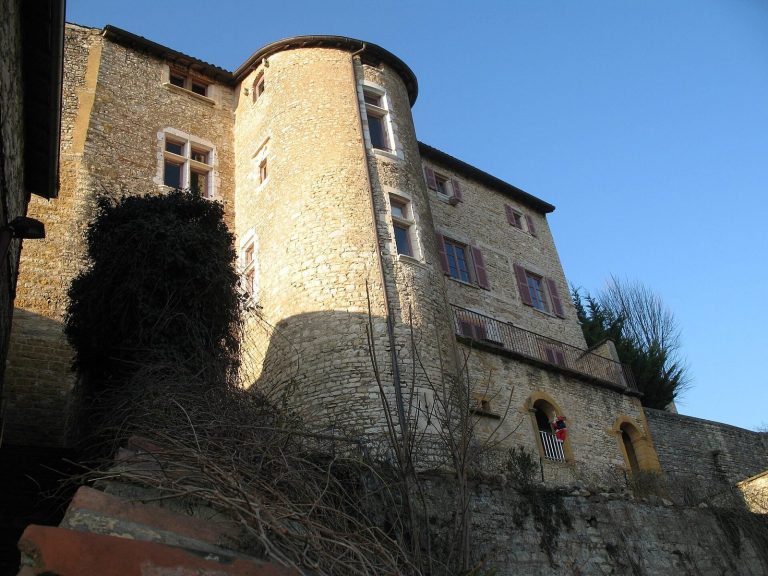
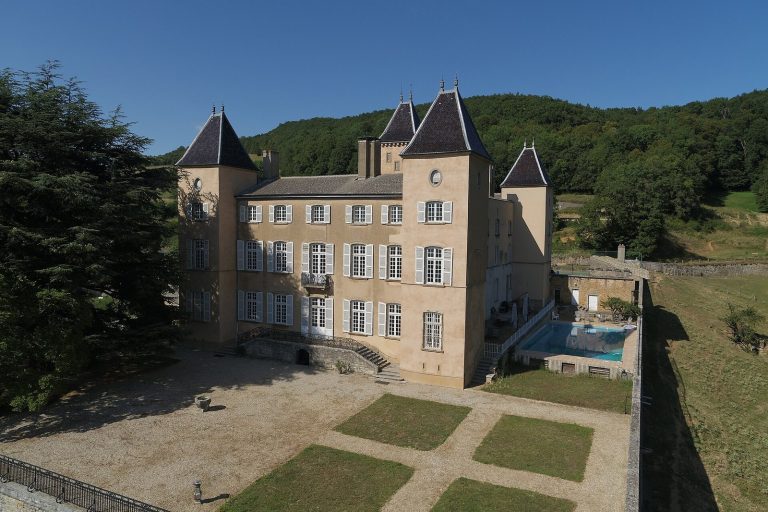
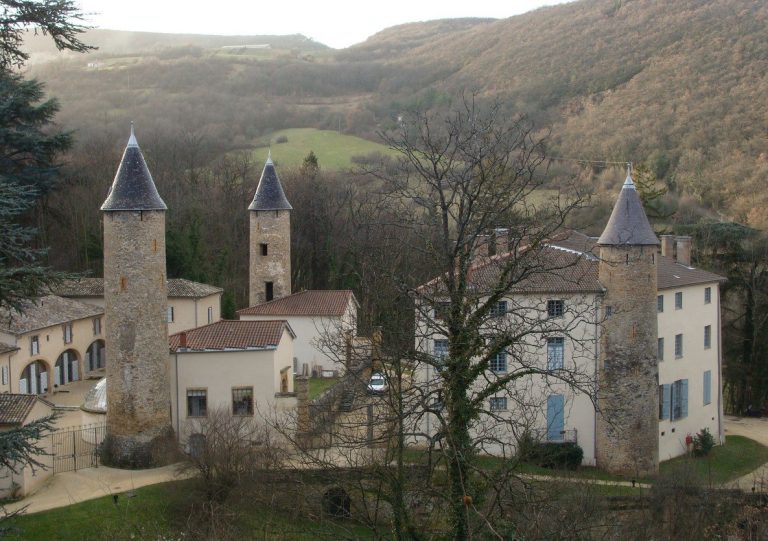
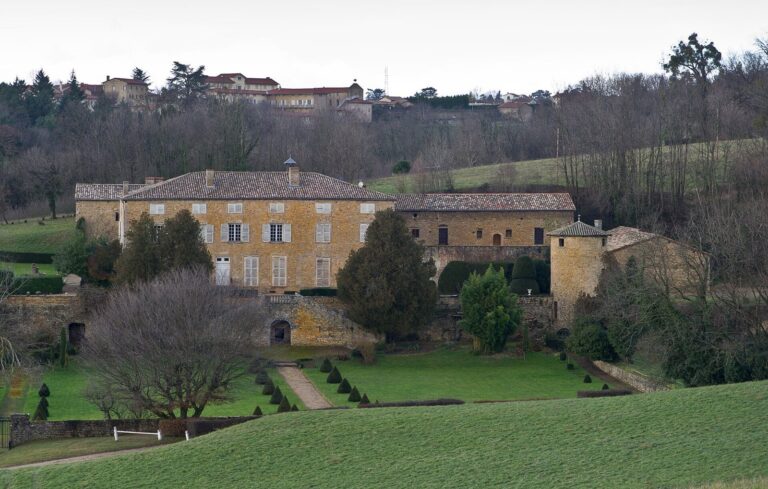
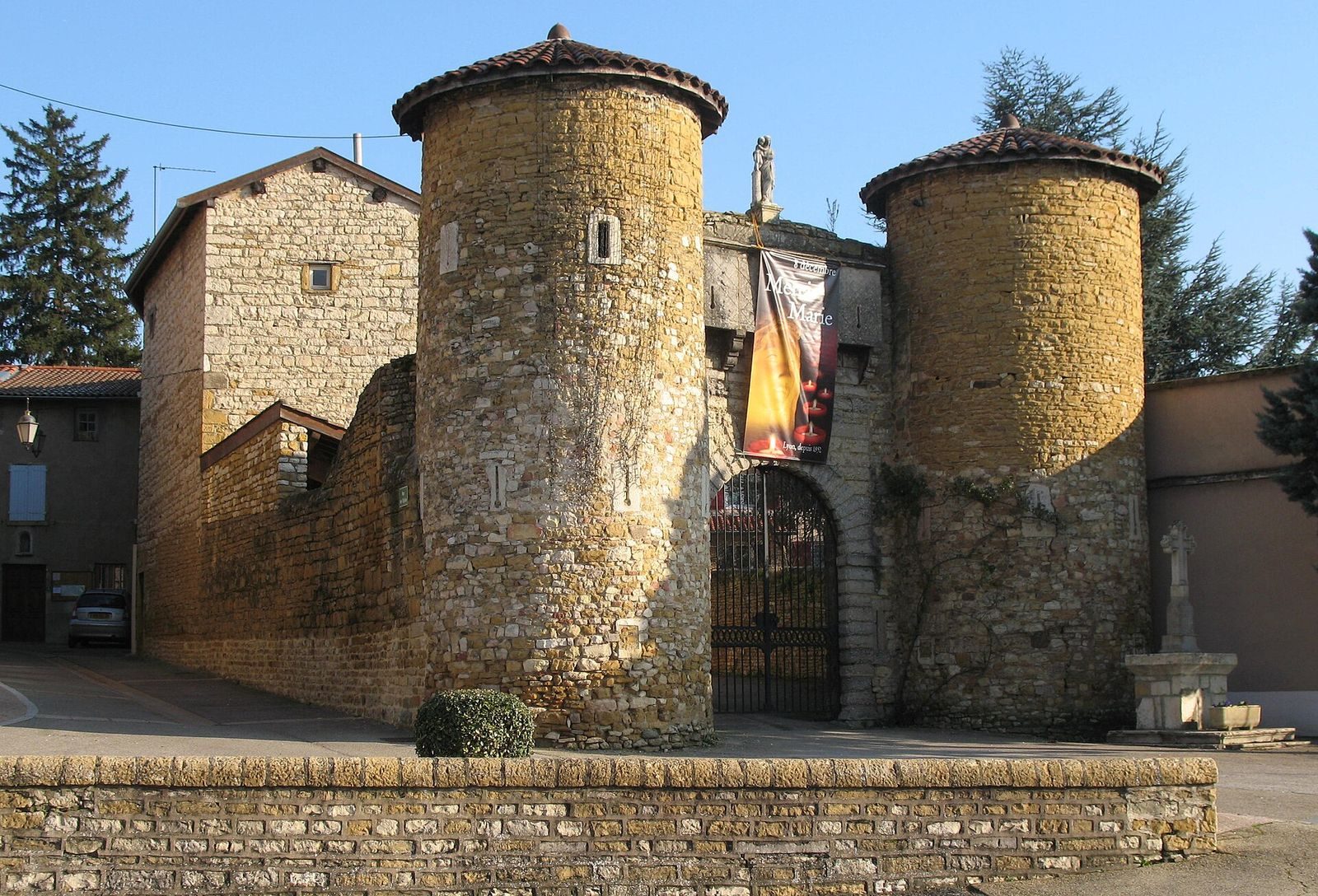
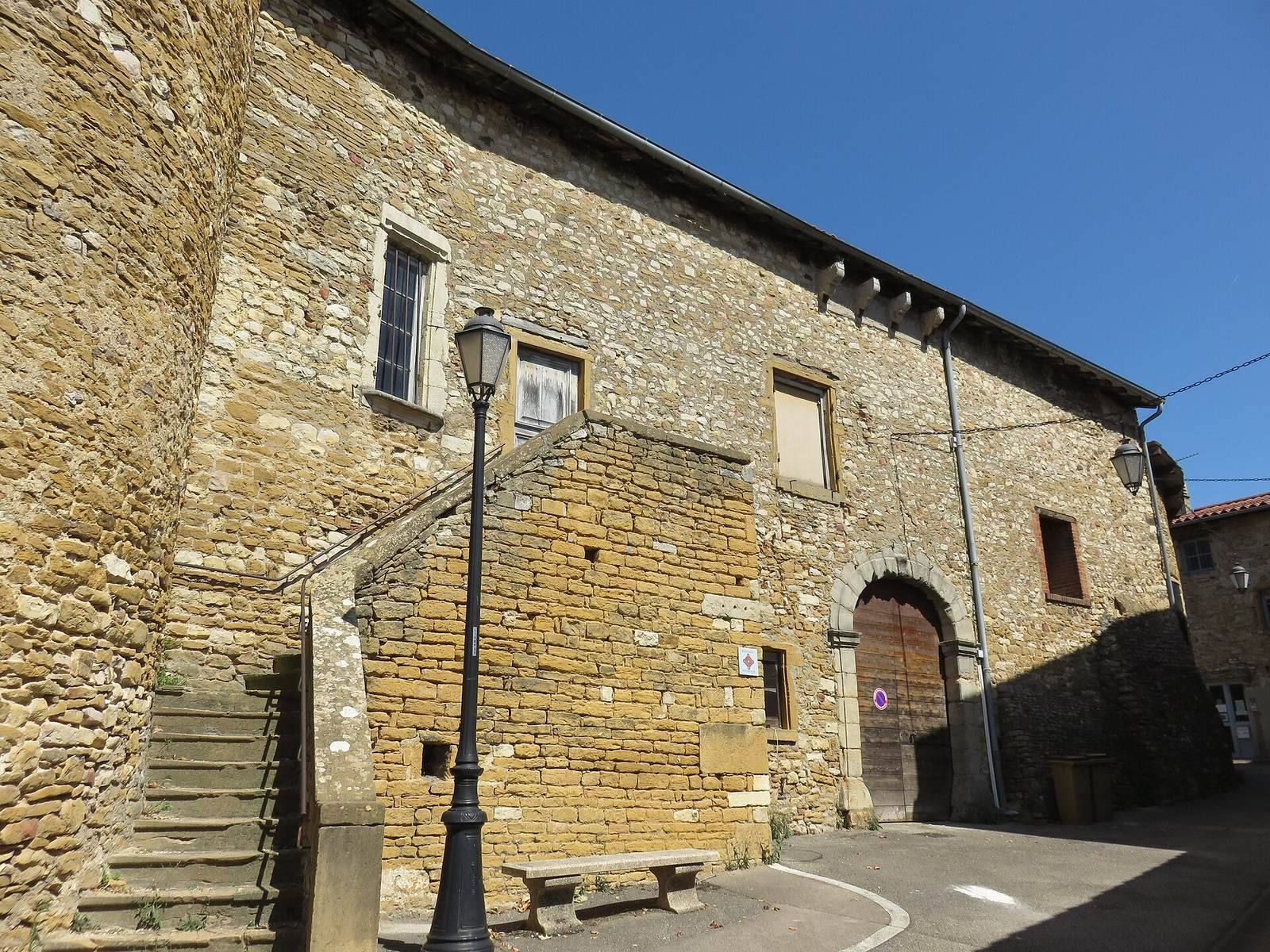
The remains include defensive and residential elements built from local stone. The stone has a yellow tone with a slight orange cast, now discolored by age. Three towers remain visible.
Enclosure and principal buildings
Parts of a tower-flanked enclosure survive alongside a cylindrical keep, the castle’s principal fortified tower, and a residential building.
Gateway
The gateway is framed by two round towers and topped by a projecting defense with openings through which defenders could observe or attack the ground below.