Château de la Provôterie: A Feudal Estate near Ahuillé, France


Site at a Glance
- Rating
- 5
- Popularity
- Very Low
- Country
- France
- Primary era
- Unclassified
- External website
- Open
- Eras represented
- Unclassified
- Civilizations
- Unclassified
- Site type
- Domestic
- Remains
- Castle
On this page6 sections
History
Château de la Provôterie is a historic estate near Ahuillé in France, consisting of a castle and an associated farm. The land was a fief dependent on Laval, meaning that it was held under feudal obligations to the county and lordship of Laval. Its lords exercised high, middle, and low justice, the three principal levels of seigneurial judicial authority under the ancien régime, and possessed a burial place in the parish church. Their feudal duty included presenting a chaplet of roses at the Feast of the Consecration.
The estate in the fifteenth and sixteenth centuries
The estate appears under several forms of its name. It was called Prévosterie in 1444, Provousterie in 1508, the seigneurial estate of Provosterie in 1634, and later Provoterie and Prévôterie. The land gave its name to the modern château. Robert Le Maçon, Chancellor of France under Charles VII during the later stages of the Hundred Years’ War and a protector of Joan of Arc, held the Provôterie in 1444 and 1460. He had no children from his marriages to Jeanne Cochon and Jeanne de Mortemer de Coué, so his nephews Elie d’Allé and Pierre Hocquedé inherited the estate.
Guy de la Vairie was lord in 1478. His widow, Guillemette de Bréon, left the fabric of the parish church an annual rent of 12 livres in 1522, providing communion bread. René de la Bahoullière later held the estate, and his widow, Renée or Louise Mallet, was buried in the seigneurial chapel in 1572.
The estate was connected with a violent event in Ahuillé in 1575. Charles de la Bahoullière, husband of Catherine de Launay of the Compagnère family, was killed by several sergeants in the choir of Ahuillé church on Sunday, 20 August. He received a solemn burial at the Cordeliers convent in Laval, whose friars belonged to the Franciscan order. His widow founded a Sunday Mass of the Blessed Sacrament in 1618 and died in 1622.
Transfers of ownership in the seventeenth century
Jean Gougeon, lord of Piquaigne and husband of Scholastique Frican, had three children baptized at Ahuillé: Scholastique in 1624, Renée in 1627, and Jean in 1628. In 1634, Andrée and Ambroise Gougeon, possibly Jean Gougeon’s sisters, were responsible for redeeming the Provôterie in connection with two marriages of their mother, Jeanne de la Bahoullière. One marriage was to François de Fontenailles, lord of Mesnil-Barré, and the other to Étienne Gougeon.
Robert Le Clerc, husband of Michelle Marest, obtained the estate in 1635 through a feudal right of retraction ceded by the Count of Laval. Jean Le Clerc, husband of Renée Gemin, held it in 1660 and died in 1669. Renée Gemin was the daughter of a lieutenant of the waters and forests of Vitré. In 1671, René Cazet, husband of Jean Le Clerc’s sister Marie Le Clerc, was lord of the Provôterie.
Ownership and lordship in the eighteenth century
Louis Dauphin de Martineau acquired the seigneurial estate from René Desaunais of Mayenne in 1720. François de Magneux of Paris, a businessman, sold it to Pierre Hoisnard in 1728. Hoisnard was a guard in Monsieur’s company, and Abbé Angot attributed the sale to an action undertaken on behalf of the Duke de la Trémoïlle. Hoisnard’s brothers, sisters, and nephews inherited the property in 1755.
François Le Clerc de la Galorière, director of the County of Laval, inherited the estate through his wife from Pierre Hoisnard and held it from 1756. In 1760, he obtained the title of lord of the parish in exchange for his right of use in the Concise Forest. The parish lordship remained dependent on the County of Laval, under the same homage as the Provôterie estate and without affecting the precedence of the superior lord.
Revolutionary and post-Revolutionary associations
The estate’s history continued through the conflicts surrounding the French Revolution. The farmer Haulmay, who served with the Chouans, royalist insurgents who fought the French Republican government in western France during the Revolutionary and post-Revolutionary conflicts, was probably killed during the attack on the Ahuillé post. In 1792, N. Le Clerc de la Provôterie was captain of grenadiers in the 2nd Battalion of the 4th Infantry Regiment at Saint-Domingue.
On 21 June 1800, Pierre, a clandestine priest, lived at the Provôterie. He was denounced for holding a procession and ringing church bells, an episode that places the estate within the religious tensions of the years following the Revolution.
Remains
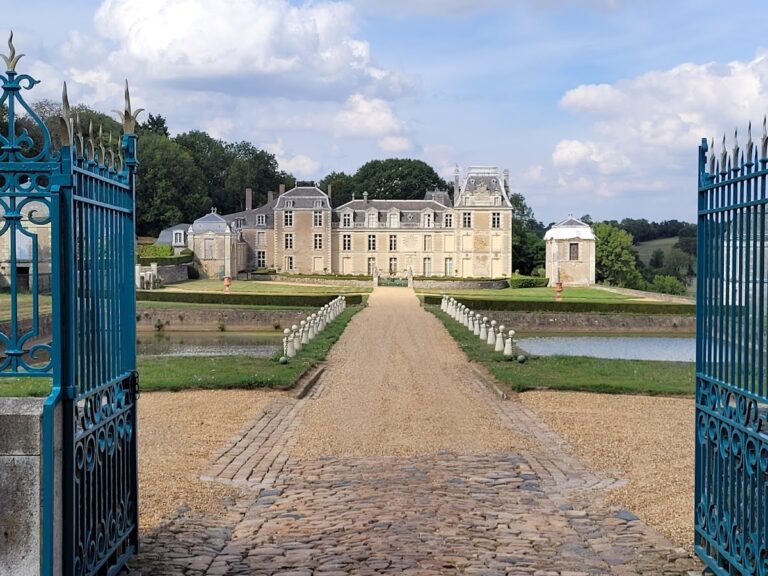
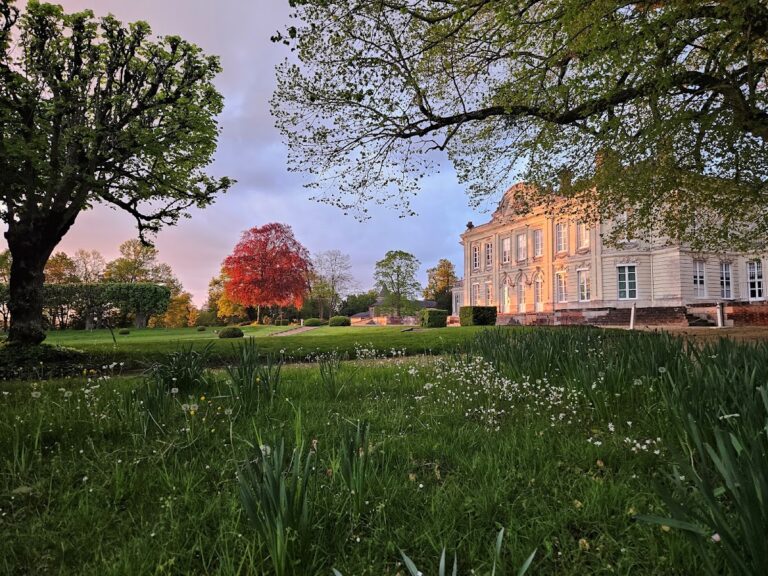
Château de la Provôterie lies northwest of Ahuillé in the Mayenne department. The surviving estate comprises the castle and a farm, and it is associated with a pond. Historical descriptions refer to the property as “Provoterie, castle and pond” and “Prévôterie, castle and pond.” A seigneurial chapel also belonged to the estate; it served as the burial place of Renée or Louise Mallet, widow of René de la Bahoullière, in 1572.