La Carelle Castle: A Medieval Hunting Pavilion in France
Site at a Glance
- Popularity
- Medium
- Country
- France
- Primary era
- Unclassified
- Eras represented
- Unclassified
- Civilizations
- Unclassified
- Site type
- Domestic
- Remains
- Castle
On this page9 sections
History
La Carelle Castle is an estate in Ouroux, in the northern Rhône department of France. In the Middle Ages it served as a hunting pavilion associated with the House of Beaujeu, a medieval noble family connected with the Beaujolais region.
Medieval and early modern ownership
In the 15th century, the Nagu family received the fief, land or rights held under feudal obligations, as a reward for service to the lords of Beaujeu. During the 16th century, the Nagu sold the castle to the Du Bost family, who later ceded most of their rights at La Carelle to the Church of Ouroux.
The Carrige family, merchants from Beaujeu, acquired the fief in the 17th century. In 1610, Jean-Marie Magnin, lord of Vertpré, married Marie Carrige, then known as the lady of La Carelle. A fire devastated the castle in 1639.
Property transfers in the eighteenth century
In 1717, Jean Magnin, lord of Pierreux and a squire, a French noble rank, married Marie Marguerite de la Roche Poncié. Following a legal proceeding in 1719, the property passed to her brother Joseph de la Roche, lord of Nully and also a squire. Joseph married Benoîte Bertucat in 1720.
Their second son, Claude Antoine (1723–1792), inherited La Carelle. He married Antoinette Targe in 1753 and added La Carelle to his family name. In 1790, their daughter and heir, Antoinette Françoise, married her cousin Jean Marie de La Roche, an officer born in 1754. Their son Antoine Louis Ferdinand (1791–1866) married Jeanne Claudine Marie Thérèse Collabaud in 1813; their son, Jean Joseph Sosthène, was born in 1816.
Nineteenth-century and later ownership
Charles Bourgeot (1825–1879), a banker in Villefranche who had married Étiennette Gerin in 1850, acquired the property in 1860. Their daughter and heir, Uranie Marie Antoinette Marguerite Bourgeot, married Lyon banker Antoine Riboud (1847–1923) in 1877.
The château later passed to Camille Riboud, brother of Léon Étienne Jules Riboud, a son of Antoine and Uranie. Camille married Miss Frachon and had many children. Ownership then passed to Camille’s son Jean, his grandson Christophe, and Christophe’s great-grandchildren after Christophe died accidentally in August 1987. The château is private property.
Remains
Layout and buildings
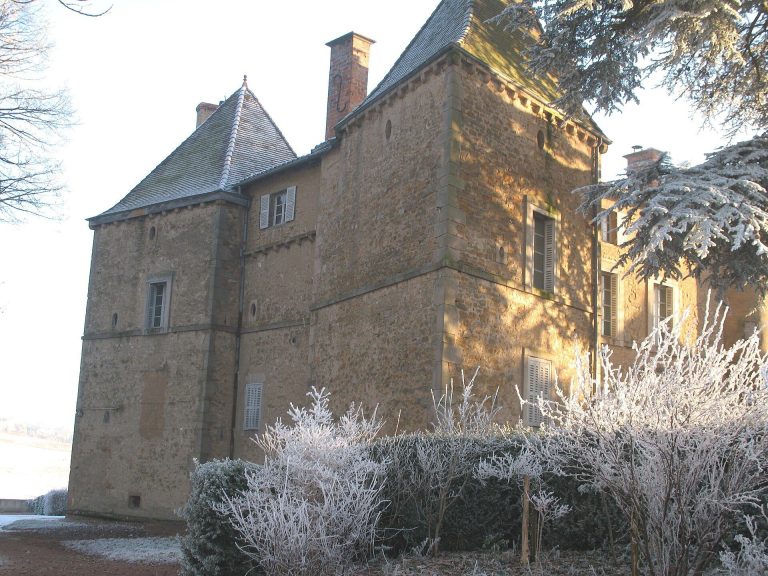
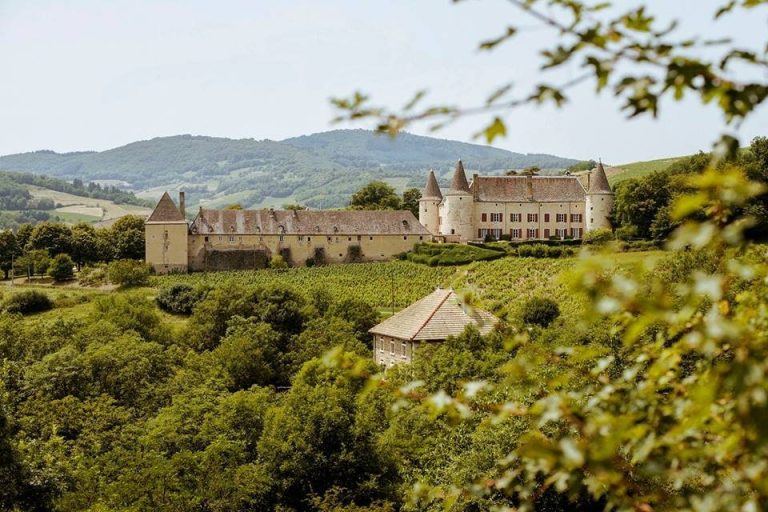
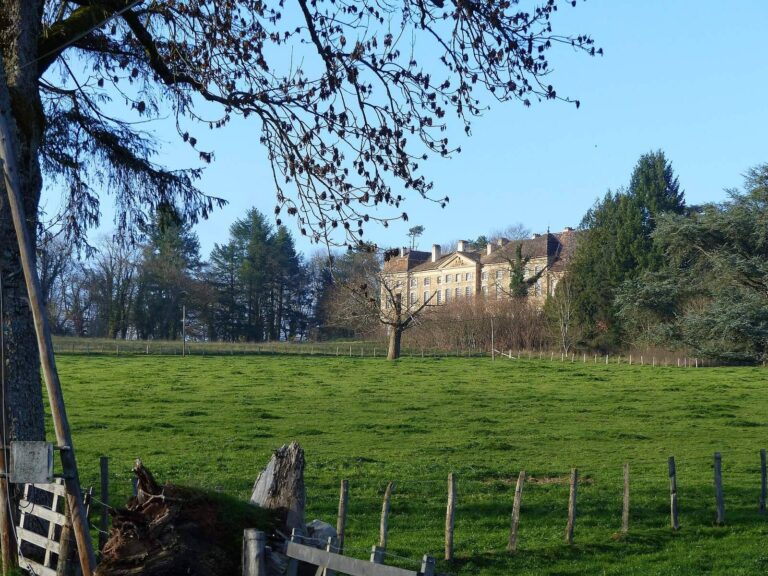
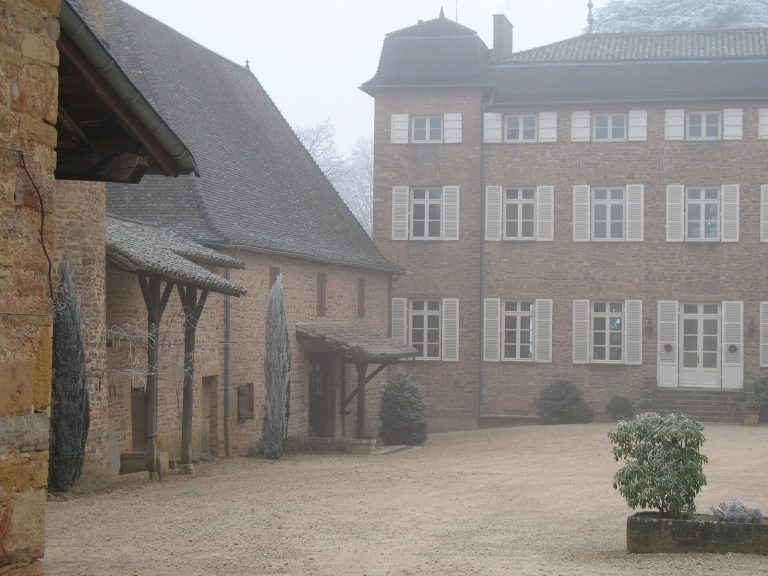
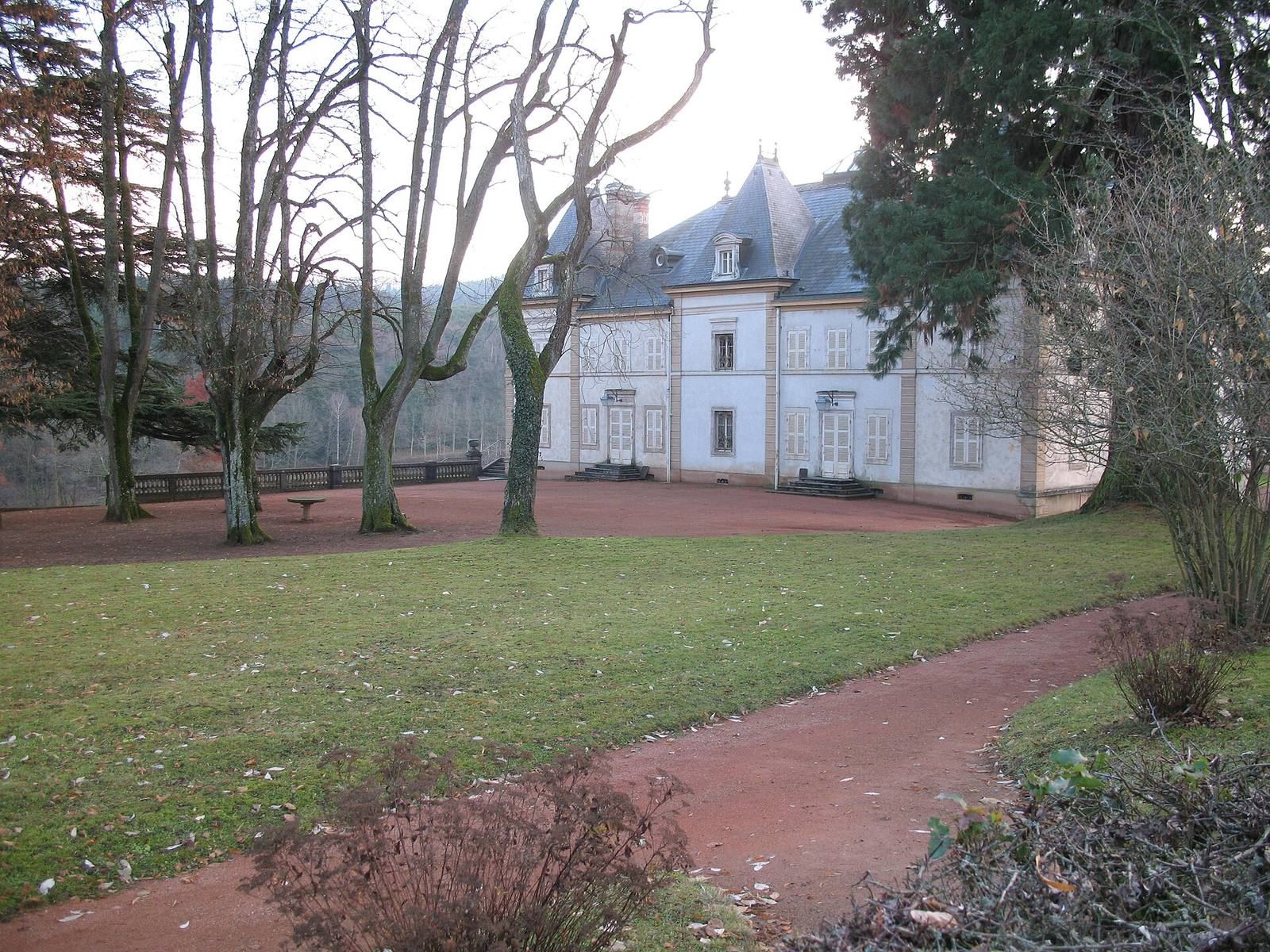
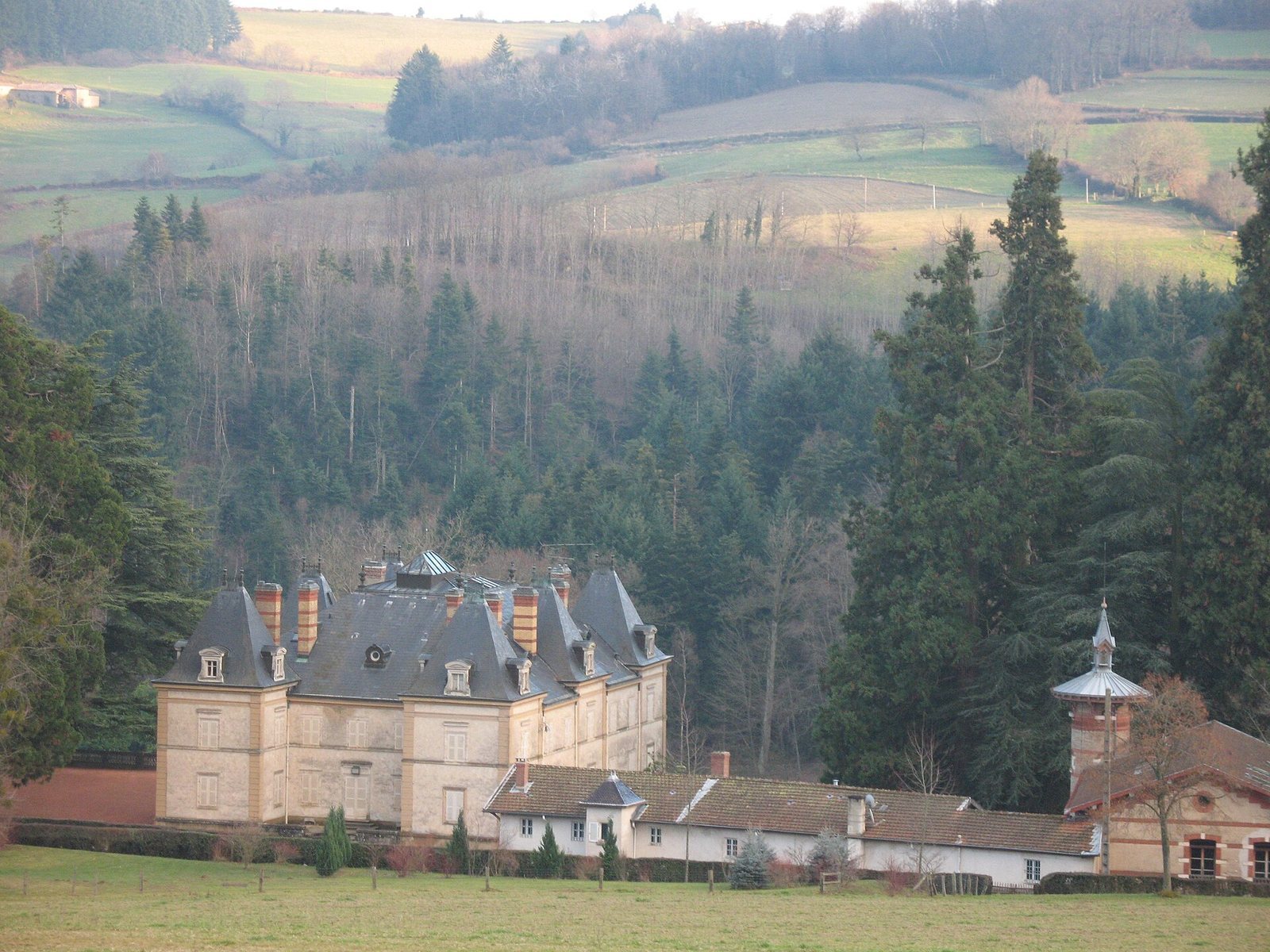
The château stands in a hollow in a valley at Ouroux. It takes its name from the La Carelle stream, which flows into the eastern Grosne. The complex includes a square main residence and outbuildings extending to the southwest.
Main residence
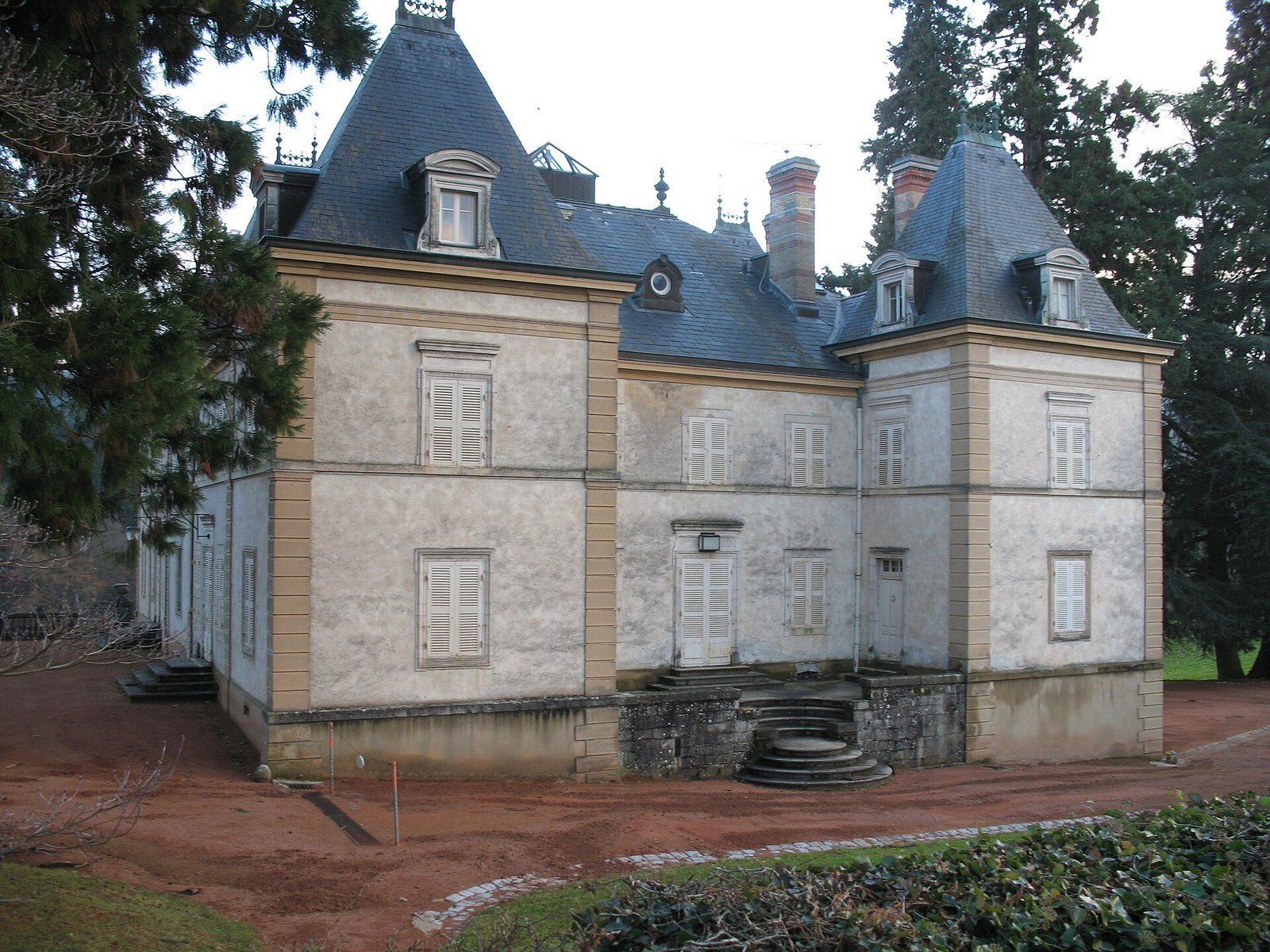
The main residence has a ground floor, an upper storey, and an attic storey. A pavilion stands at each of its four corners.
Outbuildings
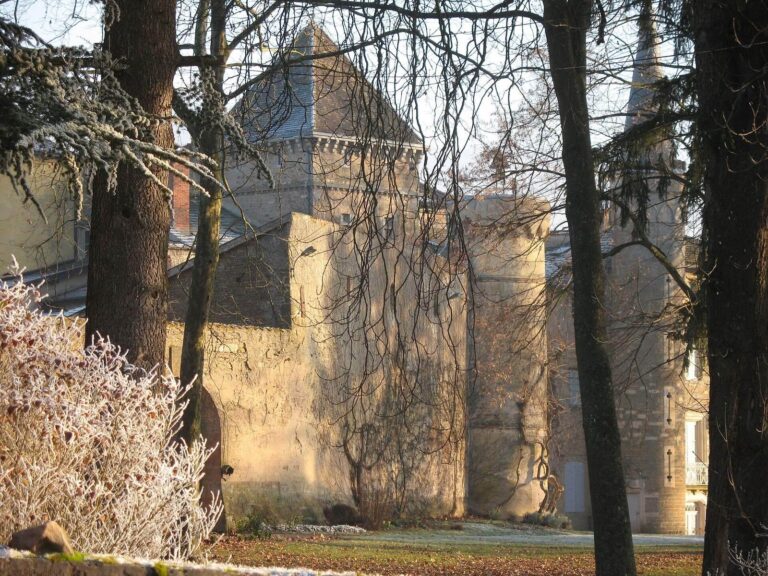
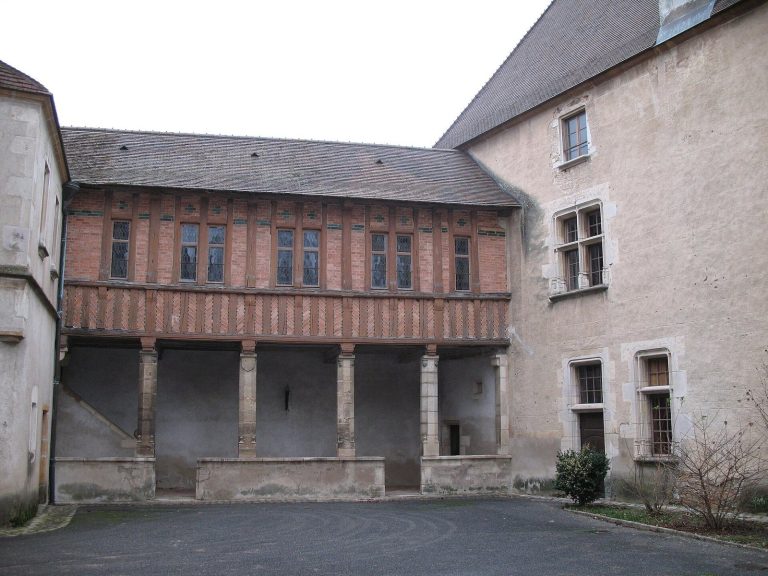
The outbuildings stretch southwest from the main residence, with a round tower among them.
Heraldic arms
The Nagu arms are blue, with three silver lozenges, or diamond shapes, arranged in a row. The de La Roche arms are quartered: the first and fourth sections are silver, each bearing three red bars, while the second and third are gold, each with a blue chevron and three small blue crosses. A sun forms the crest. The two associated family mottos translate as “With lofty head I shall strike the stars” and “Whoever collides with it is broken.”