Chashin Kurgan: An Archaeological Hillfort and Settlement in Bryansk
Site at a Glance
- Popularity
- Medium
- Country
- Russia
- Primary era
- Medieval
- Eras represented
- Medieval
- Civilizations
- Kievan Rus
- Site type
- Settlement
- Remains
- Town
On this page6 sections
History
Chashin Kurgan is an archaeological complex of a hillfort, a settlement defended by earthworks or other fortifications, and surrounding settlements in Bryansk, Russia. Its identification as the original Bryansk, a settlement named in medieval chronicles, remains disputed. The year 985 is conventionally used as the hillfort’s founding date and as the starting point for calculating Bryansk’s age, but this dating is not generally accepted as proof of the site’s identity.
Investigations and competing identifications
The first archaeological investigations took place in 1894, conducted by F. F. Pokhvalinsky and V. A. Kazansky of the Oryol Provincial Scholarly Archival Commission, a regional organization for historical and archival research. In 1976, F. M. Zavernyaev identified the hillfort with early Bryansk. He argued that its elevated, wooded position could help a fortress control the surrounding area while making it difficult to see, despite being some distance from the water. He connected this setting with Debryansk, an earlier name associated with Bryansk.
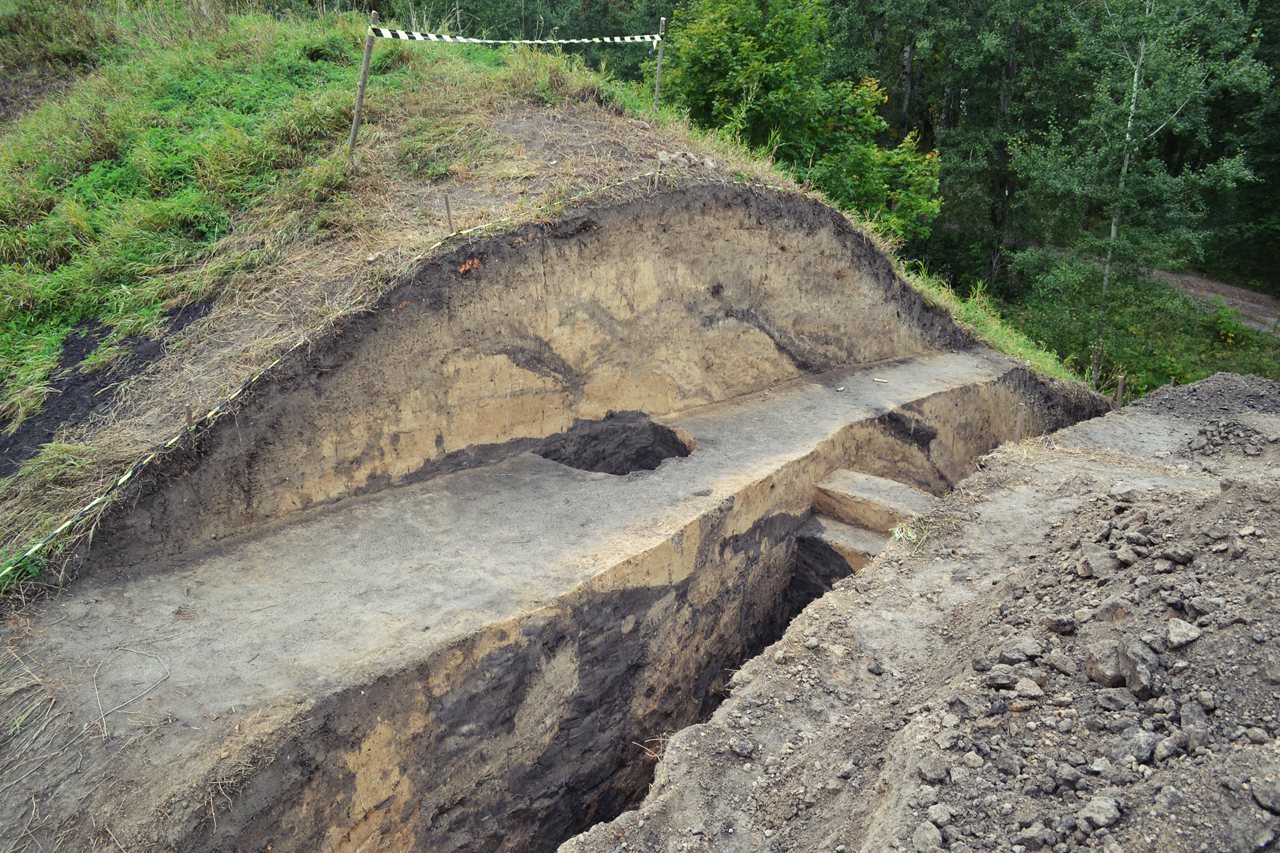
Since the early 1980s, Chashin Kurgan has been considered a possible location for the original Bryansk, although the identification remains contested. In 1980, historian and archaeologist B. A. Rybakov proposed that Bryansk shifted from the site to Pokrovskaya Hill in 1147, where the town’s Kremlin, its fortified central complex, developed. This is a hypothesis rather than an accepted account. Another interpretation, proposed by E. A. Shinakov in the early 1990s, describes an open trading-and-craft settlement. It began with people of the Romny culture, an early medieval culture of Eastern Europe, and later grew into a larger settlement of Russian merchants and warriors. In this view, fortifications accompanied the creation of a suburban princely residence or strongpoint; study of the archaeological deposits in 2016 supported the interpretation. Chashin Kurgan may also be the chronicle town of Obolov, associated with control of the water route along the Bolva.
Destruction and later settlement
In 1238, the fortified town was destroyed by fire during the Mongol-led invasion of the Rus principalities, a series of thirteenth-century campaigns against East Slavic lands. Its medieval fortifications and buildings were destroyed. Settlement later resumed without fortifications, and from the sixteenth century the place was known as the village of Gorodishche. Chashin Kurgan is a federal-level archaeological heritage site of the Russian Federation.
Remains
The site consists of a hillfort and a group of surrounding settlements, positioned where the Bolva flows into the Desna.
The hillfort
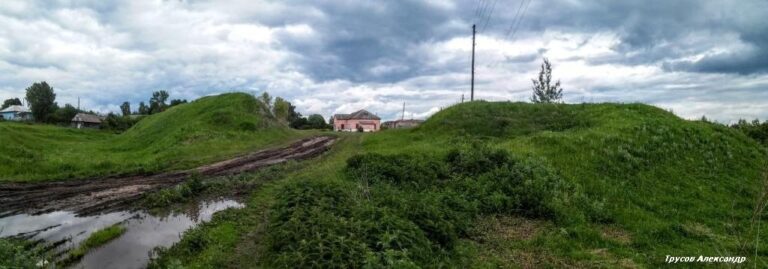
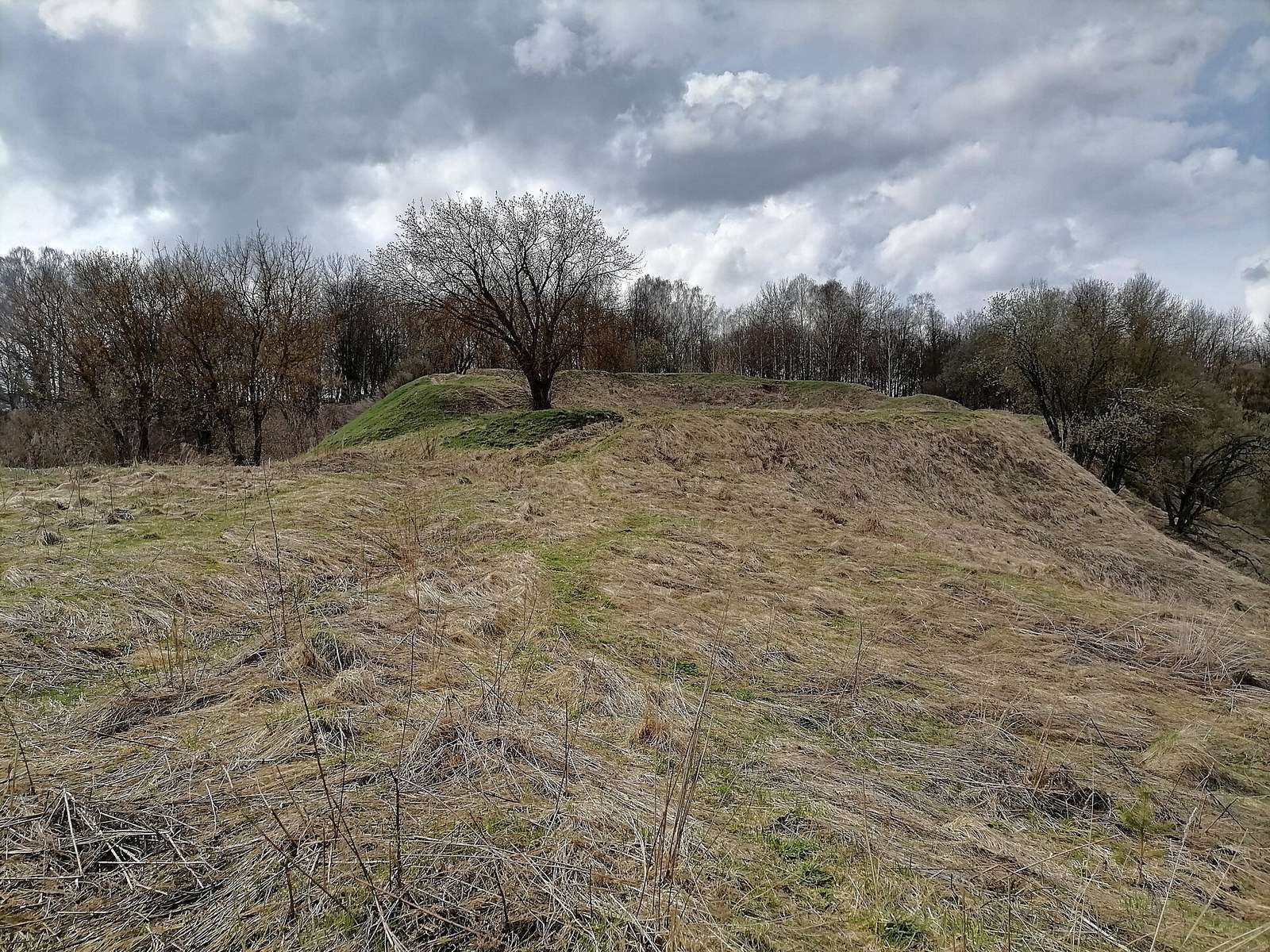
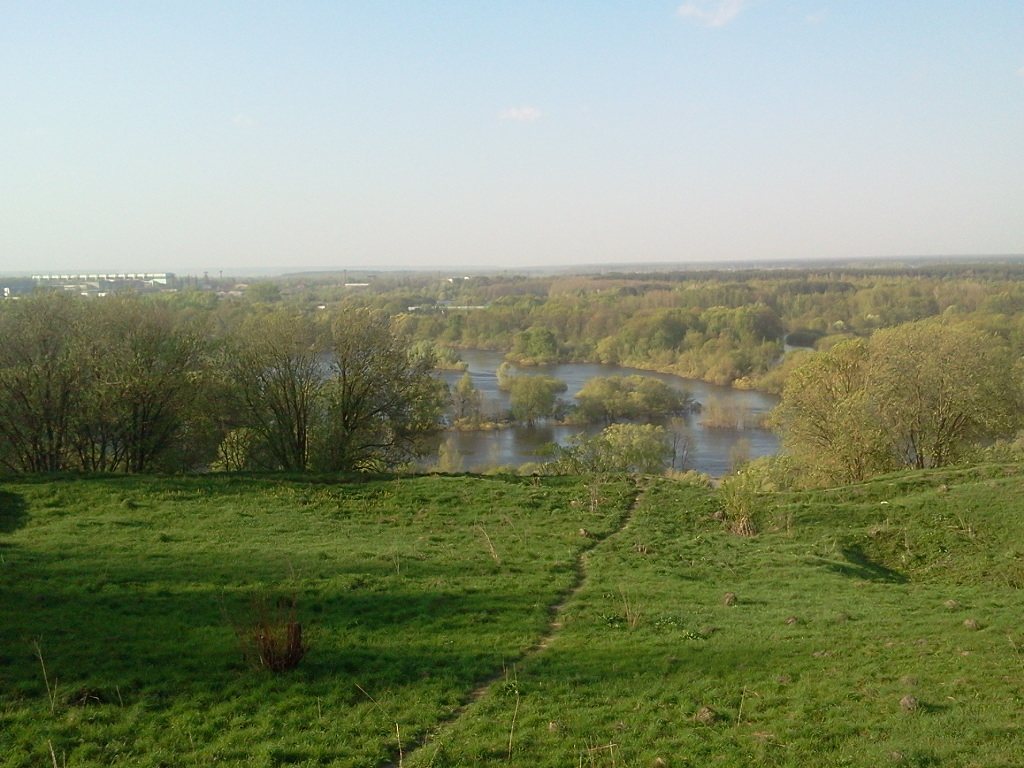
The hillfort has a cup-shaped form. Its surviving ramparts reach up to 18 metres in width and 8 metres in height. From the hill, the Desna valley and the mouth of the Bolva are visible.
Surrounding settlements
Settlements surround the hillfort and contain a substantial cultural layer, the accumulated soil and material remains of human activity. The settlement identified by Zavernyaev dates to the eleventh century and had a trading-and-craft character. Its cultural layer includes numerous objects of foreign origin.